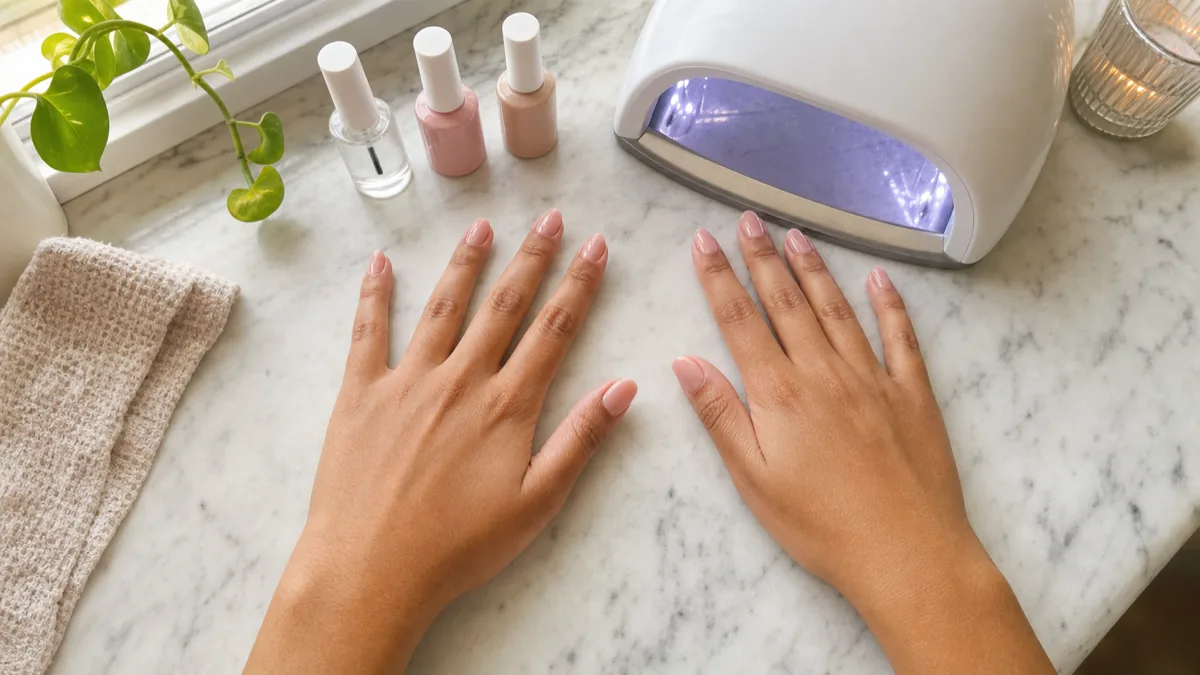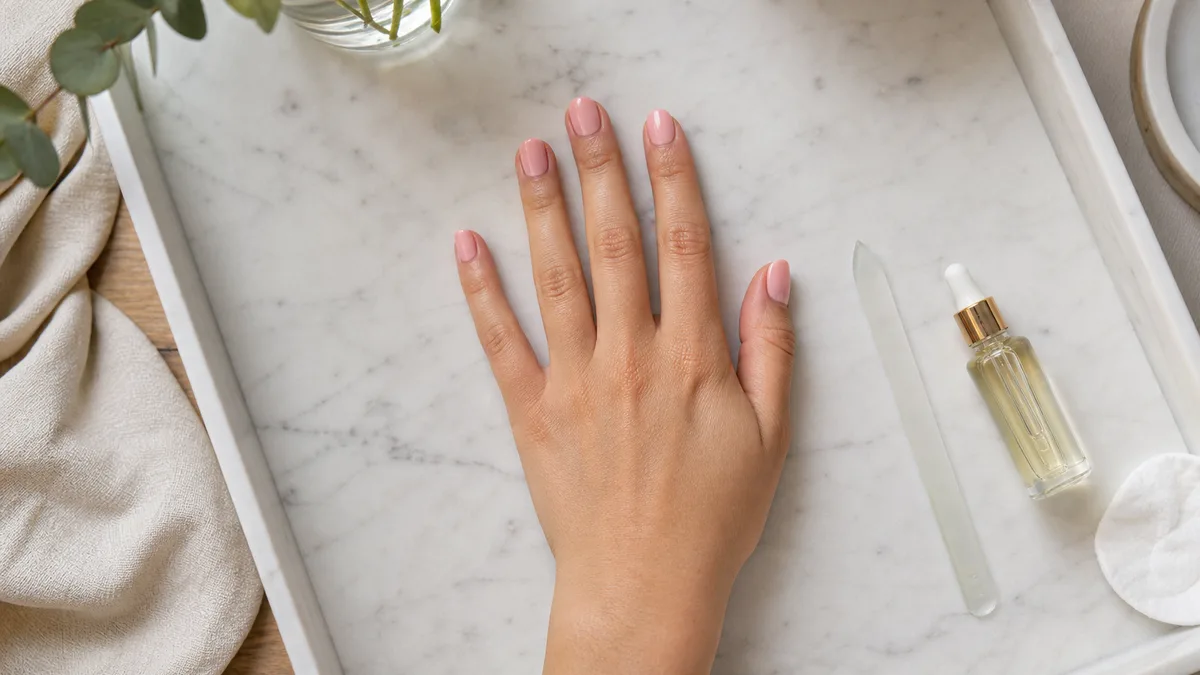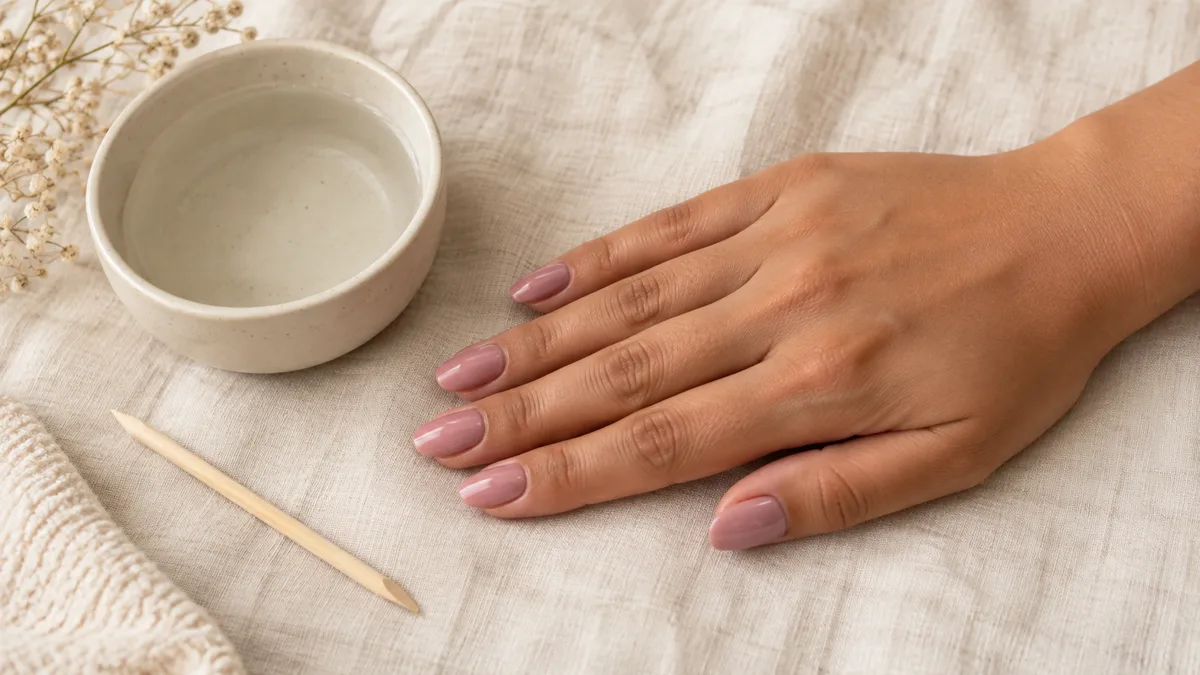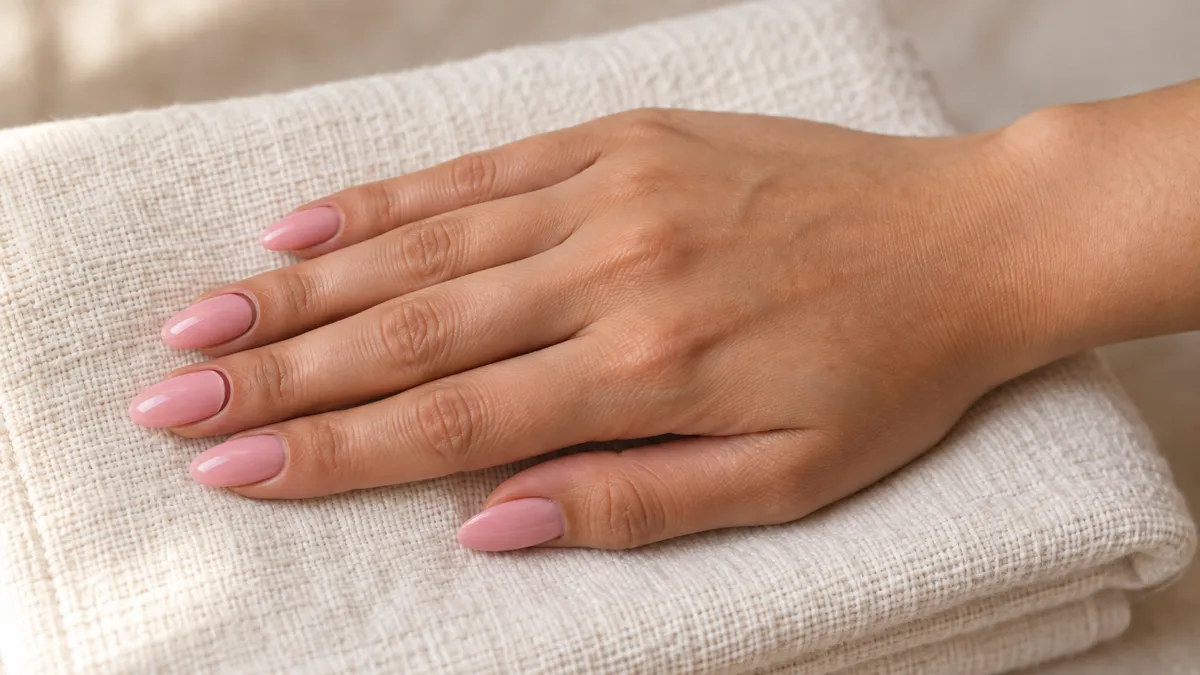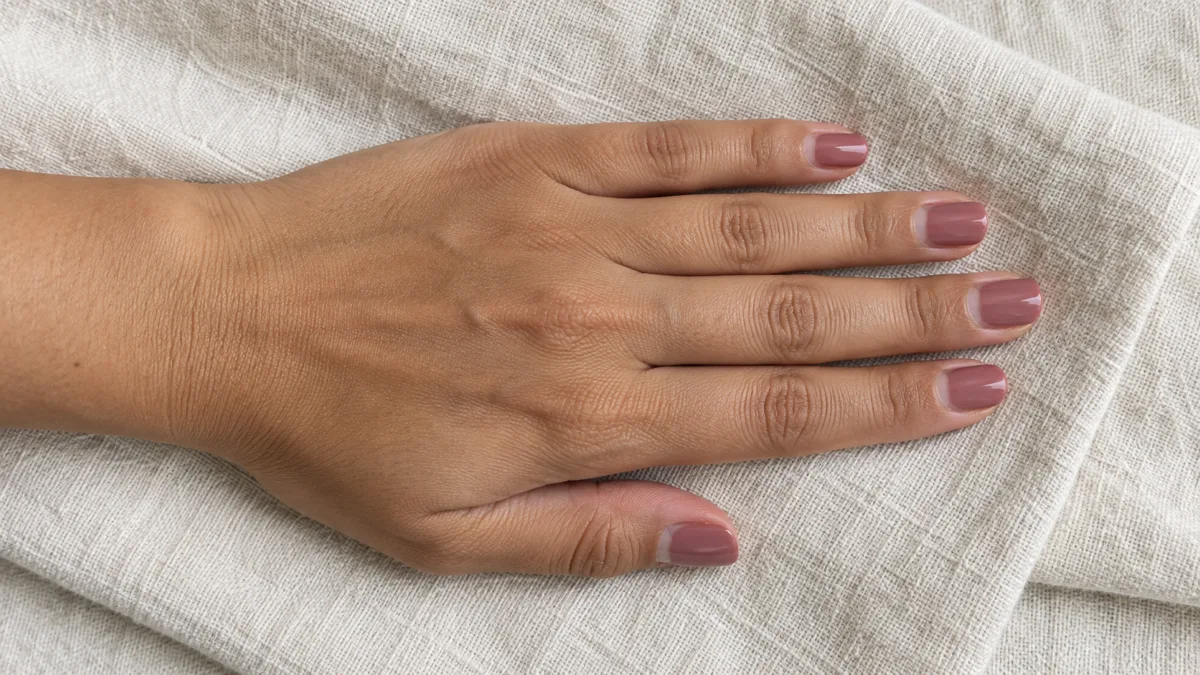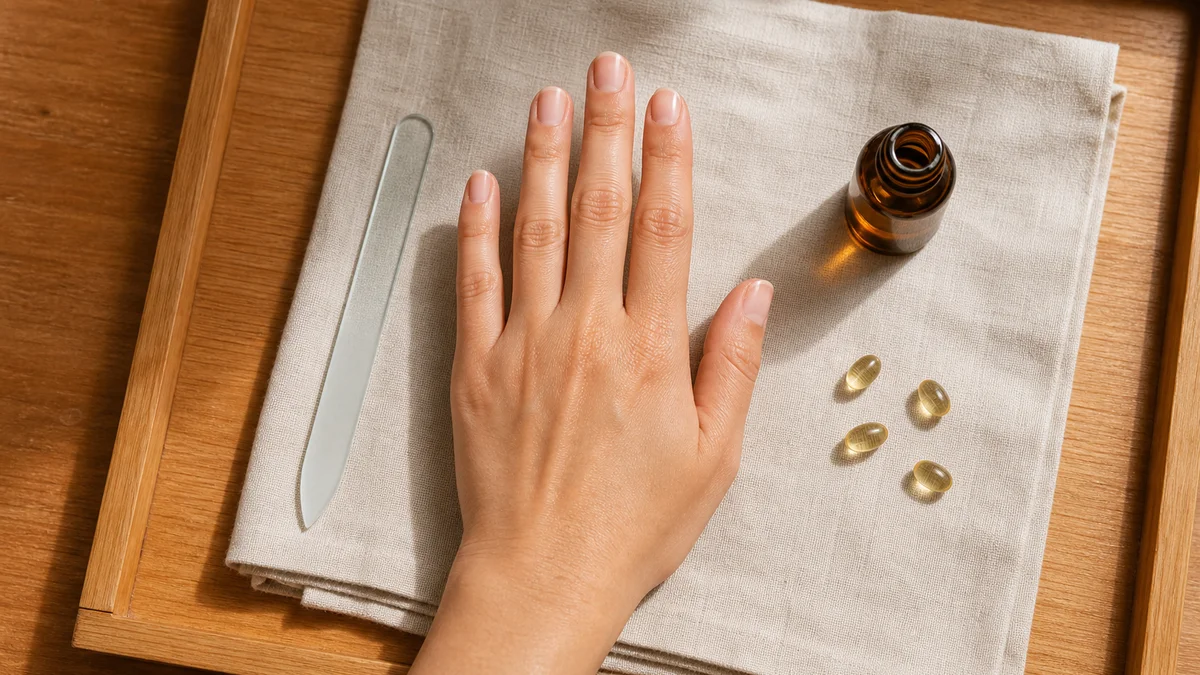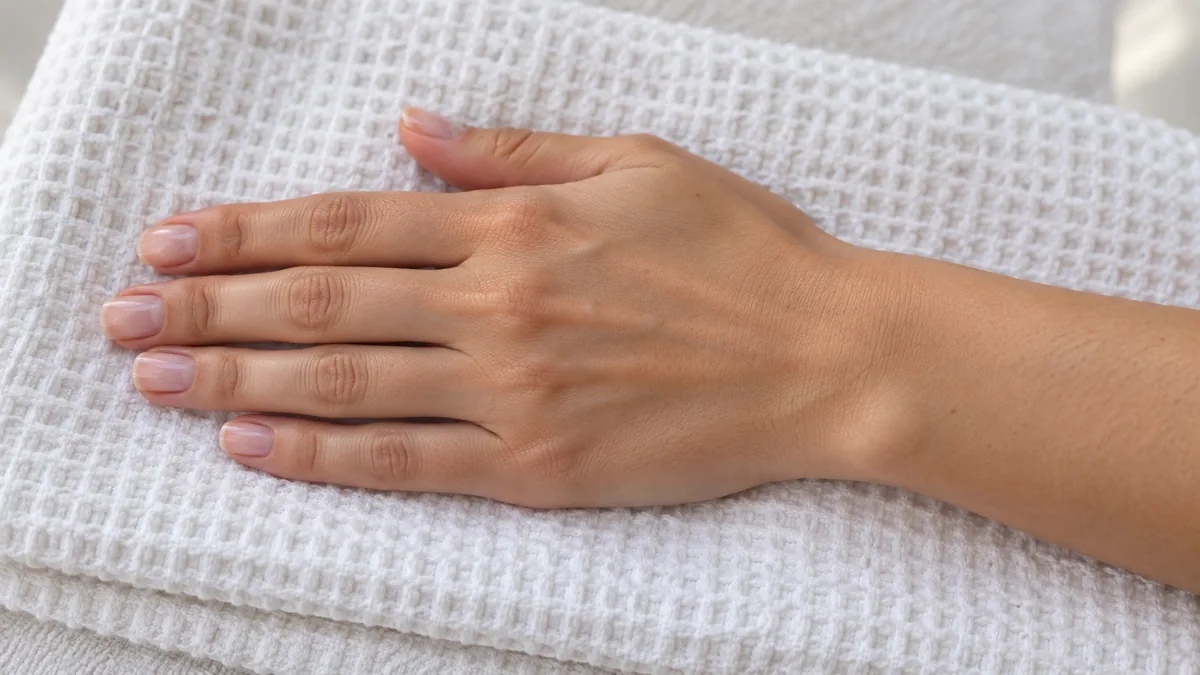
Fingernails grow at roughly the same speed for almost everyone, and no oil, serum, or supplement changes that number by much. So why do some people seem to grow long nails effortlessly while yours stall at the same short length for months?
The honest answer is that they are not growing faster. They are breaking less. Most "slow growth" is really length that snapped, peeled, or got filed away before the month was out.
This guide covers what sets the growth rate, the few habits that protect new length, what to eat, the myths to skip, and a realistic week-by-week timeline.
How to Grow Nails Faster
Why Nails Grow Slowly in the First Place
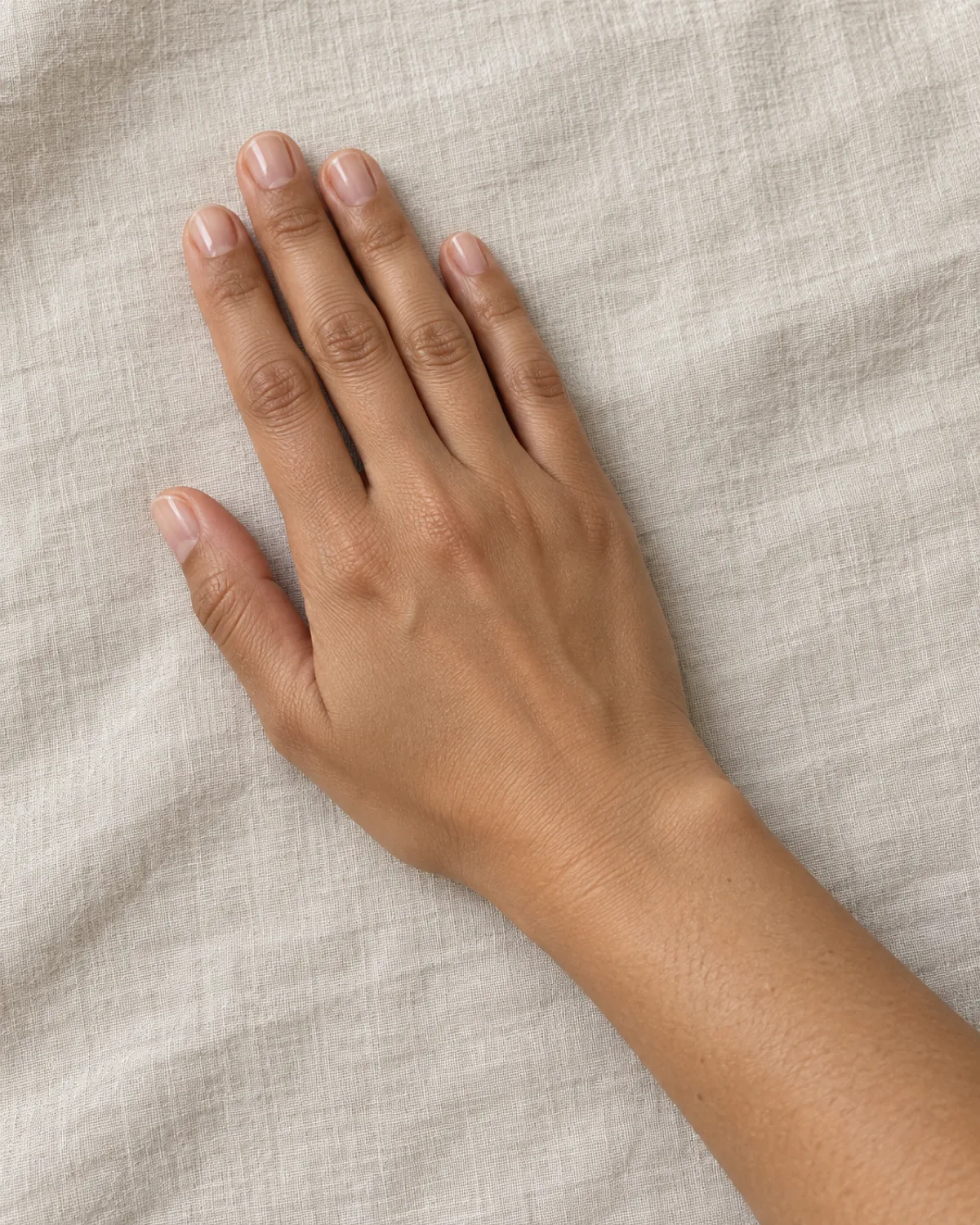
Fingernails grow about 3 millimeters a month on average, or roughly a tenth of a millimeter a day. That works out to a full regrowth from cuticle to tip in about six months. Toenails are slower, closer to 1.5 millimeters a month.
The rate is set in the nail matrix, the living tissue tucked under the skin at the base of each nail. Nothing you paint on the visible nail plate reaches the matrix, which is why "growth" polishes cannot honestly promise speed.
A few things do nudge the number, and none of them come in a bottle:
- Which hand and which finger: the dominant hand grows faster, and the middle finger grows fastest of all
- Age: growth peaks in the late teens and twenties, then slows gradually through adulthood
- Season and circulation: nails grow slightly faster in summer and in people with good blood flow to the fingertips
- Pregnancy and hormones: many people notice faster growth during pregnancy and slower growth after
- Illness and medication: a bad flu, chemotherapy, or a crash diet can leave a visible ridge where growth briefly stalled
If your nails are healthy and you still feel stuck at the same length, the growth rate is almost never the problem. Length is lost at the tip, not gained too slowly at the base, and that is where the rest of this guide focuses.
Start here if…
You do not have to read every section in order. Match your situation and jump straight to the part that will make the biggest difference.
Stop the Breakage Before Chasing Growth
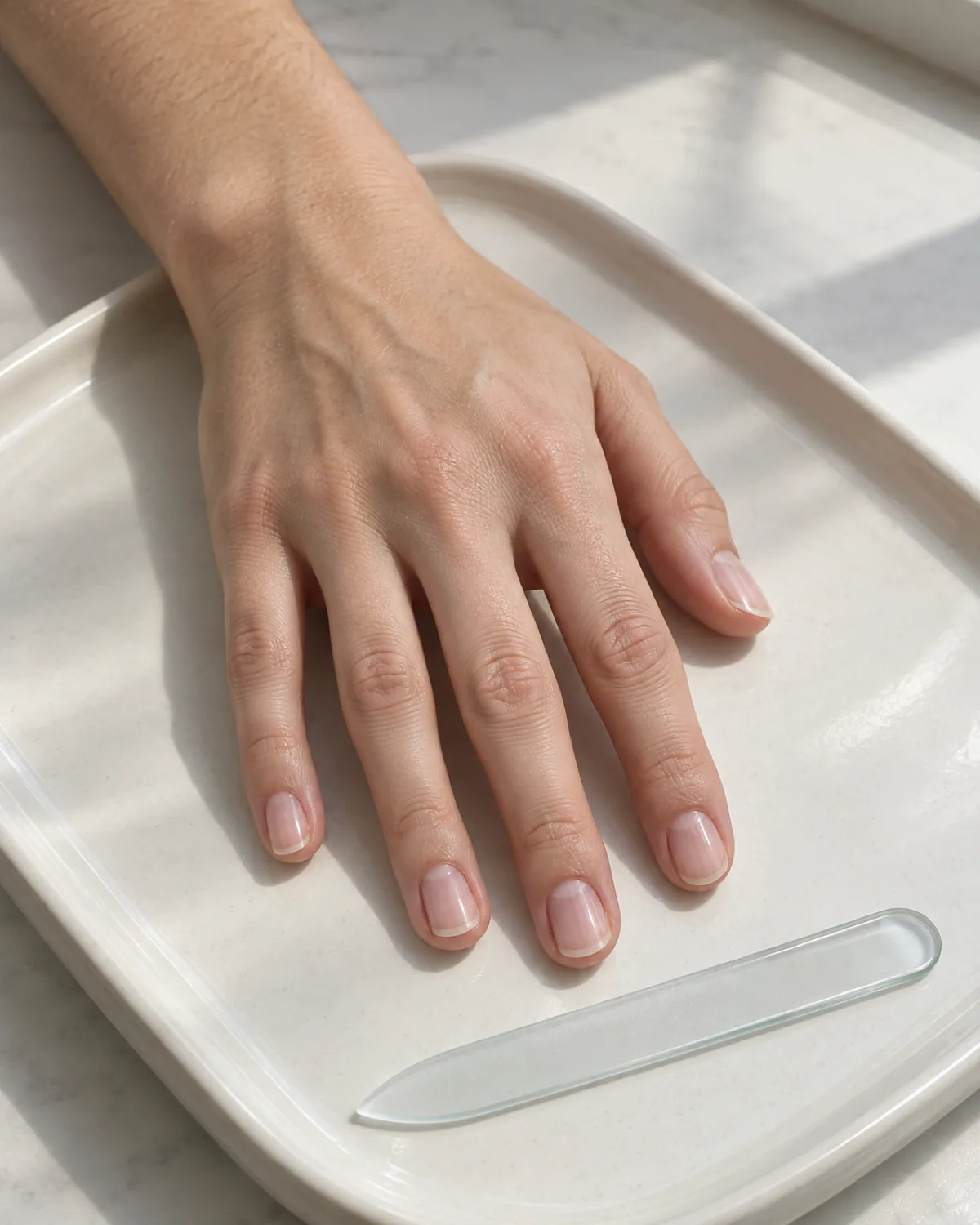
Before adding anything to your routine, figure out where your length is going. A nail that grows 3 millimeters and loses 3 millimeters to a snag looks exactly like a nail that never grew, and the fix is completely different.
Most breakage traces back to one of a few habits. Be honest about which ones apply, because the answer decides which section of this guide you actually need.
- Dryness: a dry nail plate is brittle and cracks at the corners, especially in winter and after frequent hand washing
- Nails as tools: opening cans, scraping labels, prying open a phone case, and typing hard on the tips all bend the free edge past its limit
- Long soaks: baths, dishes without gloves, and swimming swell the nail with water and then shrink it as it dries, which loosens the layers over time
- Rough removal: peeling off gel or picking at press-ons takes the top layers of nail with it, and those thin spots break weeks later
If you already have peeling or splitting, the repair side of this is covered in the guide to how to strengthen nails. This guide assumes the plate is basically sound and you want to keep more of what grows.
One small edge fix makes a big difference right away: keep a glass file nearby and smooth any tiny snag the moment you notice it. A rough corner that is left alone will catch on fabric and tear, and one tear can cost you a month.
Cuticle Oil Twice a Day Is the One Habit That Matters
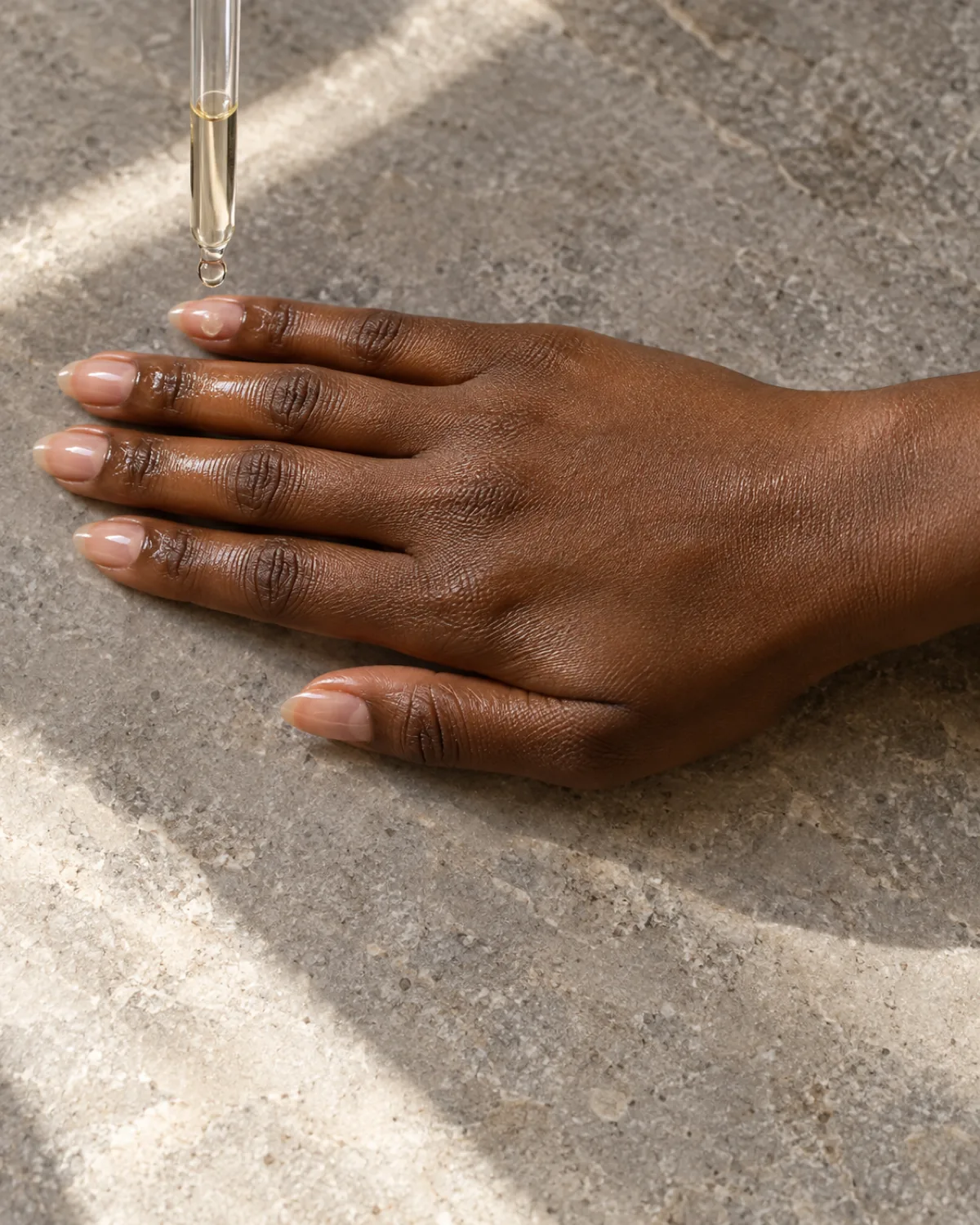
If you change only one thing, make it this. Cuticle oil does not make the matrix produce nail any faster, and anyone who tells you it does is guessing. What it does is keep the nail plate flexible, and a flexible nail bends where a dry nail cracks.
The reason it matters so much for length specifically is simple. Every break happens at the free edge, the part of the nail that has been exposed the longest and is the driest. Oil applied daily works its way into those outer layers and keeps them from turning brittle.
How to do it so it actually works:
- Twice a day, every day: morning and before bed is the easiest pattern to keep; once a week does nothing
- One drop per nail: place it on the cuticle line, then rub it along the sides and over the free edge with the pad of your thumb
- Any oil works: jojoba is closest to skin's own oil, sweet almond and vitamin E blends are fine, and even plain olive oil beats nothing
- Apply over polish too: the oil still reaches the skin folds and the underside of the free edge, which is where it counts
Give it a full month before you judge it. The nail you are oiling today does not become the free edge for weeks, so the benefit shows up on a delay. A full routine for the skin around the nail is in the cuticle care guide.
File in One Direction and Keep a Soft Shape
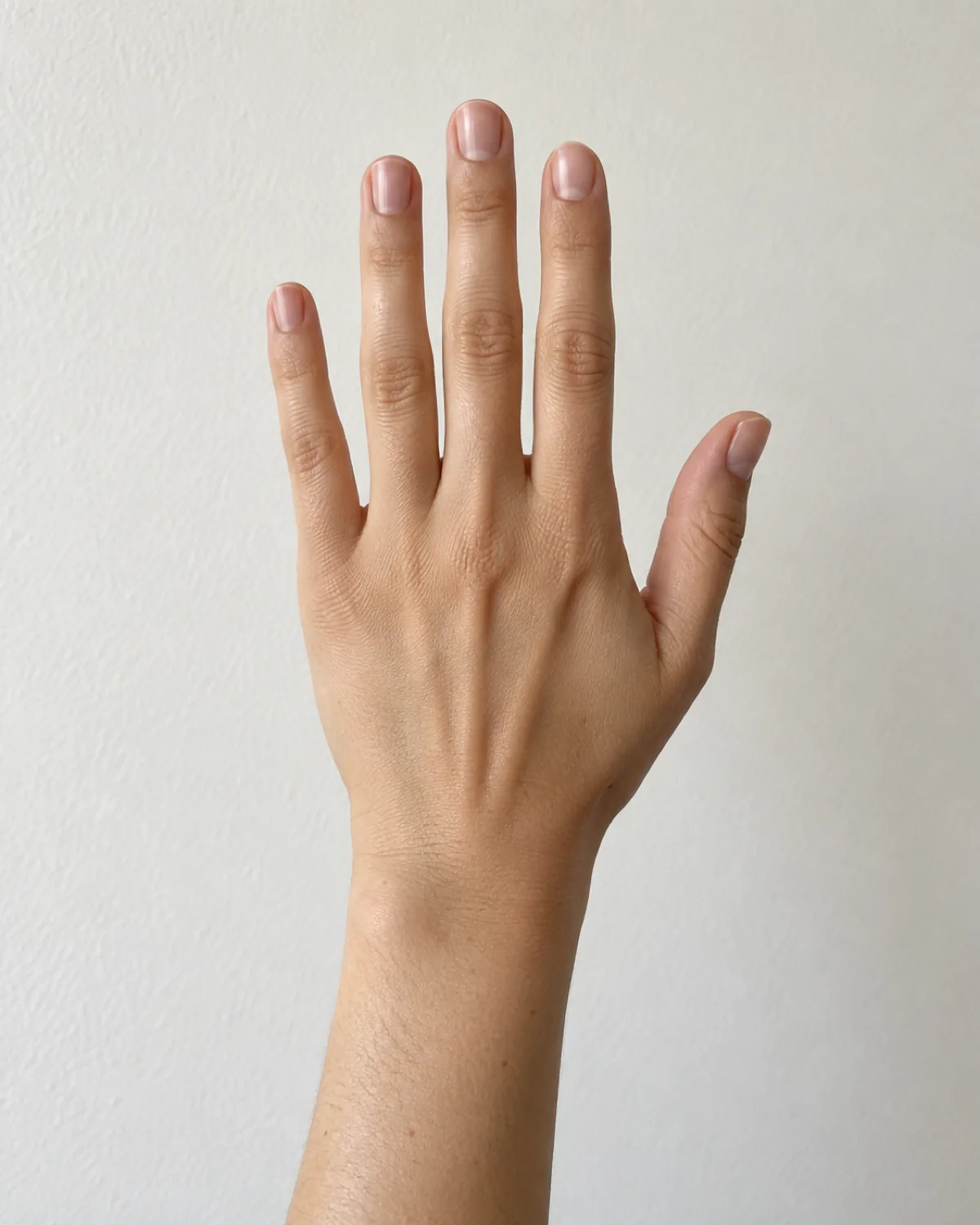
How you file decides how much of your length survives the week. Sawing a file back and forth across the tip creates tiny splits between the nail's layers, and those splits open into peeling as the nail grows out.
File in one direction only, from the side toward the center, lift, and repeat. A glass or crystal file leaves a sealed edge; a coarse emery board frays it. It takes longer, which is the point.
Shape matters just as much. Some shapes shed length constantly, others hold onto it:
- Short round and oval: no corners to catch, the most forgiving shapes while you grow
- Squoval: a soft square with rounded corners, nearly as durable and a little more polished looking
- Soft almond: tapered but not pointed, fine once you have some length to work with
- Sharp square, stiletto, and coffin corners: every corner is a lever that catches on fabric and hair; save these until your nails are strong and long
Keep the free edge short while you are building. A nail that extends a couple of millimeters past the fingertip is far less likely to bend than one that reaches out a full centimeter, and it still reads as neat. Once the plate is thicker and the habit is solid, let it grow.
3 Rules That Protect Every Millimeter
Feed the Nail: Protein, Biotin, and Water
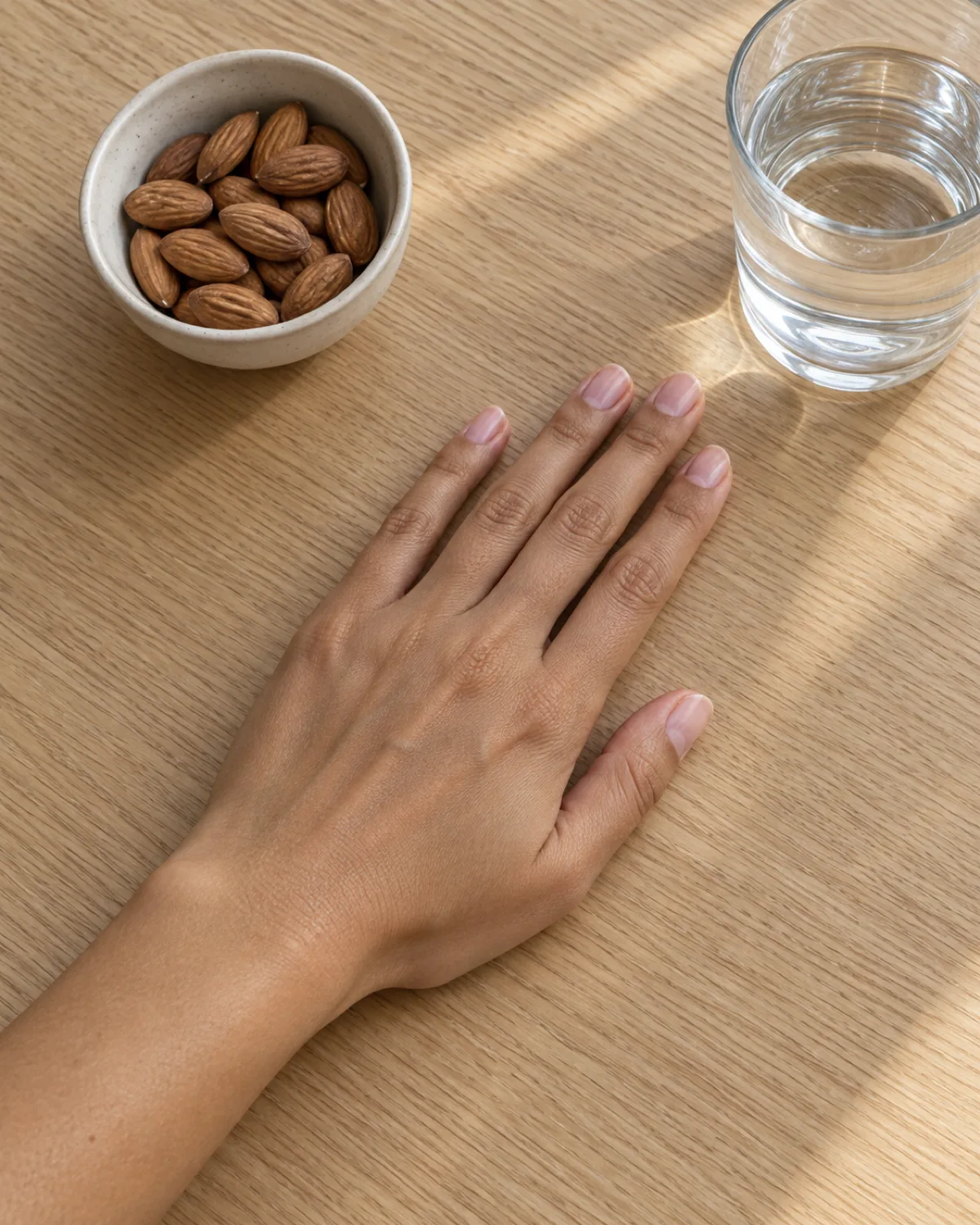
Nails are made of keratin, a protein, and the matrix builds them from what your diet supplies. Eating well does not turn 3 millimeters a month into 5, but eating badly for long enough can slow growth and thin the plate, so this is the part of the routine that runs in the background.
Here is where the evidence actually stands, without the supplement marketing:
- Protein: the foundation. Persistent low intake, common with crash dieting, shows up as thinner, slower nails months later. Eggs, fish, beans, dairy, and nuts all count
- Biotin: helps people who are genuinely deficient, which is rare on a normal diet. For everyone else the studies are small and the effect is modest at best
- Iron and zinc: low iron can cause brittle, spoon-shaped nails; if you suspect it, get tested rather than guessing with pills
- Water: hydration keeps the plate flexible, which matters more for surviving breaks than for speed
If you want a food-first version of this, a handful of nuts and a piece of fruit each day covers most of the bases. The only supplement worth a conversation with a doctor is biotin, and only if a blood test points that way. A megadose without a deficiency does nothing for your nails and can interfere with thyroid and heart lab results.
Protect New Growth: Gloves, Base Coat, and Tool Discipline
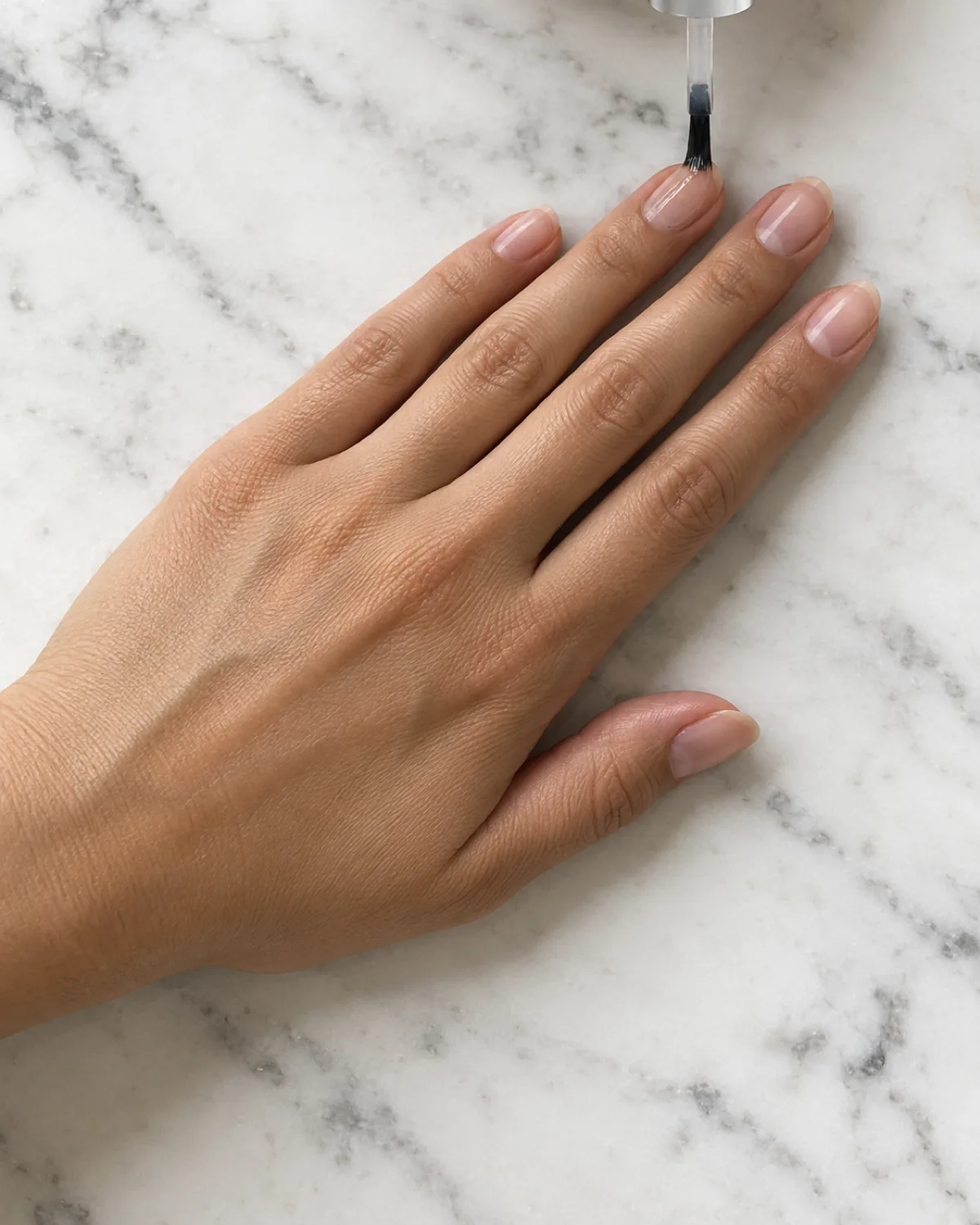
The newest 2 or 3 millimeters at the free edge are always the weakest part of the nail. They have not fully hardened, they are the thinnest section, and they take the most contact through the day. Protecting that strip is how length accumulates.
A few defensive habits do most of the work:
- Gloves for dishes and cleaning: hot water and detergent strip oil from the plate faster than anything else you do in a day
- A clear base coat or strengthener: one thin coat acts as a flexible shield on the free edge; reapply every few days, and remove gently with acetone rather than peeling
- Regular polish over long gel gaps: if you wear gel, let the nail rest between sets; rough removal is one of the biggest length killers, which is why the at-home gel guide spends so long on soaking off properly
- Short, neat, and painted beats long and bare: a manicured short nail is less likely to catch than a bare longer one
The pattern here is that nothing on this list is exciting. That is fine. The routine in the nail care routine guide is built on the same boring habits, and boring habits are the ones that stick for the three months this takes.
What Doesn't Work: Myths Worth Skipping
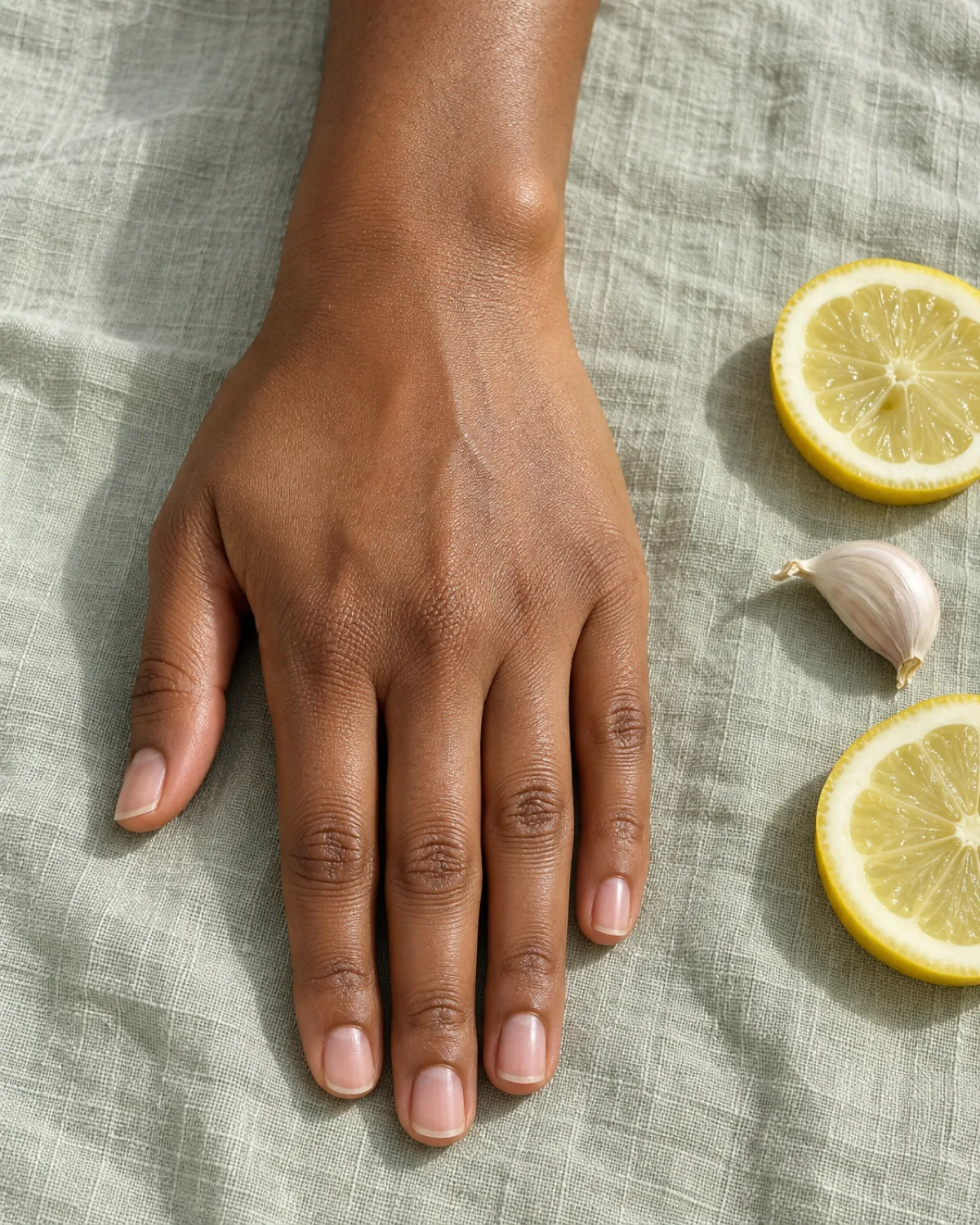
Search for how to grow nails faster and you will find the same handful of tricks repeated everywhere. Most of them are harmless, a few are actively bad for the nail, and none of them change the growth rate.
- Garlic or lemon soaks: garlic has no known effect on keratin production, and lemon juice is acidic enough to dry the plate and irritate the skin around it. Both leave you with nails that smell strange and are no longer than before
- "Cut them short so they grow back faster": the visible nail is dead tissue, and trimming it sends no signal to the matrix. Keeping nails short does help, but only because short nails break less
- Overnight or two-day results: the nail grows a tenth of a millimeter a day. Anything promising visible growth by the weekend is describing a press-on, not a nail
- Biotin megadoses: as covered above, only useful if you are deficient, and high doses can distort lab tests
- "Growth" polishes: these are base coats with good marketing. Useful as protection, not as accelerators
If a quick win is what you actually want, press-ons are the honest shortcut, and the guide to how to apply press-on nails covers how to wear them without damaging the nail underneath.
A Realistic Timeline: What to Expect Week by Week
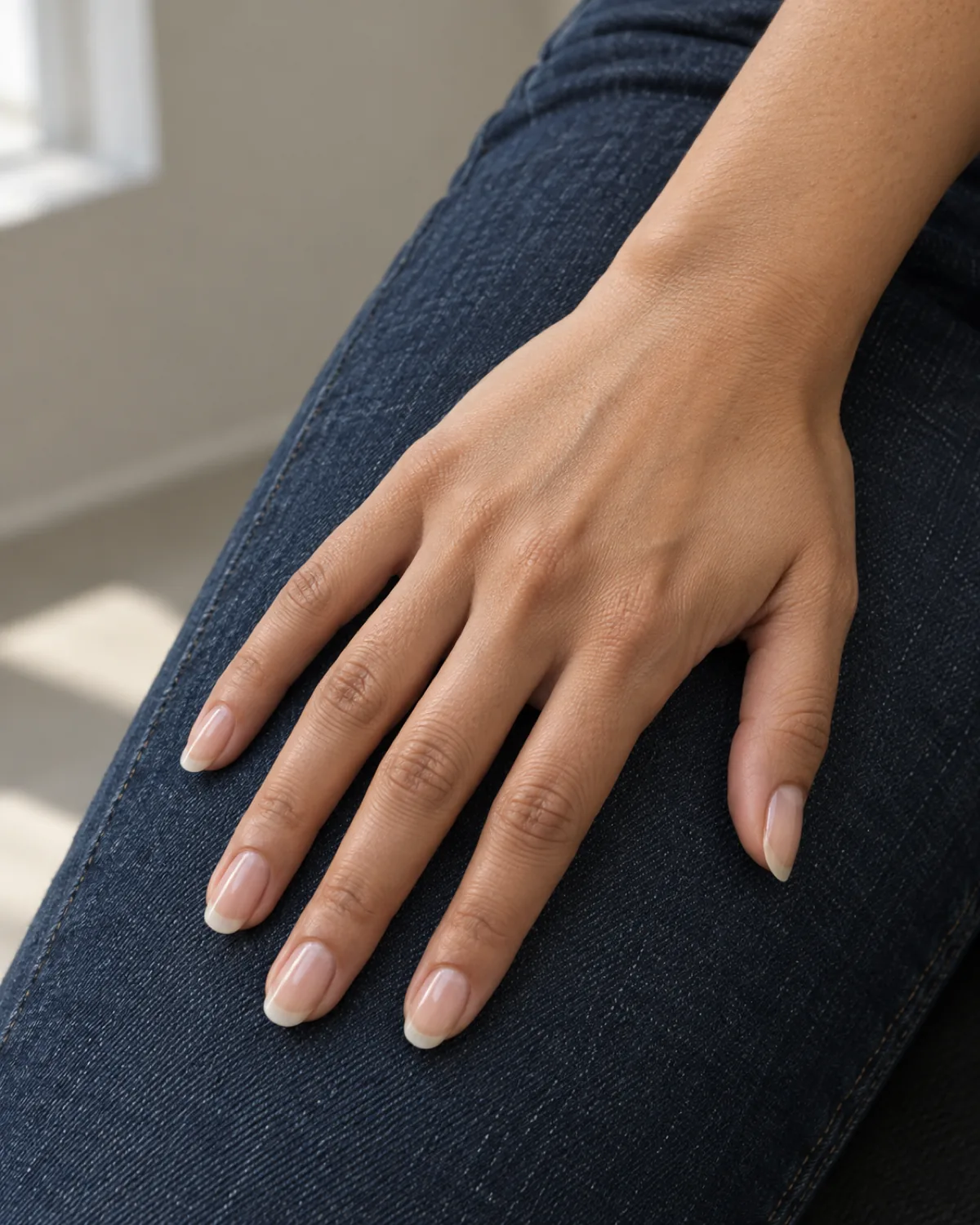
Knowing what is normal keeps you from quitting at week three, which is exactly when most people decide nothing is working. Here is what a healthy nail does on a consistent routine.
- Weeks 1 to 2: no visible change in length. What you should notice is fewer snags and less peeling, because the oil and gentler filing are already working at the edge
- Week 4: about 3 millimeters of new growth. If you started very short, this is when the free edge begins to clear the fingertip
- Week 8: around 6 millimeters. A clean white free edge is visible on every finger, and shapes like oval and squoval start to look intentional
- Week 12: roughly 9 millimeters from where you started. This is the honest starting line for anything that reads as "long nails," and the plate that grew in under the new routine is stronger than the one you began with
Two things throw the timeline off. Any break resets that finger to the day it snapped, and a period of illness or a very restrictive diet can leave a horizontal ridge and a few weeks of slower growth. Neither is permanent.
Once you are past week eight, the question shifts from growing nails to keeping them, and that is a matter of the same oil, the same file, and the same gloves. The full daily version, including the steps that make a manicure last, is in the at-home manicure guide.
How to Grow Nails in 8 Takeaways
- 1Nails grow about 3 mm a monthThe rate is set in the matrix under the skin. Nothing painted on the nail changes it, so focus on keeping length, not adding speed
- 2Find where the length is goingDryness, nails as tools, long soaks, and rough gel removal cause most breaks. Fix the cause before adding products
- 3Cuticle oil twice a dayOne drop per nail, morning and night, rubbed along the sides and free edge. A flexible nail bends instead of cracking
- 4File one way, keep a soft shapeGlass file, side to center, no sawing. Round, oval, and squoval hold length; sharp corners catch and tear
- 5Protein first, biotin only if deficientKeratin needs protein over months. Biotin helps only when a test shows you are low; water keeps the plate flexible
- 6Shield the newest 3 mmGloves for dishes, a clear base coat, gentle removal, and short neat nails while you build
- 7Skip garlic, lemon, and overnight promisesNone of them reach the matrix. Cutting short helps only because short nails break less
- 8Expect 12 weeks, not 12 daysFewer breaks by week 2, 3 mm by week 4, a white edge by week 8, real length by week 12
styvea.com

Sloane Avery edits Styvea, where she shares nail design ideas, shapes, colors, and at-home manicure how-tos for anyone who loves a good manicure. Every guide is reviewed for clarity, usefulness, image accuracy, and Pinterest-to-page alignment before publication. Visit the About page.
How to Grow Nails Faster FAQ
How fast do nails actually grow?
About 3 millimeters a month for fingernails, or a tenth of a millimeter a day. A few details worth knowing:
- The dominant hand and the middle finger run slightly ahead of the rest
- A full fingernail replaces itself in around six months; toenails take about twice as long
- Age, season, circulation, and hormones shift the number a little; no topical product shifts it at all
Does cuticle oil really make nails grow faster?
No, and it does not need to. Oil cannot reach the matrix where growth happens. What it does is keep the nail plate flexible so the free edge bends instead of snapping, which means more of each month's growth survives. Used twice a day for a month, it makes a visible difference in length for that reason alone.
Can nails grow overnight or in two days?
No. In two days a nail grows about a fifth of a millimeter, which is not visible to the eye. Any tip that promises overnight length is either describing press-ons or is simply wrong. The realistic markers:
- Four weeks: about 3 millimeters of new growth
- Eight weeks: a clean white free edge on every finger
- Twelve weeks: the honest starting line for nails that read as long
Do biotin supplements work for nail growth?
Only if you are deficient, which is uncommon on a normal diet. For people with a true deficiency, biotin can thicken and strengthen the plate over a few months. For everyone else the evidence is thin, and high doses can interfere with thyroid and heart blood tests, so it is worth a conversation with a doctor rather than a guess.
Should I cut my nails short to make them grow faster?
Cutting does not change the growth rate, because the visible nail is dead tissue and the matrix does not know it was trimmed. Keeping nails short while you build is still good advice, but for a different reason: a short free edge is far less likely to bend and break, so you keep more of what you grow.