Cuticles seal the gap between living skin and hard keratin, keeping moisture in and bacteria out. When they crack, peel, or grow jagged, every manicure starts at a disadvantage.
These fifteen methods cover the full range: which oils absorb, why a metal pusher beats a wooden stick, and the overnight trick that fixes a week of neglect in one sleep.
See also: nail care routine and gel nails at home.
From daily oil to DIY scrubs and overnight repair. Tap any method to jump straight to it.
1. Why Pushing Beats Cutting Every Single Time
Cutting cuticles removes living tissue. The proximal nail fold — the strip of skin directly above the nail plate — exists to seal the matrix against bacteria, fungus, and debris. When you cut it away, you open that seal. The body responds by growing the tissue back thicker and faster, which creates a cycle where you need to cut more often to maintain the same clean line.
Pushing does not remove anything. An orange-wood stick angled at forty-five degrees and moved in small circular motions along the nail fold lifts the thin, transparent layer of dead cuticle skin off the nail plate without touching the living tissue underneath.
After a shower, when the skin is already softened by warm water, the dead layer separates with almost no resistance. The nail fold stays intact, the seal holds, and the visible cuticle line looks clean.
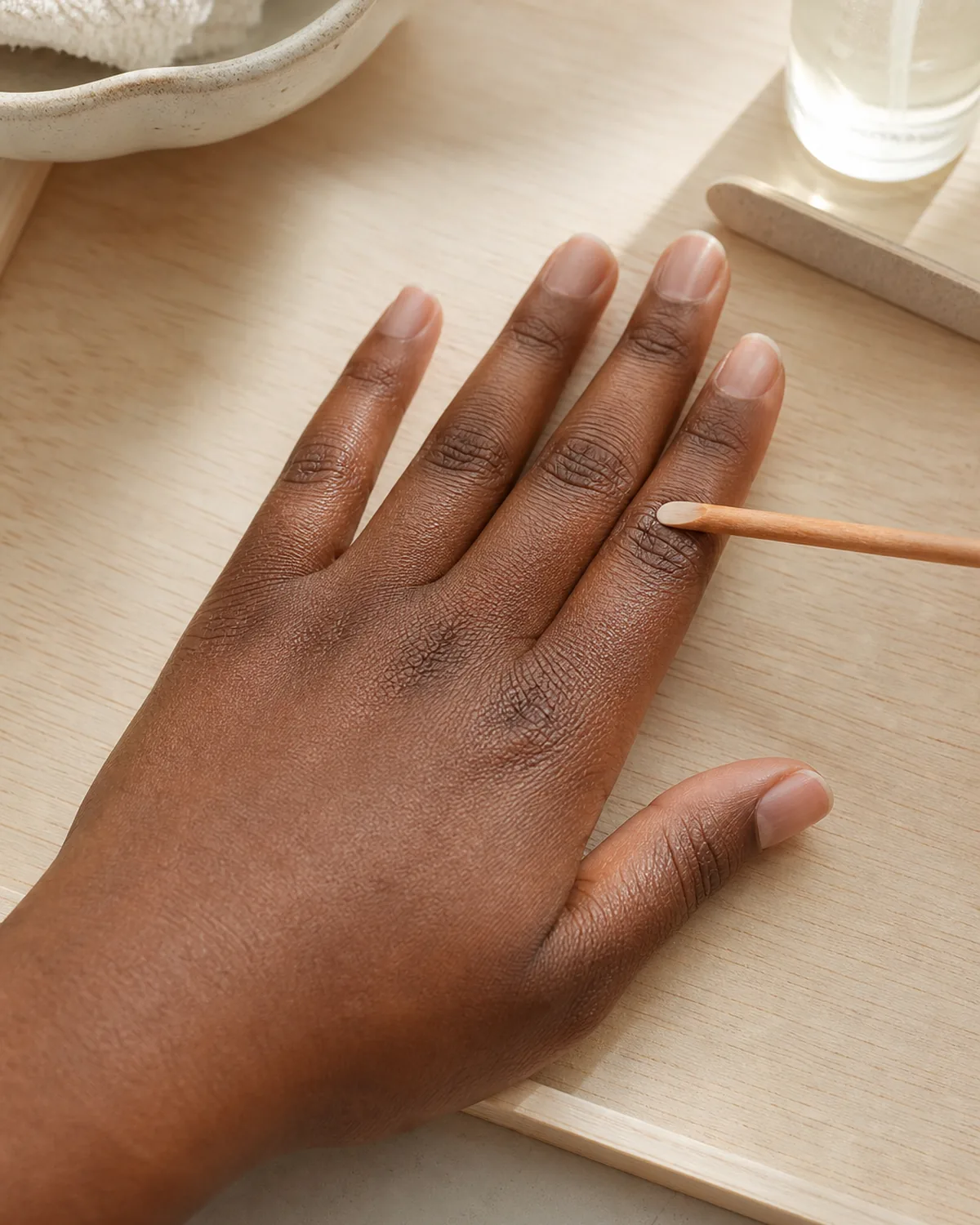
- Pushing preserves the protective seal that cutting destroys.
- Angle the stick at forty-five degrees and use small circular motions.
- Best done right after a shower when the dead layer is already soft.
- The body does not grow tissue back thicker when you push instead of cut.
- One push per week maintains a clean cuticle line without damage.
2. Jojoba Oil Absorbs Faster Than Any Cuticle Cream on the Market
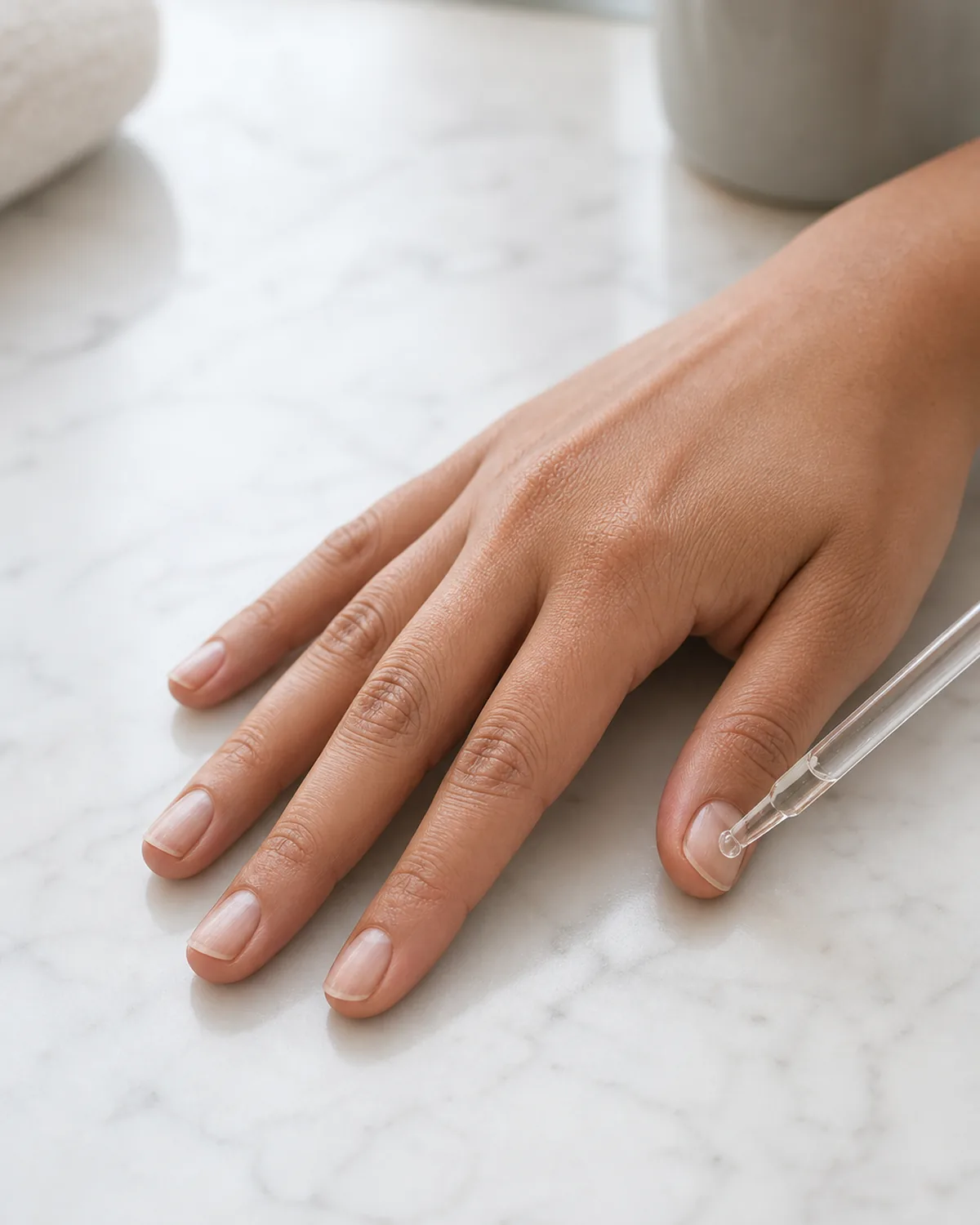
Jojoba oil is not technically an oil — it is a liquid wax ester, and its molecular structure is nearly identical to human sebum. That similarity is why it penetrates the cuticle skin in under ninety seconds while most cuticle creams sit on the surface and need rubbing to absorb.
One drop on each cuticle is enough. Massage it in a small circle with the pad of your thumb, working the oil into the fold where the skin meets the nail plate. Within two minutes the skin feels soft but not greasy.
For cuticles that are already cracked or peeling, layer it twice: one drop, wait sixty seconds, then a second drop into the same area. The first application loosens the dry surface layer; the second reaches the skin underneath.
- Jojoba is a liquid wax ester that mirrors human sebum.
- Absorbs in under ninety seconds without greasy residue.
- One drop per cuticle, massaged in small circles with your thumb.
- For cracked cuticles, layer two drops sixty seconds apart.
- Outperforms thicker creams because it penetrates rather than coating.
3. A Warm Water Soak Before Every Push Changes the Entire Experience
Pushing dry cuticles tears skin. The dead tissue layer bonds tightly to the nail plate when it is dry, and forcing a stick under it creates micro-tears that turn into hangnails within a day. A five-minute soak in warm water loosens that bond completely.
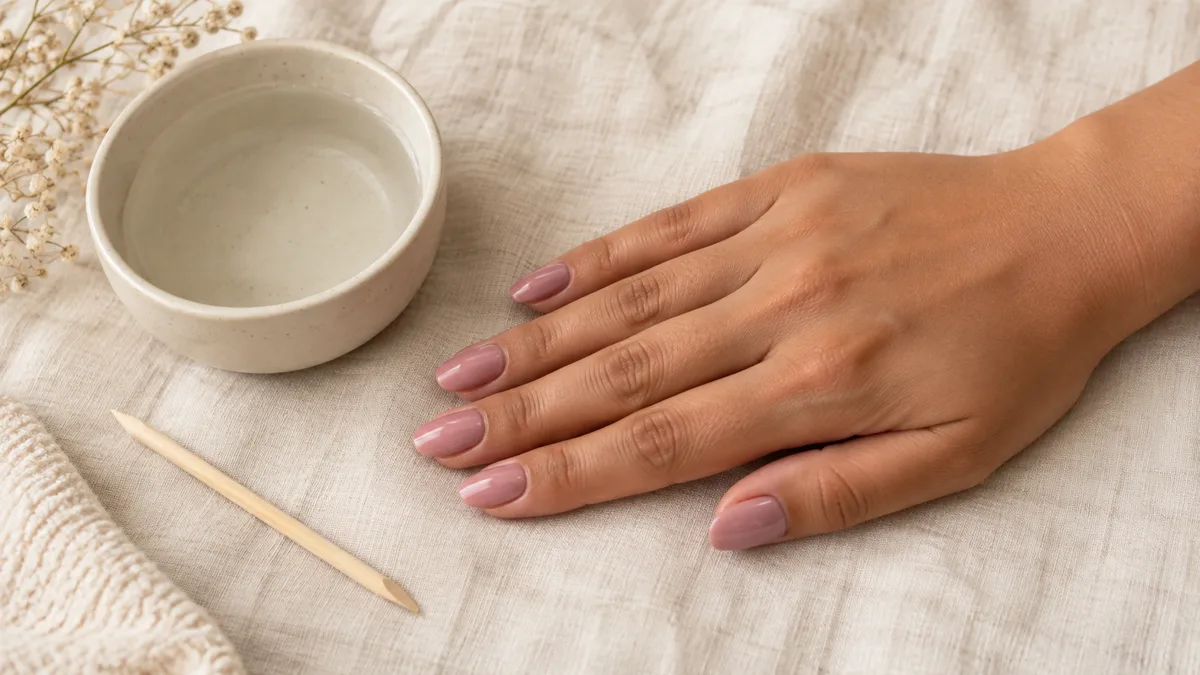
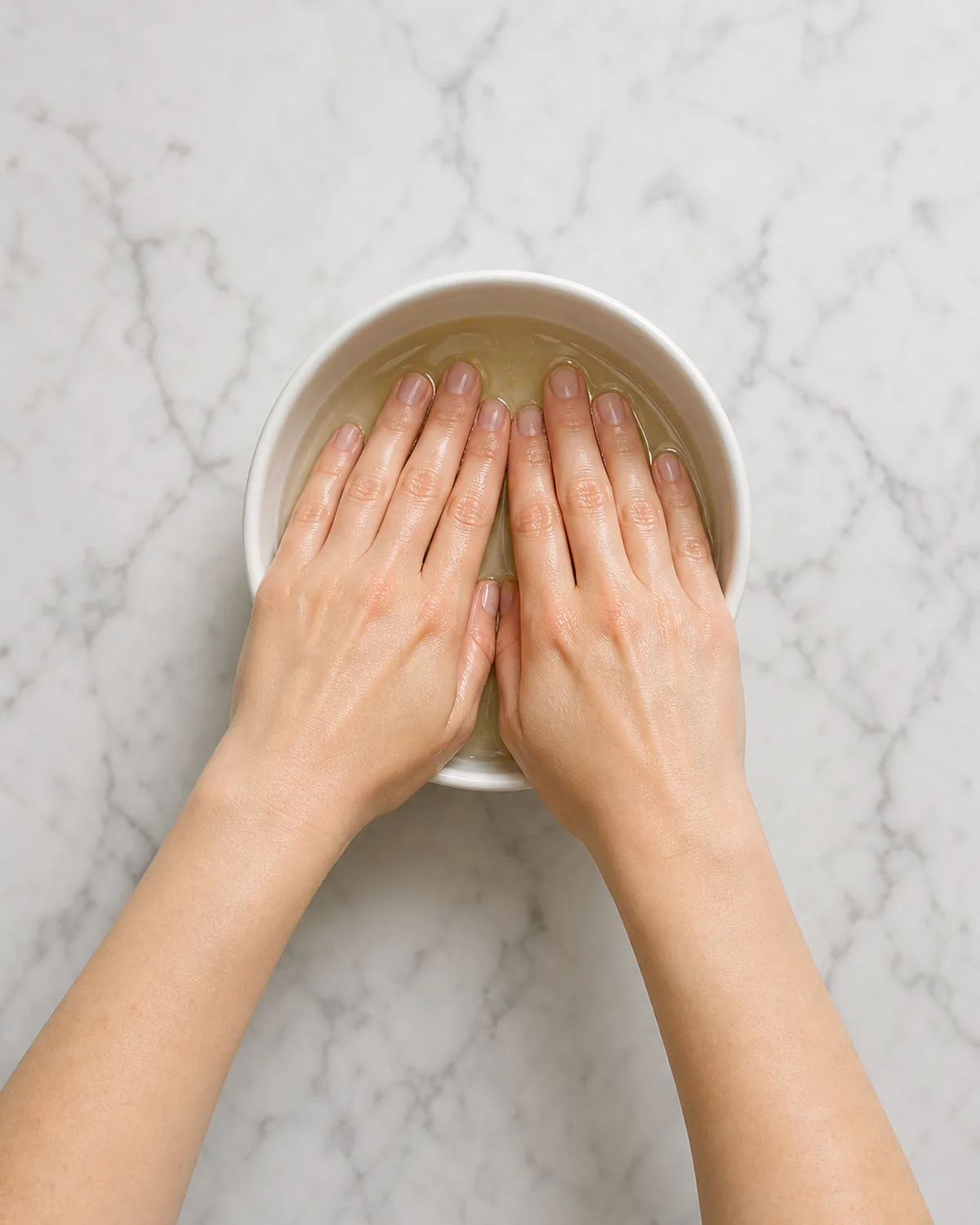
Fill a small bowl with warm water — not hot, just comfortable — and add three or four drops of olive oil or jojoba. Submerge your fingertips and let the warmth soften the cuticle tissue from underneath.
After five minutes, the dead layer lifts away from the nail plate with almost no pressure. Pushing after a soak feels smooth and effortless, while pushing dry feels like scraping.
- Five minutes in warm water loosens the dead cuticle layer completely.
- Add three drops of olive oil or jojoba to the water.
- Warm, not hot — heat dries the skin and defeats the purpose.
- Pushing after a soak feels smooth; pushing dry creates micro-tears.
- The single step that makes the biggest difference in cuticle care.
4. Dry, Cracked Cuticles Are Not a Winter Problem — They Are an Every-Day Problem
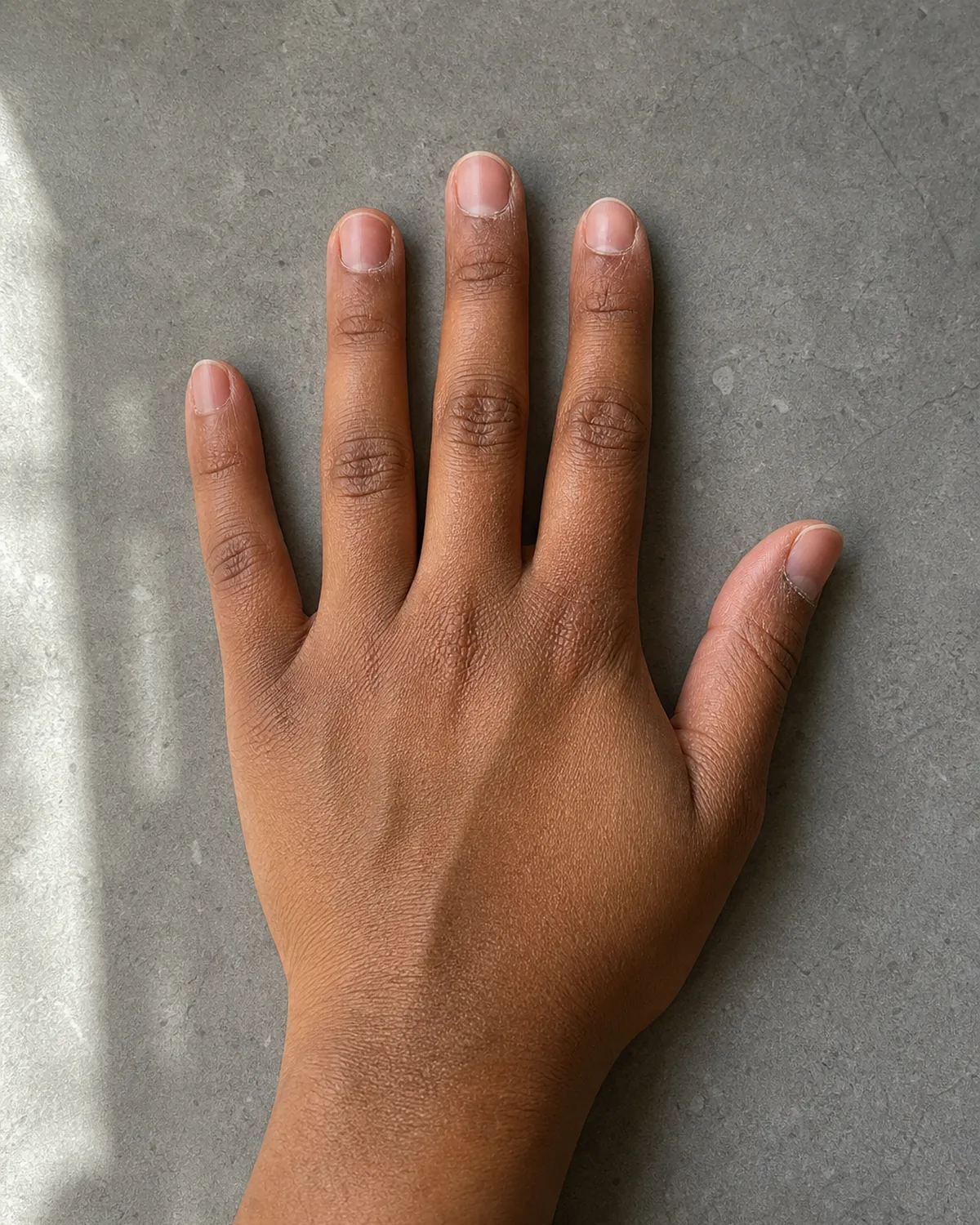
Cold weather gets the blame for dry cuticles, but the real damage comes from hand washing, alcohol-based sanitizer, acetone nail polish remover, and indoor heating — all of which happen year-round. Each hand wash strips a thin layer of natural oil from the cuticle area, and sanitizer evaporates that oil even faster.
The fix is not seasonal. A daily cuticle oil application after every hand wash is more effective than a thick cream applied once before bed. Carry a cuticle oil pen in your bag and use it the same way you would use lip balm — every time the skin feels tight, one swipe across each nail fold. The frequency matters more than the product.
- Hand washing and sanitizer cause more cuticle damage than cold weather.
- Acetone remover strips natural oil from the cuticle in seconds.
- A cuticle oil pen carried in your bag replaces oil after each hand wash.
- Frequency matters more than product quality or thickness.
- Year-round hydration prevents the damage that seasonal repair cannot undo.
5. What a Metal Cuticle Pusher Does That a Wooden Stick Cannot
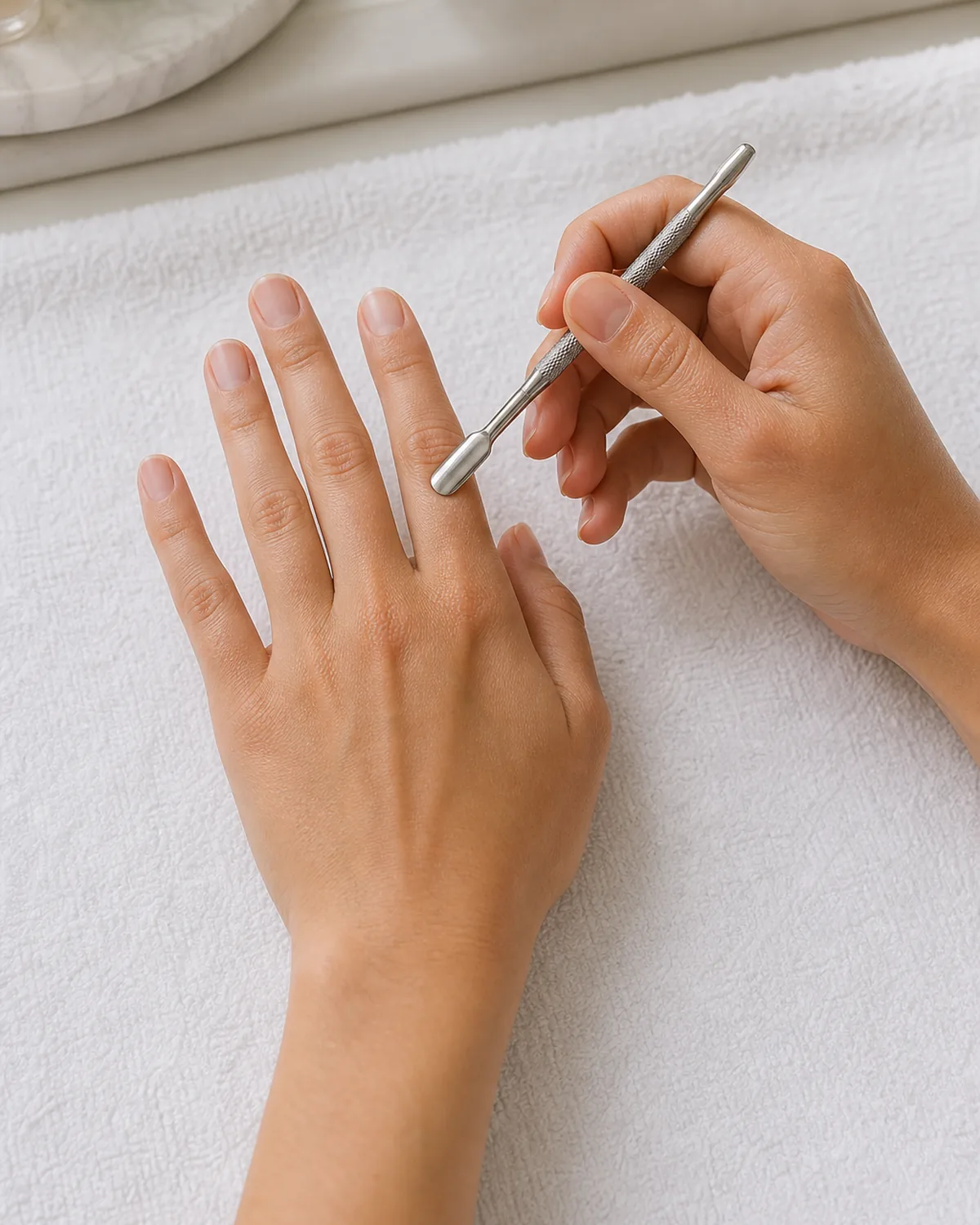
A stainless steel cuticle pusher has a thin, rounded spoon edge that slides under the dead cuticle layer with more precision than a wooden stick can achieve. The metal holds its edge indefinitely, while a wooden stick splinters after two or three uses and loses its effectiveness.
The hygiene advantage matters. Metal can be sanitized with rubbing alcohol between uses; wood absorbs moisture and bacteria and should be thrown away after a single session.
The spoon end provides a wider working surface — you can push the entire cuticle line in one smooth pass. Hold the pusher nearly flat against the nail plate and push toward the cuticle in one firm, steady stroke.
- Stainless steel holds its edge and can be sanitized between uses.
- The spoon end covers the full cuticle line in one pass.
- Wood splinters, absorbs bacteria, and should be single-use.
- Hold the pusher nearly flat against the nail plate.
- One firm, steady stroke — not short, choppy pushes.
6. She Applied Cuticle Oil Before Bed and Her Hangnails Disappeared in a Week
Overnight is when skin repairs itself, and cuticle oil applied before sleep works for eight uninterrupted hours without being washed off by hand washing or diluted by daily activity. The combination of oil and time is more effective than any frequency of daytime application.
Apply one generous drop of jojoba or almond oil to each cuticle, massage it in for ten seconds, and pull on a pair of thin cotton gloves.
The gloves keep the oil on the cuticles and off the sheets. After seven consecutive nights, hangnails stop forming, the cuticle line looks smoother, and the skin around each nail feels soft rather than tight.
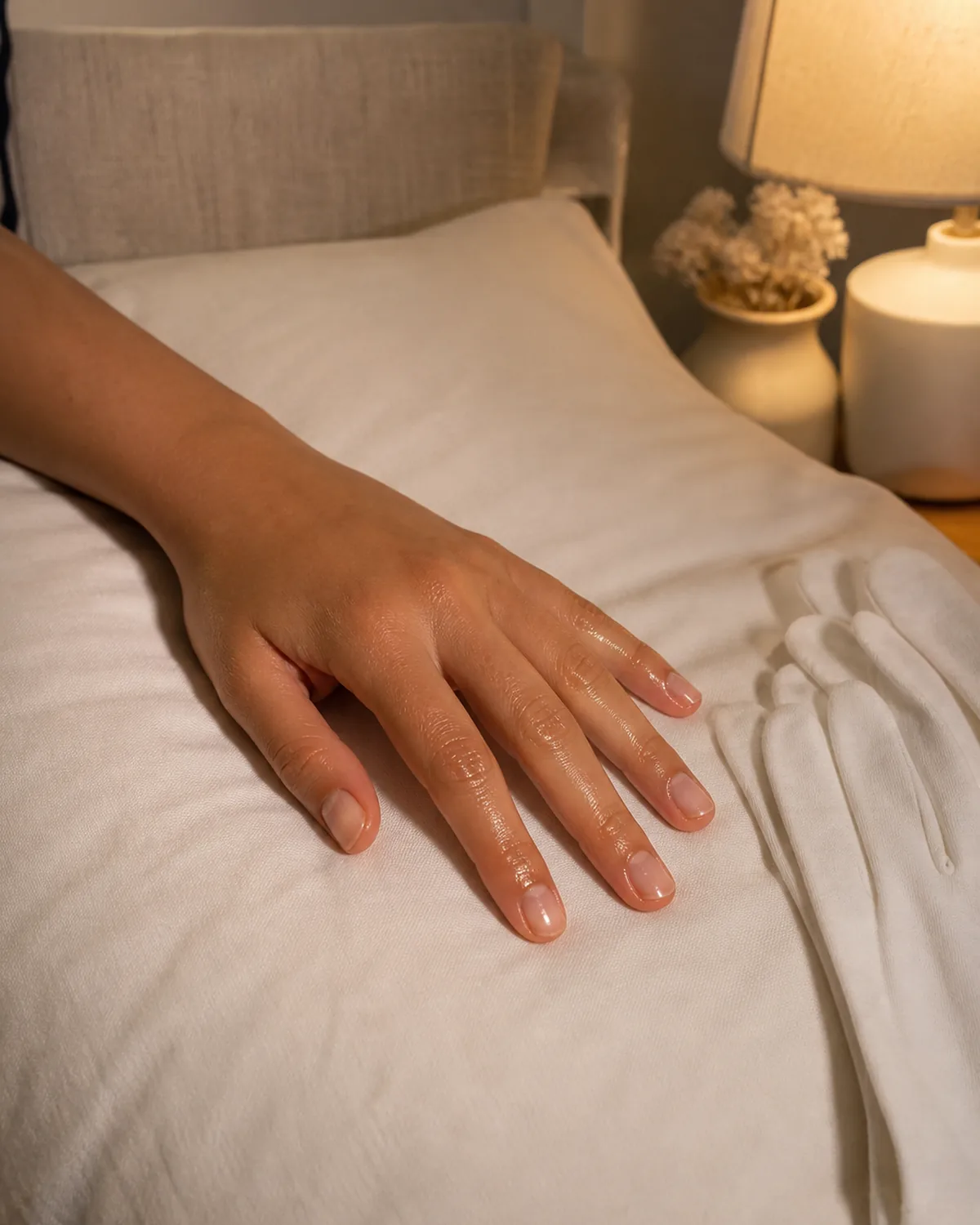
- Overnight oil works for eight hours without being washed off.
- Cotton gloves keep the oil on the cuticles and off the sheets.
- Seven consecutive nights produce visible results.
- Hangnails stop forming when the cuticle stays hydrated overnight.
- More effective than multiple daytime applications combined.
7. Petroleum Jelly as a Cuticle Barrier — the Salon Secret That Costs Almost Nothing
Before applying nail polish, dip a thin brush or cotton swab into petroleum jelly and trace a line around each cuticle. The jelly creates an invisible, waterproof barrier that prevents polish from staining the skin around the nail. Any stray polish that lands on the jelly wipes away cleanly instead of bonding to the skin.
This is a standard technique in professional salons, but it works just as well at home. The barrier also protects the cuticle from the drying effects of acetone remover — if you apply petroleum jelly before removing old polish, the remover dissolves the lacquer without stripping moisture from the surrounding skin. A single jar lasts months and costs less than a single bottle of cuticle cream.
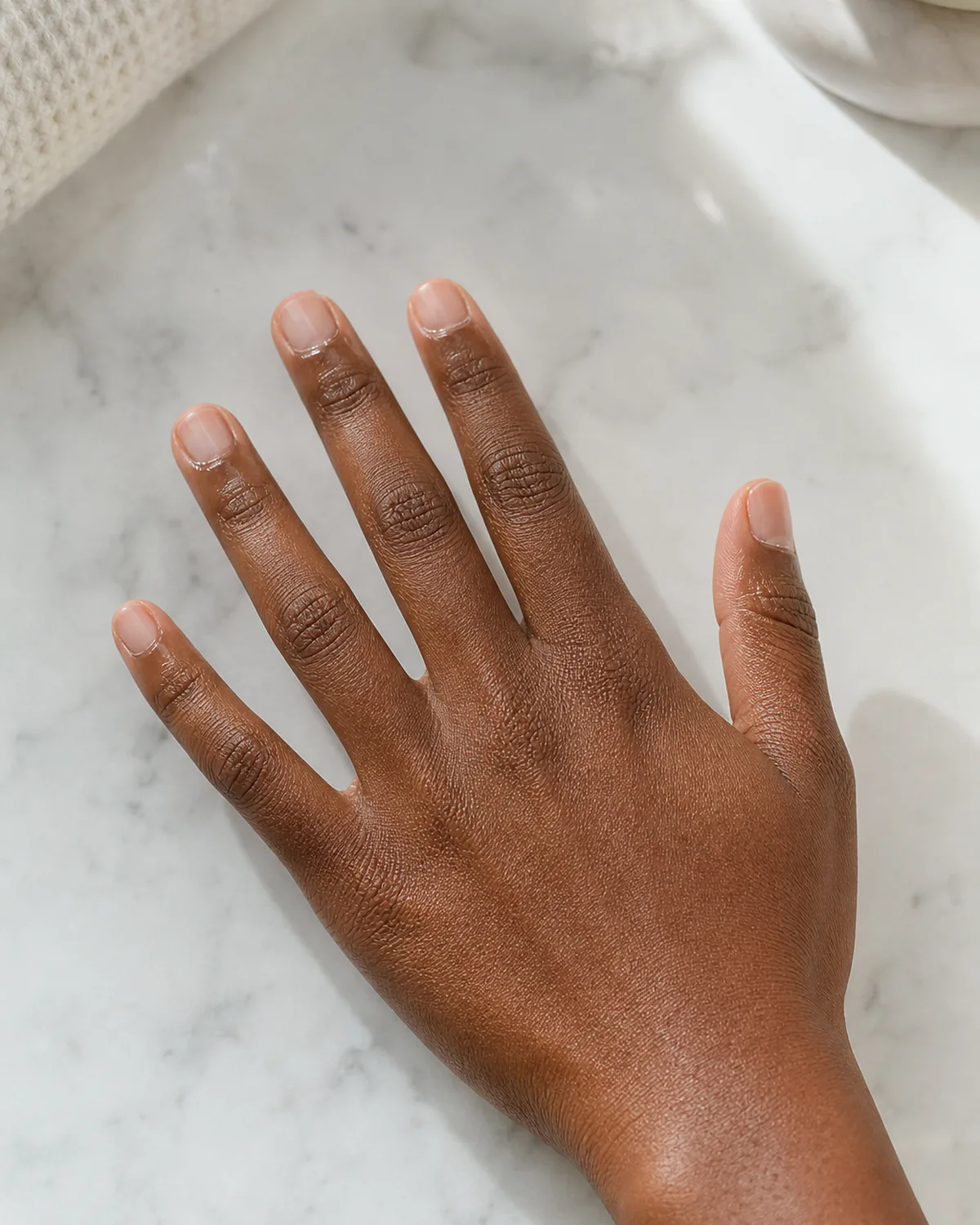
- A thin line of petroleum jelly around each cuticle blocks polish stains.
- Stray polish wipes away instead of bonding to the skin.
- Also protects cuticles from acetone during polish removal.
- Standard salon technique that works identically at home.
- A single jar costs less than one bottle of cuticle cream.
8. How to Tell When a Cuticle Needs Trimming and When It Just Needs Moisture
Not every rough cuticle needs trimming. The difference is visible: dead cuticle skin that needs trimming is opaque, thick, and stands away from the nail plate in stiff flaps. Cuticle skin that only needs moisture is translucent, thin, and lies flat against the nail but feels tight or rough to the touch.
If the skin is translucent and flat, oil it. Two days of consistent jojoba application will soften it completely.
If the skin is opaque, stiff, and lifting away in jagged pieces, trim only the dead portion — the part that has already separated from the nail fold. Use clean nippers at forty-five degrees and cut in one smooth motion. Never pull — pulling tears living tissue and creates a wound that takes days to heal.
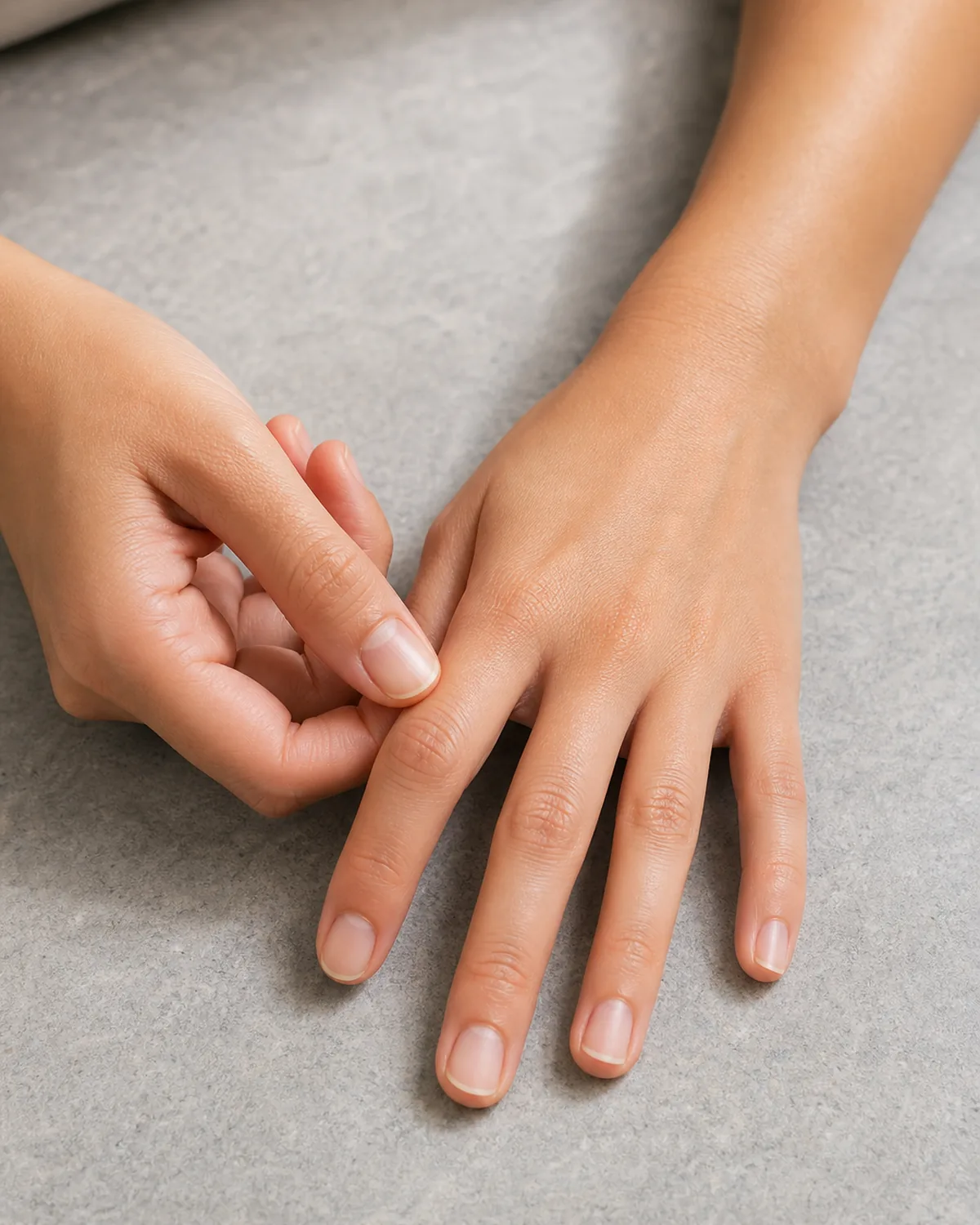
- Opaque, stiff, lifting skin needs trimming. Translucent, flat skin needs oil.
- Only trim the dead portion that has already separated from the fold.
- Use clean nippers at forty-five degrees in one smooth cut.
- Never pull — pulling tears living tissue and creates a wound.
- Two days of oil will fix what looks like a trimming problem.
They solve different problems. Most people need both in rotation.
9. Cuticle Remover Gel vs. Cuticle Oil — They Solve Different Problems
Cuticle remover gel contains alpha-hydroxy or beta-hydroxy acids that dissolve dead tissue chemically in about two minutes. It is a deep-clean tool — you apply it, wait, push, and rinse, and the dead cuticle skin comes away cleanly without mechanical force. Used once or twice a month, it keeps the cuticle line sharp without the risk of cutting.
Daily cuticle oil prevents the buildup that makes remover gel necessary. When the cuticle stays hydrated, dead skin sheds naturally instead of accumulating into thick, opaque layers.
The two products work in rotation: oil every day prevents ninety percent of the buildup, and remover gel once a month handles the rest. Using remover gel daily would strip natural oils and worsen the dryness you are trying to prevent.
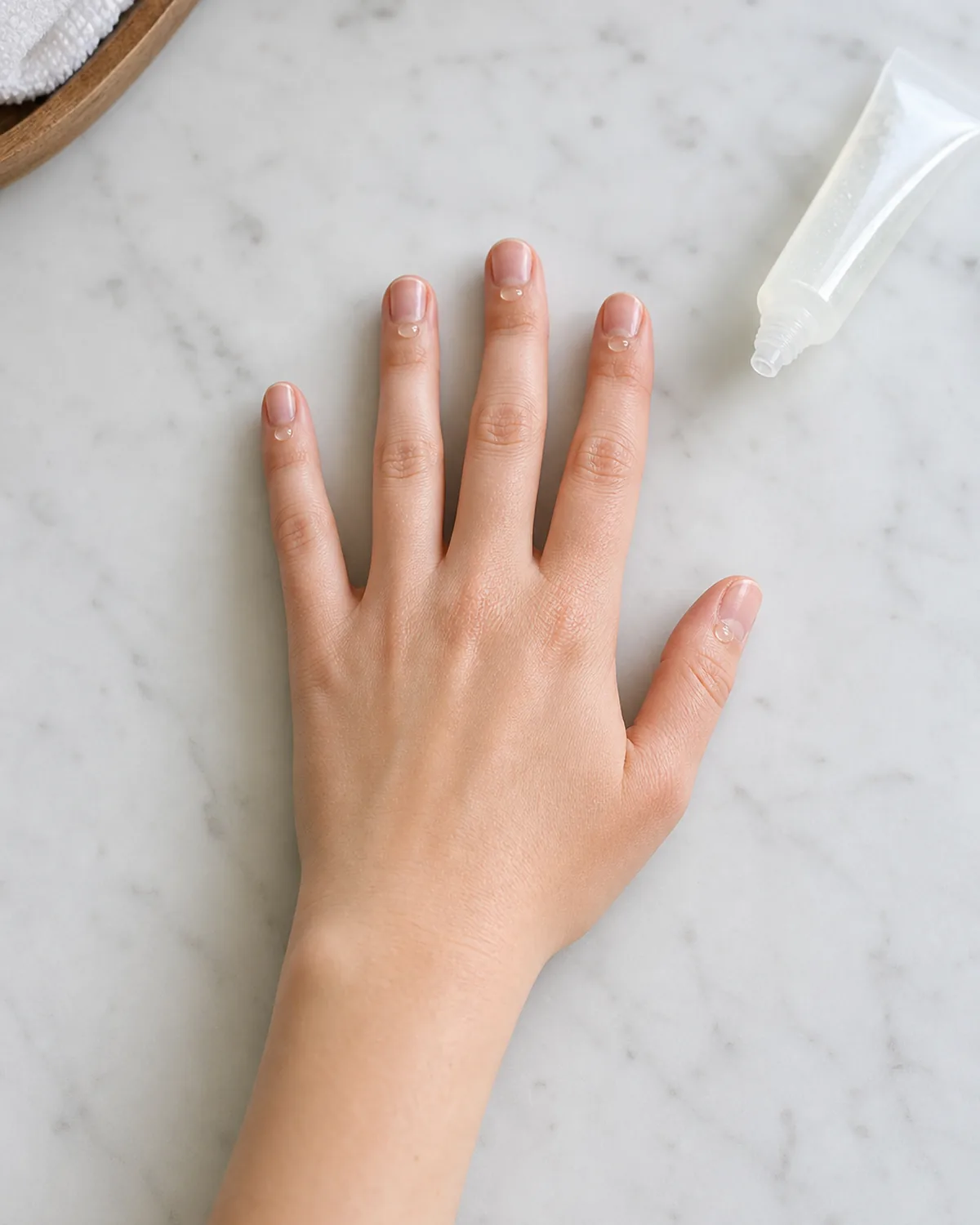
- Remover gel dissolves dead tissue chemically in two minutes.
- Daily oil prevents the buildup that remover gel removes.
- Use remover gel once or twice a month, not more.
- Oil every day, remover gel monthly — both in rotation.
- Daily remover gel would strip natural oils and worsen dryness.
10. Massaging the Nail Matrix Speeds Up Growth More Than Any Supplement
The nail matrix sits beneath the cuticle, just behind the visible nail plate. It is the factory that produces new nail cells, and its output depends partly on blood flow. A thirty-second circular massage at the base of each nail — using the pad of your opposite thumb — increases circulation to the matrix and delivers nutrients faster than they would arrive passively.
No supplement replaces this mechanical stimulation. Biotin, collagen, and keratin capsules can support nail health from the inside, but they depend on blood flow to reach the matrix.
Massage ensures those nutrients actually arrive. The pressure should be firm enough to feel warmth but not so hard that it hurts. Thirty seconds per nail, once a day.
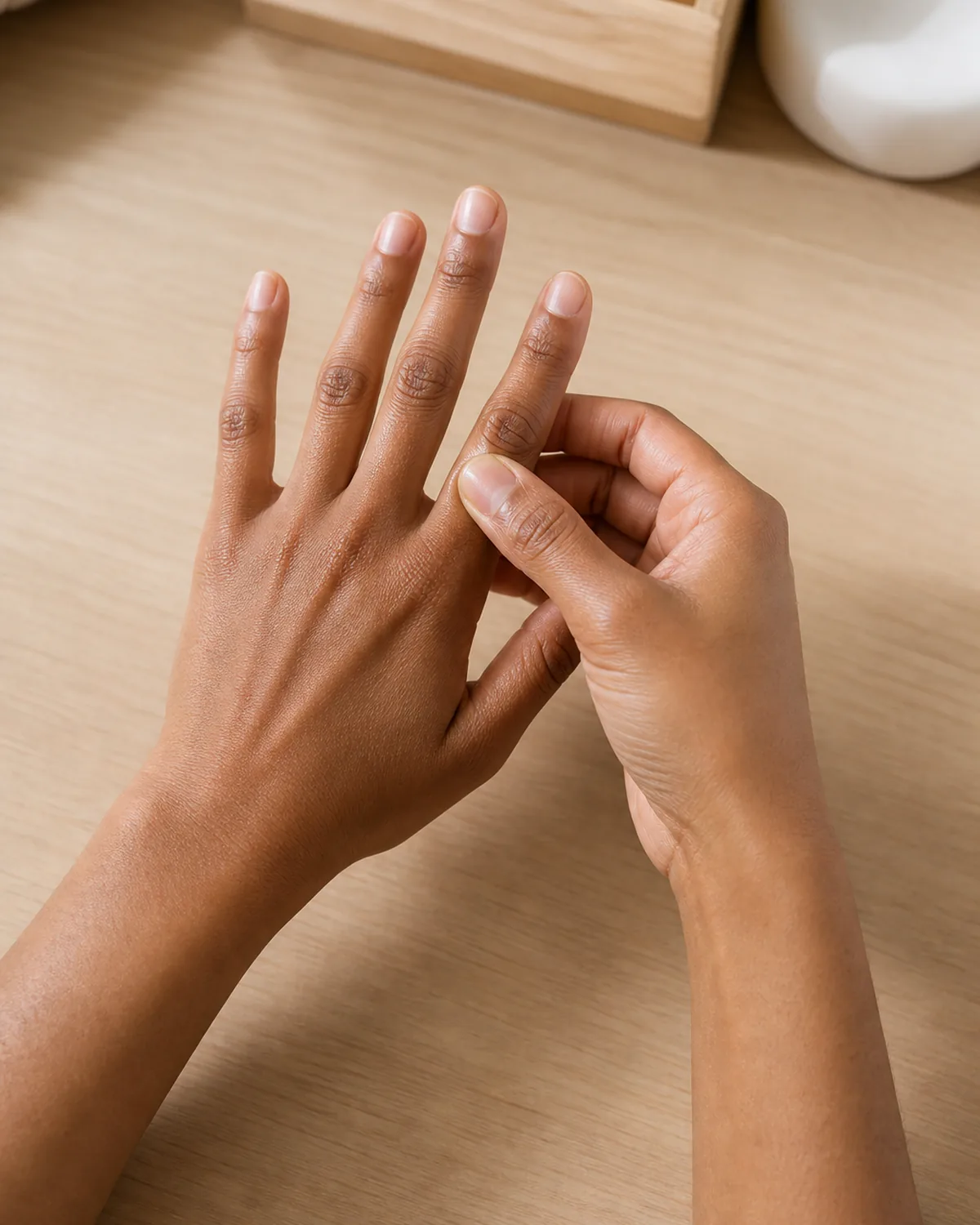
- Thirty-second circular massage at the base of each nail.
- Increases blood flow to the matrix, where new nail cells form.
- Firm enough to feel warmth, not hard enough to hurt.
- No supplement replaces the mechanical boost of direct massage.
- Once a day, every nail, thirty seconds each.
11. A Sugar-and-Olive-Oil Scrub Once a Week Keeps Dead Skin From Building Up
Fine granulated sugar mixed with olive oil and a few drops of fresh lemon juice creates a gentle exfoliant that removes dead skin around the cuticle without the chemical intensity of a remover gel. The sugar provides physical abrasion, the olive oil moisturizes as you scrub, and the lemon juice contains natural citric acid that loosens dead cells.
Work the mixture around each cuticle in small circles with your fingertip for about fifteen seconds per nail. Rinse with warm water and apply cuticle oil immediately — the freshly exfoliated skin absorbs oil more efficiently than skin with a dead layer on top. Once a week is enough. More frequent scrubbing can irritate the delicate skin around the nail fold.
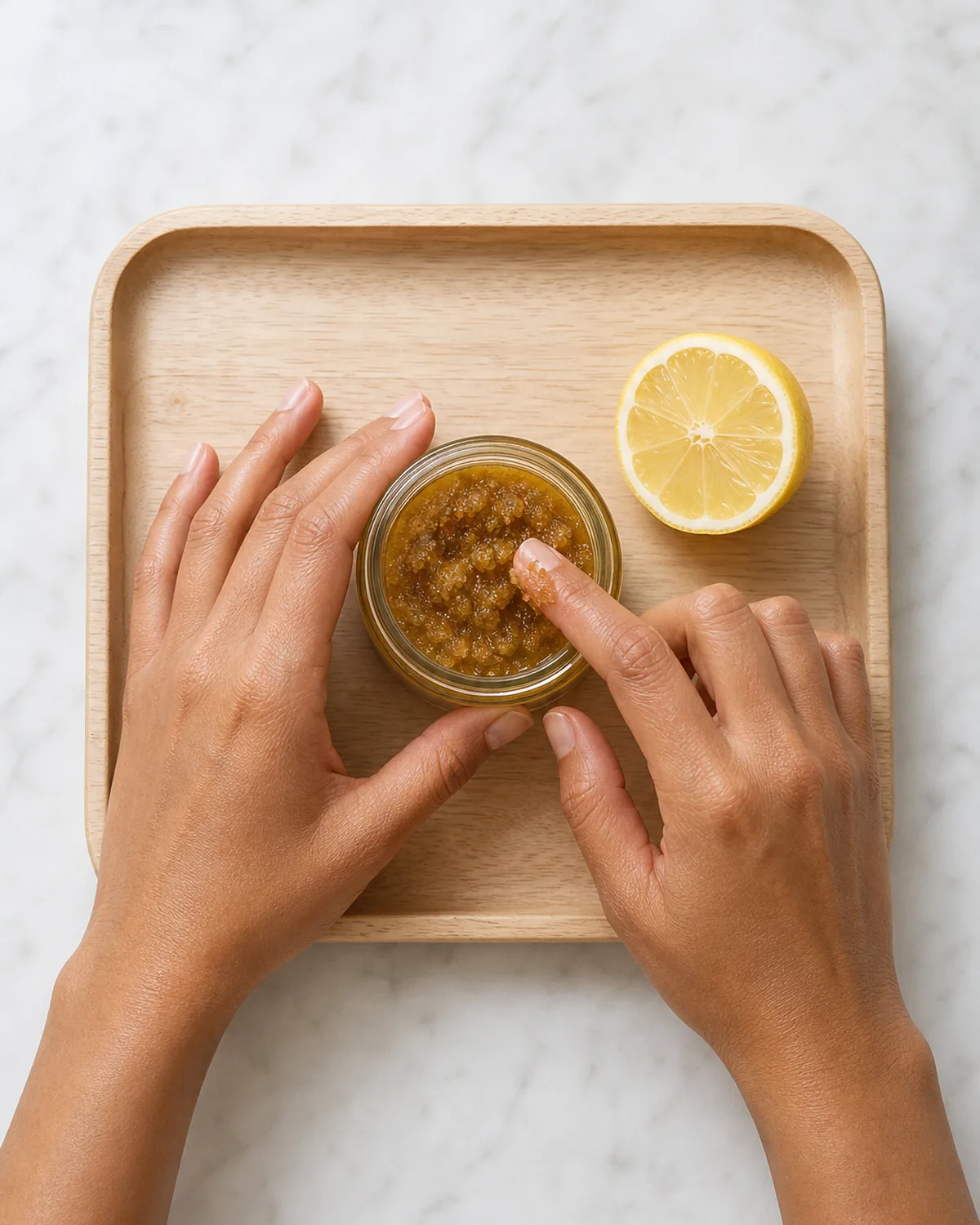
- Fine sugar, olive oil, and a few drops of lemon juice.
- Small circles around each cuticle for fifteen seconds per nail.
- Rinse, then apply oil immediately to freshly exfoliated skin.
- Once a week — more frequent scrubbing irritates delicate skin.
- Gentler than chemical remover gel with similar exfoliation results.
15 Cuticle Care Habits to Keep
- 1Push, never cutThe nail fold is a living seal against bacteria — cutting it opens the door.
- 2Jojoba firstThe wax ester closest to human sebum, absorbed faster than any cream.
- 3Soak before pushingTwo warm minutes turn tearing into gliding.
- 4Daily damage, not winter damageWashing, sanitizer, and acetone dry cuticles year-round.
- 5Metal pusher precisionA steel spoon edge slides under dead tissue a wooden stick cannot reach.
- 6Oil before bedEight uninterrupted hours of repair while you sleep.
- 7Petroleum jelly barrierA traced line of jelly keeps polish off the skin for pennies.
- 8Trim or moisturize?Stiff opaque flags need trimming — everything else just needs oil.
- 9Remover gel vs oilAcids dissolve dead tissue in minutes; oil maintains what remains.
- 10Massage the matrixBlood flow to the nail factory beats any supplement.
- 11Weekly sugar scrubSugar, olive oil, and lemon keep dead skin from building up.
- 12Replace the habitA cuticle oil pen doubles as the fidget that ends the picking.
- 13Post-gel recoveryAcetone strips everything — rehydrate hard after every removal.
- 14Match the oilVitamin E for cracks, argan for daily wear, almond for maintenance.
- 15The two-minute routineTwice a day, every day — the habit that makes the rest optional.
styvea.com
12. Stop Biting, Picking, and Peeling — What Actually Helps You Quit
The urge to pick at cuticles is a habit, and habits respond to replacement better than willpower. A cuticle oil pen doubles as a fidget tool — the act of clicking the pen and applying oil gives your hands something to do without causing damage. Carry one in your pocket or bag and use it every time you feel the urge to pick.
Bitter nail polish applied to the cuticle area creates a taste deterrent that interrupts the biting reflex. It is not a permanent solution, but it buys time for the replacement habit to form.
The real damage from picking is not cosmetic — it is medical. Torn cuticles invite bacterial and fungal infection, and repeated damage to the nail fold can cause permanent ridges in the nail plate.
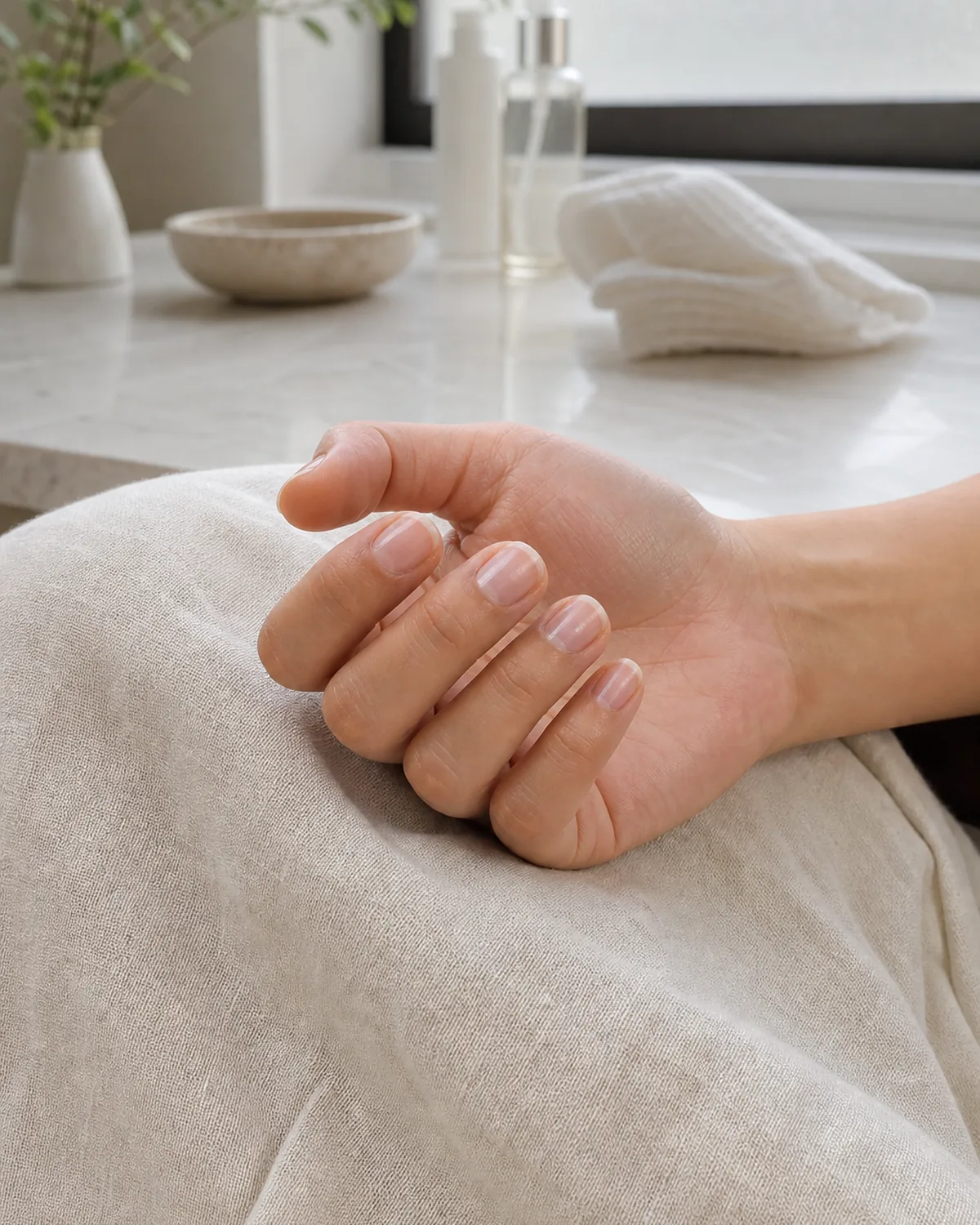
- Replace the picking habit with a cuticle oil pen.
- Bitter nail polish interrupts the biting reflex as a short-term bridge.
- Torn cuticles invite bacterial and fungal infection.
- Repeated damage causes permanent nail ridges.
- The oil pen gives your hands something to do without causing harm.
13. Why Your Cuticles Look Different After Gel Removal and How to Fix It
After weeks under a gel set, cuticles often look dry, overgrown, and rough. The acetone soak required for gel removal strips moisture from the cuticle skin, and the weeks of no maintenance during the gel wear allow dead tissue to accumulate unchecked.
The recovery plan takes about two weeks. Start with a warm water soak and gentle push to remove the accumulated dead tissue. Apply cuticle oil twice daily and use the overnight cotton glove method for the first week.
Avoid re-gelling for at least fourteen days to let the cuticle skin rehydrate and rebuild its moisture barrier. By the end of the second week, the cuticles should look and feel the way they did before the gel set.
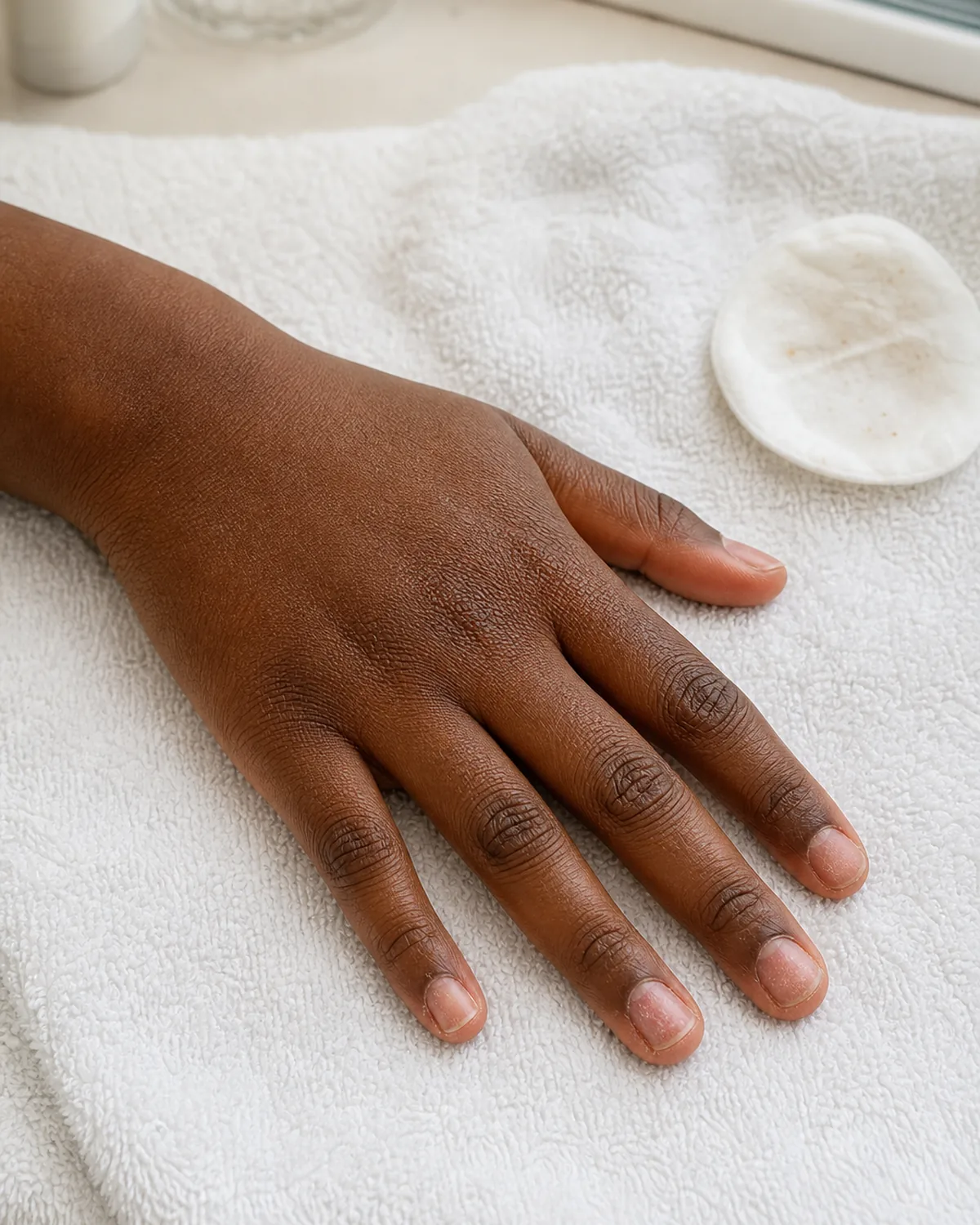
- Acetone soak strips cuticle moisture during gel removal.
- Weeks under gel allow dead tissue to build up unnoticed.
- Warm soak, gentle push, and twice-daily oil for two weeks.
- Avoid re-gelling for fourteen days to let the moisture barrier rebuild.
- Cotton gloves overnight for the first recovery week.
14. Vitamin E, Argan, Almond — Which Oil Matches Your Cuticle Type
Different oils suit different cuticle conditions. Vitamin E oil is the heaviest option — thick, slow to absorb, and best for deep cracks and actively healing skin. It creates a protective barrier that seals moisture in while the skin repairs underneath.
Argan oil is the everyday workhorse — absorbs faster than vitamin E, moisturizes without heaviness. Almond oil is the gentlest choice — lightweight, hypoallergenic, and suitable for sensitive skin.
For cuticles prone to fungal issues, add a single drop of tea tree oil to any of the above. Layer jojoba under any of them — its sebum-mimicking structure carries the heavier oil deeper. See also: chrome nails for a finish-focused contrast.
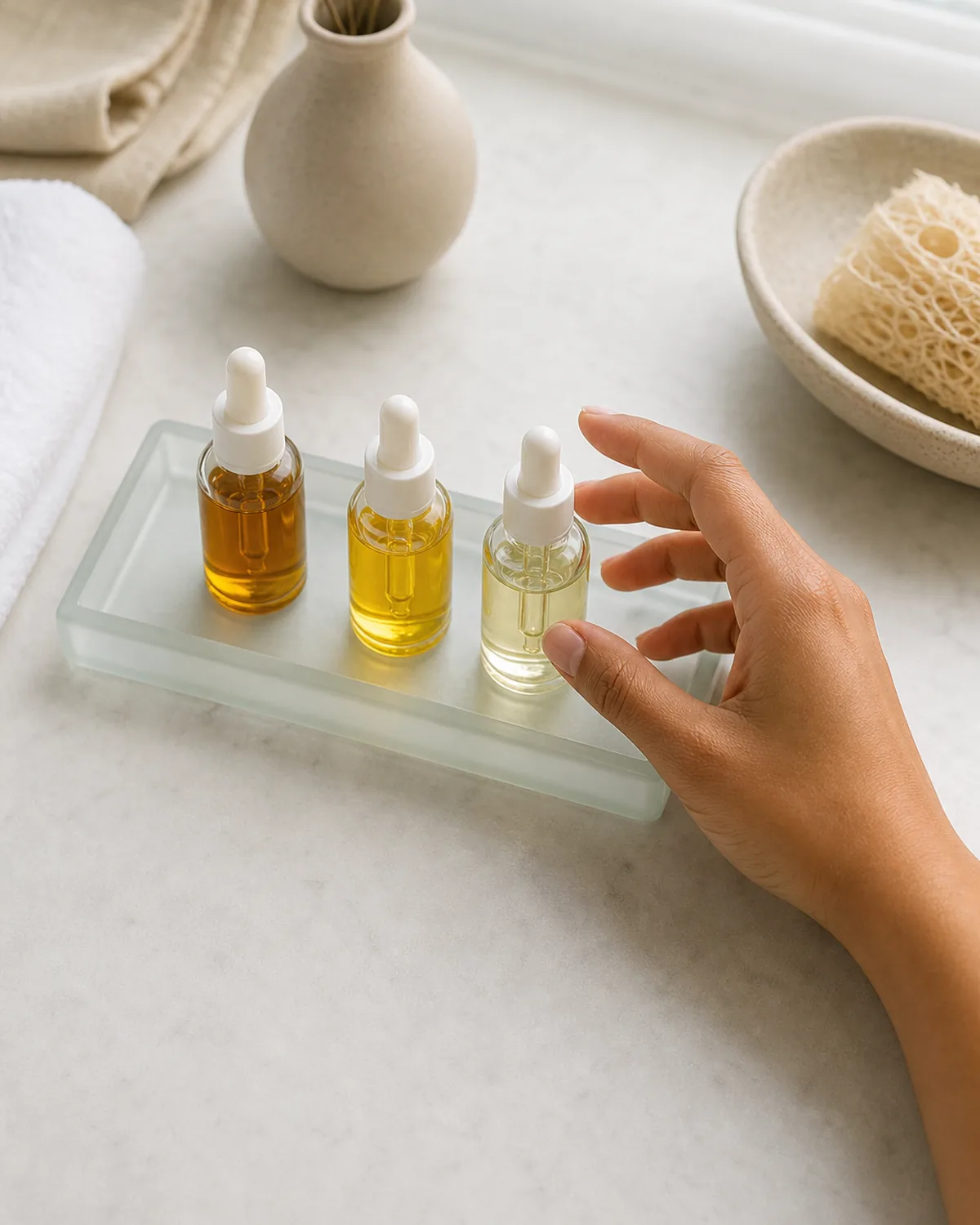
- Vitamin E: heavy, slow-absorbing, best for deep cracks and healing.
- Argan: everyday hydration, absorbs without heaviness.
- Almond: lightweight and hypoallergenic for sensitive skin.
- Tea tree: one drop added to any oil for fungal-prone cuticles.
- Layer jojoba underneath to carry heavier oils deeper into the skin.

Sloane Avery edits Styvea, where she shares nail design ideas, shapes, colors, and at-home manicure how-tos for anyone who loves a good manicure. Every guide is reviewed for clarity, usefulness, image accuracy, and Pinterest-to-page alignment before publication. Visit the About page.
15. The Two-Minute Daily Routine Sloane Does Between Every Set
This is the routine that makes everything else in this article optional. Two minutes, twice a day: once after a morning shower and once before bed.
First, push. After the shower, the dead cuticle layer is already soft. One pass with an orange-wood stick along each nail fold — ten nails in about forty seconds. Second, oil. One drop of jojoba on each cuticle, massaged in with the thumb pad — another forty seconds. Third, massage. Firm circular pressure at the base of each nail for three seconds each — thirty seconds total. Done.
The habit compounds. After a week, cuticles stay soft without needing a soak. After a month, hangnails stop forming entirely.
After three months, the nail surface grows out smoother because the matrix has been getting consistent blood flow. Every manicure lasts longer because the cuticle line stays clean between appointments. See also: nude nails.
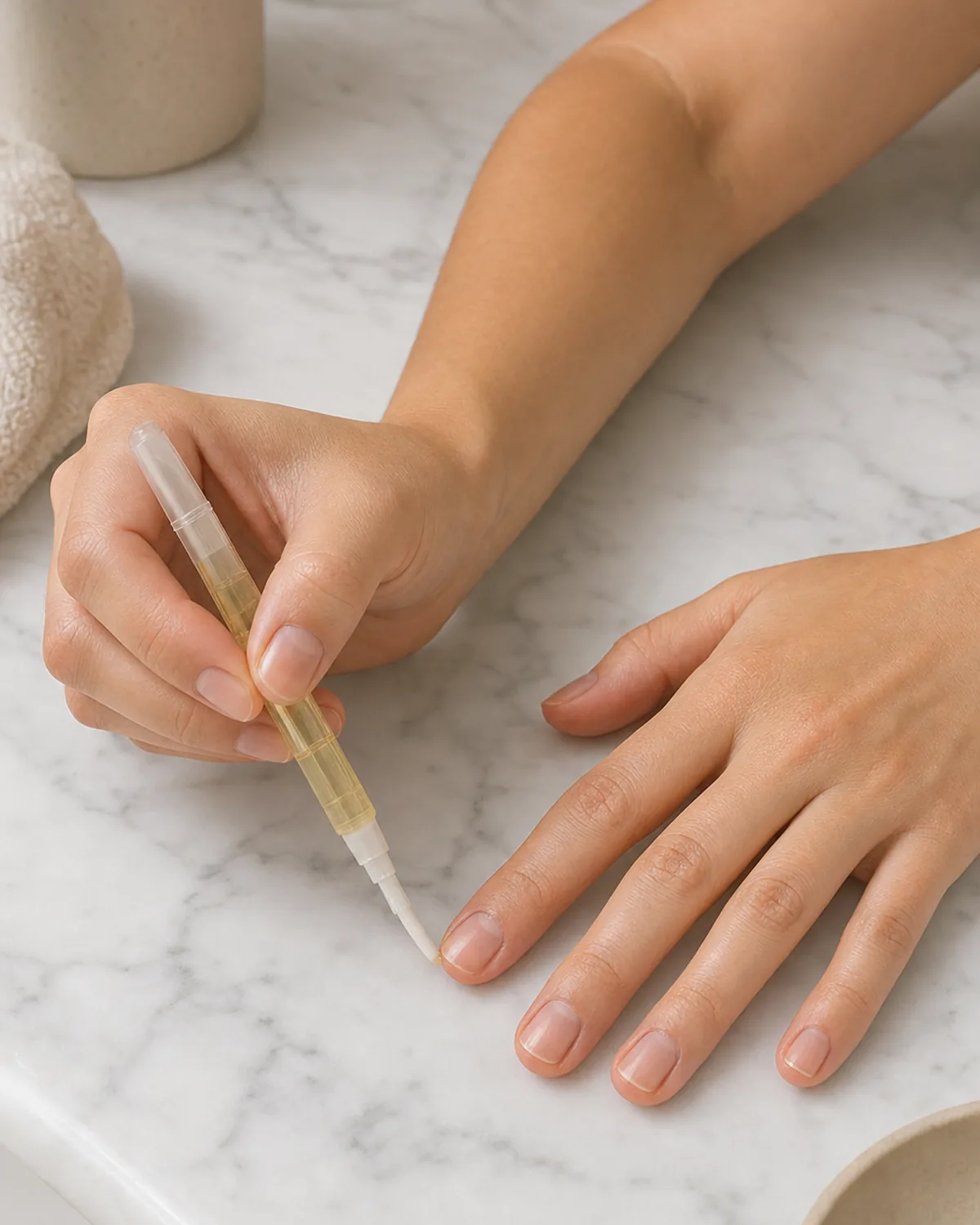
- Push after shower, oil, massage — two minutes total.
- Morning after shower and evening before bed.
- After one week, cuticles stay soft without soaking.
- After one month, hangnails stop forming.
- The habit that makes every manicure last longer.
Quick answers for the most common cuticle care questions.