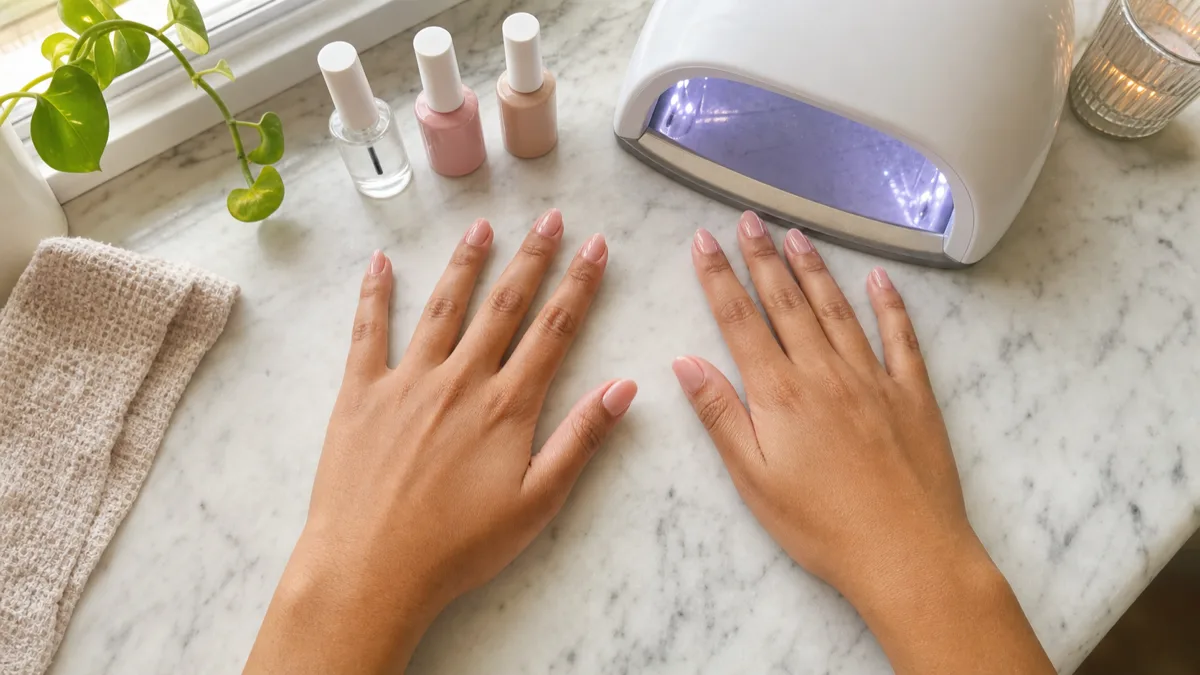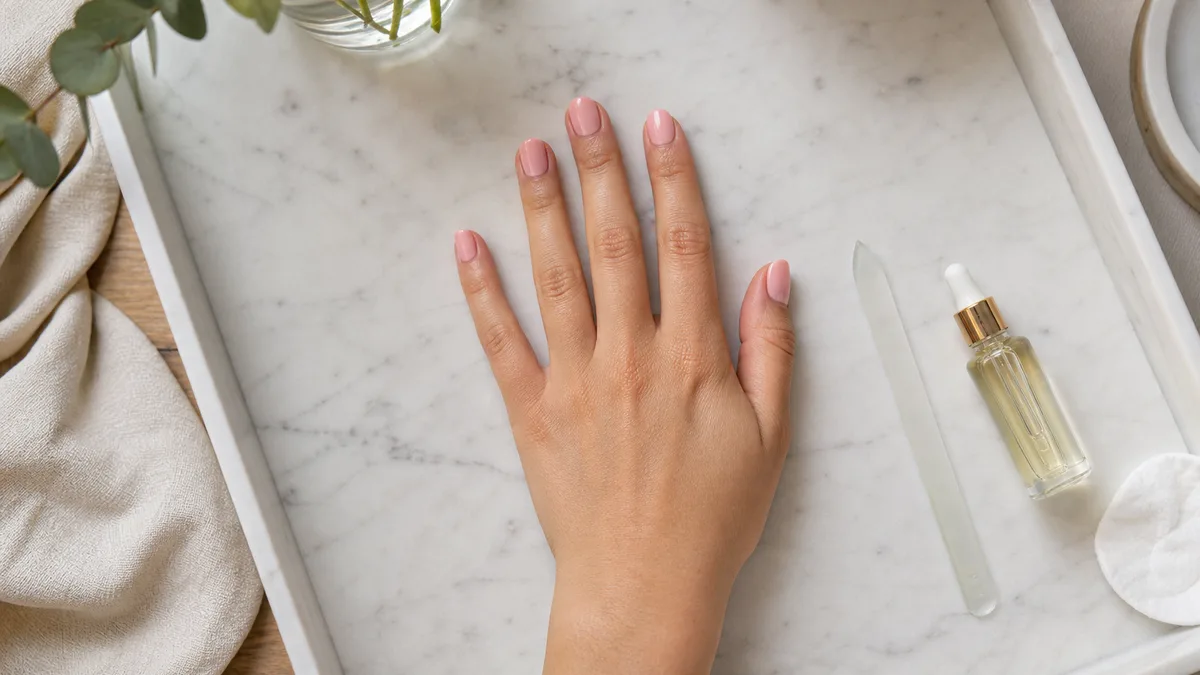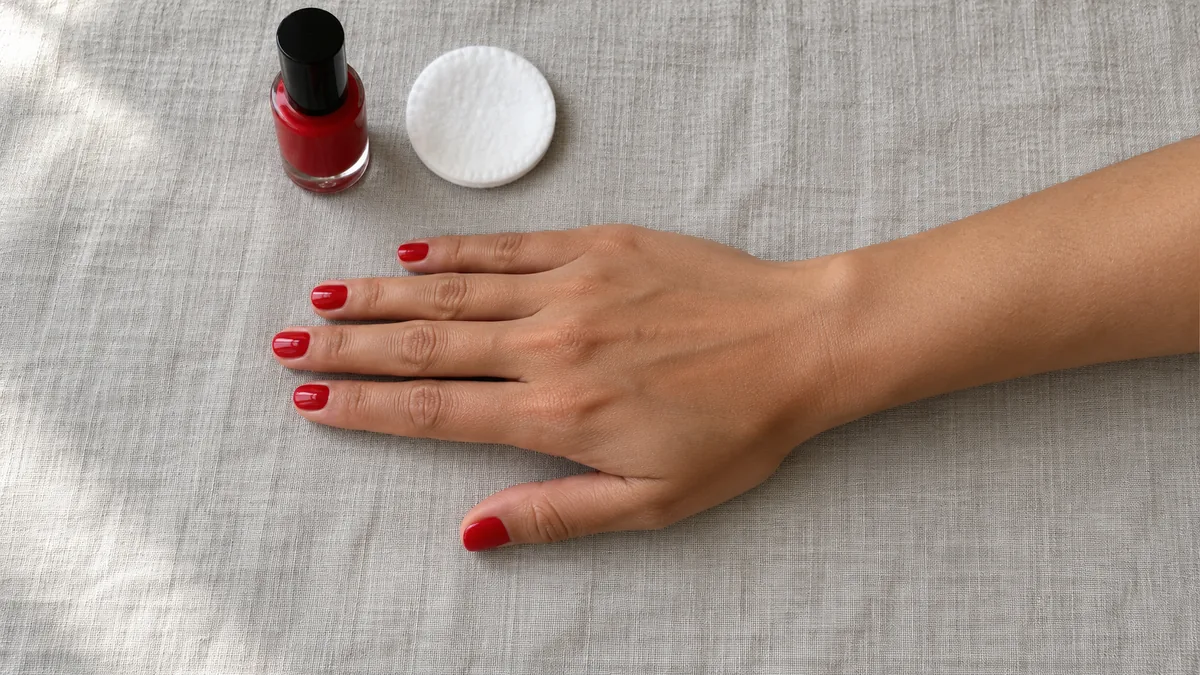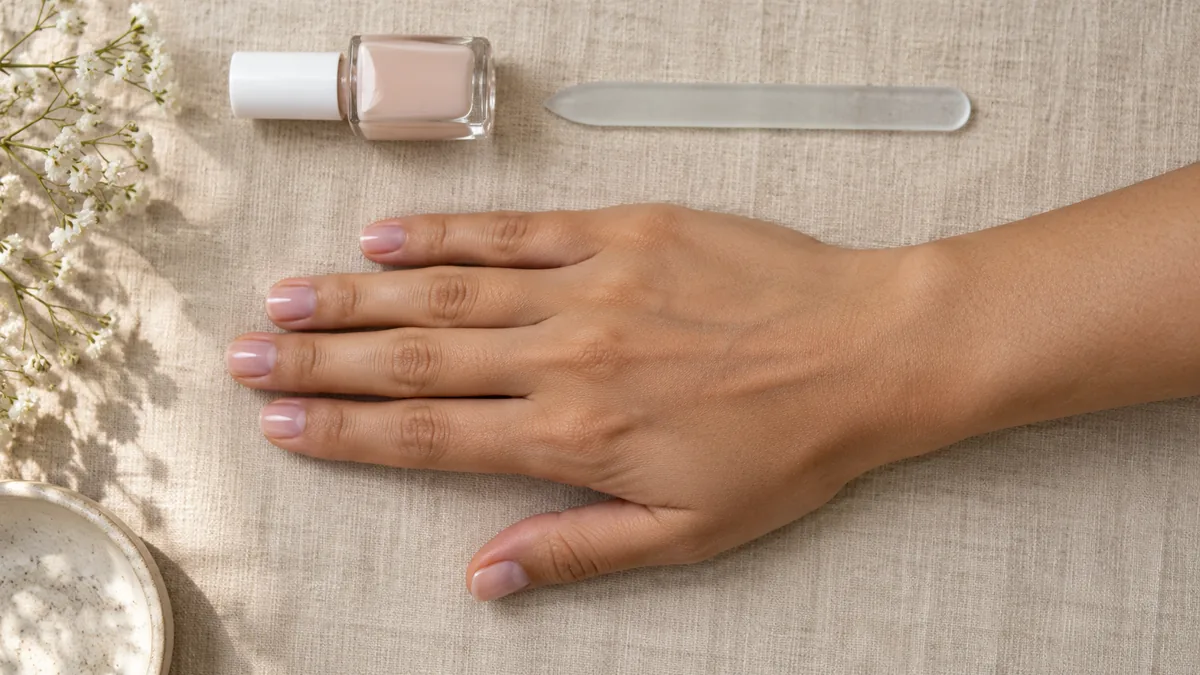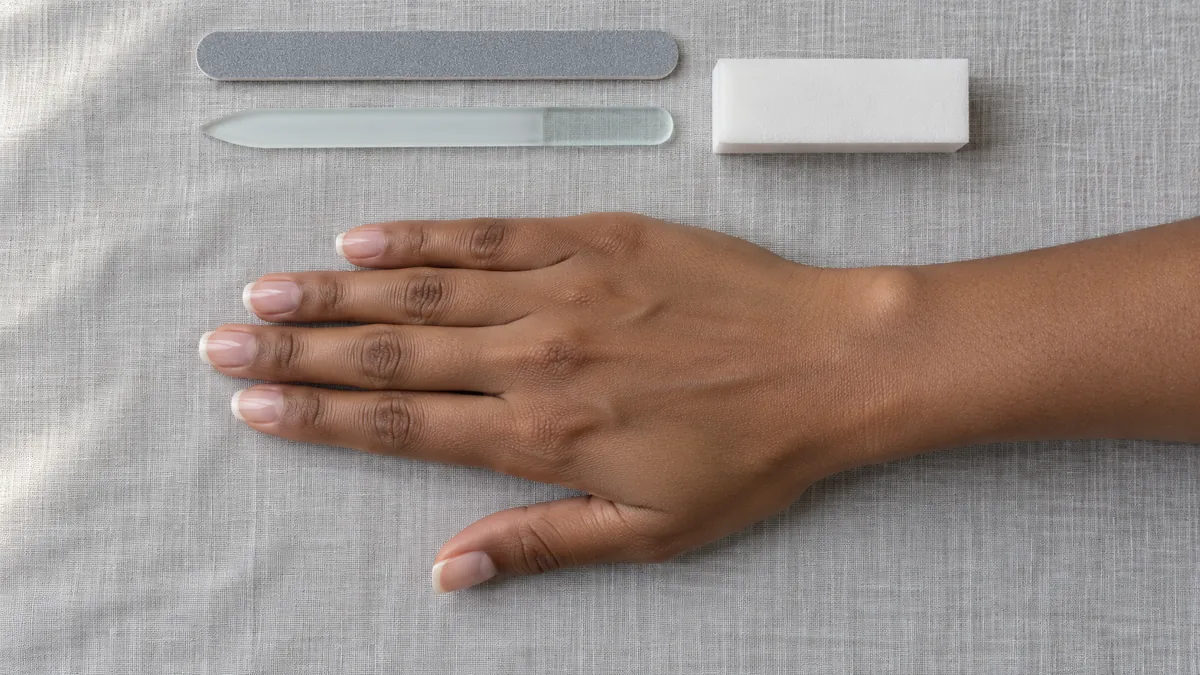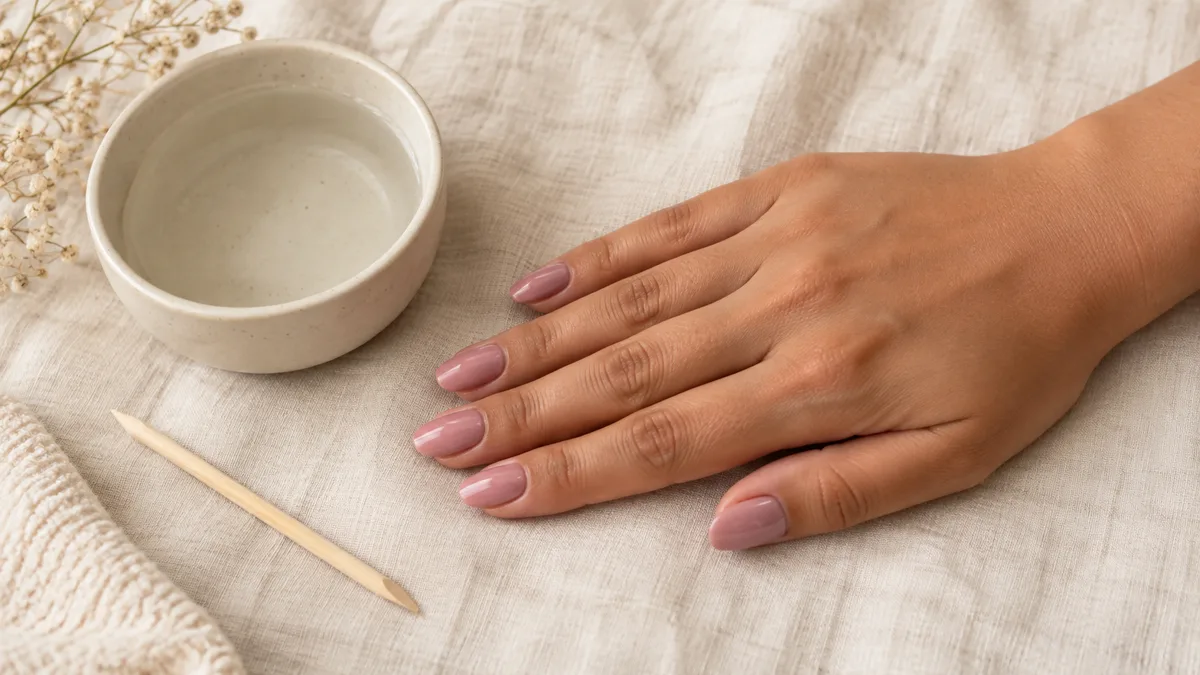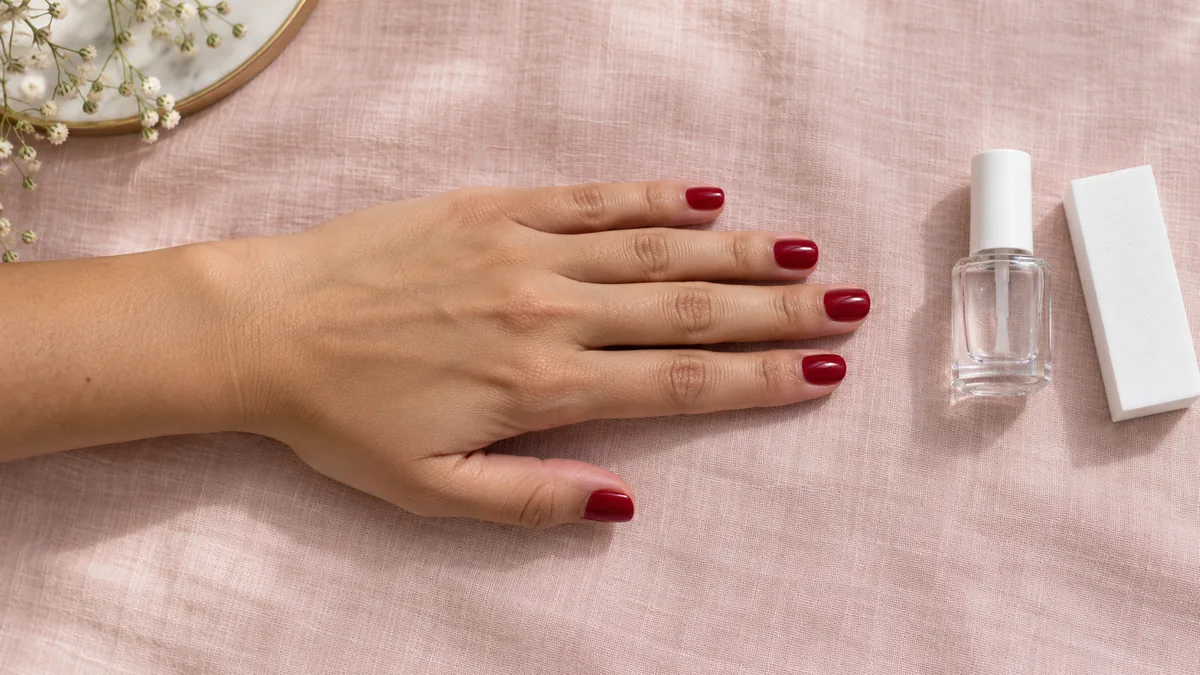
A regular manicure should look fresh for close to a week. If yours chips by day three, the polish is rarely the problem. Most early chips start before the first coat, or in the first few hours after the last.
This guide covers what happens around the brush: prep, base coat, aftercare, and patching chips. For the brush technique itself, see the how to apply nail polish guide.
How to Make Nail Polish Last Longer
Start with why polish chips, then work through prep, painting, and aftercare in the order you will use them.
Start here if…
Look at your nails on day three. How the polish failed tells you which step to fix first.
Why Polish Chips in the First Place
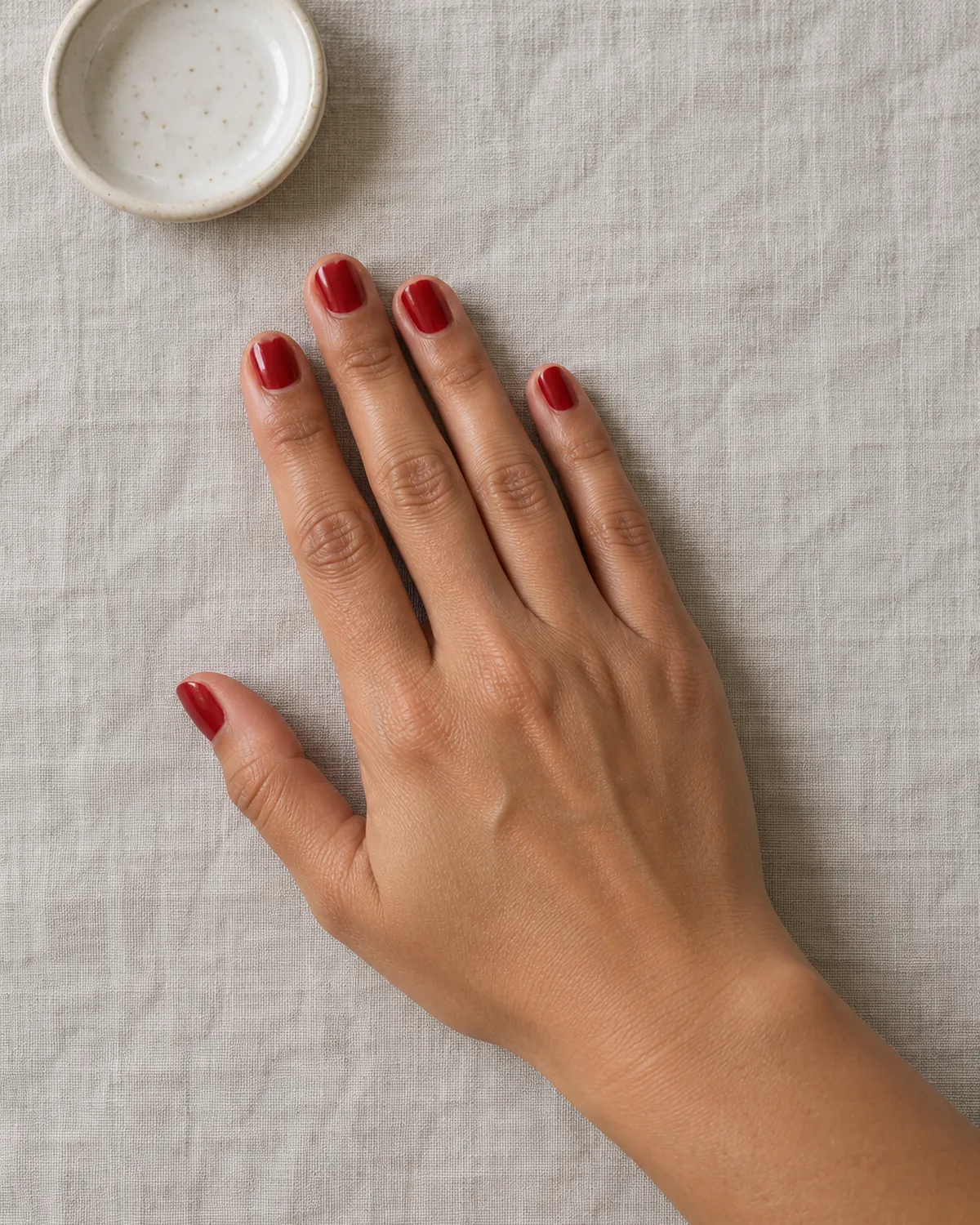
Polish is a thin, fairly stiff film sitting on a nail that bends, absorbs water, and takes knocks all day. A chip is where those two things stop agreeing with each other.
Once you know which failure you are looking at, you know where to fix it. Check a nail that chipped and compare it with this table.
| What you see | Likely cause | Fix |
|---|---|---|
| Tips worn white | Unsealed free edge | Wrap the tips |
| Lifting at the cuticle | Oil left on the nail | Buff and wipe |
| Peels off in one sheet | Water under the polish | Paint on dry nails |
| Cracks across the nail | Thin, bendy nails | Right base coat |
| Morning dents | Thick, soft coats | Thin coats, early night |
Most people have one main failure, not all five. Fix that step first and you will usually gain two or three days of wear before anything else matters.
Paint on Dry Nails, Not Right After a Soak
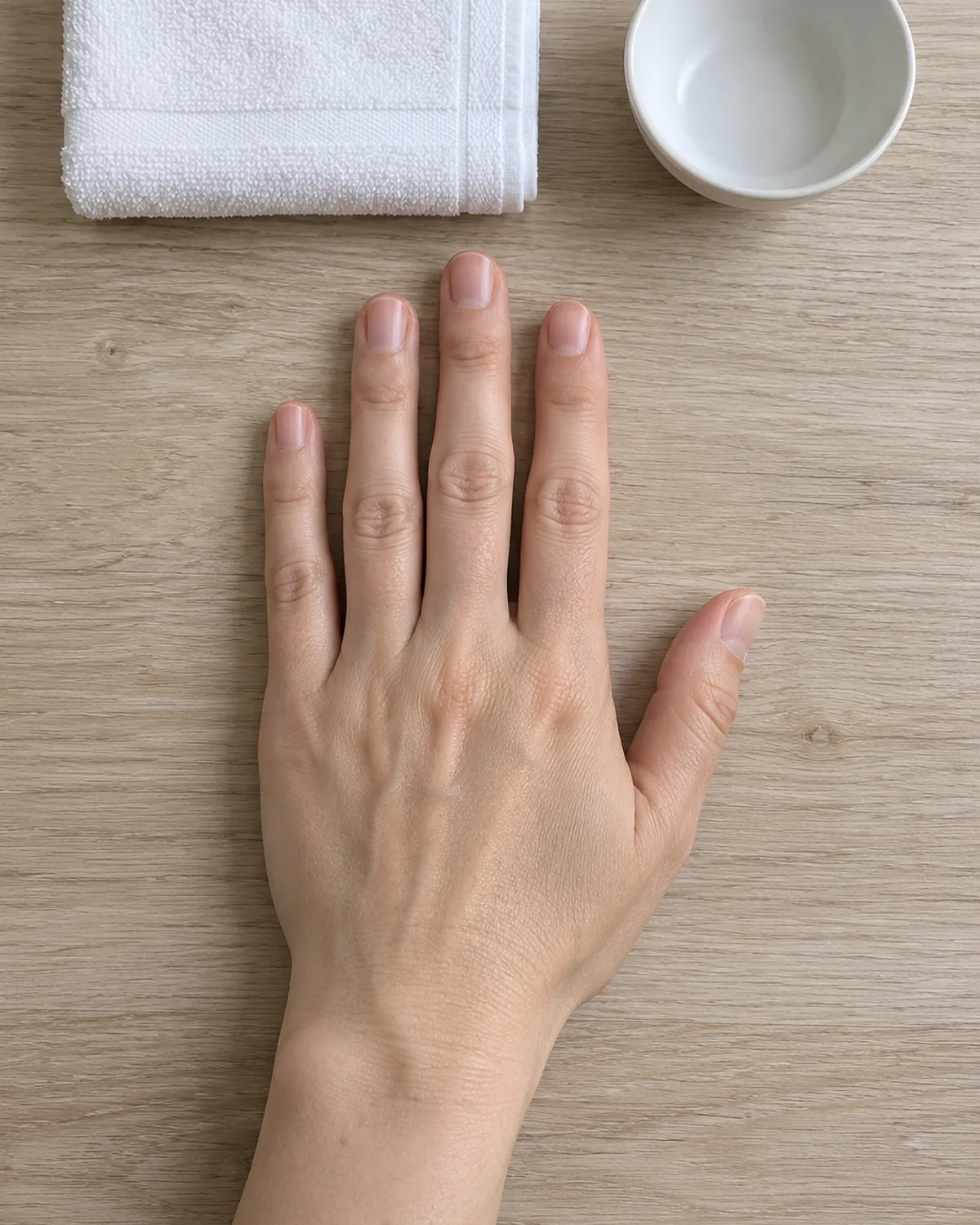
Nails absorb water. After a long shower, a bath, or a round of dishes, the nail plate swells slightly. Paint it then, and the nail shrinks back as it dries over the next few hours while the polish on top does not. That mismatch puts stress on the film and is a common reason polish lifts in a sheet.
It is also why soaking your fingers before a manicure, the classic salon step, works against long wear. Softening cuticles is useful. Painting over a swollen nail is not.
Time your manicure around water:
- Wait at least an hour after a shower, bath, or washing up before painting
- Do any soaking or cuticle work the day before, not right before polish
- Paint in the evening after the day's chores, not before them
- Dry your hands completely and keep lotion off until you are done
If you do want to push back cuticles first, use a cuticle remover gel on dry nails instead of a soak. The cuticle care guide covers how.
Buff Off the Shine, Then Dehydrate the Plate
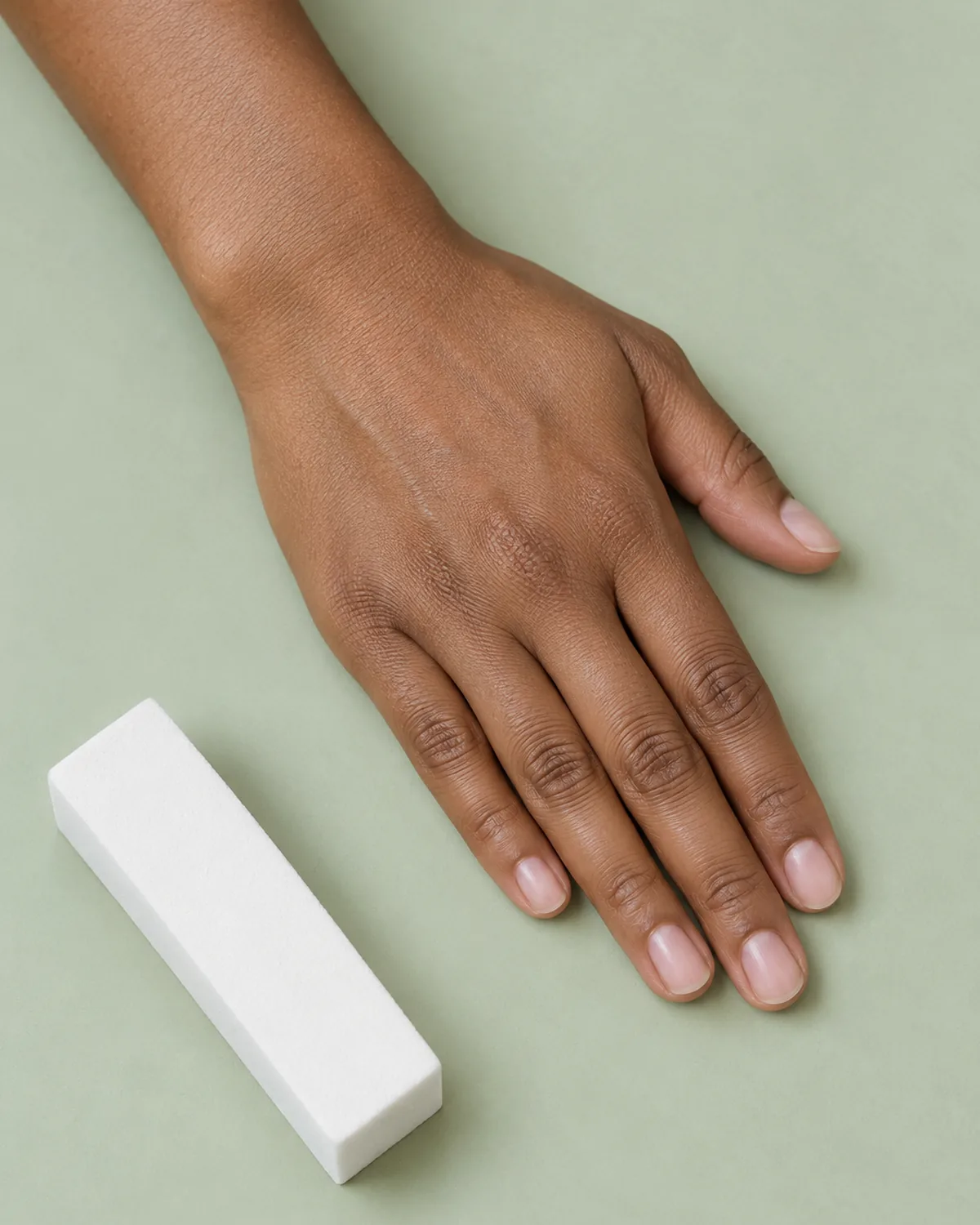
A naturally glossy nail is smooth enough that polish has little to hold on to. A very light buff gives it a faint texture to grip, the same idea as sanding a surface lightly before you paint a wall.
The key word is light. You are taking off the shine, not thinning the nail. Use a fine buffer (240 grit or finer) and sweep it once or twice across each nail in one direction.
Prep in this order:
- Shape the nails with a file (see the how to file nails guide)
- Buff each nail lightly until the shine is gone
- Brush away the dust
- Wipe each nail with rubbing alcohol or nail polish remover
- Do not touch the nails again until the base coat goes on
That final wipe removes the natural oils on the nail plate, along with any hand cream left from earlier. If polish keeps lifting from the cuticle on you, this wipe is the step to take more seriously, especially along the sides and close to the skin.
Every section of this guide comes back to one of these. When a manicure chips early, one of them was skipped.
Match the Base Coat to Your Nail Type
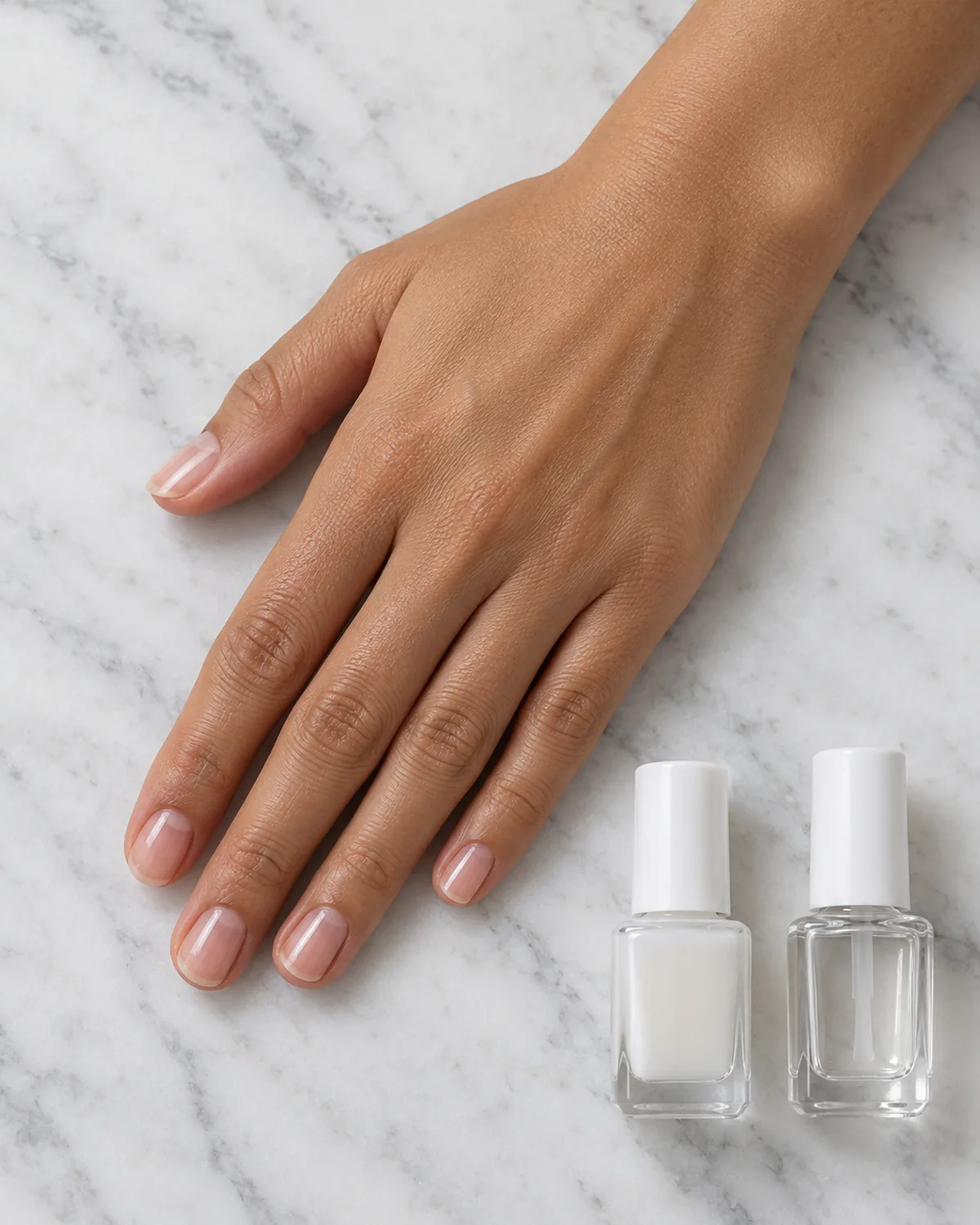
Base coat is the layer that bonds to your nail, so it does more for wear time than any top coat. But "base coat" covers several different products, and the right one depends on your nails.
| Your nails | What happens | Base coat to try |
|---|---|---|
| Oily | Polish peels off in one piece | Sticky or "grip" |
| Thin and bendy | Cracks across the middle | Strengthening |
| Ridged | Pools in grooves, chips at bumps | Ridge-filling |
| Peeling at the tip | Lifts with the nail layers | File smooth first |
One caution on strengtheners. Some formulas make nails harder, and very hard nails can turn brittle and snap instead of bending. If your nails start breaking more often, switch back to a plain sticky base coat for a while.
Whatever you use, paint one thin coat, wrap it over the tip, and let it set for about a minute before color.
Two Thin Color Coats, Two Minutes Apart
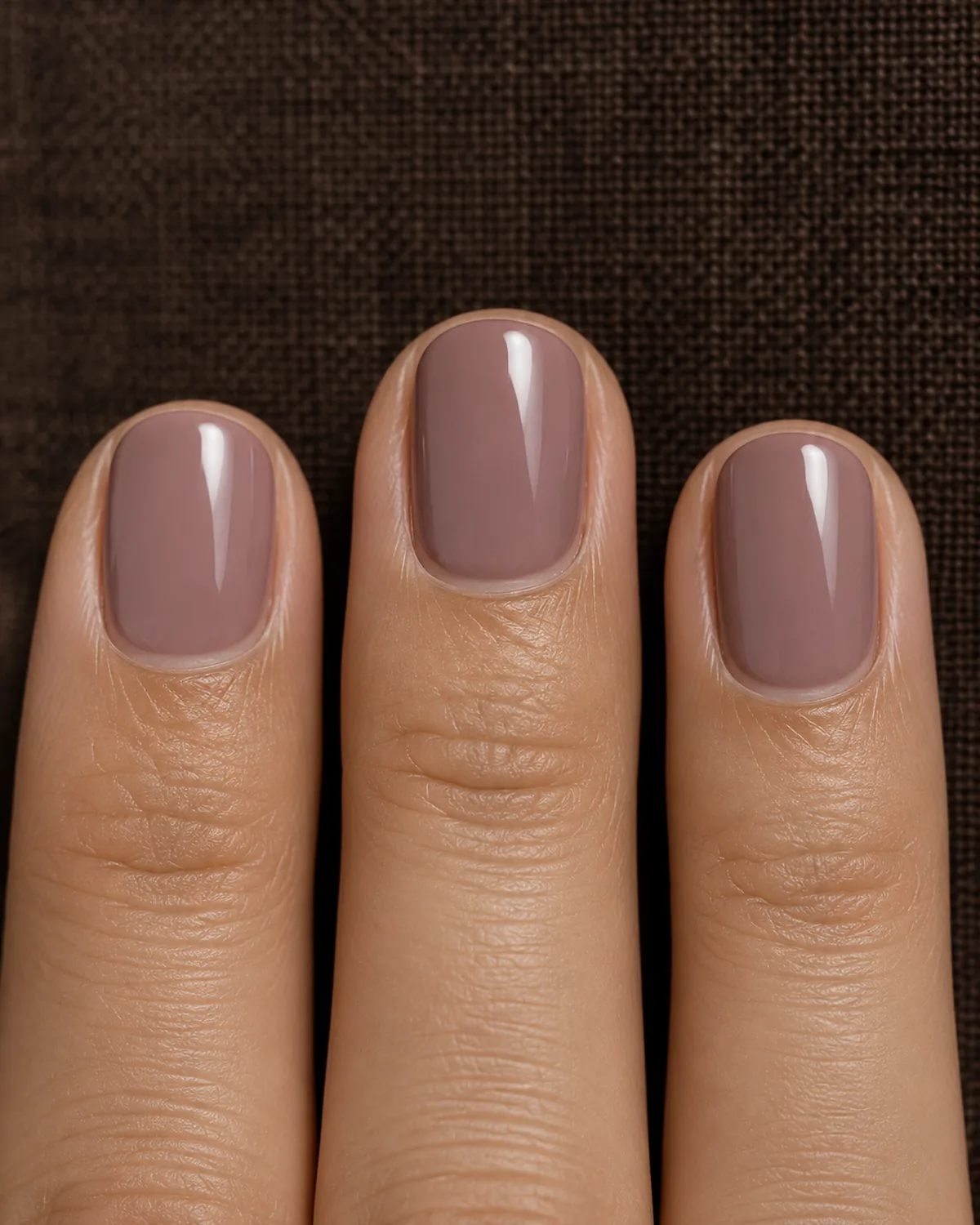
A thick coat of polish dries from the top down. The surface feels dry within minutes, while the layer underneath stays soft for hours. That soft layer is what dents when you reach into a bag and what pushes up into wrinkles under pressure.
Two thin coats avoid that. Each one is thin enough to set through before the next goes on, so the finished manicure is firm from the nail up.
How thin is thin:
- Wipe most of the polish off one side of the brush on the bottle neck
- You should be able to see a little of the nail through the first coat
- Wait about two minutes before the second coat
- If the color still looks patchy, add a third thin coat rather than a heavier second one
Pale and sheer shades often need three coats. That is fine. Three thin coats will outlast two thick ones every time.
Seal With a Long-Wear Top Coat and Wrap the Tips
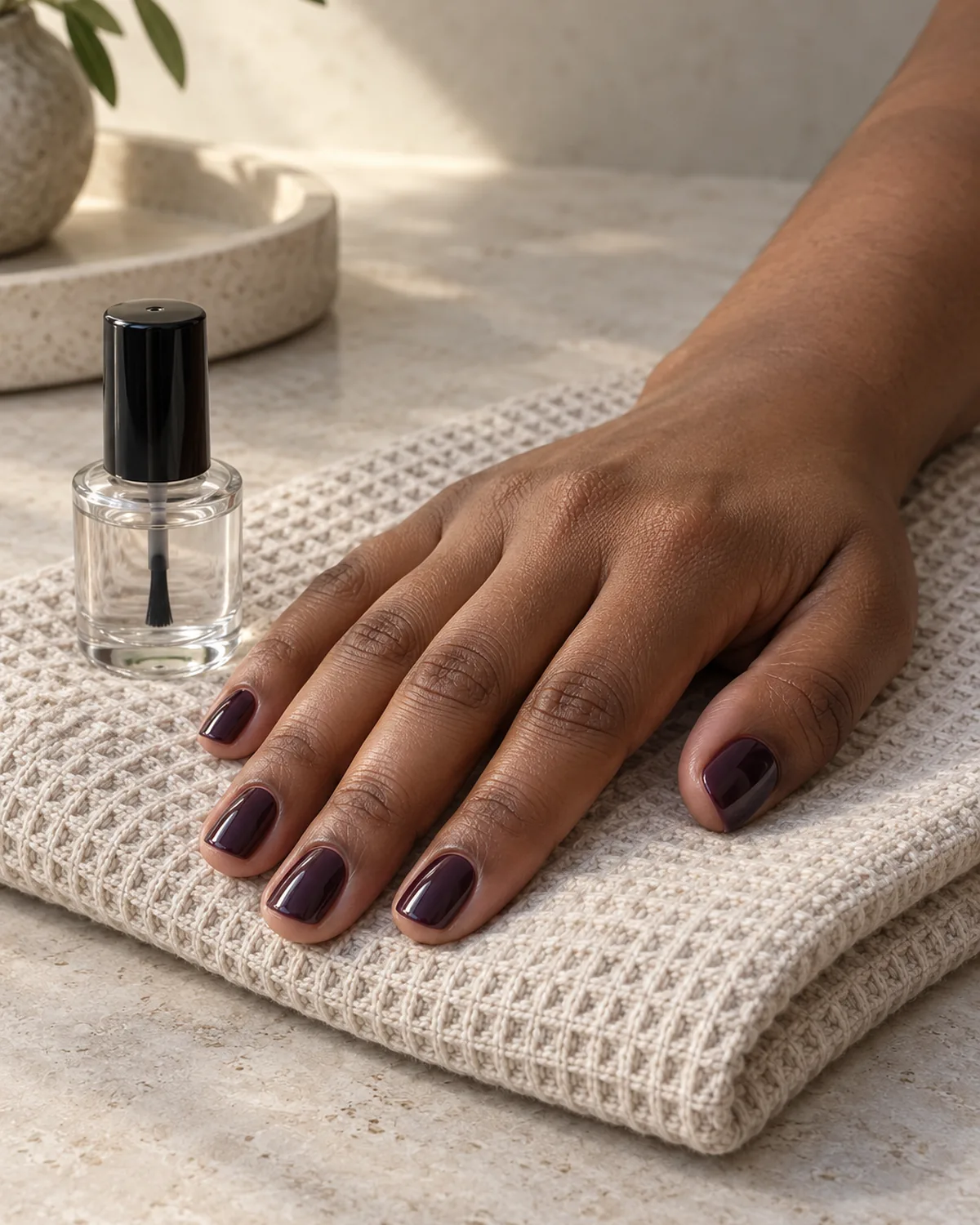
Top coat is the layer that actually meets the world. It takes the friction from typing, keys, and fabric, so the color underneath stays intact. Wrapping it over the free edge seals the whole stack at the point where chips start.
To wrap the tip, wipe most of the top coat off the brush, hold it almost flat against the edge of the nail, and sweep it once from side to side.
Long-wear or quick-dry?
| Top coat type | Strength | Watch out for |
|---|---|---|
| Long-wear or gel-effect | Thick, flexible, glossy for days | Takes longer to dry fully |
| Quick-dry | Surface sets in minutes | Some formulas shrink as they dry and pull at the edges |
| Matte | Changes the finish | Usually wears faster than a glossy top coat |
If chips are your main problem, a long-wear top coat is usually the better choice, even if it means a slower evening.
Then keep it topped up. Add one thin layer of top coat on day two and again on day four, wrapping the tip each time. That fresh layer takes the wear that would otherwise reach your color.
Treat the First Twelve Hours Gently
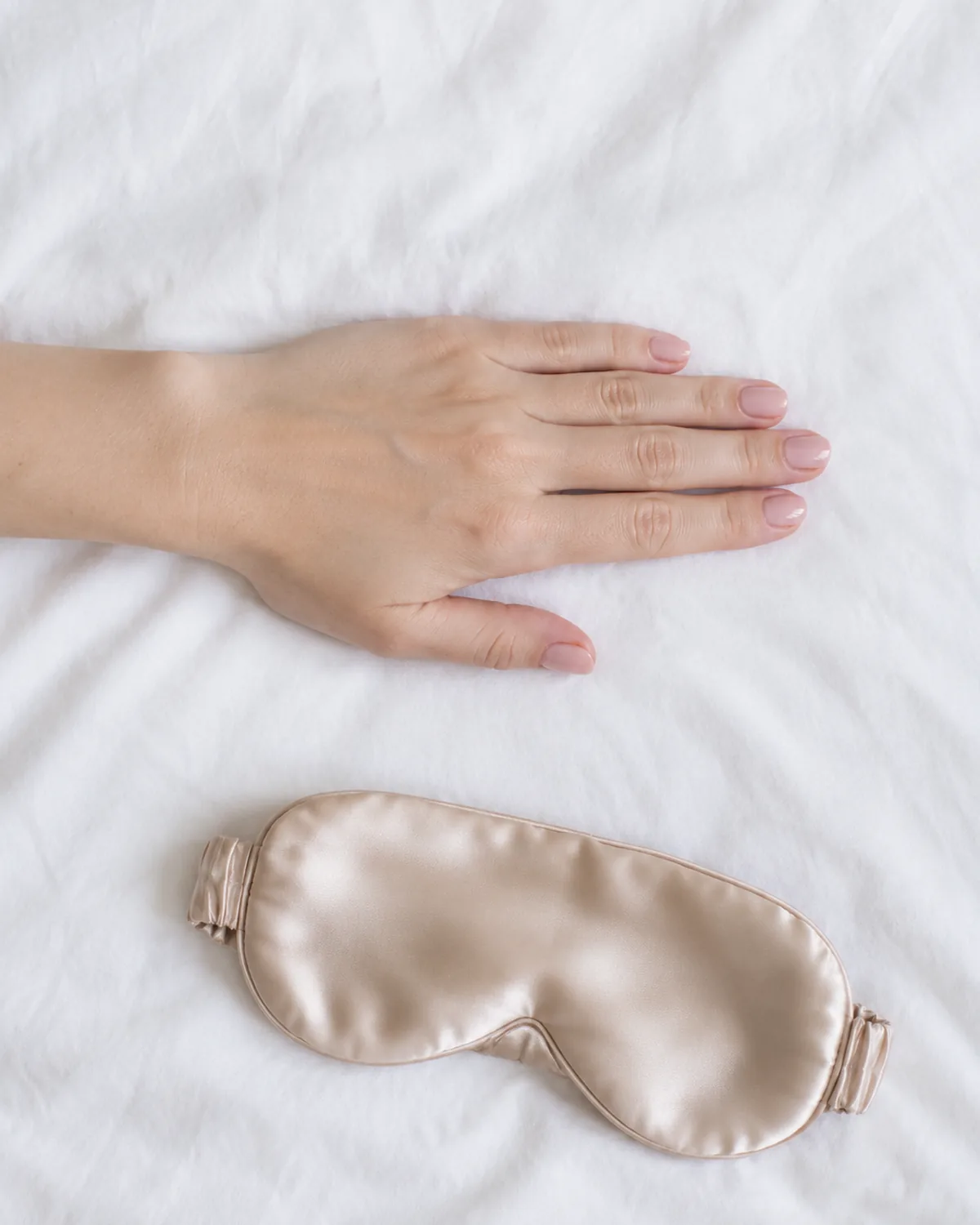
Dry to the touch is not the same as hard. Regular polish feels dry within about fifteen minutes, but the layers underneath keep hardening for hours. Most manicures that are ruined overnight were simply asked to do too much too soon.
| Time after top coat | What the polish can handle |
|---|---|
| 15 to 20 minutes | Light tasks; no pressing, no digging in bags |
| 1 to 2 hours | Most daily tasks, done with care |
| Overnight | Mostly set; sleep and showers are fine |
For the rest of the evening:
- Skip a hot bath or long shower, since heat and water soften fresh polish
- Hold off on thick hand cream, which can leave a film on soft top coat
- Before bed, press two nails lightly together; if they stick at all, wait longer
- Paint earlier in the evening if you tend to wake up with sheet marks
Those faint lines on your nails in the morning are fabric pressed into polish that was still soft under the surface. Thin coats and an earlier start fix that better than any drying spray.
Wear Gloves for Wet Work and Keep Nails Off Duty
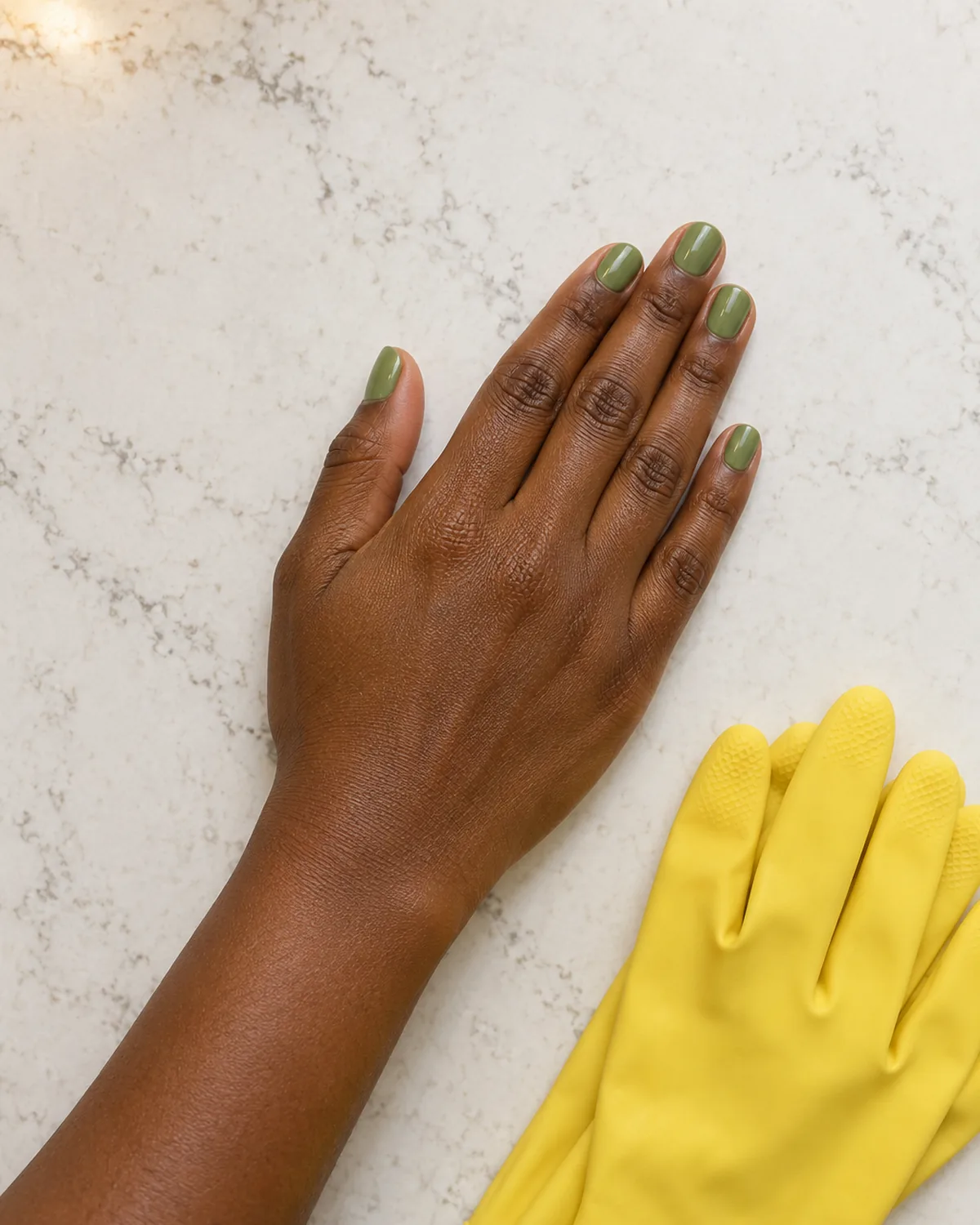
Hot water and household cleaners are hard on polish. Water swells the nail under the polish, and many cleaning products contain solvents that soften the top coat. A week of washing up bare-handed can wear a manicure down in a few days.
Rubber gloves are the simplest fix. Cotton-lined ones are more comfortable for long jobs and keep your hands from sweating, which also helps.
Habits that save the tips:
- Open cans with a spoon handle or the side of a fingertip, not the nail
- Peel stickers and labels with a butter knife instead of scratching
- Type with the pads of your fingers rather than the tips
- Wear gloves for gardening, cleaning, and anything with hot water
None of this is about being precious with your nails. The tips take the force first, and every scrape there is a chip waiting to happen.
Use Cuticle Oil Without Lifting Your Polish
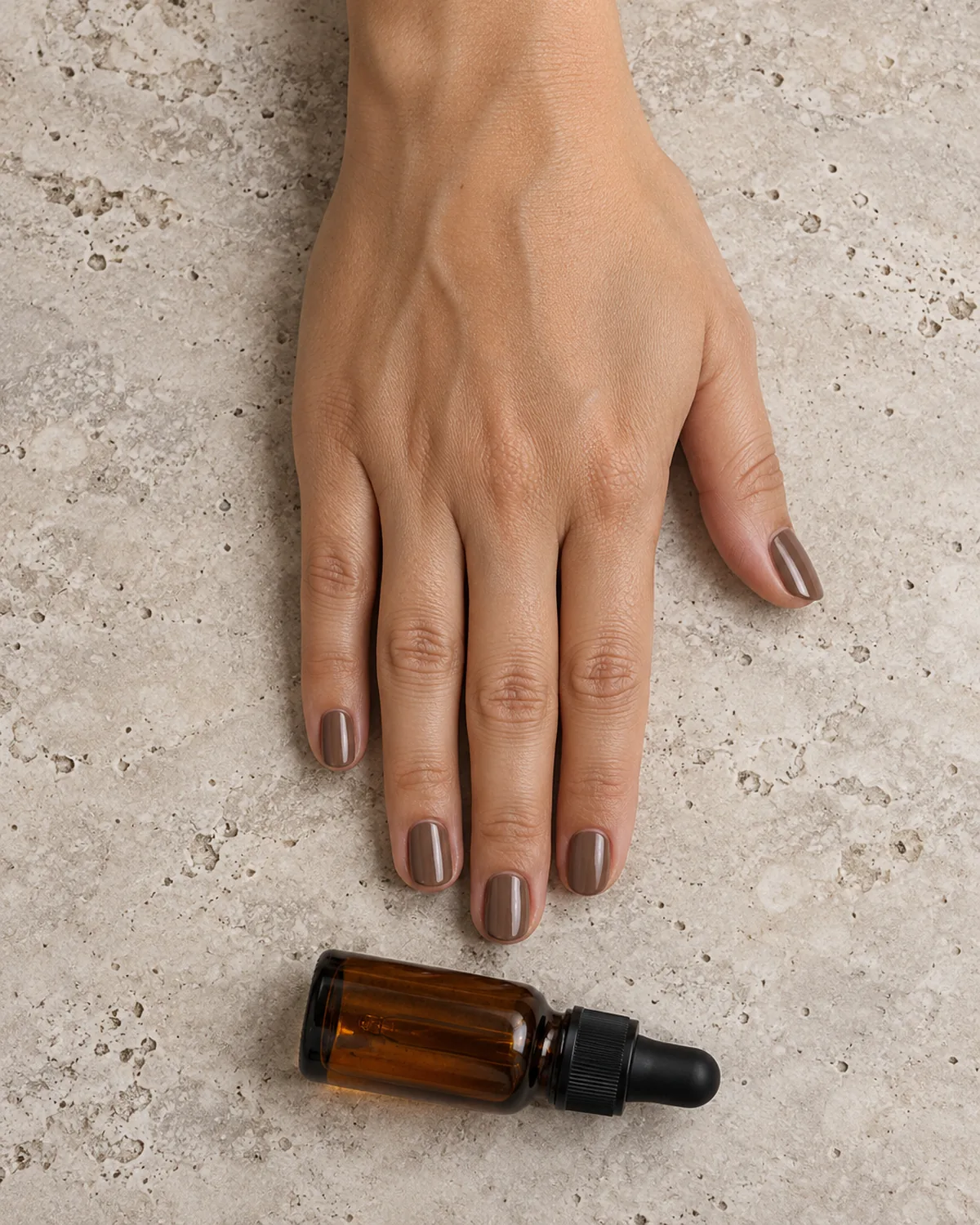
Cuticle oil helps polish last. It keeps the nail and the skin around it flexible, and a flexible nail bends without cracking the polish on top. The catch is timing and placement, because oil on the nail plate is exactly what makes polish slide off.
How to use it while you are wearing polish:
- Wait at least twelve hours after your manicure before the first drop
- Put one drop at the base of each nail, on the skin, not on the polish
- Massage it into the cuticle and side walls for a few seconds
- Wipe any oil off the nail surface with a tissue
- Before refreshing your top coat, wipe the nails with remover or alcohol
Use it once a day, ideally at night. If you have never kept a cuticle routine, the how to strengthen nails guide explains why flexible nails hold polish better than hard, dry ones.
Patch a Chip Instead of Starting Over
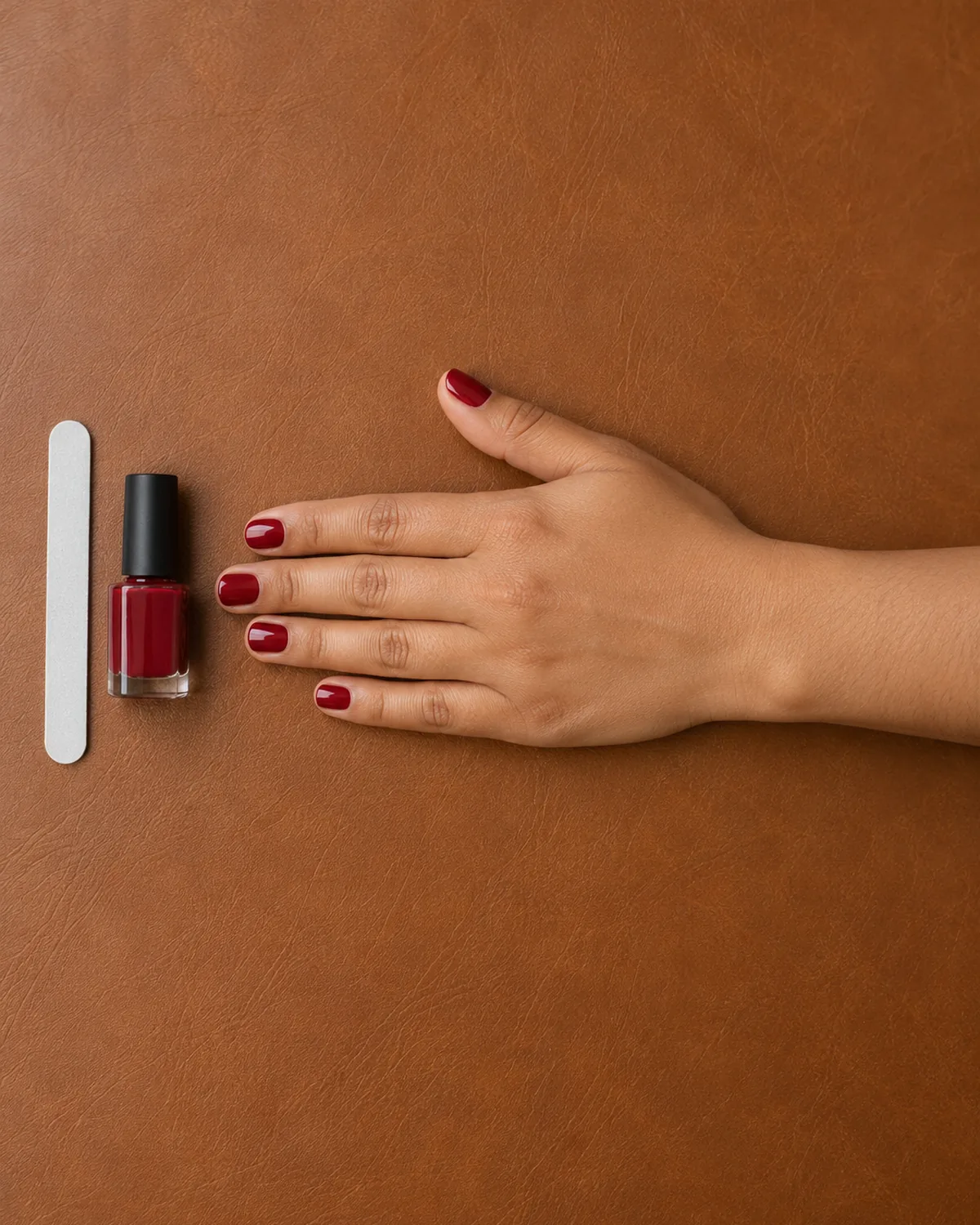
One chipped nail does not mean a whole new manicure. A small chip at the tip can be patched in about five minutes, and done well it is hard to spot.
How to patch a chip:
- Smooth the rough edge of the chip with a fine buffer so there is no ridge
- Wipe that nail with remover on a cotton bud, keeping it off the rest of the polish
- Dab a thin layer of the same color into the gap only
- Let it dry for two minutes, then add a second thin dab if needed
- Paint top coat over the whole nail, wrapping the tip, to blend the old and new layers
| Situation | Patch it or redo it? |
|---|---|
| One small chip at the tip | Patch it |
| Two or three small chips | Patch them, then refresh the top coat on all ten |
| Polish lifting from the cuticle | Redo that nail |
| Chips on more than half your nails | Take it all off and start again |
If your polish keeps failing on the same nail, it is usually the one you use most, often the index finger or thumb. Give that nail an extra wrap of top coat when you paint. For a sturdier option that lasts two weeks, the gel nails at home guide walks through the switch.
Make Nail Polish Last Longer in 10 Takeaways
- 1Read the chipWorn tips, lifting cuticles, and whole sheets peeling off each point to a different fix
- 2Paint on dry nailsWait an hour after water so the nail is not swollen under the polish
- 3Buff and wipeA light buff takes off the shine, and alcohol clears the oil
- 4Choose the right baseSticky for oily nails, strengthening for bendy ones, ridge-filling for uneven ones
- 5Two thin coatsThin layers set all the way through, with two minutes between them
- 6Wrap the tipsSeal every coat over the free edge and refresh top coat on days two and four
- 7Go easy the first nightNo hot bath, no thick cream, and no bed until the polish does not stick
- 8Gloves for wet workWater and cleaners soften polish, and nails are not tools
- 9Oil the skin, not the polishOne drop at the cuticle each night, then wipe the nail clean
- 10Patch small chipsBuff, dab color into the gap, and seal the whole nail with top coat
styvea.com

Sloane Avery edits Styvea, where she shares nail design ideas, shapes, colors, and at-home manicure how-tos for anyone who loves a good manicure. Every guide is reviewed for clarity, usefulness, image accuracy, and Pinterest-to-page alignment before publication. Visit the About page.
Long-Lasting Nail Polish FAQ
How long should regular nail polish last?
With good prep and a top coat, regular polish usually looks fresh for five to seven days on fingernails. Expect less if you:
- Wash dishes or work with water often without gloves
- Type all day or use your nails as tools
- Skip the base coat or top coat
How do you make normal nail polish last as long as gel?
You can get close, though not quite to the two weeks gel offers. The biggest gains come from:
- A sticky base coat on a buffed, alcohol-wiped nail
- Thin coats with the tip wrapped on every layer
- A long-wear top coat, refreshed on days two and four
How do you make nail polish last longer on toes?
Toenail polish already lasts longer than fingernail polish, often two to three weeks, because toes take far less wear. To stretch it further:
- Let toes dry for an hour before closed shoes
- Wrap the tip of the big toe, which rubs against shoes the most
- Add top coat once a week
Does dipping wet nails in cold water help polish last?
It may firm the very surface a little, but it does not harden the polish underneath, and it adds water right when you want the nail dry. Thin coats and time do more.
Can you put regular top coat over gel polish?
You can, but it does not add much. Cured gel is already harder and glossier than regular top coat, and the regular layer will wear off first. If gel is lifting, a top coat will not hold it down.