Silver sits in a space no other nail color occupies. It is not warm like gold. It is not neutral like nude. It reflects light without absorbing a mood, which makes it equally at home on a Tuesday errand run and a Saturday night out.
The range inside this single color family is wider than most people expect. Dense glitter reads festive. Liquid metallic reads editorial. Pewter reads moody. Gunmetal reads edgy. Each finish shifts the entire mood.
What separates a good silver manicure from a forgettable one is the finish — and matching that finish to the right nail shape.
From icy glitter to dark gunmetal, organized by finish and shape.
1. Silver Glitter on Short Almond
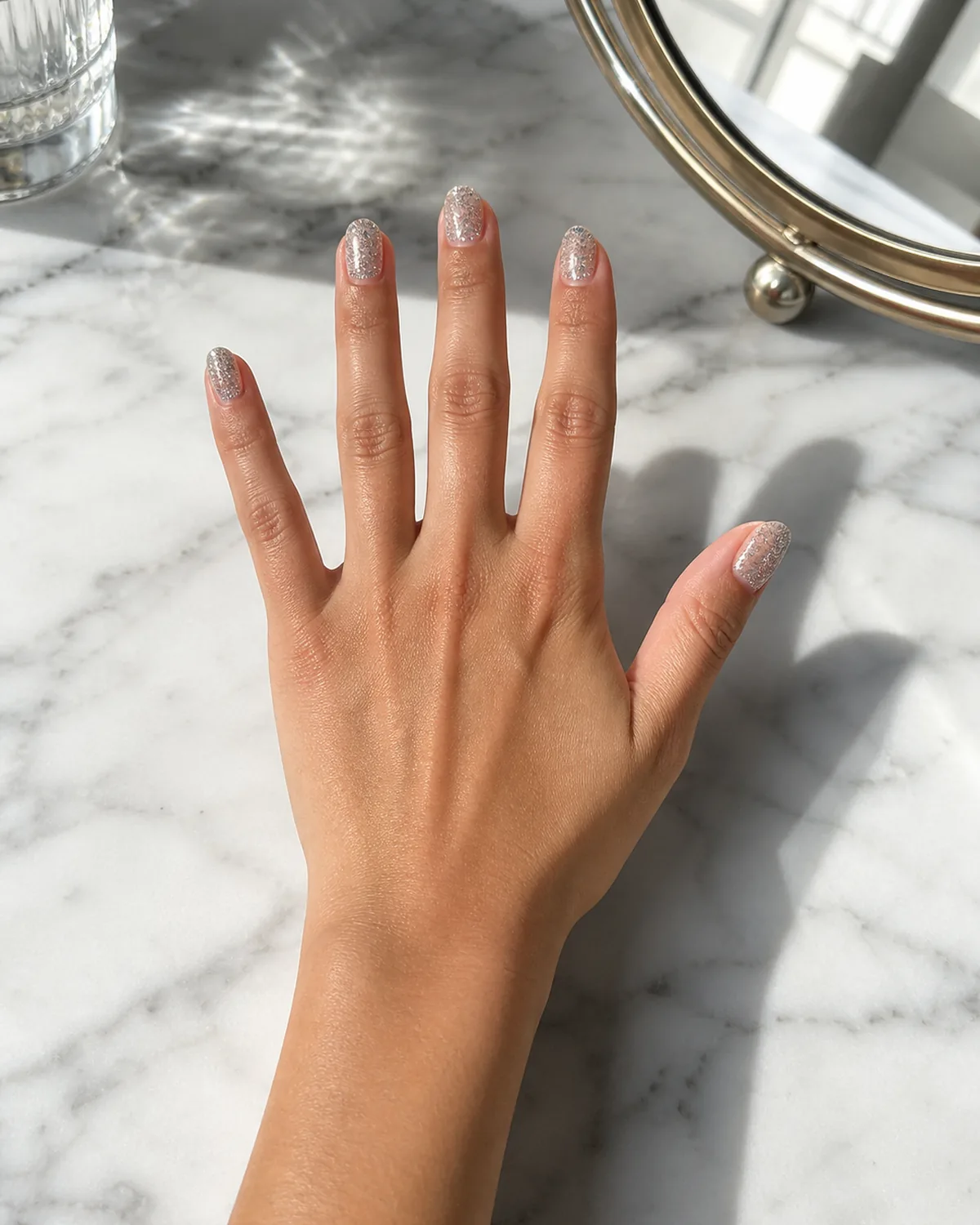
Dense fine silver micro-glitter packed over a clear base creates a solid sheet of sparkle that catches every angle of light. This is the entry point for silver nails — the version that works on everyone regardless of skin tone or personal style.
Short almond is the shape that makes glitter feel polished rather than costume-y. The tapered sides slim the finger, and the rounded tip keeps the silhouette soft enough to wear to work.
The trick is opacity. One coat of glitter polish looks patchy. Two coats look uneven. Three coats — or a sponge-dabbed application — builds the kind of coverage where no bare nail shows through, and the surface reads as solid silver rather than scattered sparkle.
2. Liquid Silver Metallic on Medium Coffin
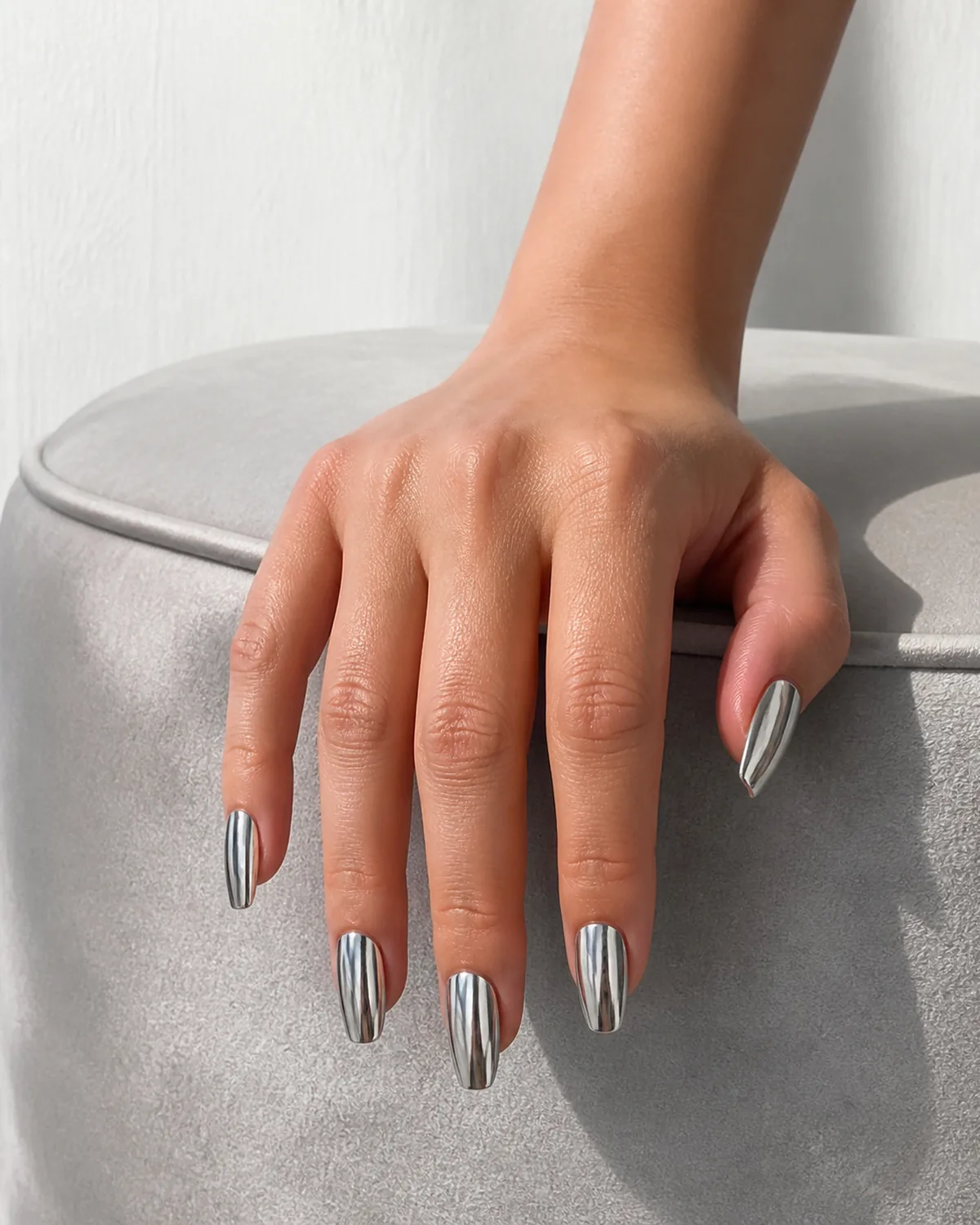
Liquid silver metallic produces a smooth, mirror-like surface using high-shine metallic lacquer rather than chrome powder. The difference is subtle but important: chrome requires a gel base and UV curing, while metallic polish applies like any regular lacquer and removes with standard acetone.
Medium coffin provides the flat, wide nail bed that liquid metallic needs to show its reflective quality. The straight sides and squared tip create clean geometric panels of mirror-like silver.
Apply in thin, even strokes in one direction only. Going back and forth over wet metallic polish creates brush marks that break the mirror effect. Two thin coats, each dried completely, produce the smoothest result.
3. Pewter on Oval
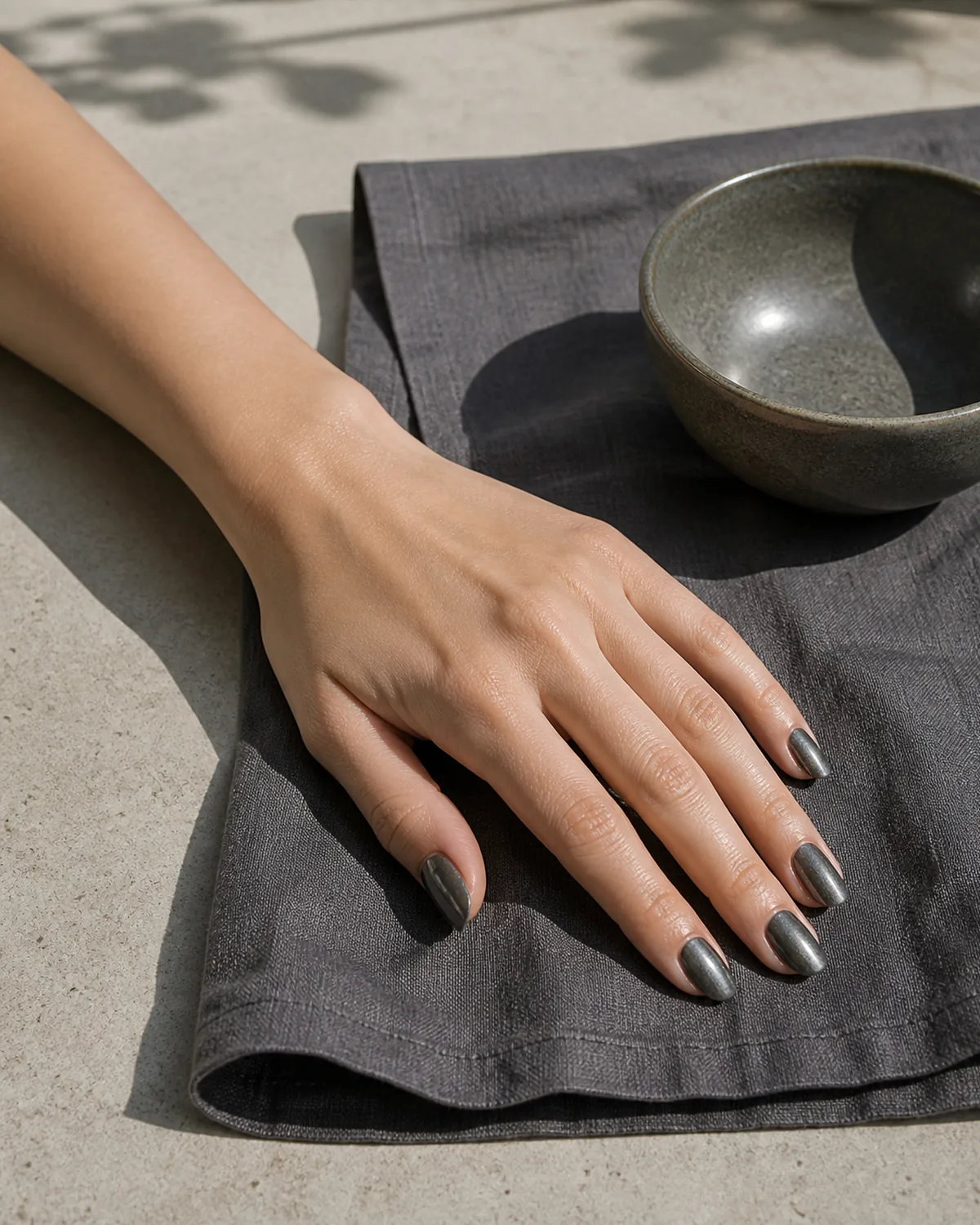
Pewter sits in the space between silver and charcoal — darker and earthier than bright silver, with a warm gray undertone that feels grounded rather than flashy. This is the silver shade that works through fall and winter without looking seasonal.
Oval keeps the look understated. The rounded shape softens what could otherwise read as severe, and the moderate length means the dark metallic does not overwhelm the finger.
Pewter metallic polishes are less common than bright silver, but they exist in most professional lines. Look for formulas labeled gunmetal, dark silver, or industrial — anything in the gray-silver family with visible metallic sheen but no sparkle.
Five moods, five metallic approaches — pick the one that fits how you dress and where you go.
4. Holographic Silver on Stiletto
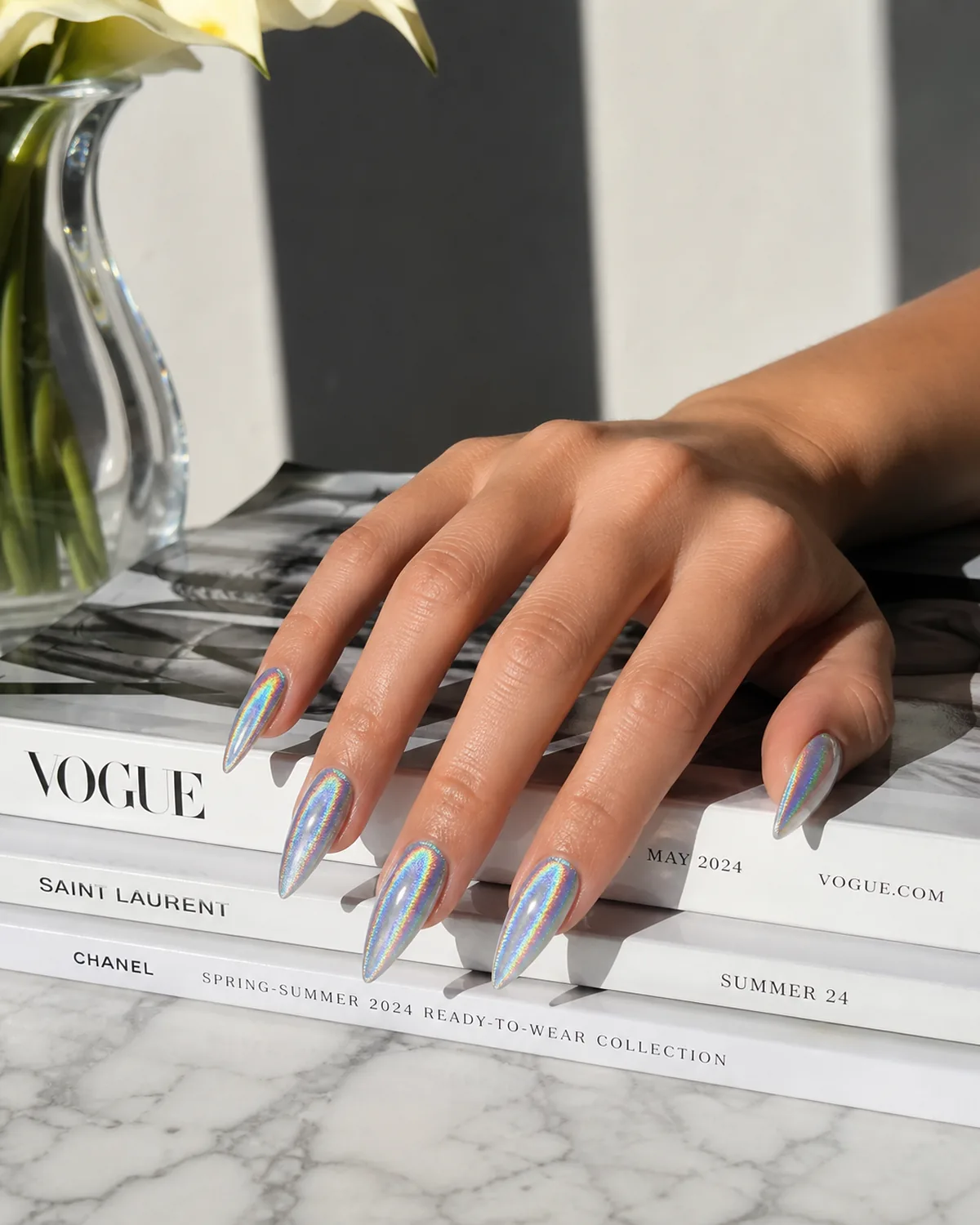
Holographic silver shifts between blue, pink, and green under direct light, producing a prismatic rainbow flash on a silver base. The effect is impossible to replicate with standard metallic polish — it requires micro-particles that diffract light rather than simply reflecting it.
Stiletto amplifies the holographic effect by creating a long, narrow surface that catches light at multiple angles as the hand moves. Each finger becomes its own light show.
Holographic polishes need direct light to perform. Under fluorescent office lighting, they read as a standard silver shimmer. Under sunlight or warm incandescent light, the rainbow flash appears. Keep this in mind when choosing where you plan to show them off.
5. Silver Foil on Short Round
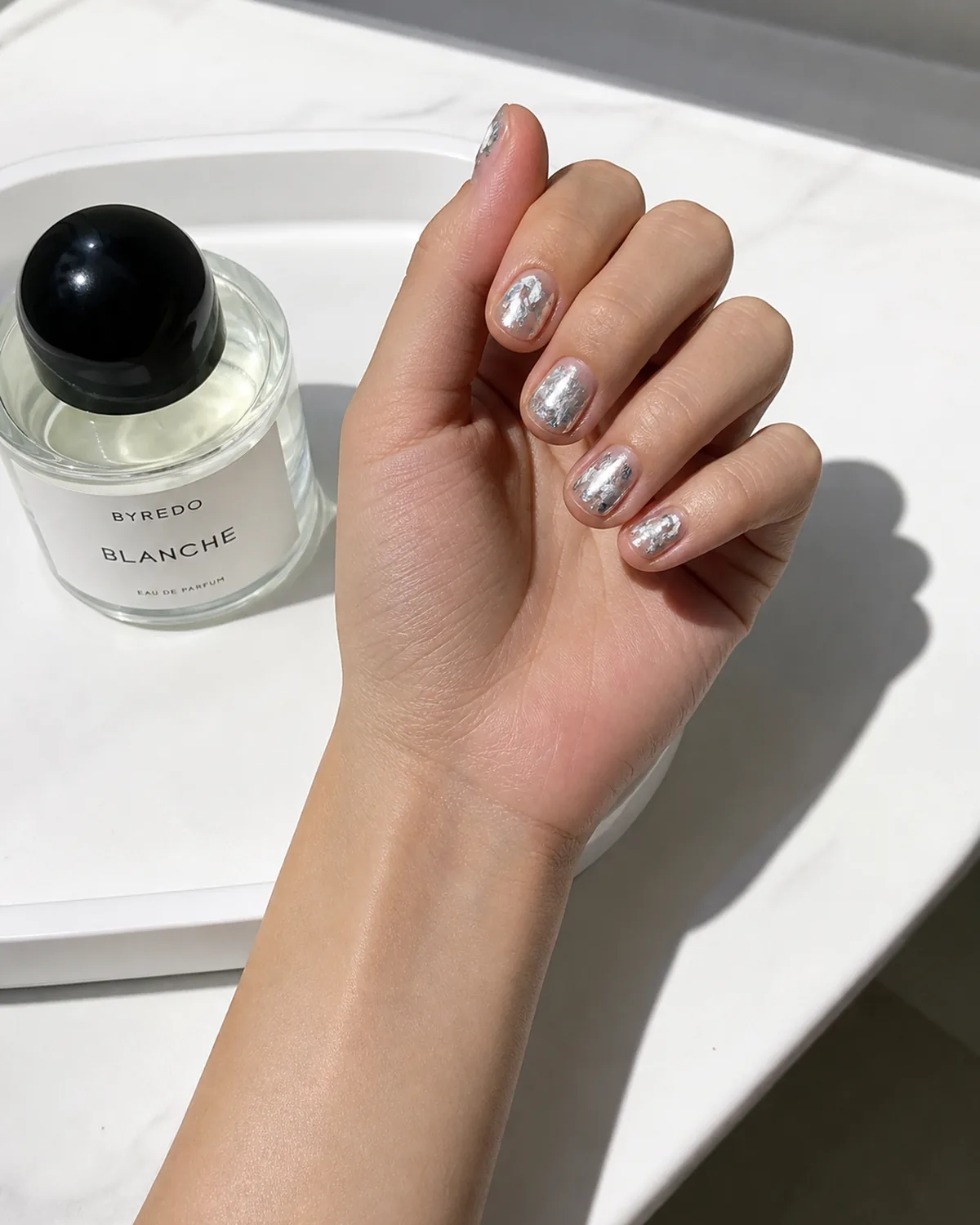
Silver leaf foil creates an organic, hammered-metal texture that looks nothing like polish. The irregularity is the point — torn pieces of foil pressed into wet gel produce crinkled edges and varying opacity that catch light unpredictably.
Short round is an unexpected pairing that works precisely because the small canvas concentrates the foil texture into a jewel-like effect rather than spreading it thin over a large nail bed.
Apply foil over a nude or clear base. Press pieces down with a silicone tool or orange stick, then seal with a thick clear top coat. The foil pieces should overlap slightly at their edges but leave small gaps of bare nail showing through — total coverage looks like metallic polish, not foil art.
6. Silver Smile Line on Long Almond
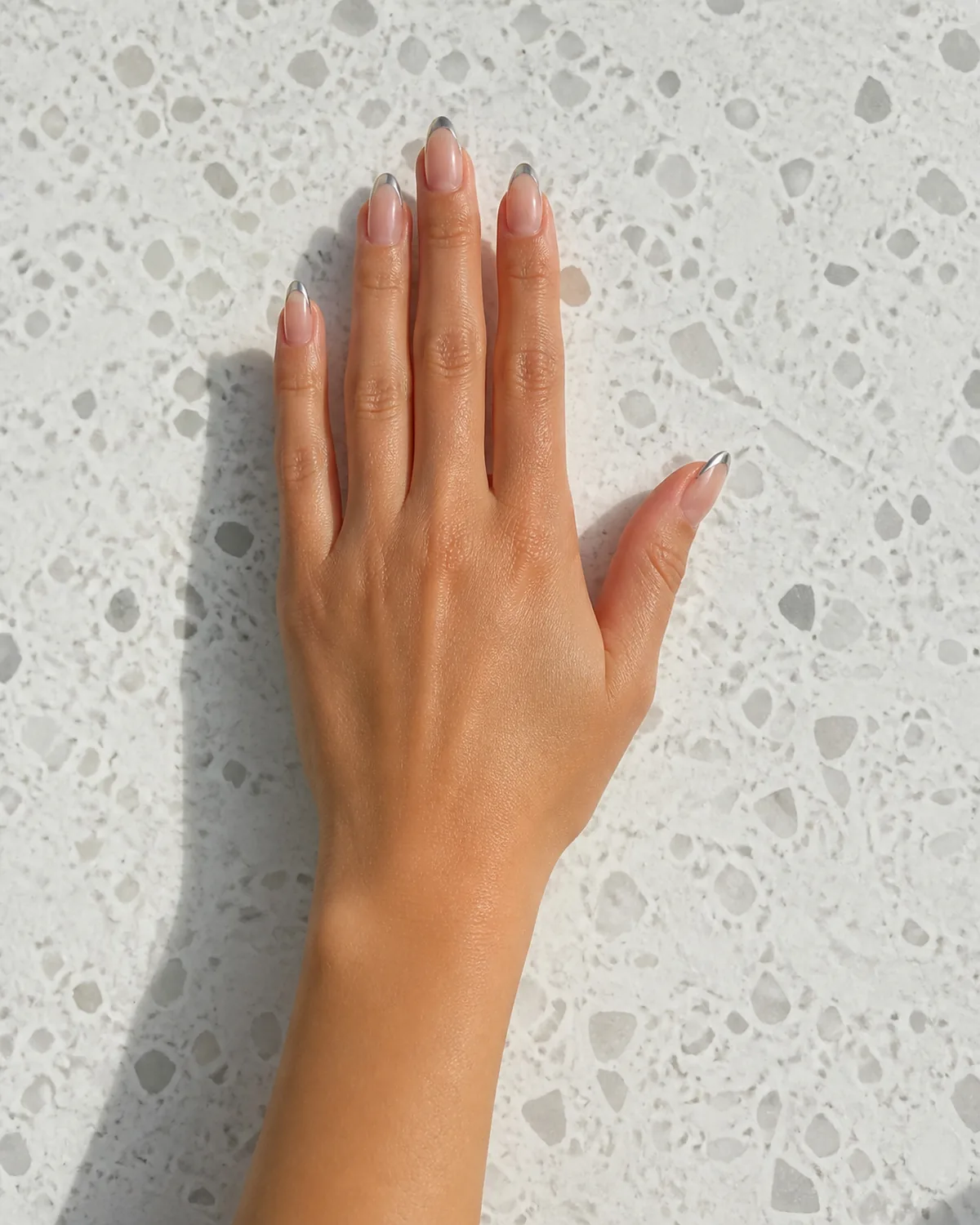
Swapping the classic white smile line for a thin band of reflective silver metallic produces an effect that is quieter than a full silver manicure but more distinctive than a standard nude-and-white combo. The silver catches light at the tips in a way that reads modern without trying too hard.
Long almond elongates the finger and gives the silver line enough room to register as metallic rather than as a gray smudge. The tapered curve creates a natural arc that the silver follows.
Use a thin striping brush or edge guides for clean separation between the nude base and the silver band. Silver metallic polish is less forgiving than white — any wobble shows more because the reflective surface amplifies inconsistencies.
7. Gunmetal on Square
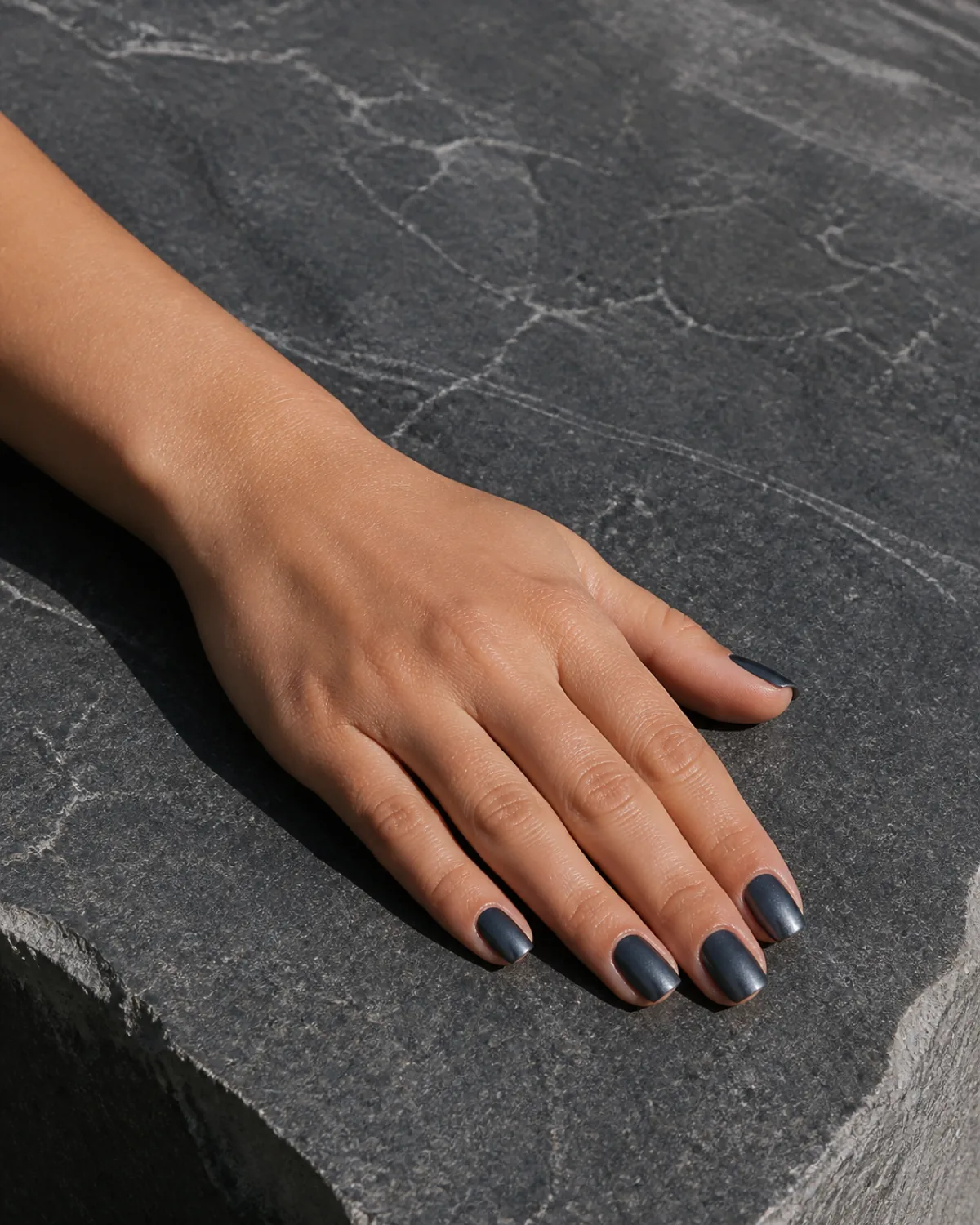
Gunmetal is the darkest member of the silver family — almost black in shadow but catching silver when direct light hits the surface. The satin metallic finish sits between matte and glossy, which gives it a raw, industrial quality that regular dark polish cannot match.
Square nails emphasize the architectural quality of gunmetal. The straight sides and flat free edge create clean geometric panels that suit the no-nonsense attitude of this shade.
Gunmetal reads differently under different lighting conditions. In dim environments, it passes for black. Under bright light, the silver undertone appears. This chameleon quality makes it one of the most versatile dark shades — appropriate for workplaces that would raise eyebrows at black nails.
8. Sparkle Ombre Fade on Squoval
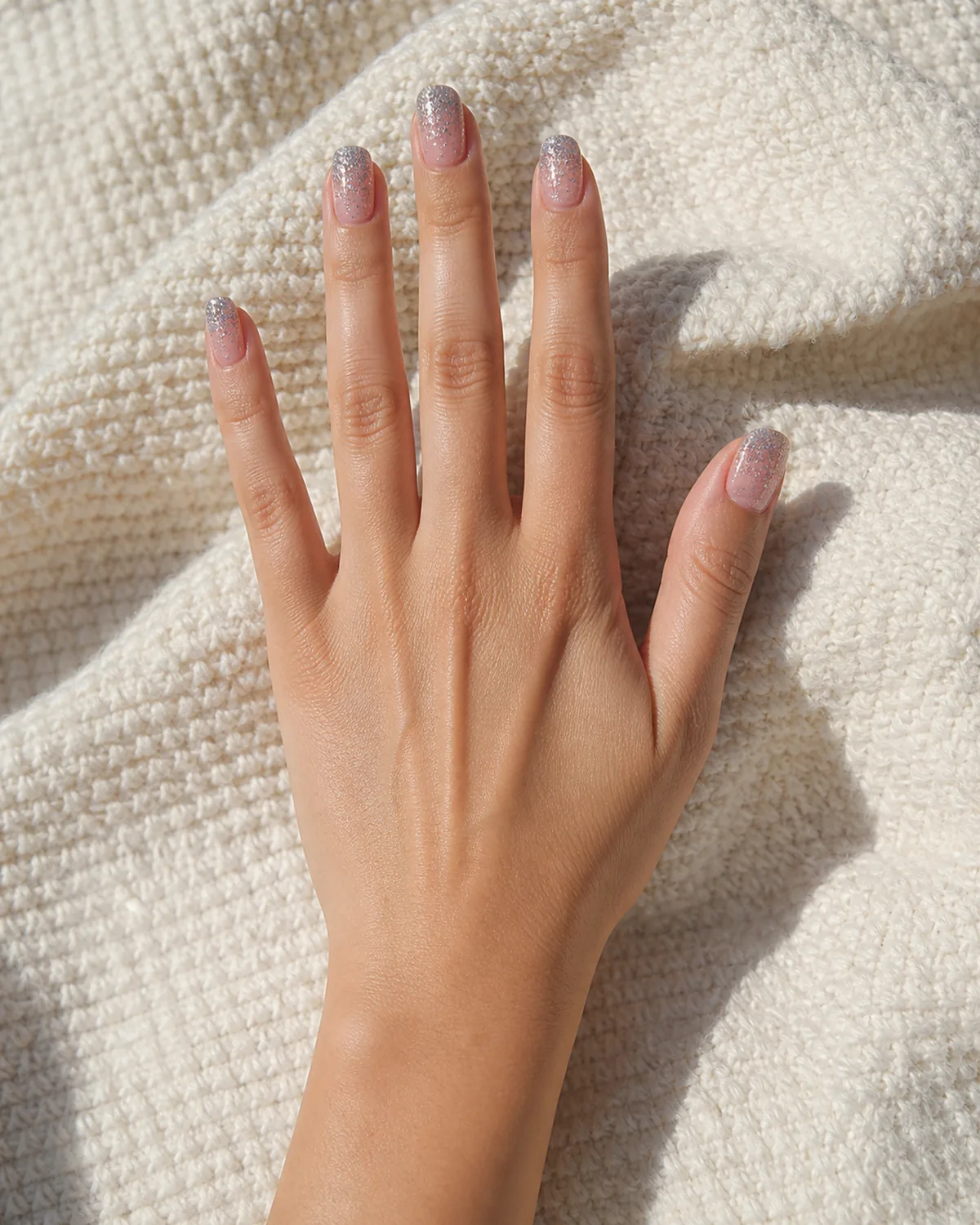
A silver glitter ombre concentrates dense sparkle at the nail tip and fades it toward the cuticle, creating a gradient that is statement enough for an evening event but wearable enough for a Saturday brunch. The sheer pink base keeps the look soft where full-coverage glitter would read as party mode.
Squoval provides the balanced canvas that a gradient needs. The flat, wide tip gives the densest glitter section room to shine, while the softened corners prevent the look from feeling too angular.
Build the gradient with a cosmetic sponge. Dab silver glitter polish onto the tip third of the nail, then gently sponge upward — the particles thin naturally as the sponge runs out of product, creating a seamless fade without hard lines.
9. Champagne Silver on Medium Almond
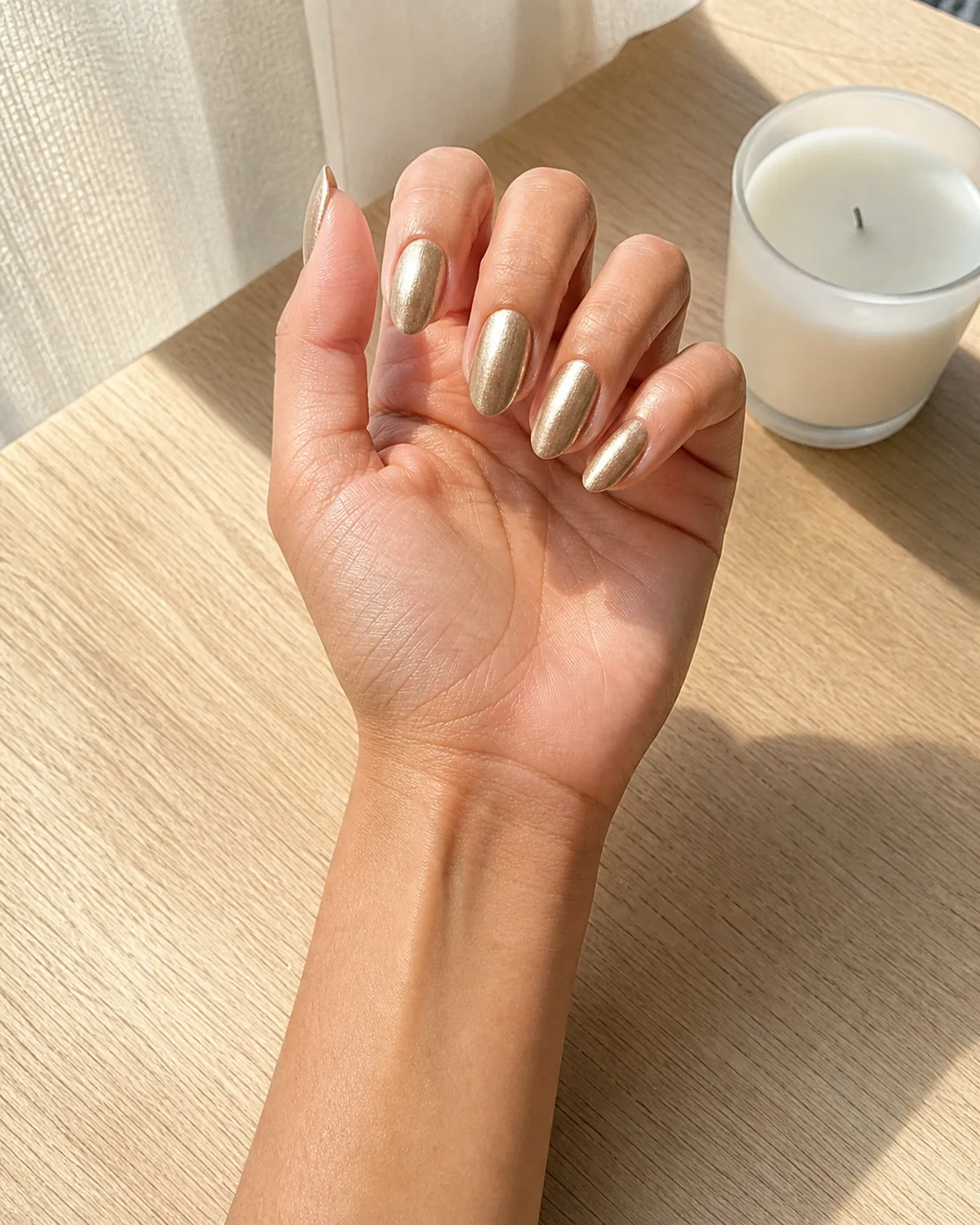
Champagne silver bridges the gap between silver and gold — warm enough to complement gold jewelry but cool enough to read as silver rather than gold in photographs. The golden undertone softens the metallic effect, making this the most flattering silver shade for warm skin tones.
Medium almond gives champagne silver the elegant, tapered silhouette it needs to look intentional. On shorter or blunter shapes, warm metallic can read as undecided between silver and gold — the almond length resolves that ambiguity.
This is the silver shade most commonly requested for weddings and formal events. It photographs warm under both flash and natural light, avoiding the blue cast that cool silver can produce in camera.
10. Silver Marble on Oval
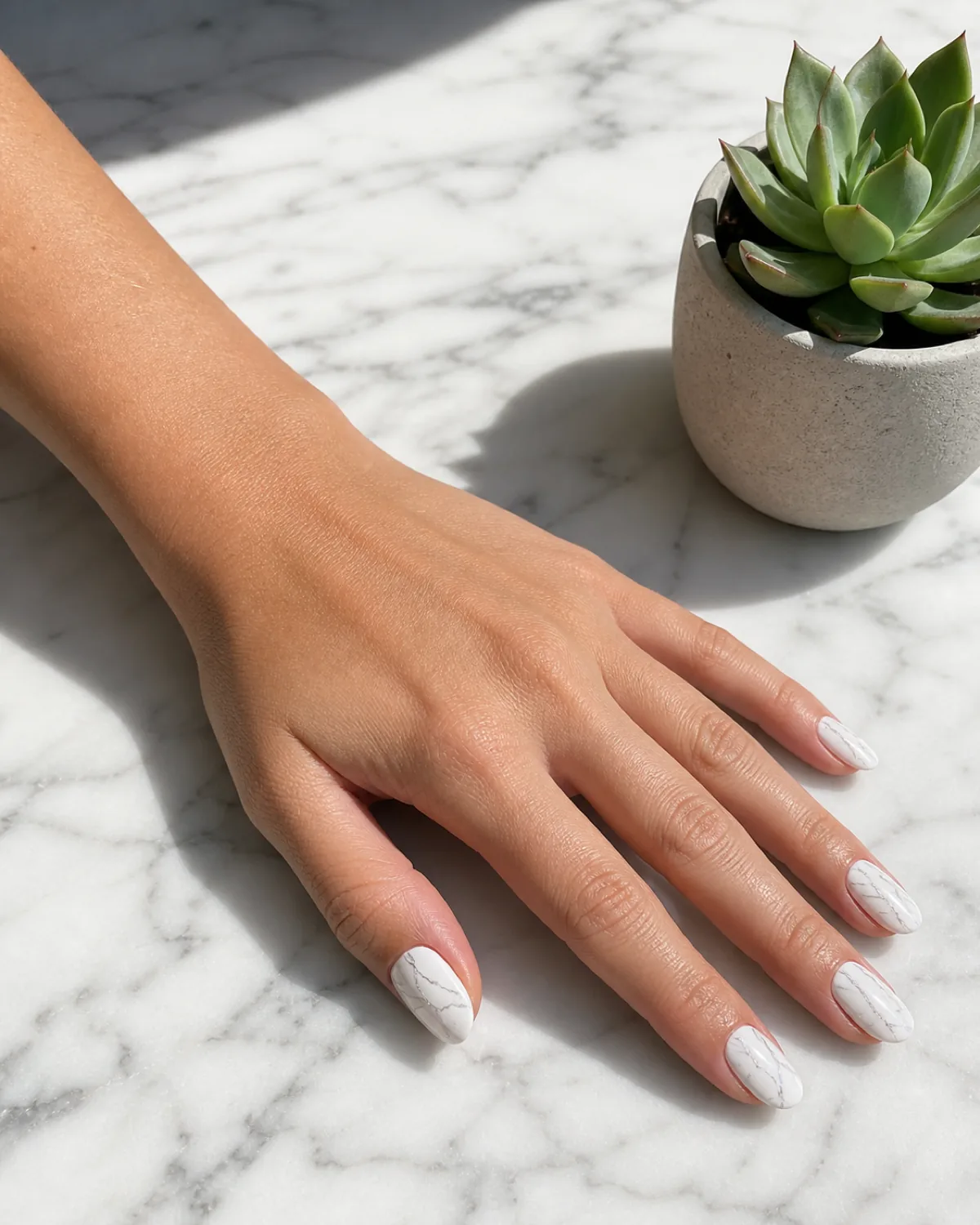
Silver marble replaces the gray ink veining of traditional marble nails with thin silver metallic lines, adding a reflective shimmer that standard marble techniques lack. The white base and silver veining combination reads as both artistic and luxurious.
Oval allows the veining pattern to flow naturally across the nail surface. Rounded edges mean the marble design does not get cut off by sharp corners — the lines wrap around the cuticle-to-tip curve in a way that mimics the organic movement of real stone.
Create veining with a thin brush dipped in silver metallic polish, then immediately swirl a clean brush through the wet lines to soften and spread them. The goal is translucent, feathered edges — not crisp stripes. Seal with a glossy top coat to add depth.
11. Brushed Metallic Silver on Coffin
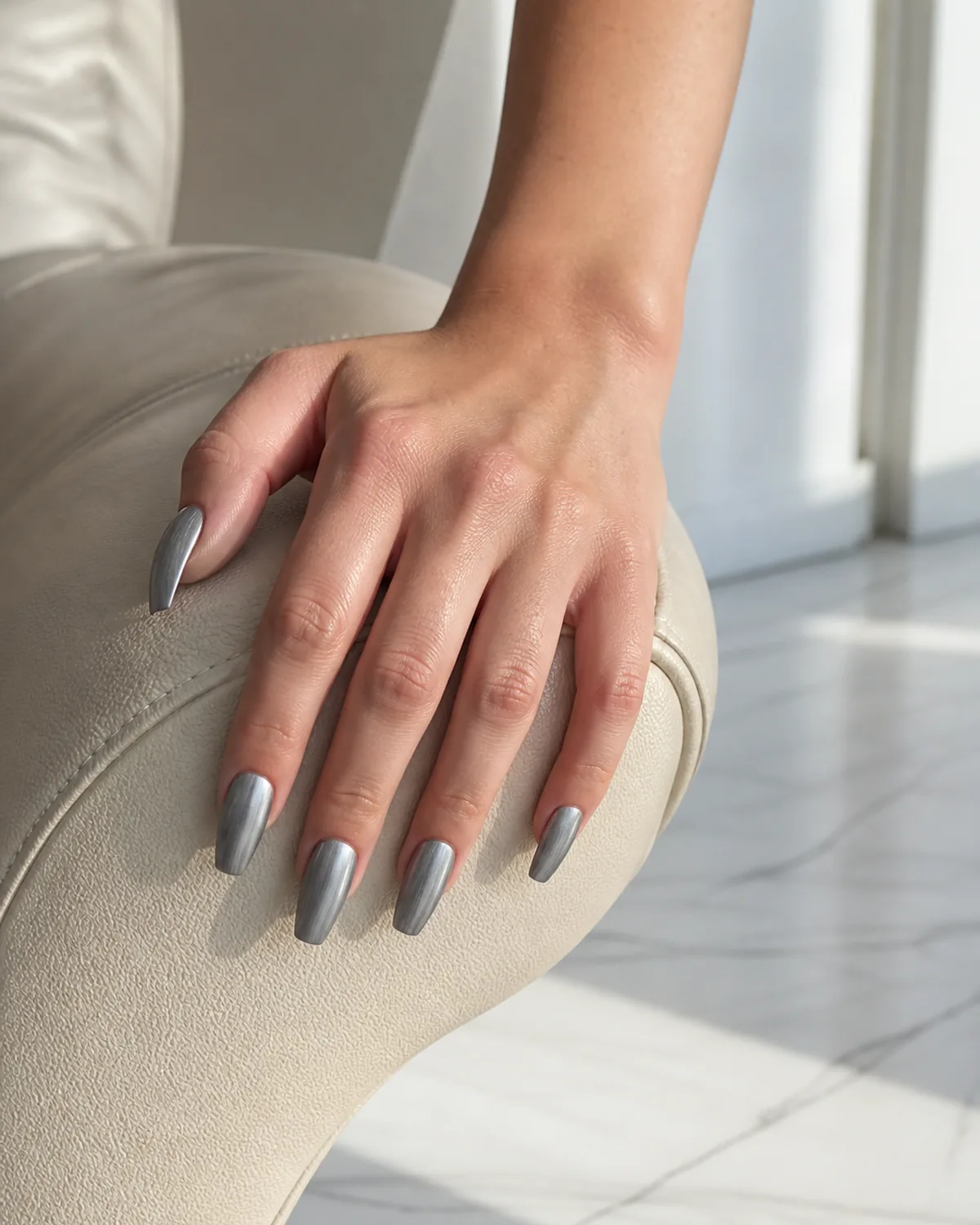
Brushed metallic eliminates the shine that defines most silver nail looks, replacing it with the matte, directional texture of stainless steel. The result is unmistakably metallic but completely different from anything glossy — industrial, architectural, and almost sculptural.
Coffin provides the long, flat surface area that brushed texture needs to read properly. The straight sides become clean panels of faux metal, and the length gives the directional brush lines room to establish their pattern.
To achieve the effect, apply a silver metallic polish and immediately drag a dry brush through the wet surface in one direction — cuticle to tip — creating fine parallel lines. Let it dry without a top coat. Adding gloss defeats the brushed effect entirely.
13 Silver Nail Ideas to Try
- 1Silver glitterDense fine micro-glitter over clear on short almond, the entry point that works on everyone.
- 2Liquid silver metallicA mirror-smooth metallic lacquer on medium coffin, the effect of chrome without the powder.
- 3PewterThe warm gray between silver and charcoal on oval, grounded rather than flashy.
- 4Holographic silverA prismatic rainbow flash on stiletto, shifting blue to pink to green in the light.
- 5Silver foilTorn leaf pressed into wet gel on short round, hammered metal instead of polish.
- 6Silver smile lineThe white French line swapped for a thin reflective silver band on long almond.
- 7GunmetalThe darkest silver on square, almost black until direct light finds it.
- 8Sparkle ombre fadeDense sparkle at the tip fading toward the cuticle on squoval.
- 9Champagne silverThe bridge between silver and gold on medium almond, warm in person and cool on camera.
- 10Silver marbleMarble veining redrawn in thin metallic lines on oval.
- 11Brushed metallicThe matte directional grain of stainless steel on coffin.
- 12Negative space trianglesAlternating silver and bare-nude geometry on medium stiletto.
- 13Antique silverAged-sterling patina on short squoval, intentionally imperfect highlights.
styvea.com
12. Silver and Nude Negative Space on Medium Stiletto
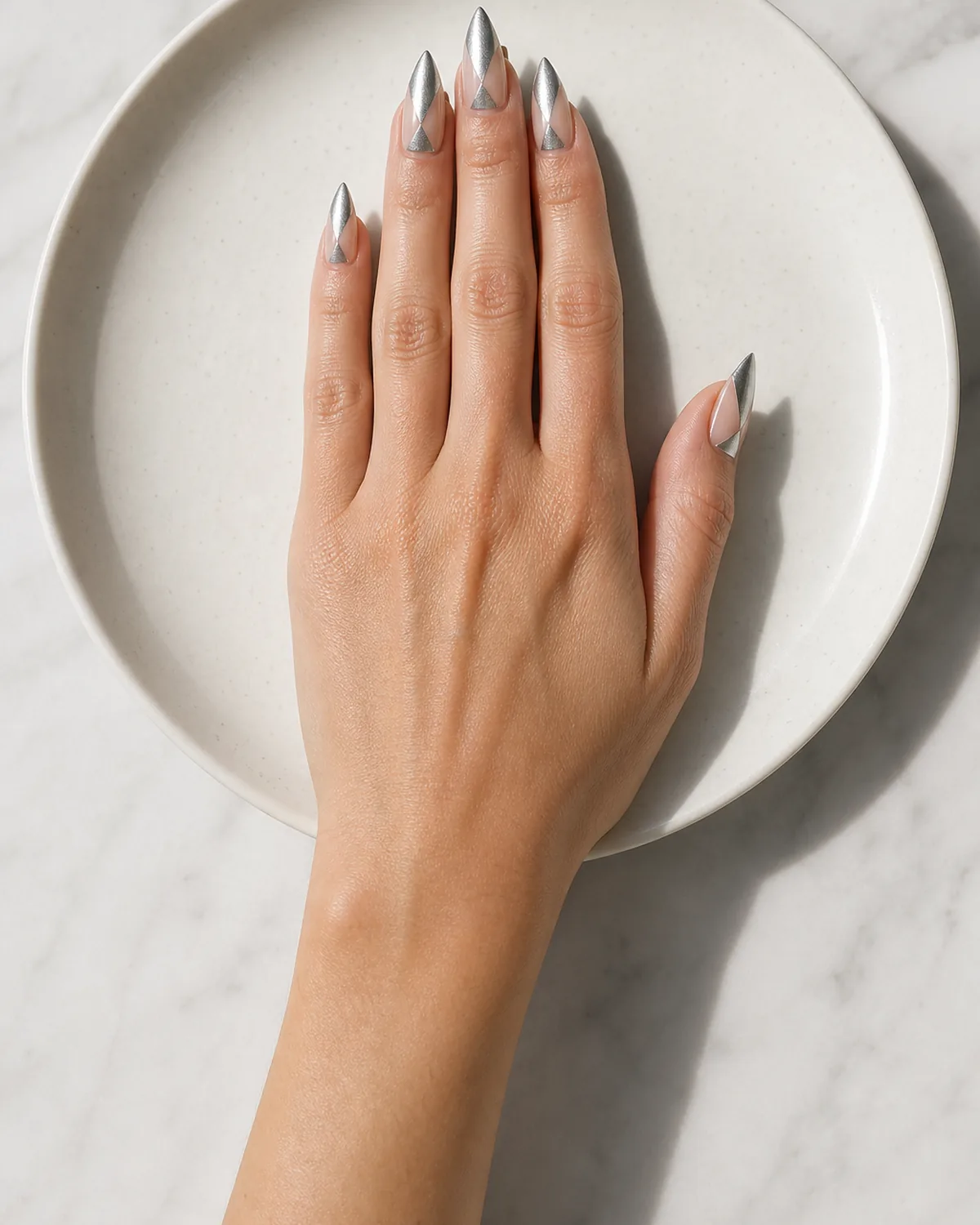
Negative space designs use bare nail as an intentional design element rather than a gap to fill. Alternating triangles of silver metallic and exposed nude create a geometric pattern that is simultaneously minimal and bold — the kind of nail art that gets compliments from strangers.
Medium stiletto gives the triangular pattern a natural endpoint at the pointed tip. The elongated shape amplifies the angular geometry, making each nail read like a tiny architectural study.
Precision matters here. Use striping tape to mask off the triangular sections before applying silver metallic polish. Remove the tape while the polish is still slightly wet for the cleanest edges. Any smudging between the silver and bare sections ruins the graphic effect.
13. Antique Silver on Short Squoval
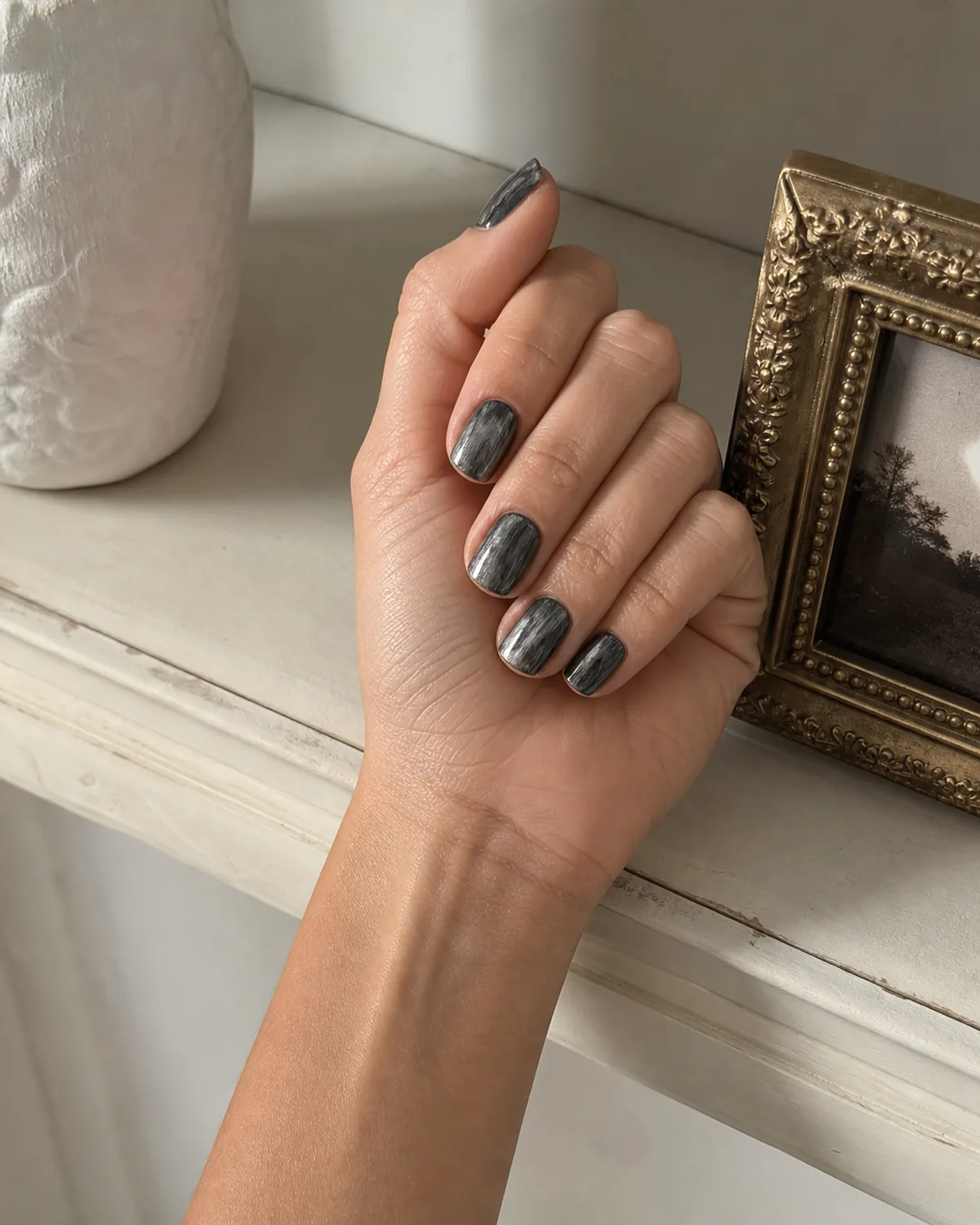
Antique silver mimics the patina of aged sterling — a matte charcoal base with silver highlights that appear only on raised surfaces and brush strokes. The look is intentionally imperfect, which places it closer to wearable art than to conventional manicure territory.
Short squoval grounds the antique effect in practicality. The conservative length and softened square shape prevent the textured finish from looking costumey, while the flat nail bed provides enough surface area for the charcoal-to-silver transition to register.
Layer a dark gray or charcoal base, let it dry, then lightly sponge or dry-brush silver metallic over the surface so it catches only the highest points. Finish with a matte top coat — the oxidized effect disappears entirely under gloss.
Frequently Asked Questions
Does silver nail polish look good on every skin tone? Silver is one of the most universally flattering metallic shades because it reads as cool-neutral rather than warm or cool. That said, warm skin tones may prefer champagne silver (idea 9) which has a golden undertone, while cool skin tones tend to favor pure silver glitter or holographic finishes.
What is the difference between silver chrome and silver metallic polish?
Chrome nails use a fine mirror powder rubbed over a cured gel base to create a true mirror finish. Metallic polish is a standard lacquer with metallic pigments that produces a reflective but not mirror-perfect surface. Chrome needs professional tools; metallic polish works at home with regular application.
How do I keep silver nails from chipping? Metallic formulas chip more visibly than cream colors because every chip exposes bare nail against a reflective background. Apply a base coat, wrap the polish over the free edge of the nail with each coat, and finish with a top coat that also wraps the tip. Reapply top coat every two to three days to maintain the seal.
Can I do silver nails at home without gel?
Every silver look in this guide can be achieved with regular polish. Silver glitter, metallic, foil, and holographic polishes are all available in standard lacquer formulas. The only finish that requires professional application is a full mirror chrome — that belongs to chrome nails as a technique.
What colors go well with silver nails for an accent nail? Black, white, nude pink, and navy blue all pair cleanly with silver. For a cohesive look, match the silver finish to the accent: matte black with brushed metallic silver, glossy nude with silver glitter, or deep navy with holographic silver.

Sloane Avery edits Styvea, where she shares nail design ideas, shapes, colors, and at-home manicure how-tos for anyone who loves a good manicure. Every guide is reviewed for clarity, usefulness, image accuracy, and Pinterest-to-page alignment before publication. Visit the About page.