Short acrylic nails are the middle ground — strong enough for any finish, practical enough for typing and cooking.
These fifteen designs span four short shapes and prove that acrylic is not just for length. Crisp French tip lines, chrome mirrors, coffin silhouettes that soft nails cannot hold.
Tried short nail designs on natural nails and wanted more structure? This is the next step. Pair any with spring 2026 trends.
From glossy nude almonds and micro French tips through chrome, ombré, cat eye, and matte mocha — fifteen salon-ready acrylic looks on short nails that prove length is optional and drama is not. Jump straight to the one you want.
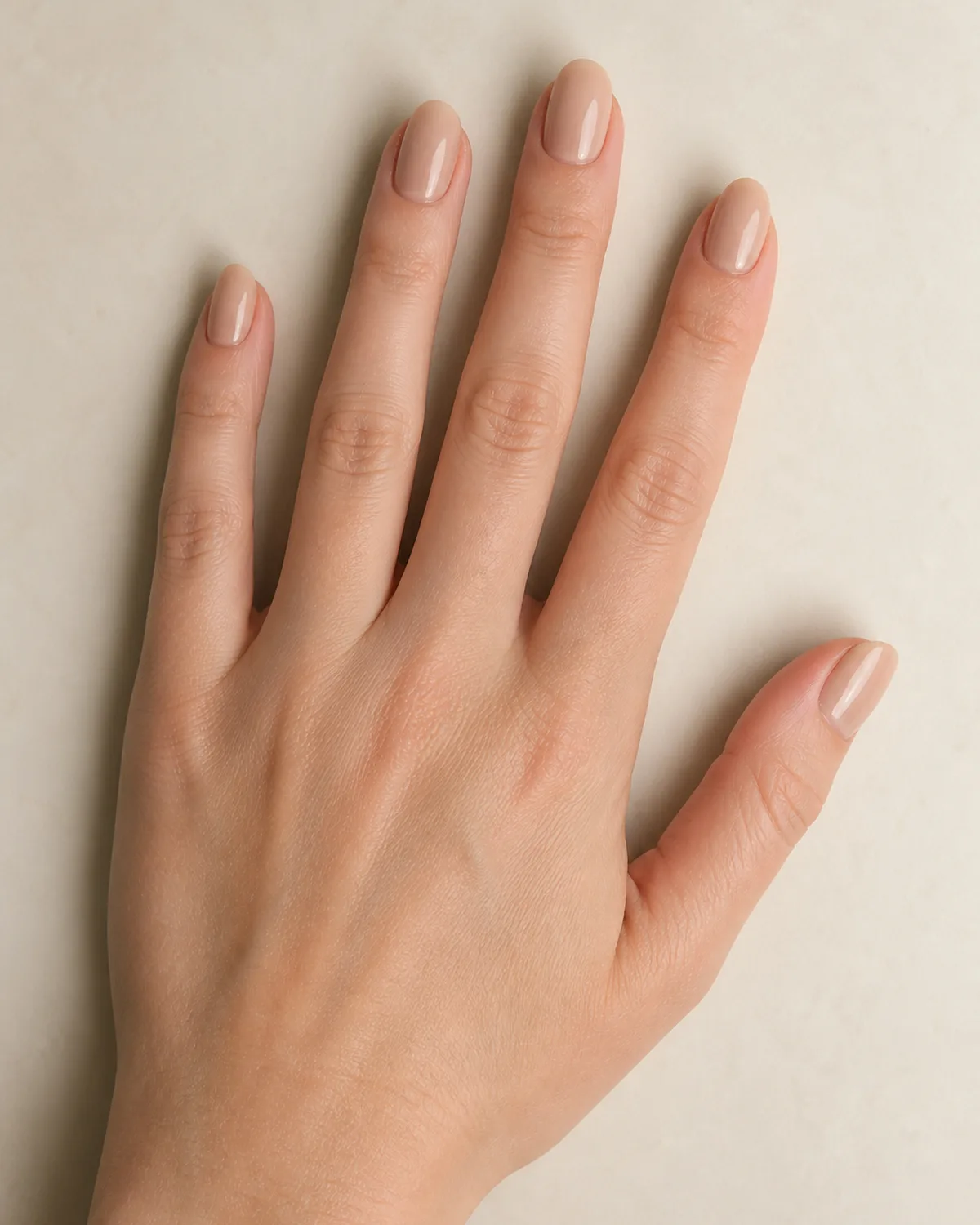
1. Glossy Nude on a Short Almond Extension
A short almond extension in a nude shade that matches the skin tone is the most invisible acrylic work a tech can do. The nail looks like a better version of what grew there naturally — same color, same proportions, but with a uniformly smooth surface and a gentle taper that natural nails rarely hold on their own.
The almond shape is forgiving on short lengths because the rounded tip distributes impact across a curve rather than concentrating it at a sharp point or a flat edge. For anyone whose natural nails chip or split before reaching this shape, a thin acrylic overlay solves the structural problem without adding visible bulk.
Ask the tech to match the acrylic powder to the underside of the forearm rather than the back of the hand. The wrist-side skin is closer to the actual nailbed color, and a match there reads seamless under any lighting.
2. She Asks for "Just Past the Fingertip" Every Time
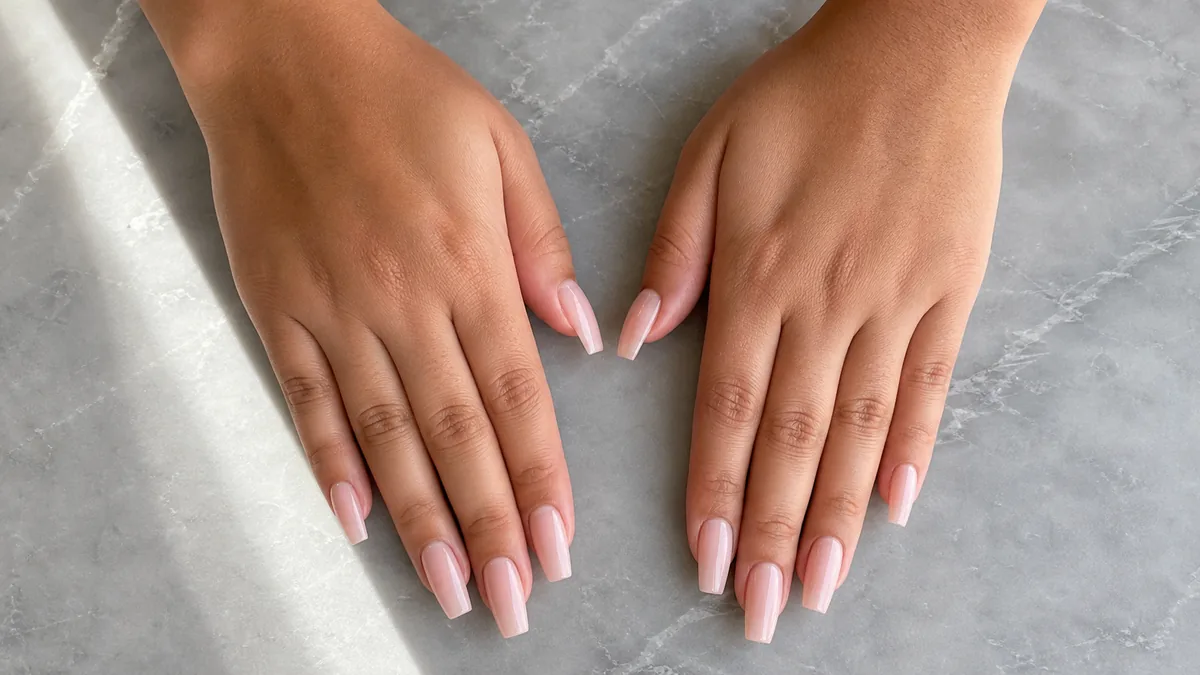
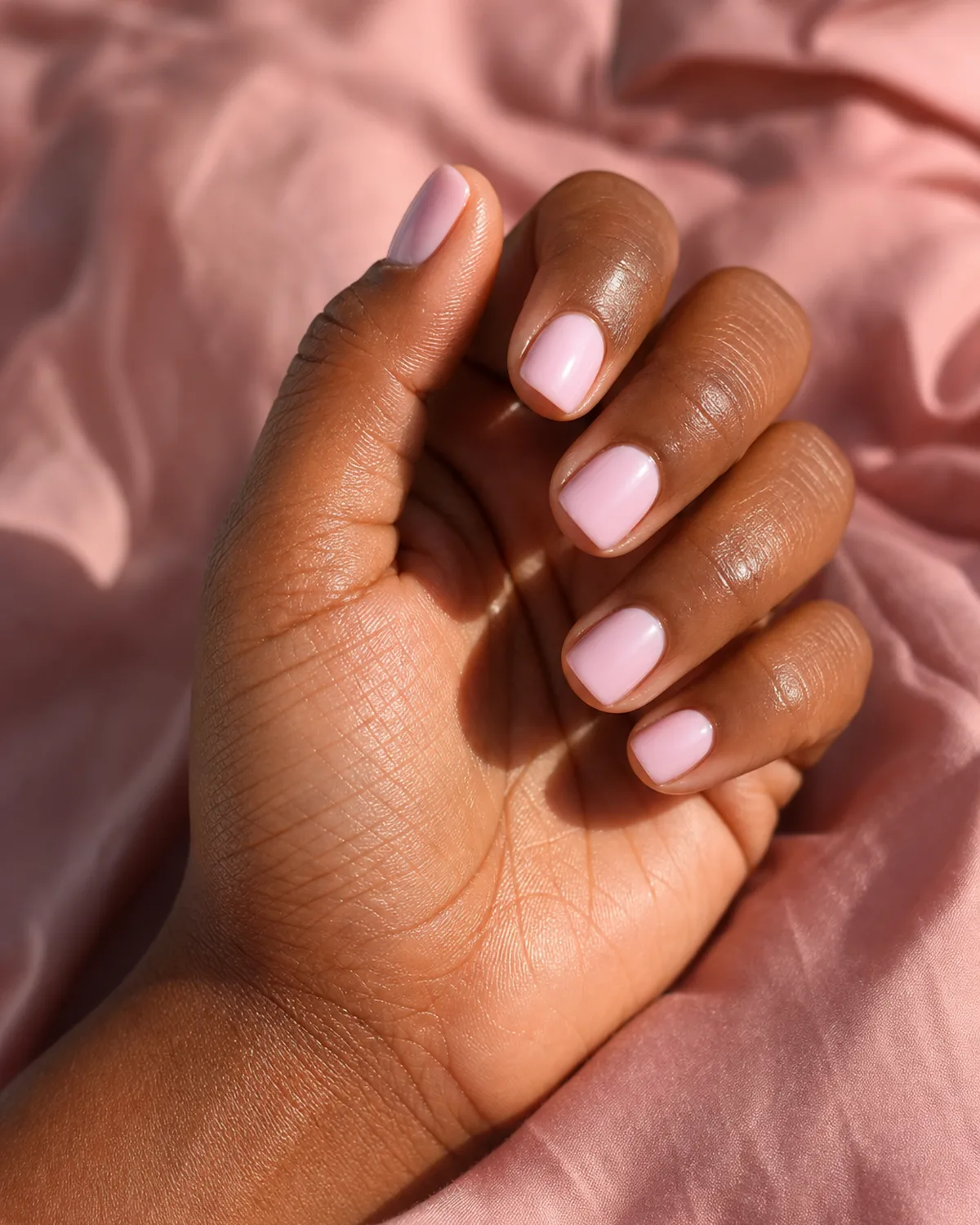
The phrase "just past the fingertip" is the single most useful instruction to give a nail tech when booking a short acrylic set. It tells them the exact length — about two to three millimeters of free edge — without ambiguity. Techs hear "short" and interpret it differently depending on their training and clientele. "Just past the fingertip" leaves no room for guesswork.
This soft pink squoval set lands in that range. The nails clear the fingertip enough to catch light and show the shape, but they sit flush against the finger pad when typing. The squoval shape (square with rounded corners) is the most functional for daily use because there are no sharp corners to snag and no dramatic taper to weaken.
The color here is deliberately close to a natural pink-white nailbed. At this length, the line between "are those acrylics?" and "she just has nice nails" disappears entirely.
3. Why a Short Coffin in Acrylic Hits Different
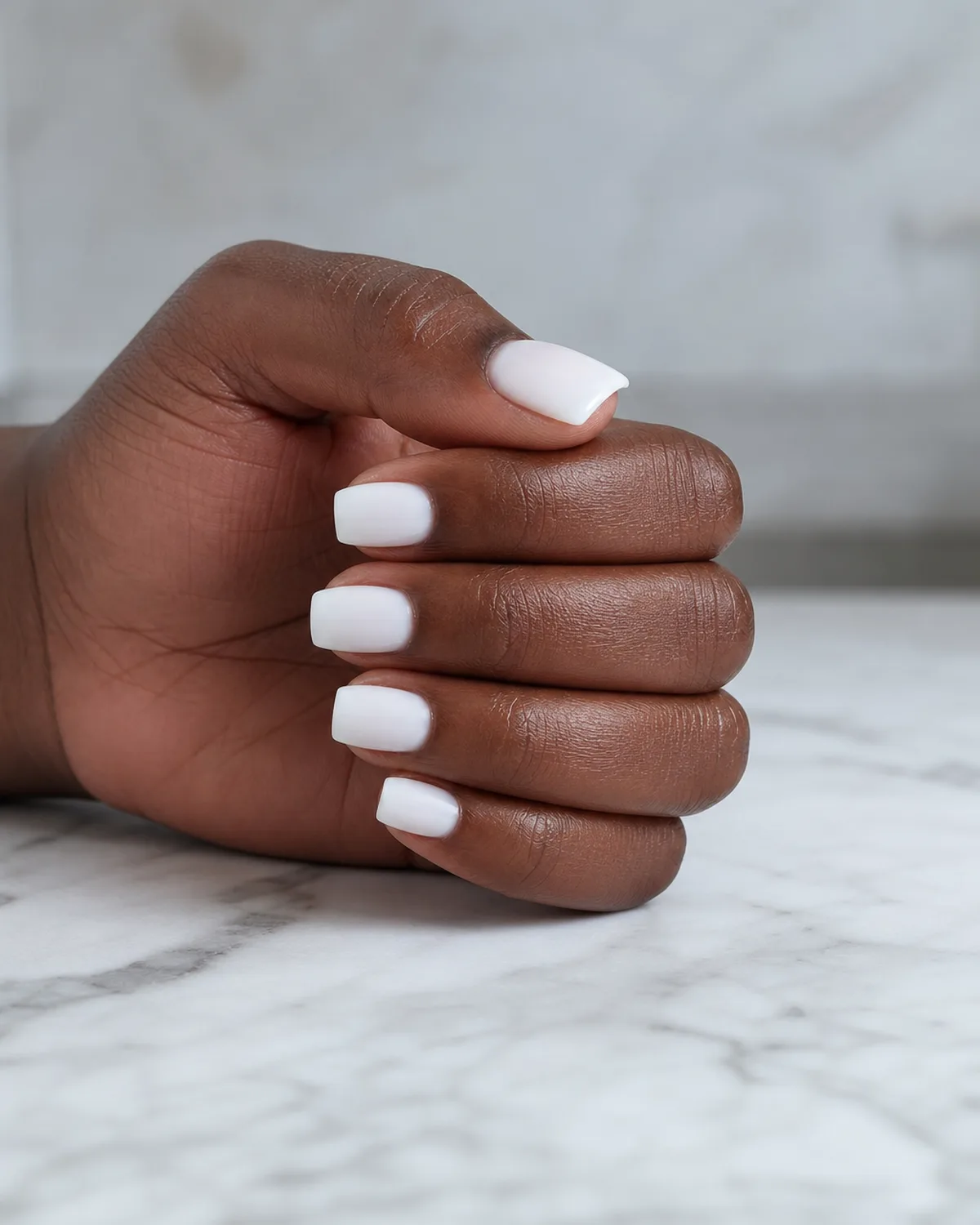
The coffin shape depends on straight, parallel side walls and a flat squared-off tip. Natural nails at a short length cannot hold that geometry — the plate flexes and rounds the edges within days. Acrylic locks the shape in place. The flat tip stays flat, the walls stay straight, and the silhouette reads as architectural even at a conservative length.
This milky white version leans into the structural quality of the shape. The opaque white makes the flat tip and clean lines more visible than a sheer or nude shade would. From the side, the profile looks like a miniature column — squared, deliberate, precise.
Short coffin works on every finger width. Wide nailbeds benefit from the visual narrowing that the tapered walls create. Narrow nailbeds benefit from the flat tip that adds perceived width at the end. The shape compensates in both directions.
4. Micro French Tips That Only Acrylic Can Hold
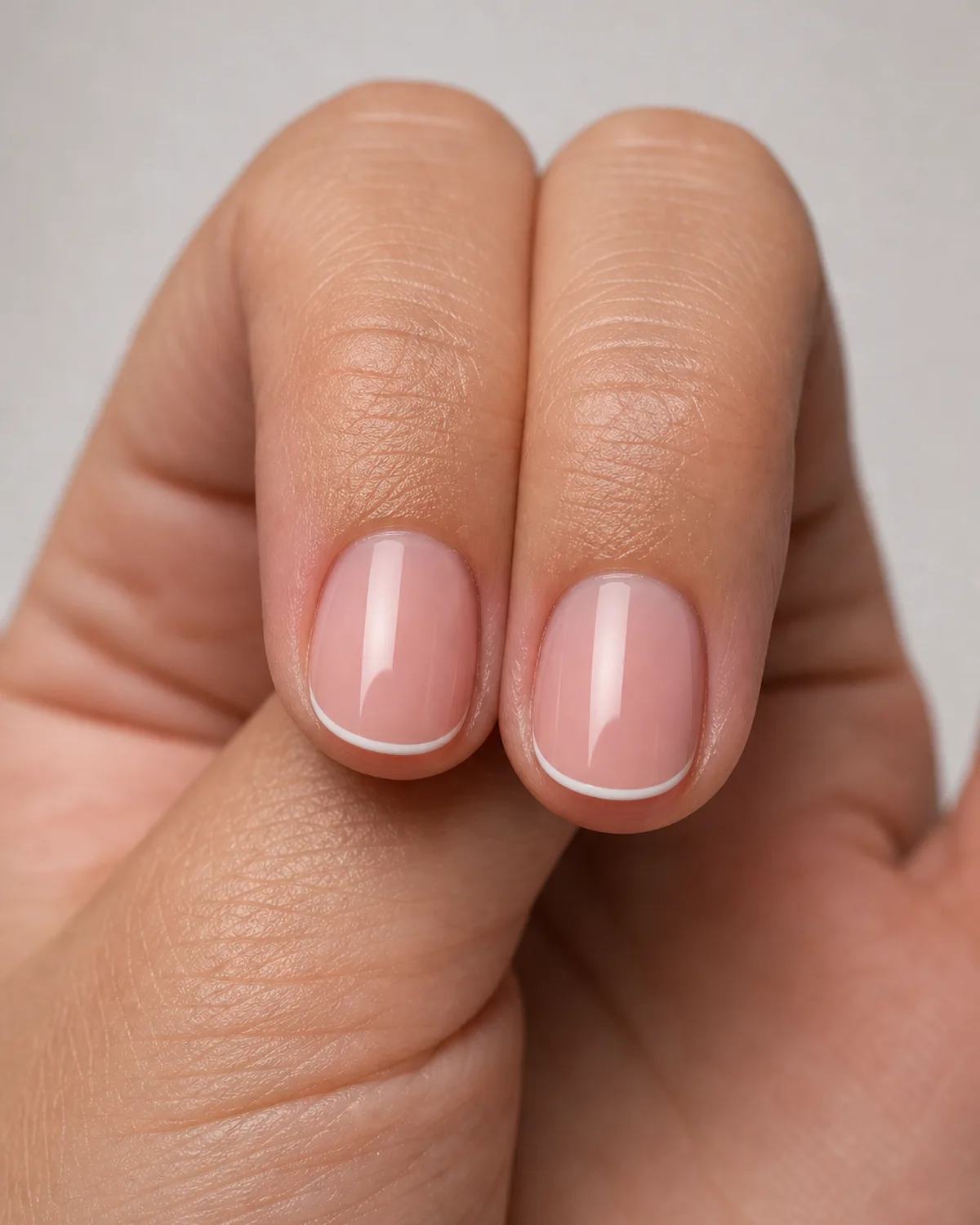
A micro French tip is a white line no wider than a millimeter at the free edge. On a natural nail, this line blurs within a day because the nail surface flexes and the polish shifts. On acrylic, the line stays crisp for the life of the set because the hard surface underneath does not bend.
The tech uses a detail brush and a slow, deliberate pull across the tip — one stroke per nail, wiped clean and reloaded between each one. Any hesitation creates a bump in the line, which is why this look is difficult to execute on anything softer than acrylic.
The sheer pink base is acrylic powder mixed at a lower ratio to create translucency. The natural nailbed shows through, so the only visible color is that thin white crescent.
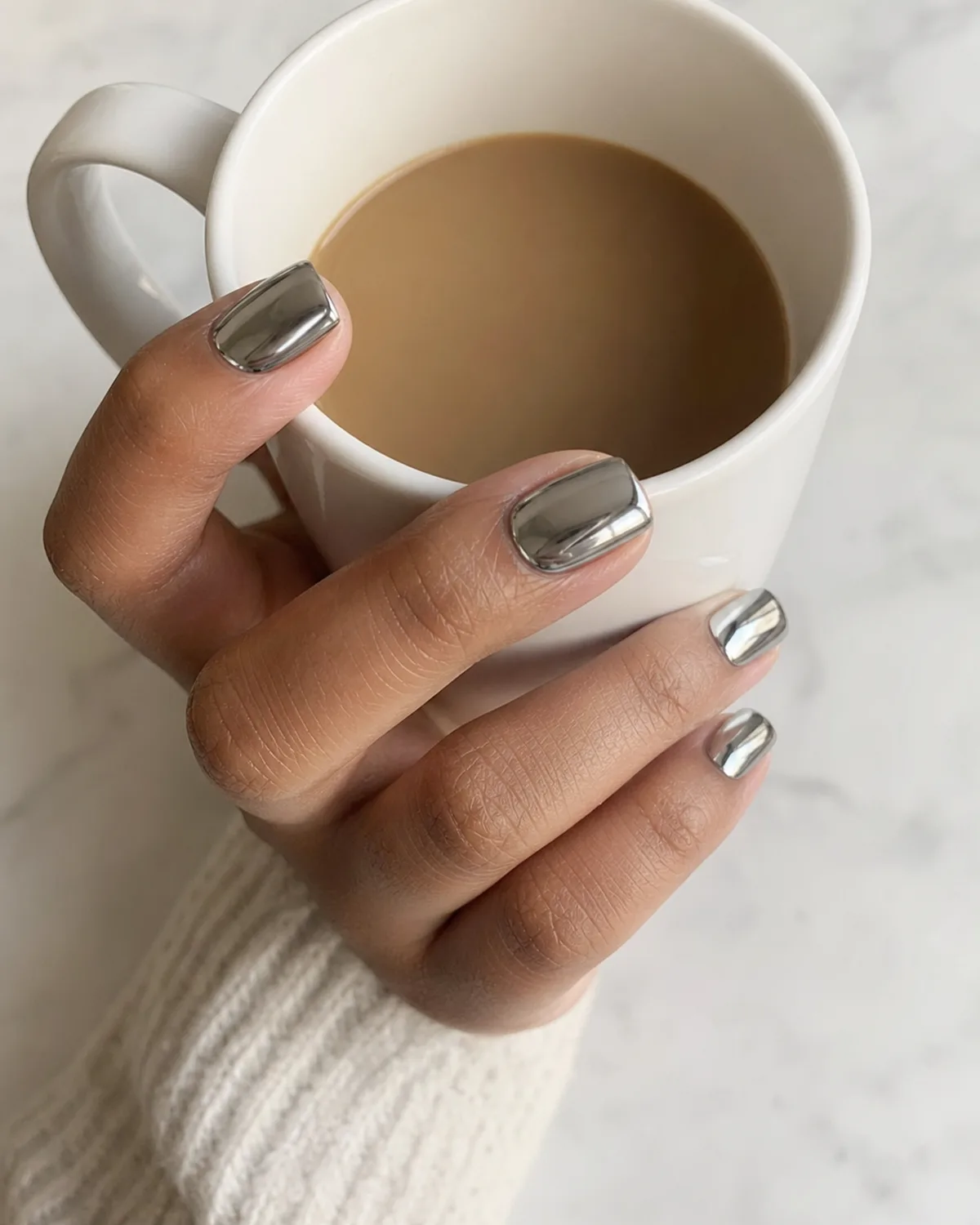
5. The Chrome Finish on Short Square Feels Like Jewelry
Chrome nails need a perfectly smooth, hard surface to reflect light without distortion. Acrylic provides that out of the box. The chrome powder — rubbed on over a no-wipe gel top coat — mirrors the surroundings so cleanly that the nails function like tiny concave mirrors on the fingertips.
On a short square shape, the flat surface area maximizes the reflective plane. Longer nails curve, which breaks the mirror effect into segments. Short and flat means the entire nail face reflects as one continuous sheet of metal.
This silver version catches light at every angle — holding a coffee cup, adjusting a bag strap, resting a chin on a hand. The reflections shift constantly, which is why chrome on short nails reads less like polish and more like a piece of jewelry permanently attached to the finger.
Both create a hard overlay on short nails. Choosing between them depends on what the nails need and how often fills are practical.
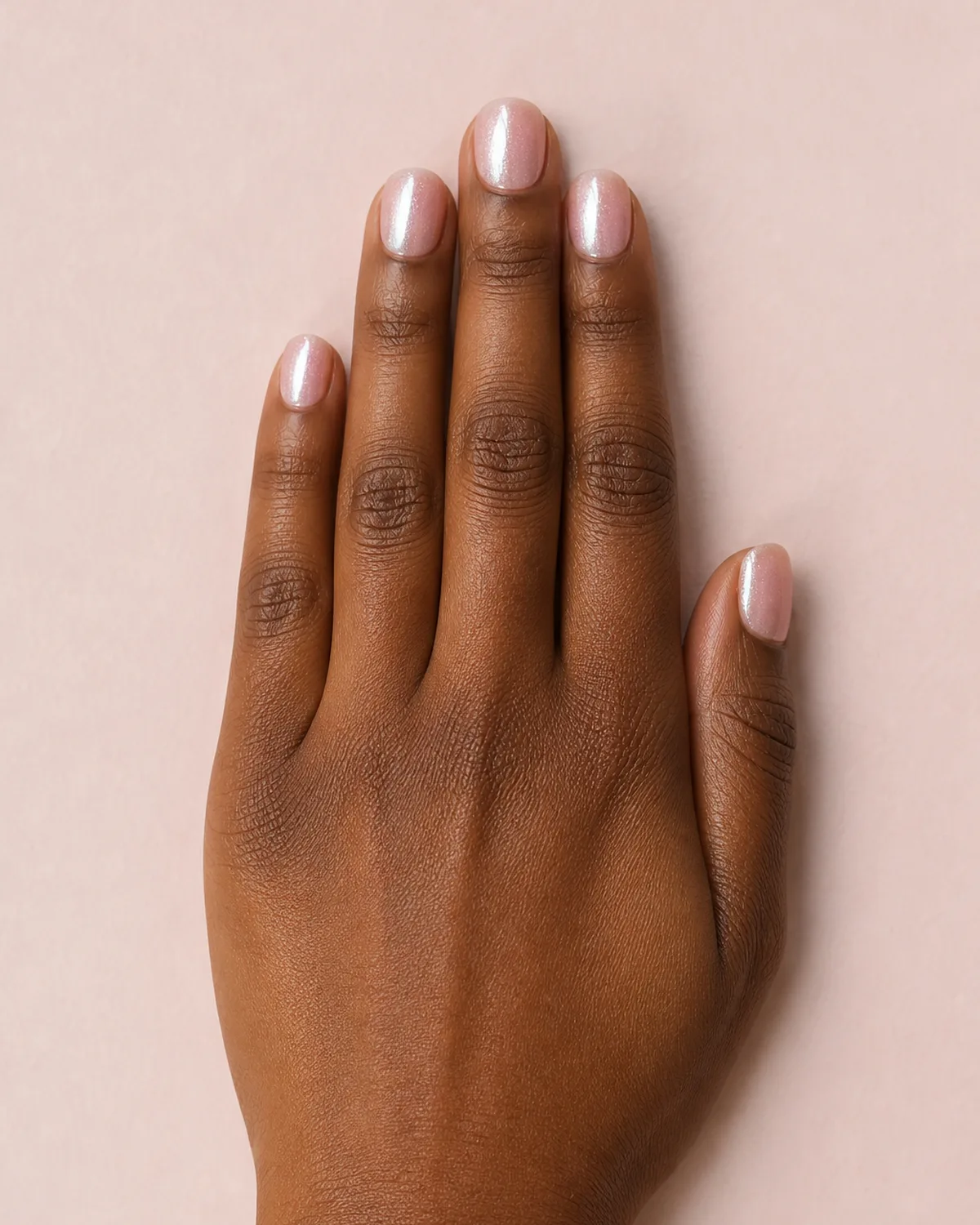
6. Glazed Donut on a Short Round — No Lifting, No Chipping
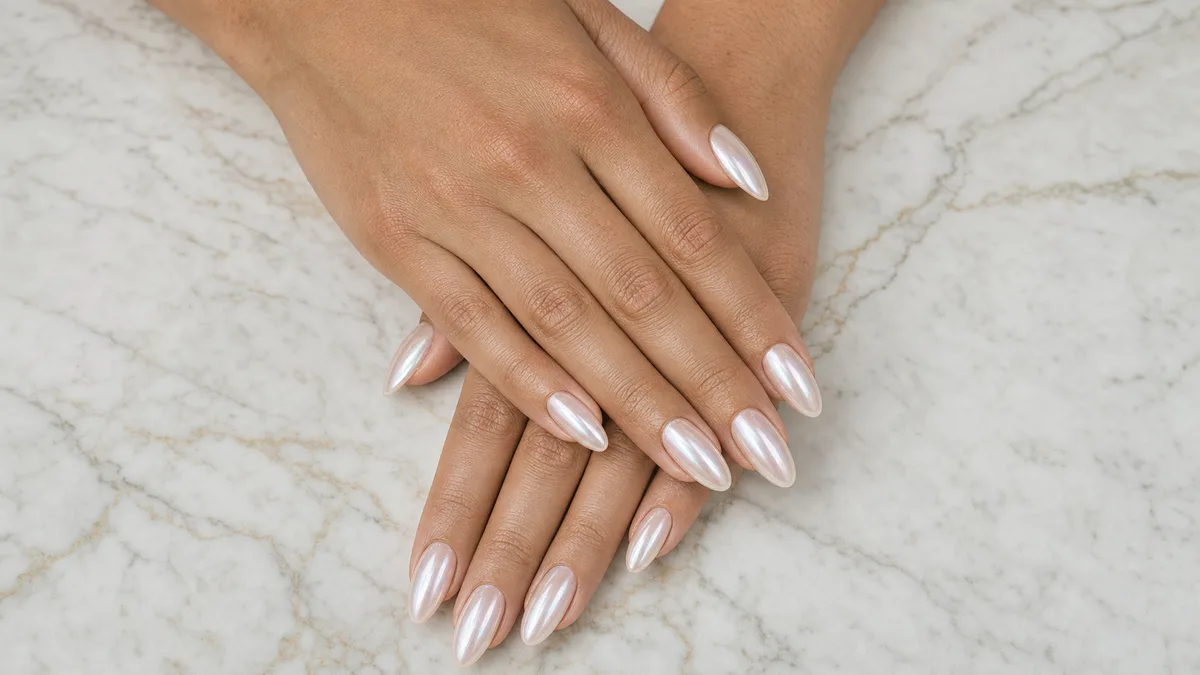
The glazed donut finish is a sheer milky-pink base topped with a fine chrome or pearl powder that creates a translucent shimmer rather than a solid metallic coat. On acrylic, the shimmer sits on a rigid, perfectly level surface, which eliminates the clouding and uneven reflection that happen when the same finish goes over a natural nail that flexes.
Short round nails suit this finish because the curved free edge catches light in a soft arc rather than a sharp line. The shimmer moves across the nail in a gradient as the hand shifts position — it breathes, in a way that chrome does not.
The no-chip advantage here is real. Because the acrylic base does not bend, the gel top coat (which carries the shimmer) stays bonded uniformly. On natural nails, the flex at the tip is where glazed finishes start to peel within five days. On acrylic, two weeks with zero lifting is routine.
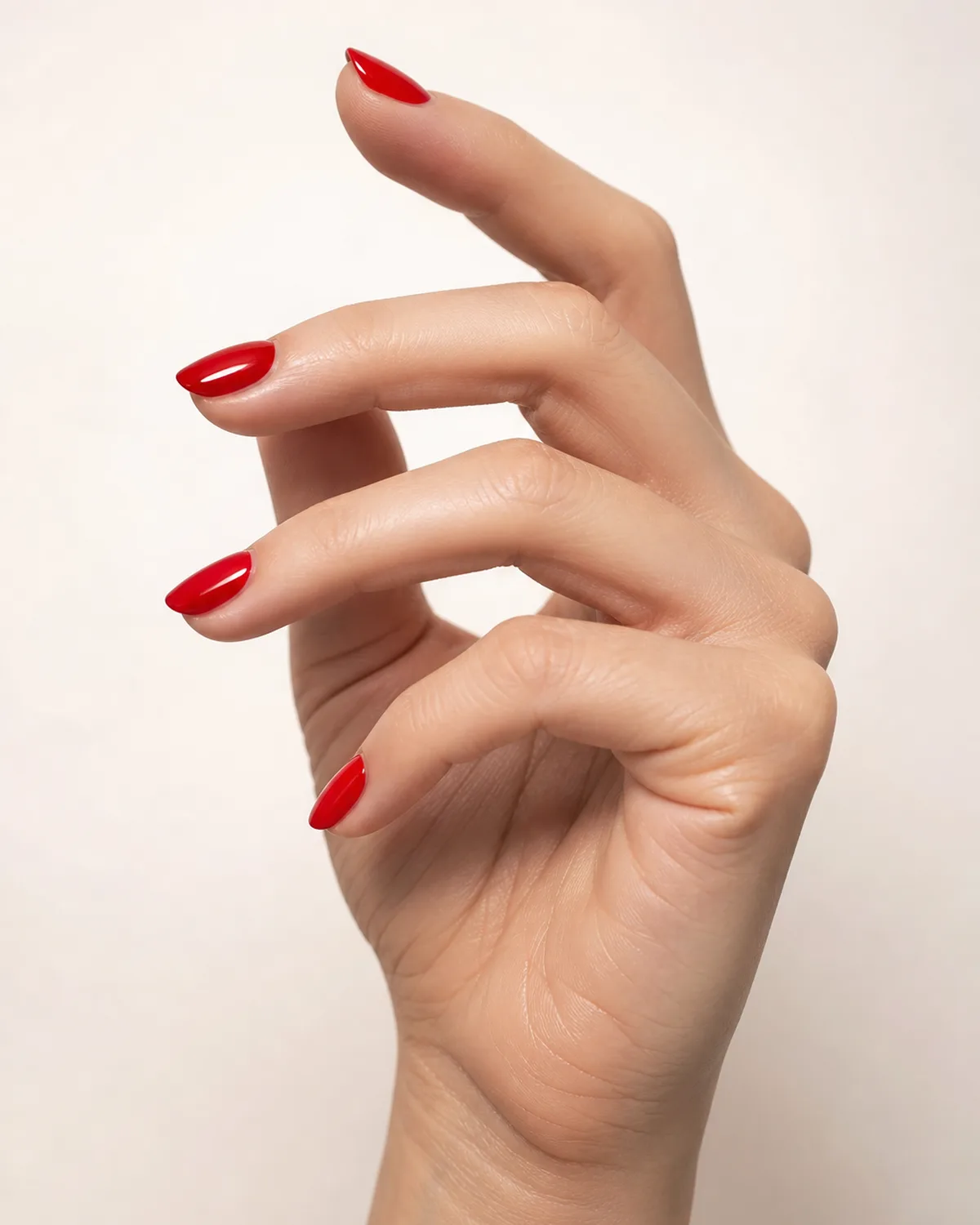
7. She Switched from Long to Short Acrylic and Kept the Drama
The assumption that short nails are quiet nails falls apart the moment a bold color enters the frame. This cherry red on a short pointed (sometimes called a short stiletto) acrylic proves that impact comes from color saturation and shape precision, not from length.
Short pointed acrylics have a subtle taper that ends in a gentle point rather than the aggressive spike of a full-length stiletto. The shape is architectural enough to stand out in a crowd of squovals and rounds, but the point is blunt enough that it never catches on fabric or scratches skin.
The red here is a true cherry — blue-based, not orange-based — which reads deeper and richer on shorter nails. Warm reds push toward coral territory at short lengths, which can flatten the look. Cool-toned cherry holds its depth regardless of how much nail surface is visible.
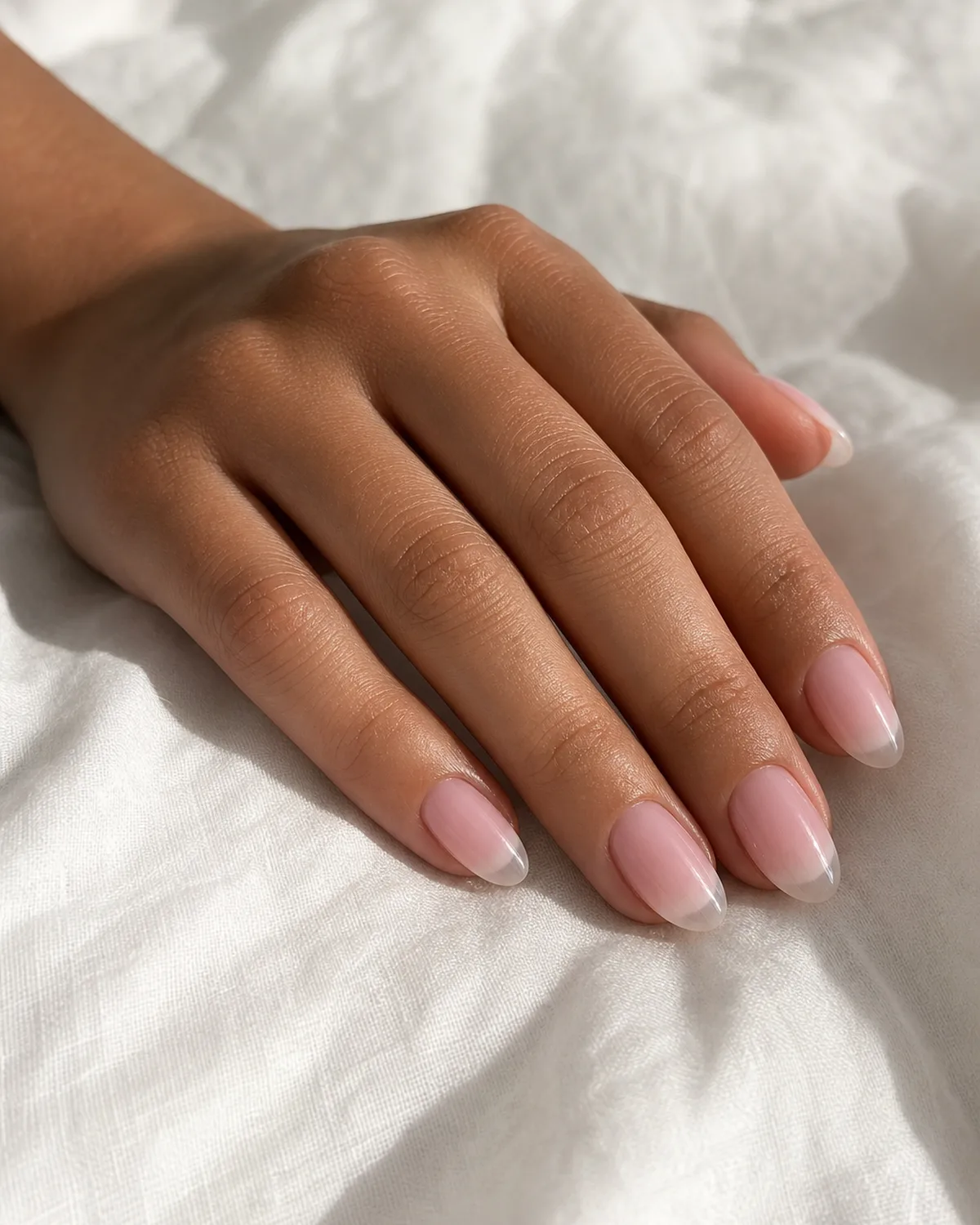
8. Baby Pink Ombré Fading into a Clear Tip
The ombré technique on acrylic involves blending two acrylic powders (or a powder and clear) while the product is still wet on the nail form. The gradient happens during application, not after — it is built into the structure of the nail itself. This makes the transition smoother and more durable than a painted-on gradient because there is no layer boundary where the colors meet.
This baby pink-to-clear version is one of the most requested short acrylic designs in salons because it combines two advantages: the pink at the cuticle area matches the skin, and the clear tip creates an illusion of nail length by letting light pass through.
On short nails, the gradient compresses into a tighter space, which actually intensifies the transition. The eye reads the fade faster, making the effect more pronounced than it would be on a long nail where the gradient stretches over a centimeter of space.
9. What Builder Gel Over Natural Nails Actually Looks Like
Builder gel is not an extension — it is a protective dome. A thin layer of hard gel over the natural nail creates a smooth, glossy surface that adds strength without adding length. The natural nailbed shows through, and the only visible difference is a glassy sheen that looks like clear polish that never chips.
This overlay is the entry point for anyone who wants the durability of acrylics without the commitment to extensions, fills, or a specific shape. The natural nail shape stays exactly as it is. The gel just reinforces it, filling ridges and sealing the surface against water and daily wear.
Fills are less frequent than with extensions — every three to four weeks instead of two to three — because there is no length growing out and creating a visible gap. The gap still forms at the cuticle, but it is less noticeable on a clear overlay than on a colored set.
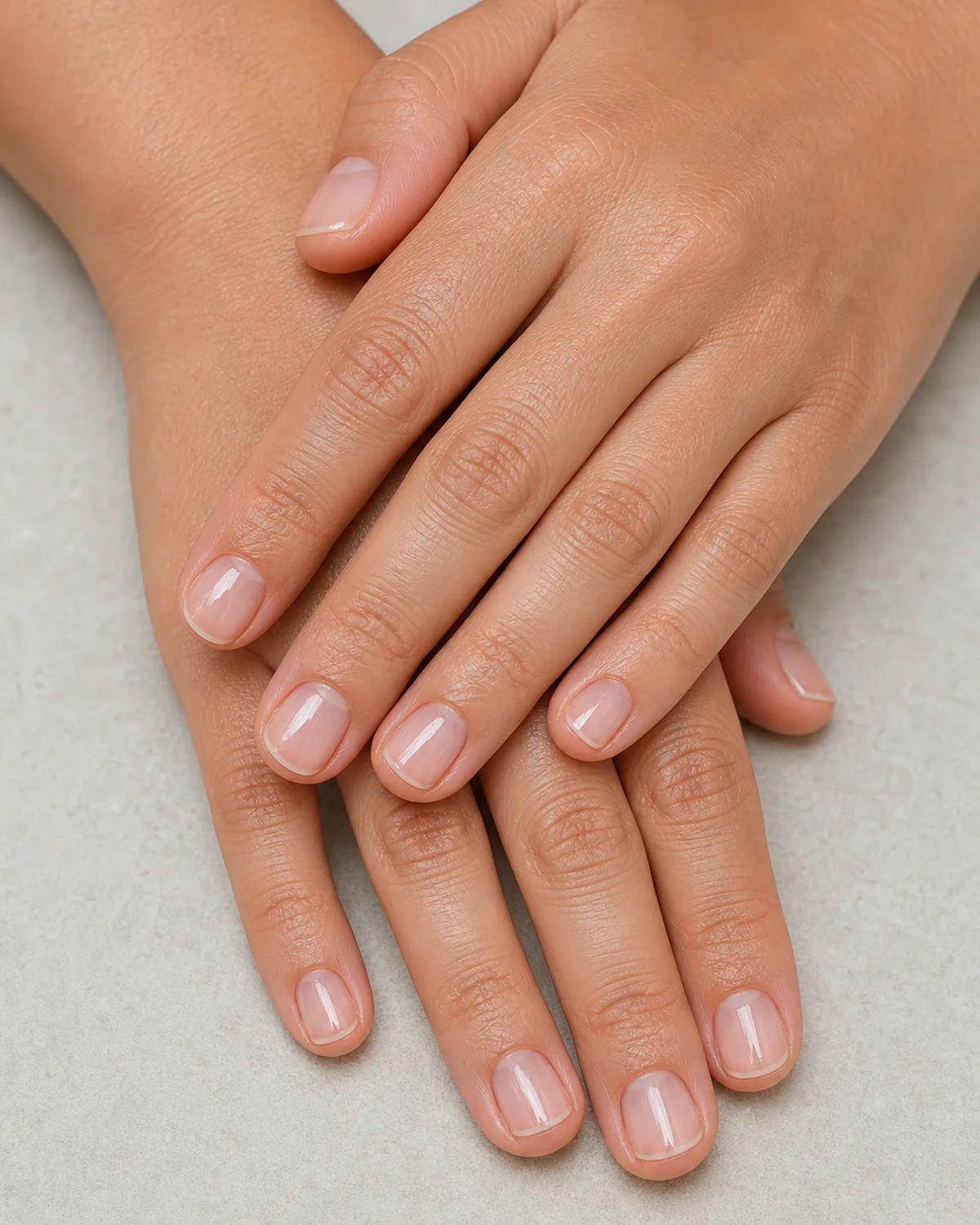
10. One Glitter Accent Nail on an Otherwise Clean Set
A single accent nail breaks the monotony of a uniform set without committing to a full design. This version uses four glossy nude coffin nails and one holographic glitter nail on the ring finger — the finger that naturally draws the eye because of its association with rings and jewelry.
Holographic glitter shifts color depending on the light angle: silver in shade, rainbow in direct light, and a warm gold under warm bulbs. Embedding the glitter in acrylic (rather than painting it on top) creates a smooth surface that does not snag on hair or fabric, which is the main practical complaint about glitter on natural nails.
The coffin shape on the accent nail matches the other four, keeping the overall set cohesive. Mixing shapes (like a stiletto accent on a round set) can work on long nails where the difference is dramatic, but on short nails the shape difference is too subtle to read, so matching is the cleaner choice.
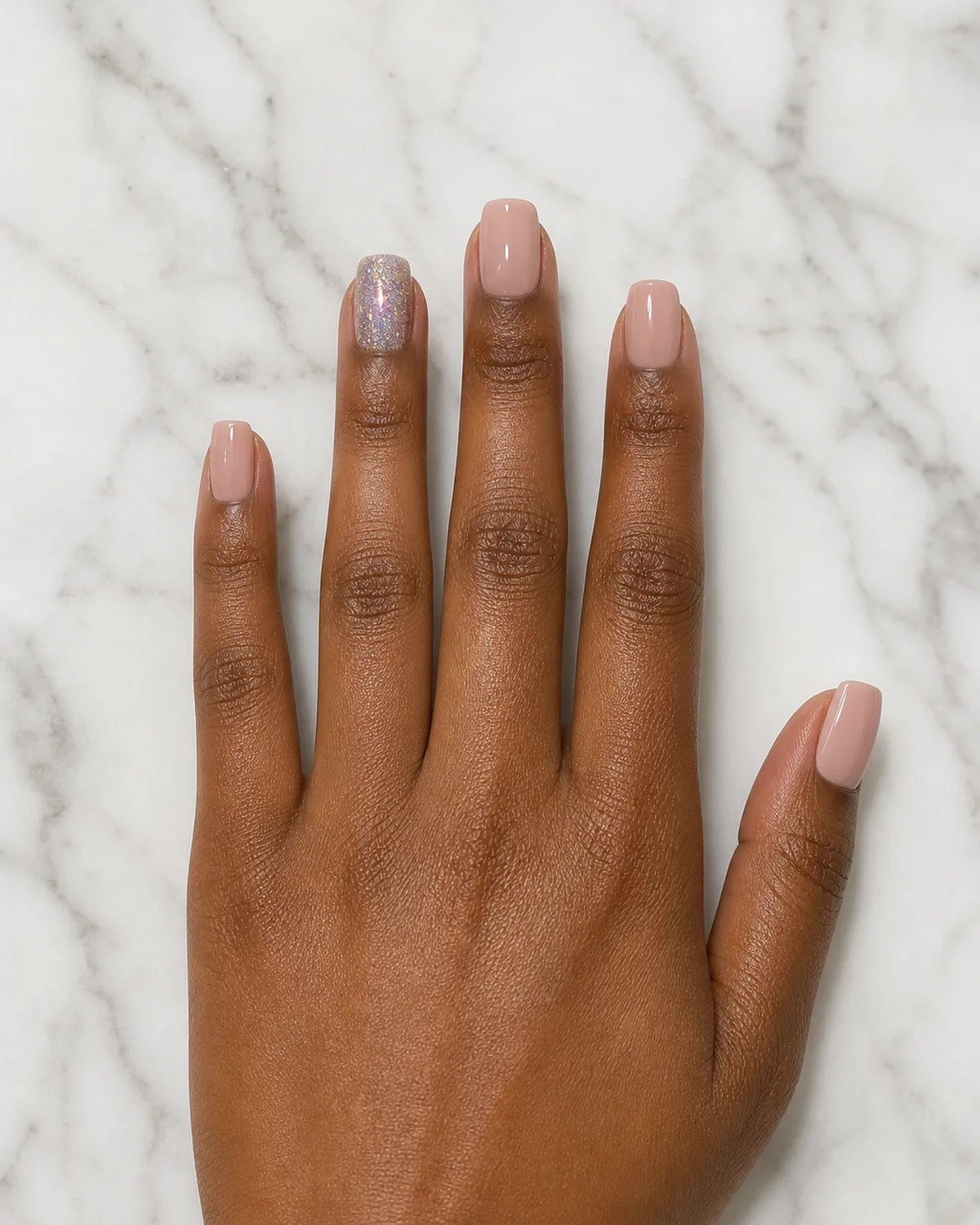
11. The Short Acrylic Square That Survived a Two-Week Vacation
Durability is the argument for acrylic over gel polish on short nails, and a two-week vacation is the stress test. This deep burgundy square set shows zero chips, zero lifting, and zero tip wear after fourteen days of sunscreen, saltwater, pool chlorine, and luggage handling — conditions that would destroy a gel manicure by day five.
The square shape contributes to the durability. Unlike almonds or stilettos, the square edge distributes force evenly across the full width of the nail. There is no taper concentrating stress at a point. Impact hits the flat edge and disperses sideways rather than cracking forward.
The burgundy color here hides any micro-scratches that do accumulate on the surface. Lighter colors show surface wear sooner because scratches scatter light and create a matte spot on a glossy surface. Dark colors absorb that scattered light, keeping the finish looking wet and fresh longer.
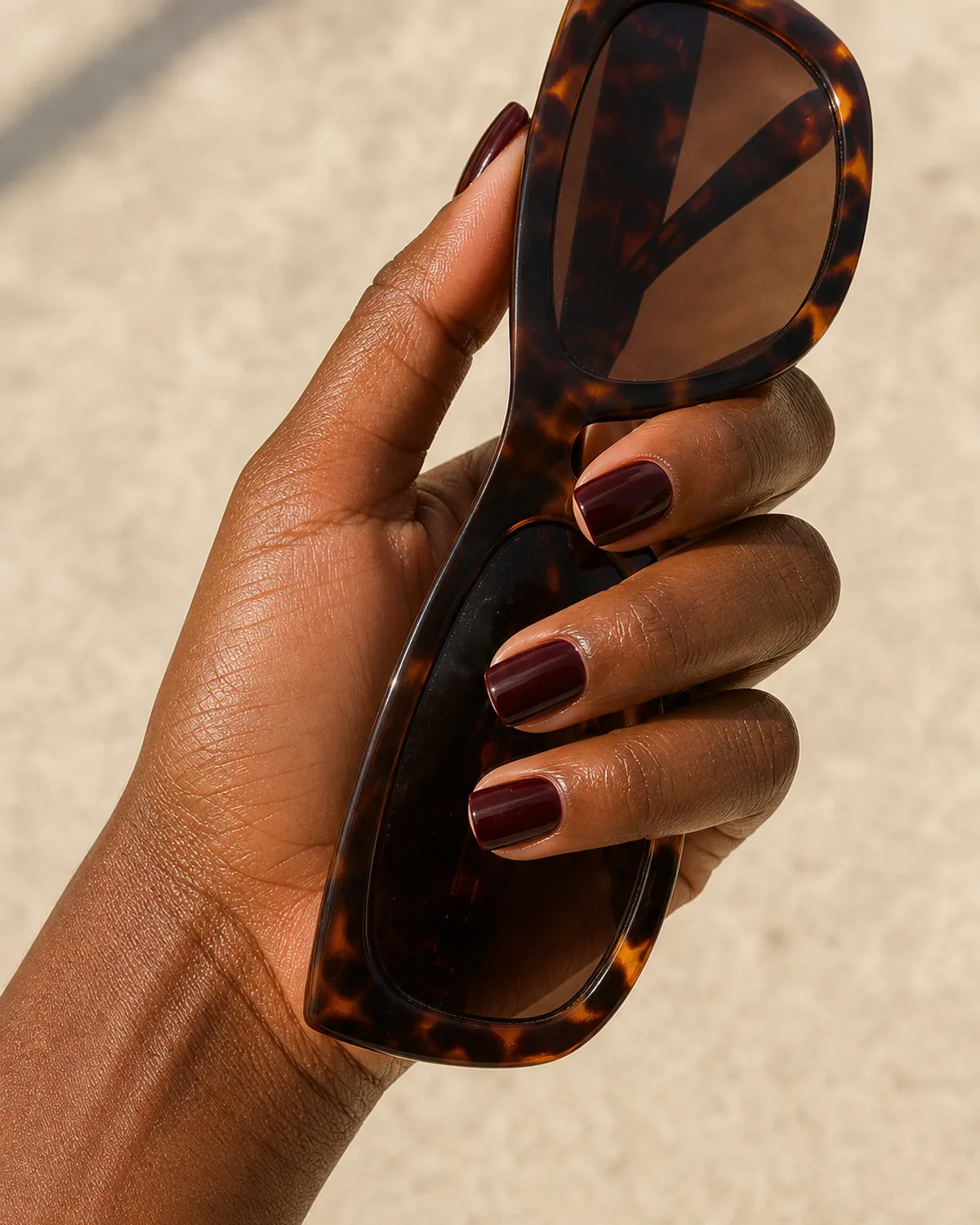
12. Cat Eye Swirl Locked Under a Short Acrylic Dome
Cat eye nails use a magnetic gel that contains iron particles. When a magnet is held over the wet gel, the particles align into a luminous stripe that shifts position as the viewing angle changes. Acrylic acts as the structural base underneath, and the magnetic gel sits as a thin layer between the acrylic and the top coat.
On short almond nails, the cat eye stripe runs diagonally across a compact surface. The stripe appears wider relative to the nail size, which makes the magnetic effect more intense and concentrated than it would be on a longer nail where the stripe is thinner and the surrounding negative space dilutes the impact.
This olive-green version with a golden swirl sits in the intersection of moody and luminous. The dark base disappears in shade, leaving only the golden line floating on the surface. In direct light, the full green depth opens up and the gold stripe shifts position in real time.
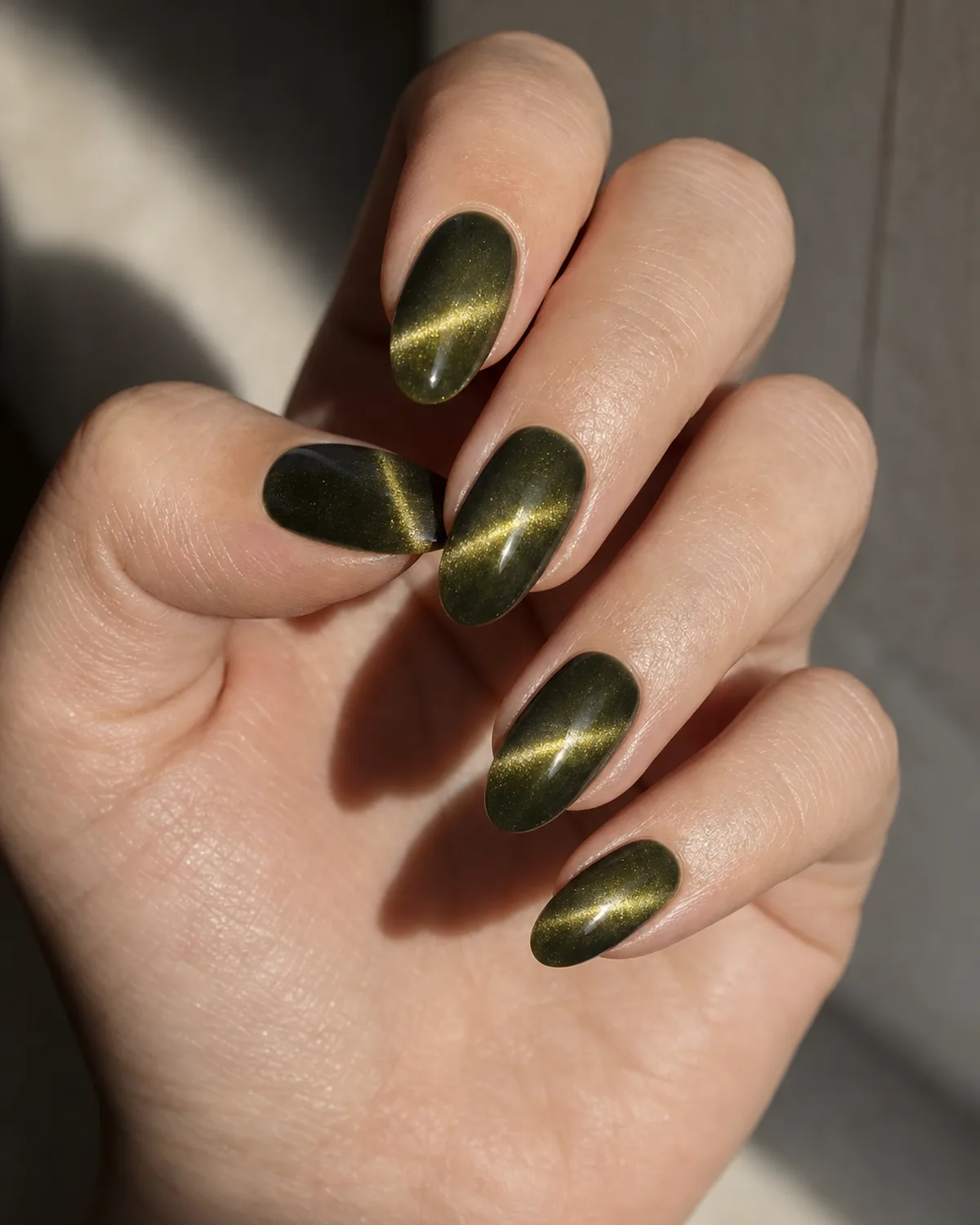
Clear communication prevents the most common short-acrylic complaints. Say these four things before the tech starts filing.
13. How to Ask Your Tech for Short Without Getting Stubs
The gap between "short" and "stubby" is about one millimeter. Stubs happen when the tech files the free edge flush with the fingertip. Intentional short means two to three millimeters of free edge remain — enough for a sliver of white or color beyond the finger pad.
Show a reference photo that demonstrates the exact length. Verbal descriptions fail here because "short" means different things to different people. A photo sets the target in pixels, not in conversation.
The other adjustment is the cuticle area. A well-shaped cuticle pushback before application gives the acrylic a clean starting line. When the cuticle area is messy, the nail looks shorter than it is because the eye measures length from the visible start of the acrylic, not from the true cuticle line.
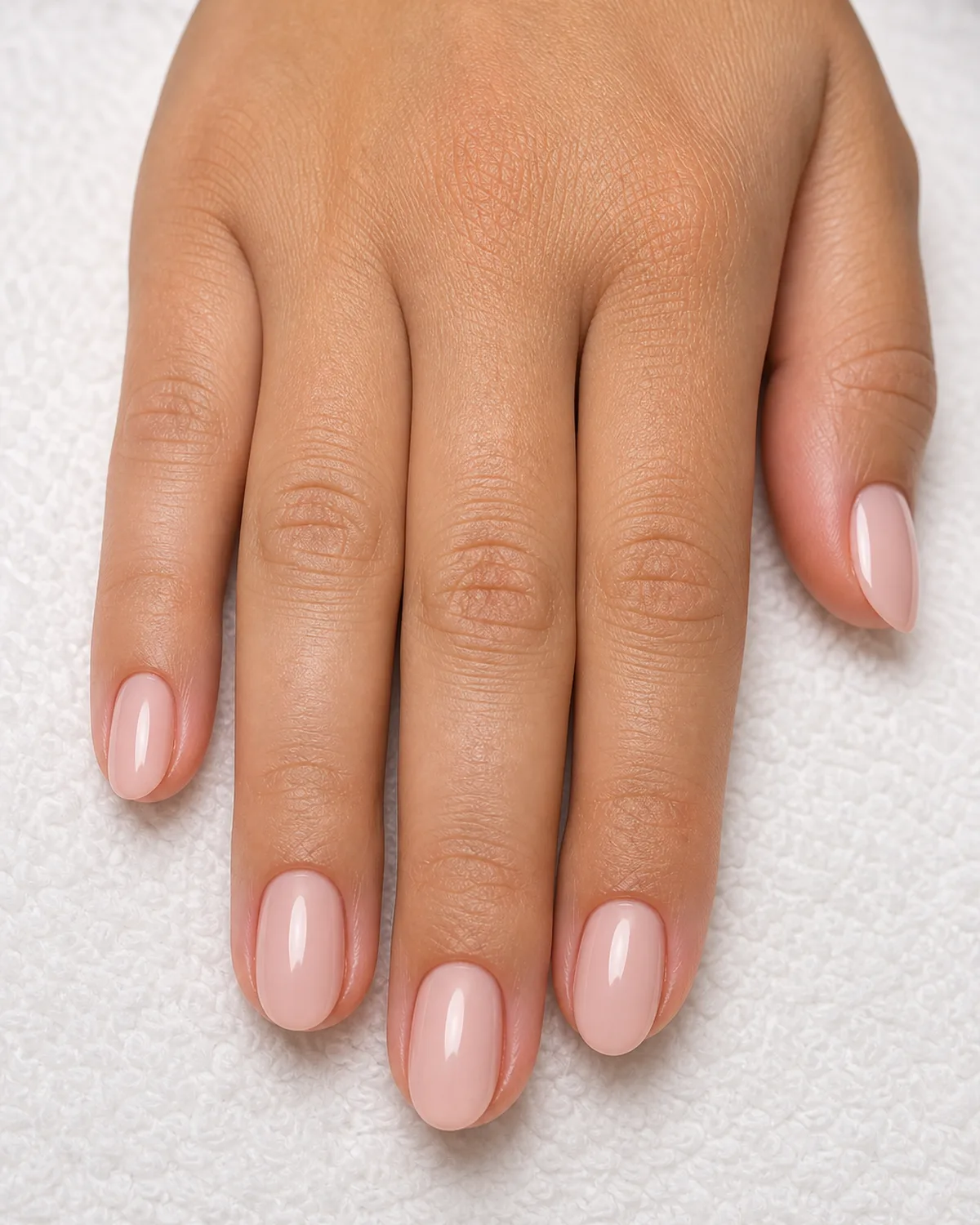
14. Matte Mocha That Whispers Instead of Shouts
Matte finishes absorb light instead of reflecting it, which makes the color appear deeper and the surface appear softer. This mocha brown on short round acrylics looks like suede — a textile texture rather than a lacquer texture. The effect is quiet in a way that glossy finishes, even in the same shade, are not.
The matte top coat is the last step in the application. It goes over the gel top coat (which seals the acrylic and the color) and chemically flattens the surface at a microscopic level. This means the matte effect is on top of a glossy, sealed layer — if the matte coat wears off at the tip after a week, the gloss underneath appears rather than bare acrylic.
Round shapes suit matte finishes because the gentle curve distributes the light absorption evenly. Sharp shapes (coffin, square) create visible matte-versus-shadow transitions at the edges, which can read as scuffing rather than intentional texture.
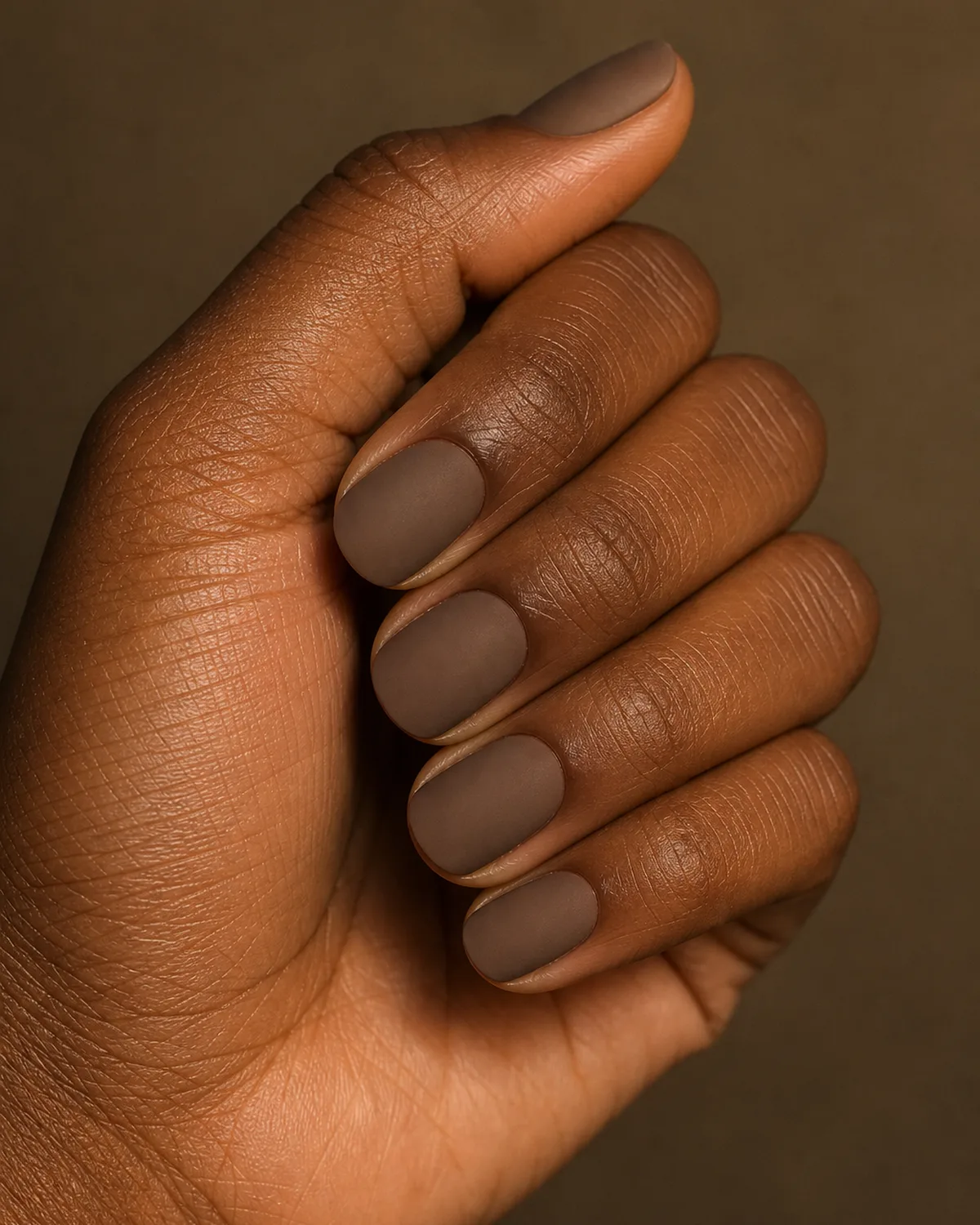
15. The Full Set Sloane Wears When She Wants Low Maintenance
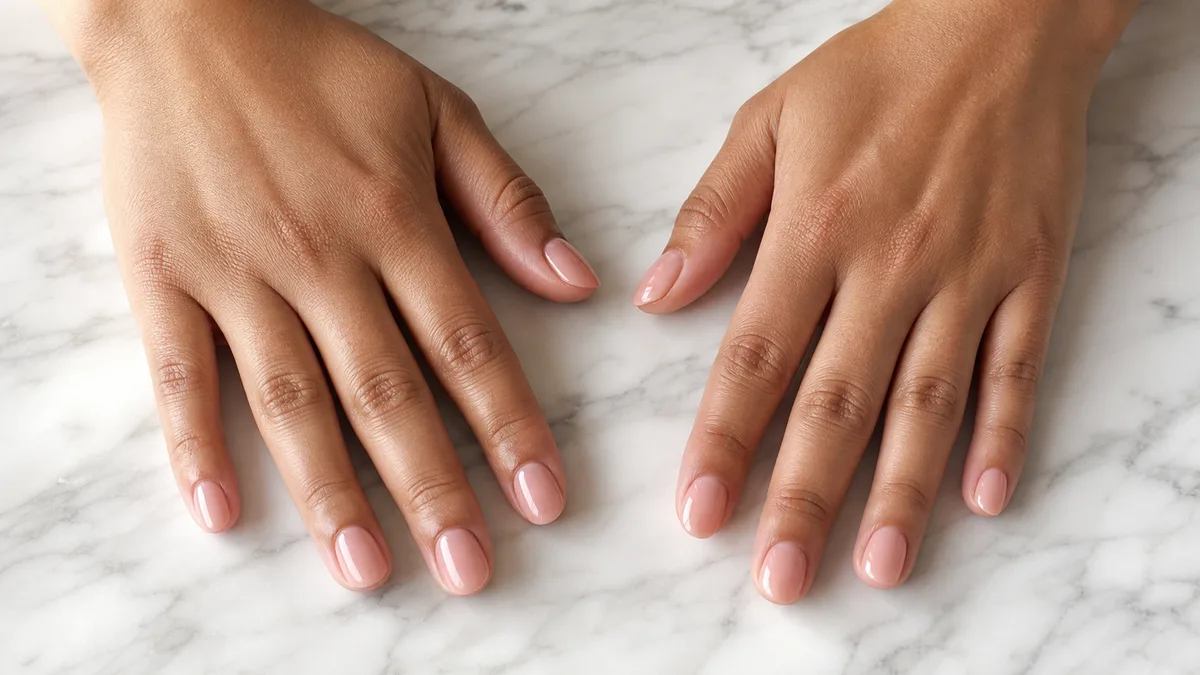
Sloane's everyday set is a sheer pink acrylic overlay on a short squoval — the "your nails but better" look that passes for natural nails at arm's length and reveals its polish-smooth surface only up close. The sheer pink lets the natural nailbed color show through, so the acrylic reads as enhancement rather than coverage.
This is the set for anyone who wants the benefits of acrylic (strength, smoothness, uniform shape) without any visible evidence of salon work. No one asks "where did you get your nails done?" because the nails look like they grew that way. Which is exactly the point.
Maintenance is minimal: a fill every three weeks, a swipe of cuticle oil daily, and a clear top coat refresh at the two-week mark if the surface starts to dull. Three products, one appointment per month, and hands that always look put together.
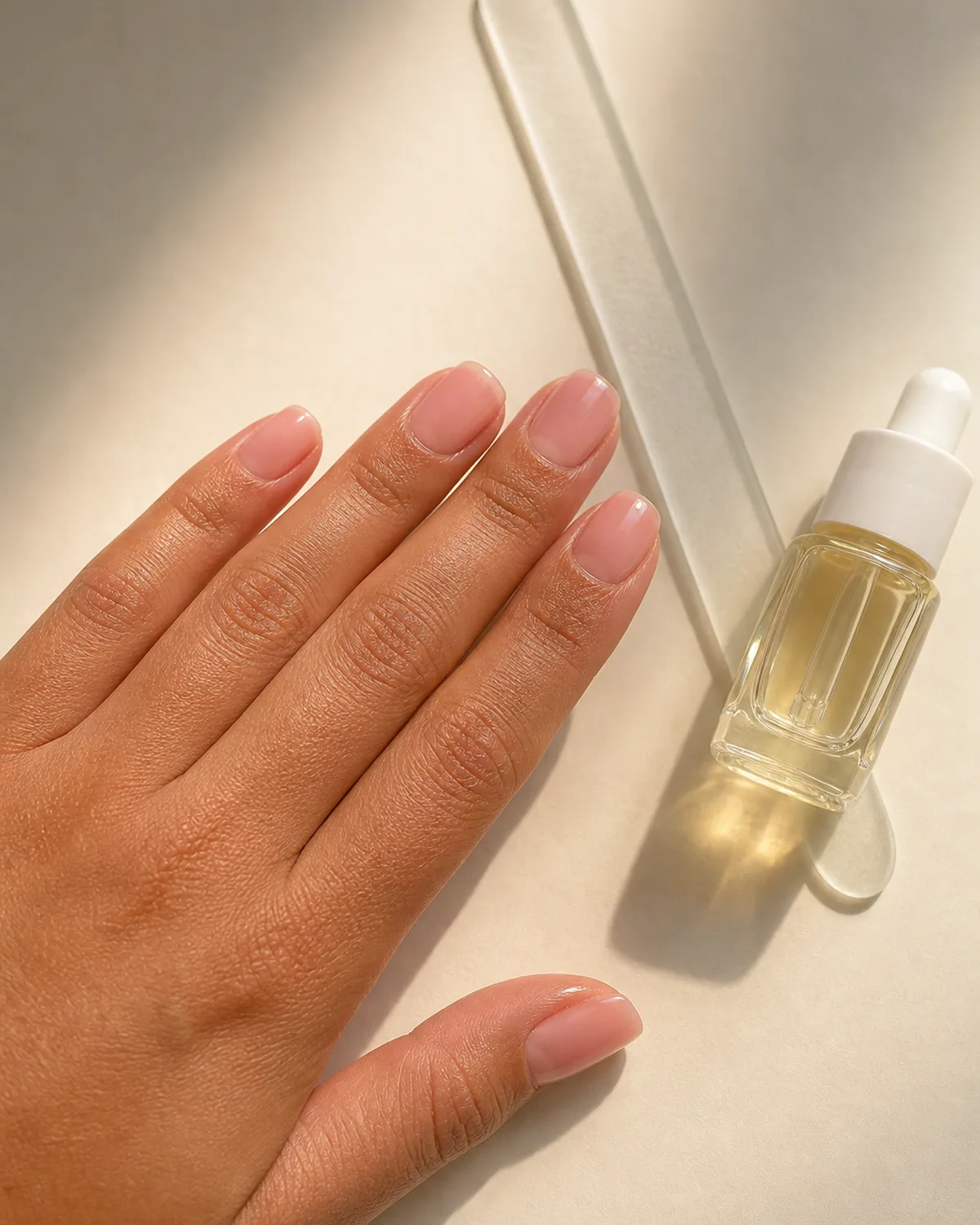
That covers fifteen ways to wear short acrylic nails — from invisible overlays to bold chromes to matte finishes that feel like suede on the fingertips. Short length keeps the practical advantages. Acrylic keeps the structural ones. The combination means every shape and finish that long nails claim is available at a length that works for real life.
15 Short Acrylic Designs
- 1Glossy nude almondSkin-match shade, invisible enhancement.
- 2Just past the fingertipSoft pink squoval, the everyday length.
- 3Short coffinFlat tip, straight walls, milky white.
- 4Micro FrenchRazor-thin white line on sheer pink.
- 5Chrome squareMirror-finish silver, catches every angle.
- 6Glazed donut roundPearlescent shimmer, zero chipping.
- 7Cherry red pointedShort stiletto, bold color, full drama.
- 8Pink ombréBaby pink fading to clear at the tip.
- 9Builder gel overlayClear dome, natural nails underneath.
- 10Glitter accentOne holographic ring finger, four nude.
- 11Burgundy squareChip-free through a two-week vacation.
- 12Cat eye swirlMagnetic stripe under an acrylic dome.
- 13Ask for shortReference photo, 2–3mm past the tip.
- 14Matte mochaSuede texture, no shine, all warmth.
- 15Sloane's everyday setSheer pink, squoval, your nails but better.
styvea.com

Sloane Avery edits Styvea, where she shares nail design ideas, shapes, colors, and at-home manicure how-tos for anyone who loves a good manicure. Every guide is reviewed for clarity, usefulness, image accuracy, and Pinterest-to-page alignment before publication. Visit the About page.