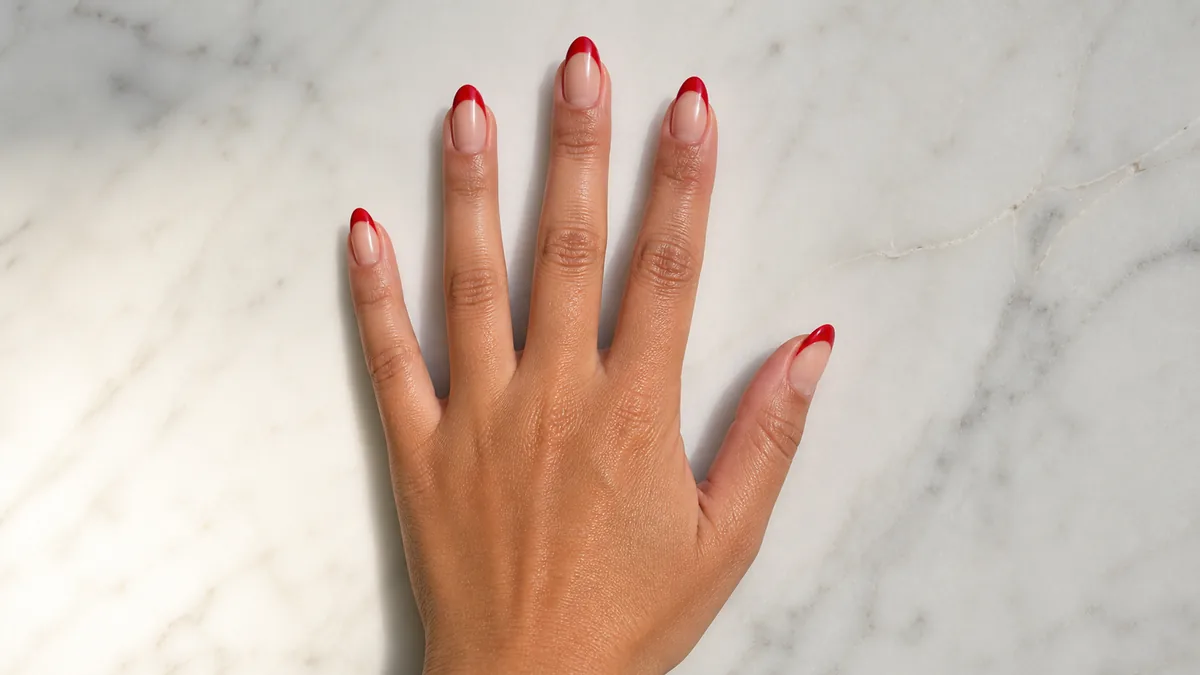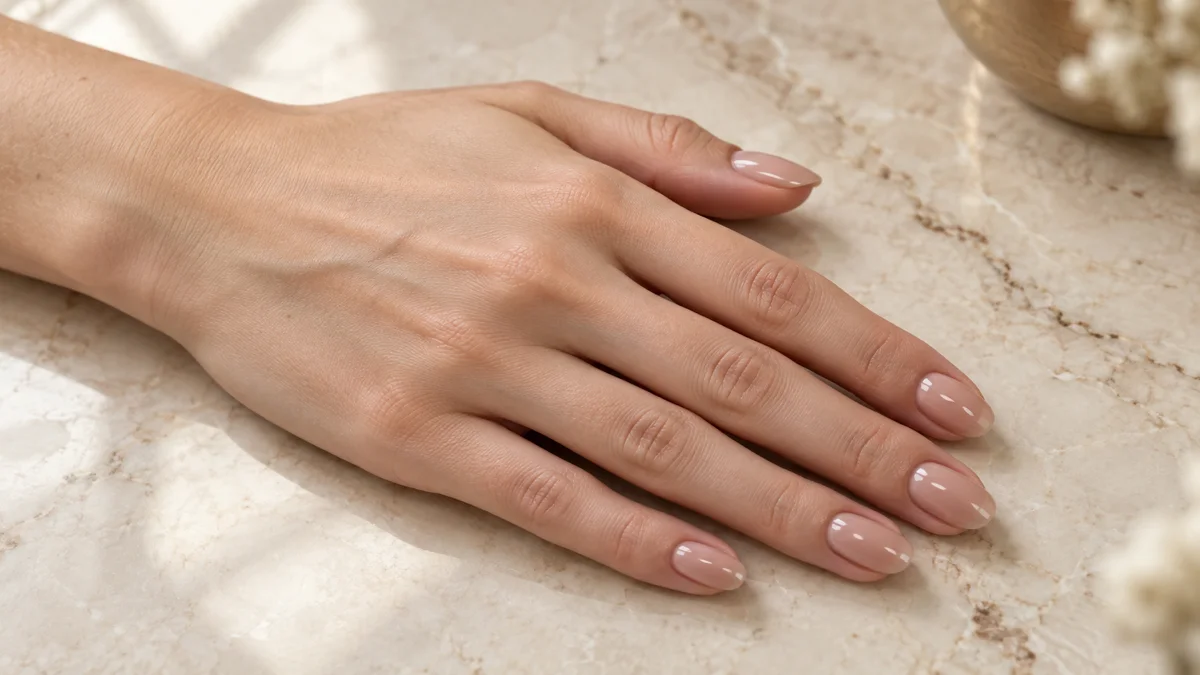
Minimalist nails strip a manicure down to one deliberate gesture — a single line, a dot of gold, a half-painted surface, or nothing at all except a flawless gloss.
Fifteen designs built on nude nails as canvas and French tips reduced to a whisper.
Pair any of these with spring 2026 trends for a seasonal update that still reads quiet.
From single-line accents and negative-space half-moons through gold dots, matte-gloss splits, and bare-nail shimmer — fifteen intentionally quiet designs that prove restraint is its own kind of statement. Jump straight to the one you want.
1. A Single Thin Line Down the Center of a Bare Nail
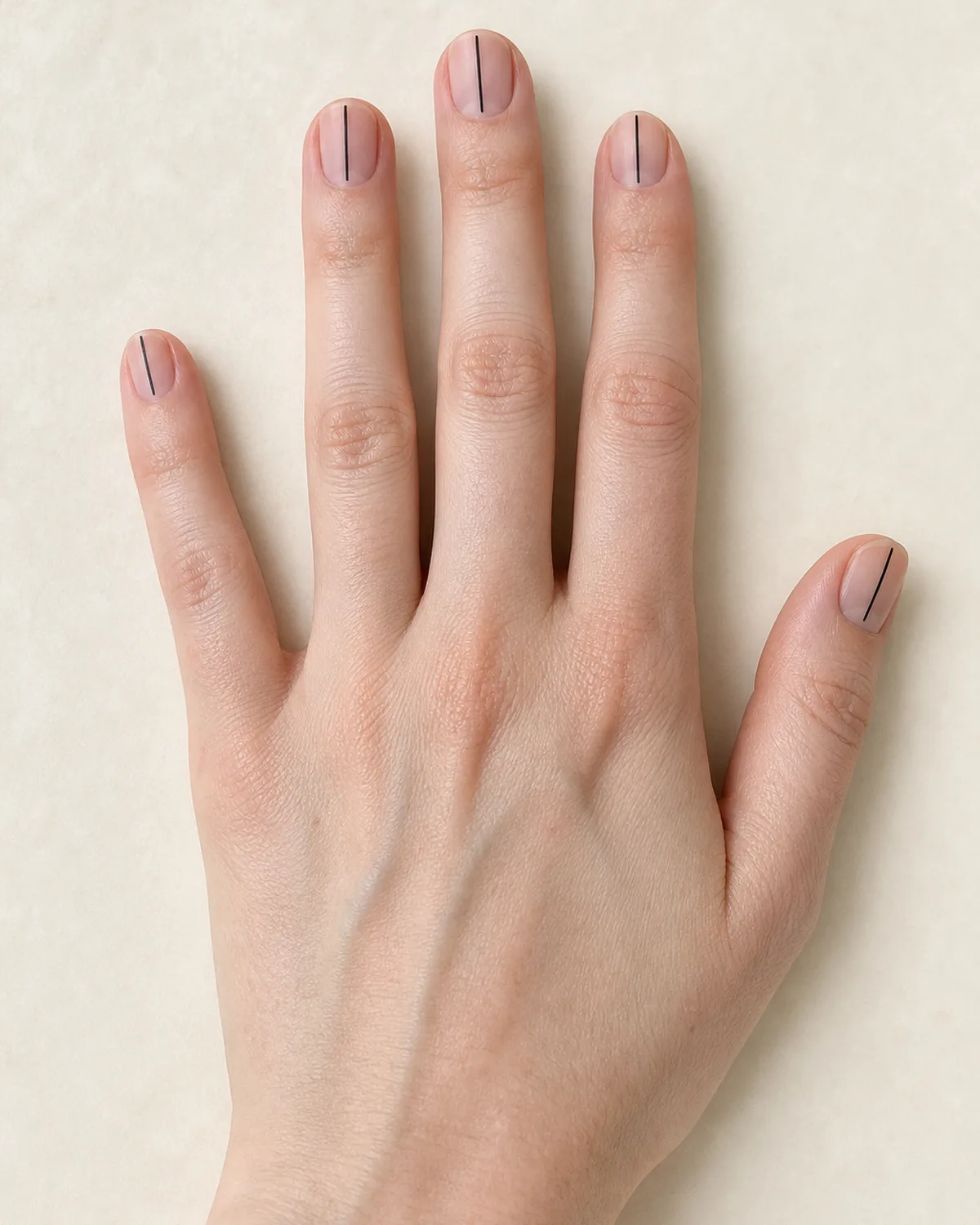
One thin black line running from cuticle to tip, centered on each nail, painted with a striping brush in a single pull. No base color, no top coat on the bare areas — just the natural nail surface and a line.
The technique requires a steady hand and a loaded brush. The line should be consistent in width from start to finish, which means the brush needs to touch down at the cuticle with the same pressure it carries to the free edge. Any hesitation creates a bump. Any lift creates a gap. One continuous motion, one breath, one line.
Short oval nails suit this design because the rounded tip gives the line a natural endpoint. On a square nail the line stops abruptly at a flat edge. On an almond the taper draws the line to a point. The oval splits the difference — the line ends softly without vanishing.
2. She Asked for "Almost Nothing" and Got This
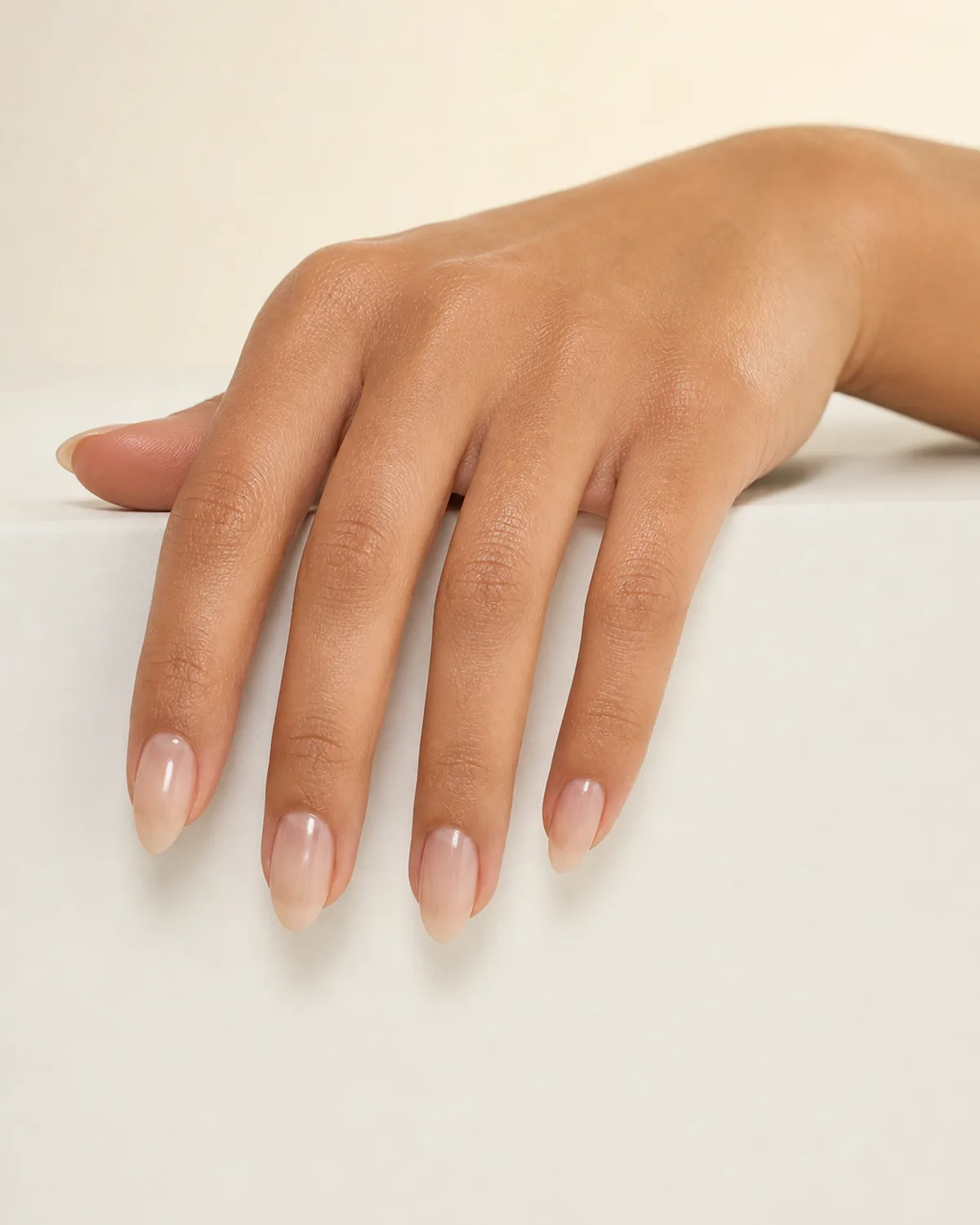
The request "almost nothing" translates to a single coat of sheer milky gloss over well-shaped almond nails. No art, no accent, no visible color — just a luminous wet surface that makes the natural nail look like a polished version of itself.
This is the hardest manicure to photograph because the design is the absence of design. The eye has nothing to land on except the shape, the shine, and the health of the nail underneath. Any ridge, any unevenness, any cuticle roughness shows through a sheer coat the way it never would under an opaque color.
A good tech treats a sheer gloss appointment with the same precision as a complex nail art set. The surface prep — buffing, cuticle work, dehydrating — takes the same time. The payoff is a nail that looks like it belongs on a hand that never needed a salon, which is the entire illusion.
3. What Negative Space Actually Looks Like on a Short Square
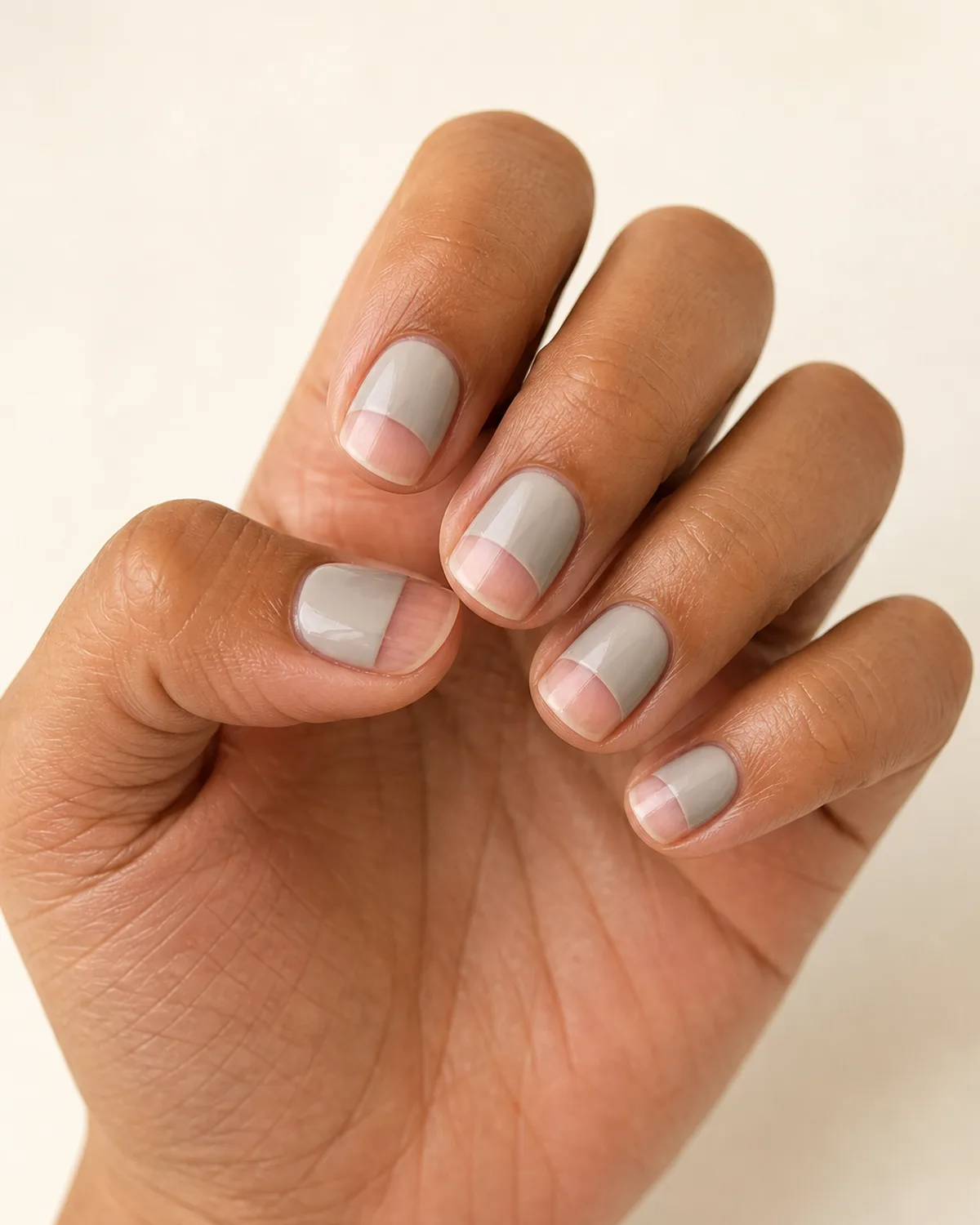
Negative space in nail art means leaving a section of the nail intentionally bare — no polish, no base coat, nothing. The bare nail becomes part of the design rather than something to cover up.
This half-moon version coats the upper half of the nail in soft greige and leaves the lower half completely transparent. The half-moon boundary follows the natural curve of the cuticle, creating a crescent of bare nail that mirrors the lunula (the pale half-moon at the base that some nails show naturally).
On short nail designs, the negative space occupies a larger proportion of the visible nail, which makes the design read as more intentional. On long nails, a half-moon can look like the polish grew out. On short nails, the bare section is too large and too centered to be accidental.
4. One Gold Dot at the Base Changes Everything
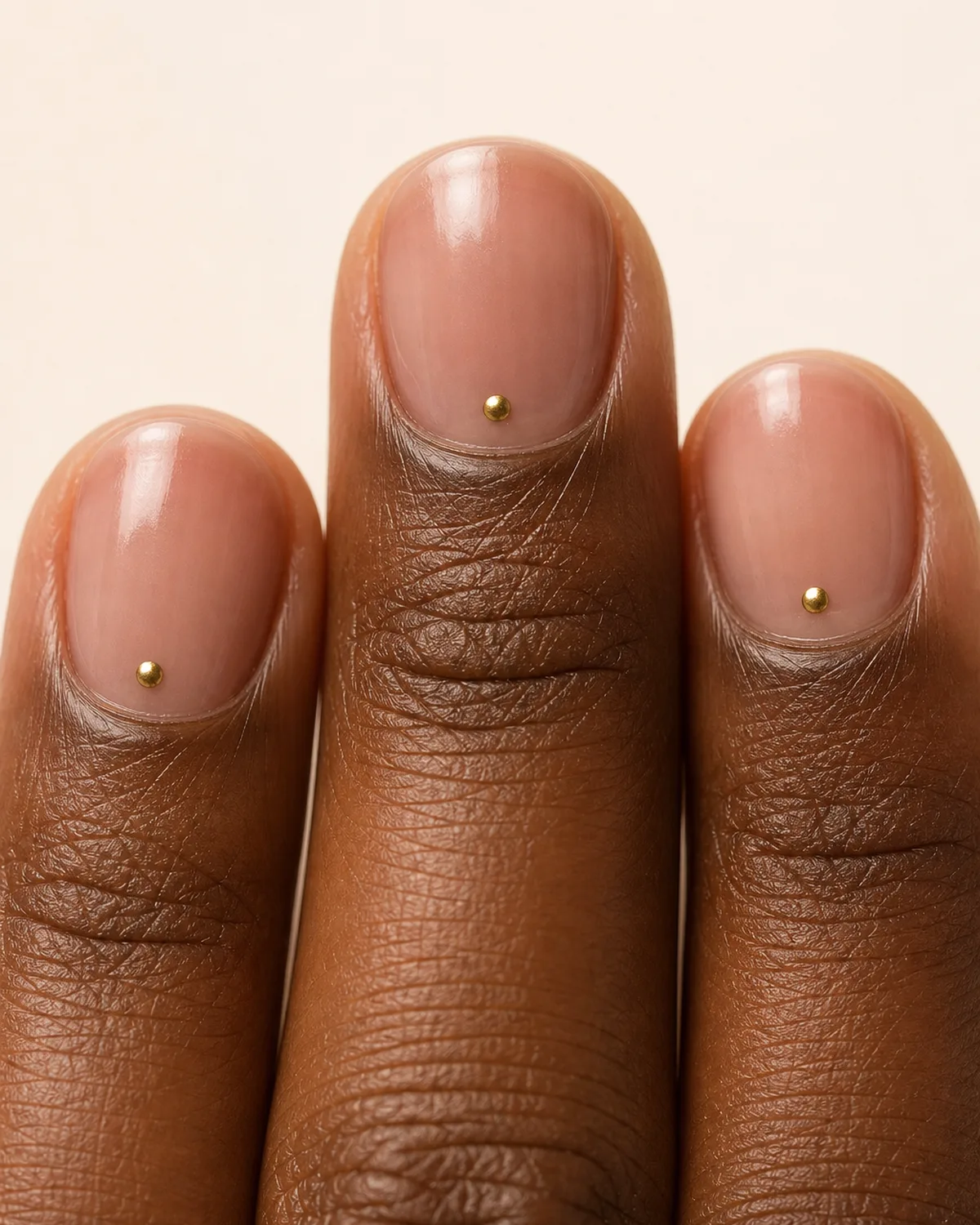
A single metallic gold dot, no larger than a pinhead, placed at the base of each nail near the cuticle line. The rest of the nail wears a bare pink wash — enough color to even the surface, not enough to register as polish.
The dot sits where the eye naturally rests when looking at a nail: the base. It functions like a tiny piece of jewelry permanently set into the manicure. From across a table, the nails look bare. Up close, the gold catches light and the entire manicure shifts from "no polish" to "very specific polish."
Placement precision matters more than the dot itself. A dot that drifts left or right of center on any nail breaks the rhythm across the hand. The tech places each one with a dotting tool pressed straight down and lifted straight up — no drag, no smear, no second dip.
5. The Manicure Nobody Notices Until They Do
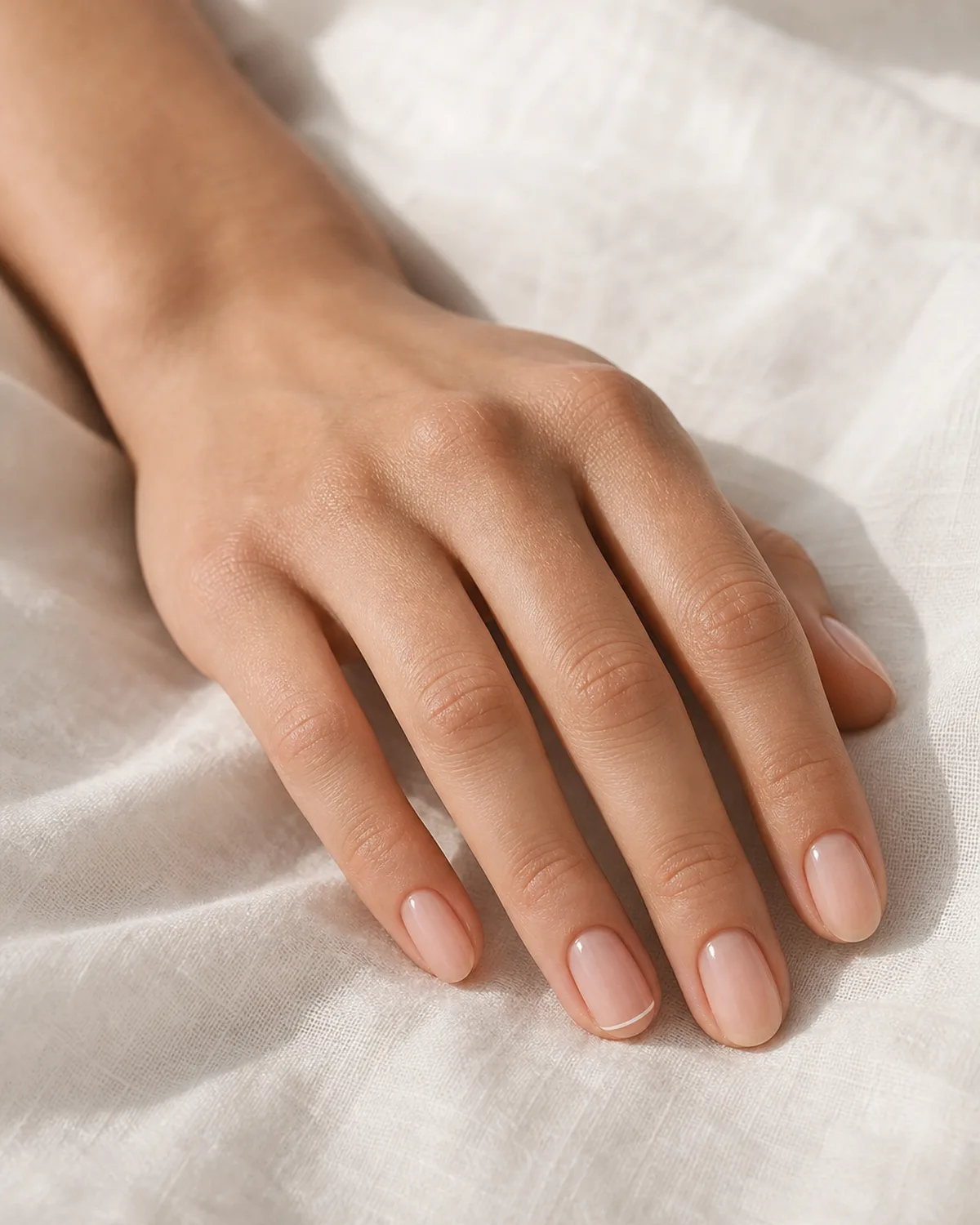
Four nails in barely-there sheer pink. One nail — the ring finger — with a micro French white tip so thin it reads as a suggestion of a line rather than a line itself. The design exists in the gap between "she's wearing polish" and "she's not."
This accent approach works because the ring finger already draws attention. Adding a single micro-thin white line to that one nail creates a focal point without disrupting the overall quiet of the hand. The eye catches it after a second or third look, which is the kind of slow reveal that keeps a manicure interesting across days rather than just the hour after leaving the salon.
Oval nails carry this design well. The rounded tip softens the French line into a gentle curve rather than a sharp smile, which keeps the accent consistent with the understated tone of the rest of the set.
Both look like "nothing," but they serve different purposes and wear differently over time.
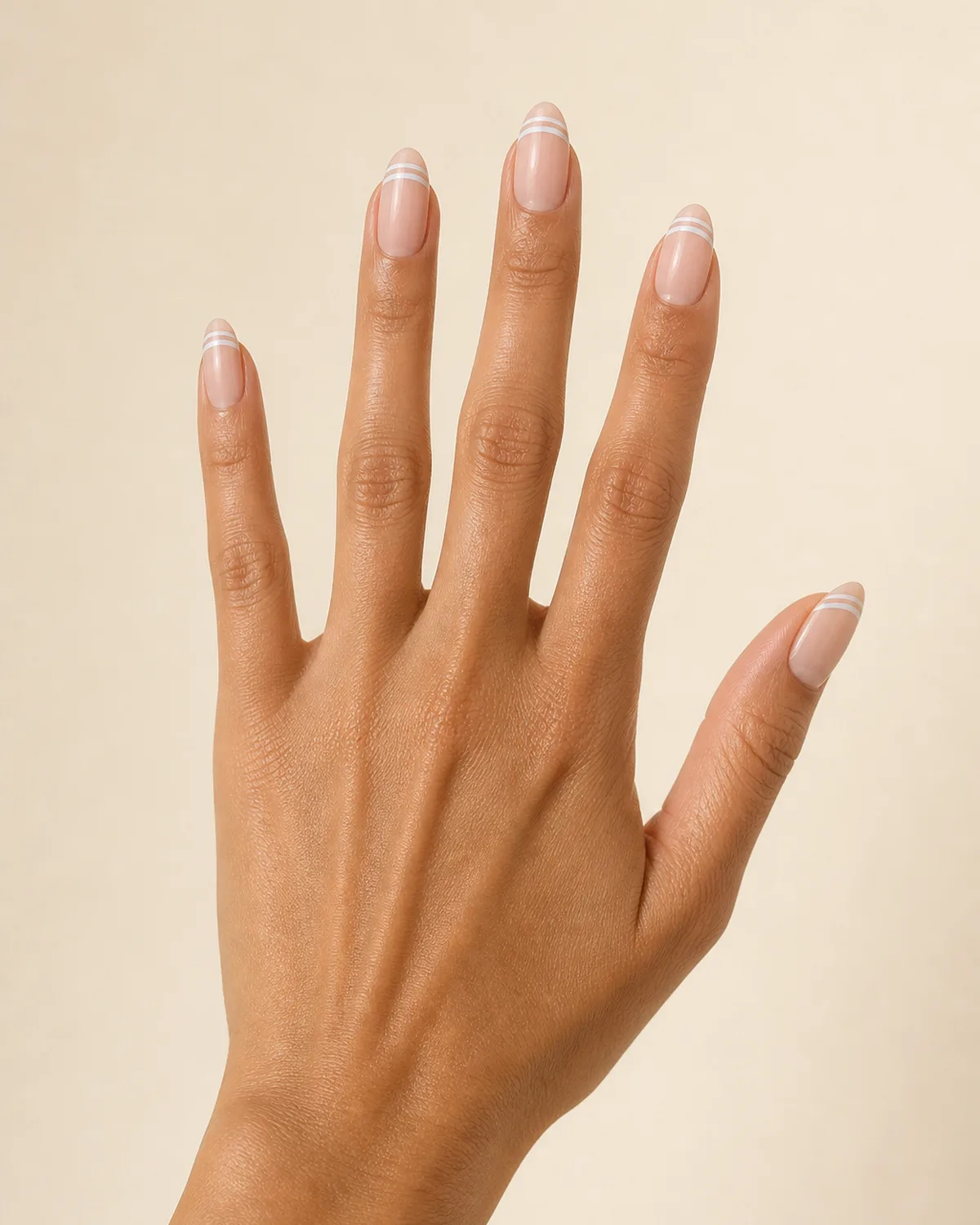
6. Two Parallel Lines Instead of a Full French
Two thin white lines painted near the tip, running parallel to each other with a sliver of bare nail visible between them. The lines reduce the French manicure to its geometric essence — a border at the edge — then double it for visual rhythm.
The spacing between the lines matters. Too close and they merge into one thick line. Too far apart and the design reads as two separate French tips stacked on top of each other. The ideal gap is about the same width as each line, creating an even pattern of white-bare-white at the free edge.
Almond nails give the parallel lines a gentle curve that follows the nail shape. On a square nail, the lines would run straight and flat. The almond curve adds softness to what is fundamentally a geometric design, which keeps it from tipping into graphic-art territory and maintains the minimalist register.
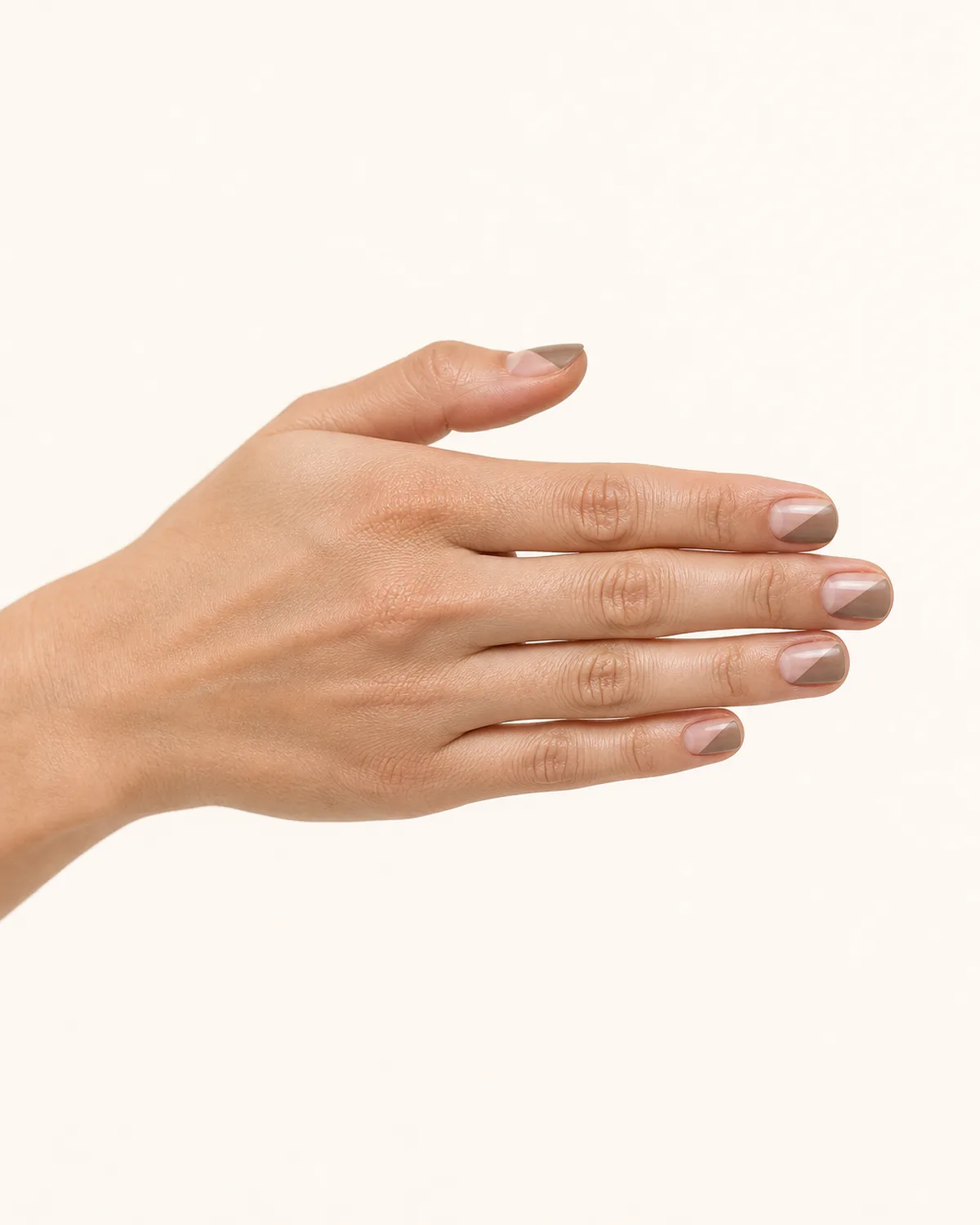
7. Why Leaving Half the Nail Bare Feels Like the Bravest Move
A diagonal line splits each nail in two: one half coated in warm taupe, the other half left completely bare and transparent. The line is crisp, the division is deliberate, and the bare half is not an oversight — it is the design.
This takes more confidence than a full-coverage color because the bare half exposes the nail surface without any protective layer. Any imperfection in the natural nail — ridges, discoloration, dryness — is on display. The design works best on nails that have been buffed smooth and treated with cuticle oil so the bare half looks intentionally raw rather than accidentally unfinished.
Short square nails give the diagonal line a clean geometry. The flat edges of the square shape create straight boundaries on two sides, and the diagonal adds a third angle that breaks the grid without curving. The result is architectural — a building facade in miniature.
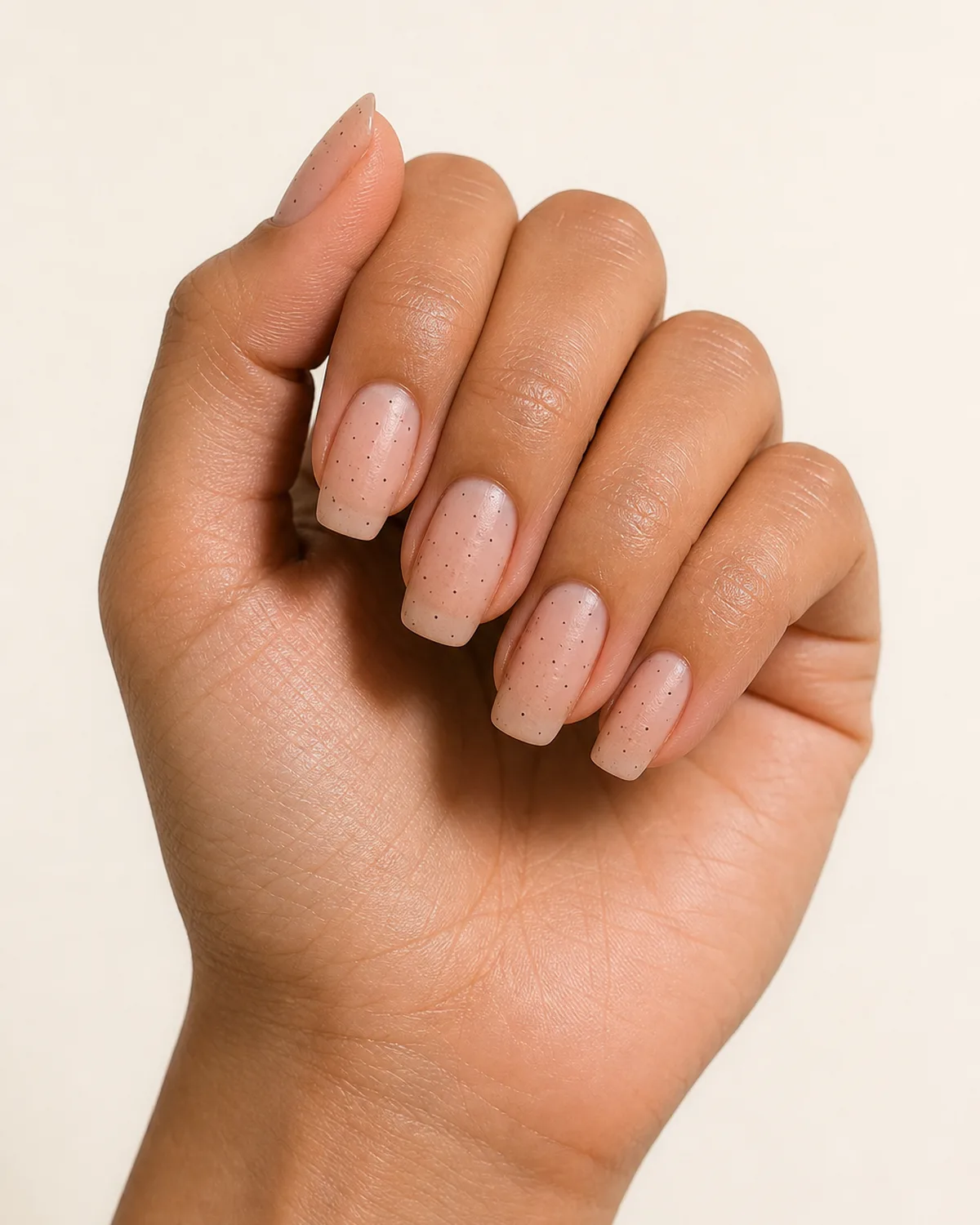
8. A Dot Pattern So Small It Only Shows Up Close
Scattered micro dots in matte black on a nude base. Each dot is one millimeter or less — the size of a ballpoint pen tip. From arm's length the nails look nude. From across a table the nails look textured. Only up close does the pattern resolve into individual dots.
The dots are placed irregularly, not in a grid. A grid pattern reads as mechanical and decorative. Scattered dots read as organic and accidental, even though each one is placed with a dotting tool. The randomness is planned — no two nails share the same arrangement, which prevents the hand from looking stamped.
Coffin nails give the dots more surface area to scatter across, and the flat tip creates a boundary that contains the pattern without requiring a clean edge. The dots just stop where the nail ends.
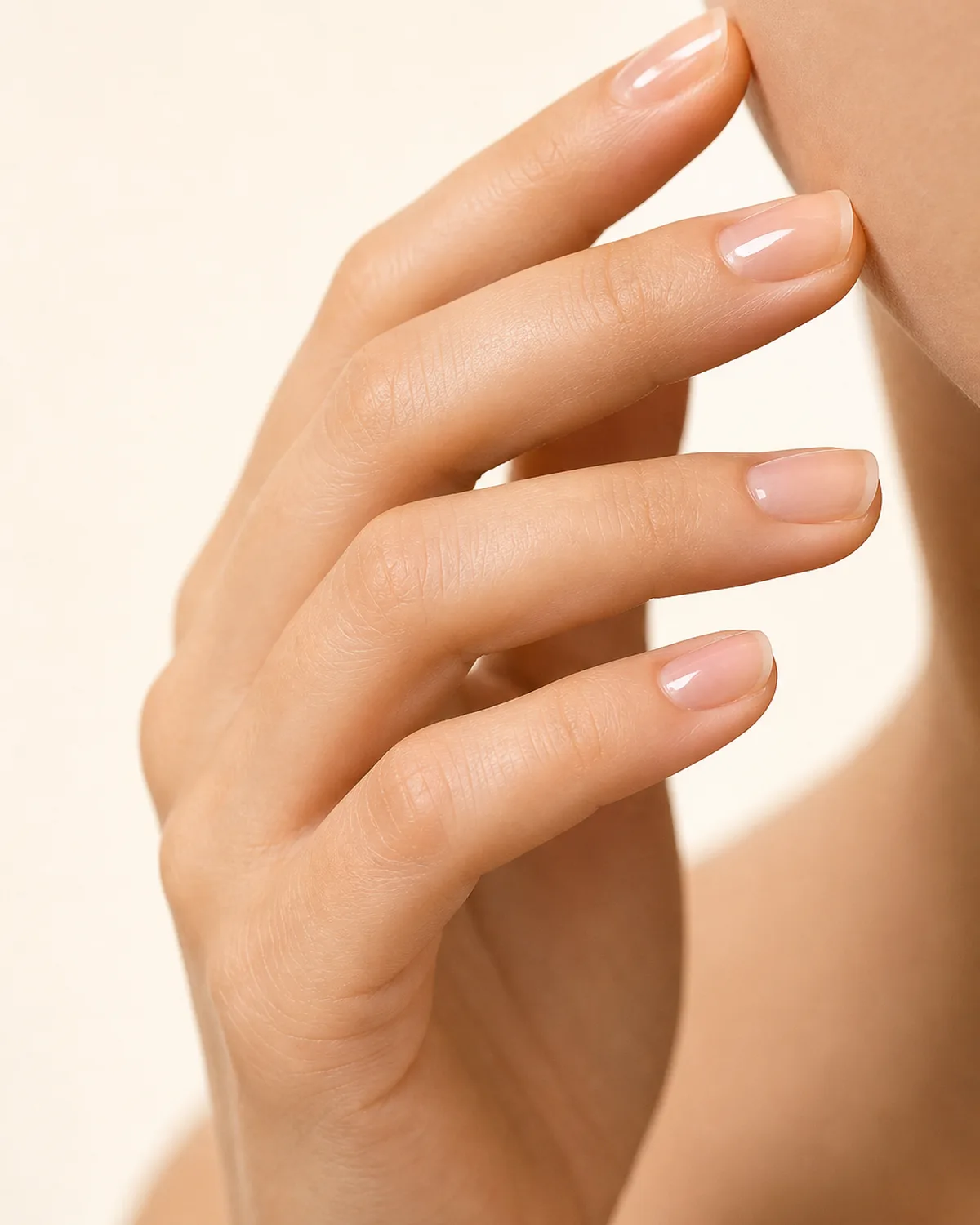
9. She Switched from Chrome to Clear and Didn't Miss It
Crystal-clear gloss on natural oval nails. No tint, no shimmer, no color of any kind — just a glass-like layer that amplifies whatever the nailbed looks like underneath. The nail is the finish.
This is the minimalist endpoint. Every other design in this guide adds something — a line, a dot, a color, a texture. This one adds only shine. The clear gloss turns the natural nail into a polished surface the way a coat of varnish turns raw wood into furniture: the material stays the same, the presentation changes.
The switch from chrome (which is the maximum reflective finish) to clear (which is the minimum) sounds like a downgrade. In practice it feels like a release. No maintenance anxiety, no visible grow-out, no color matching to outfits. The nails just look clean and healthy, which is enough.
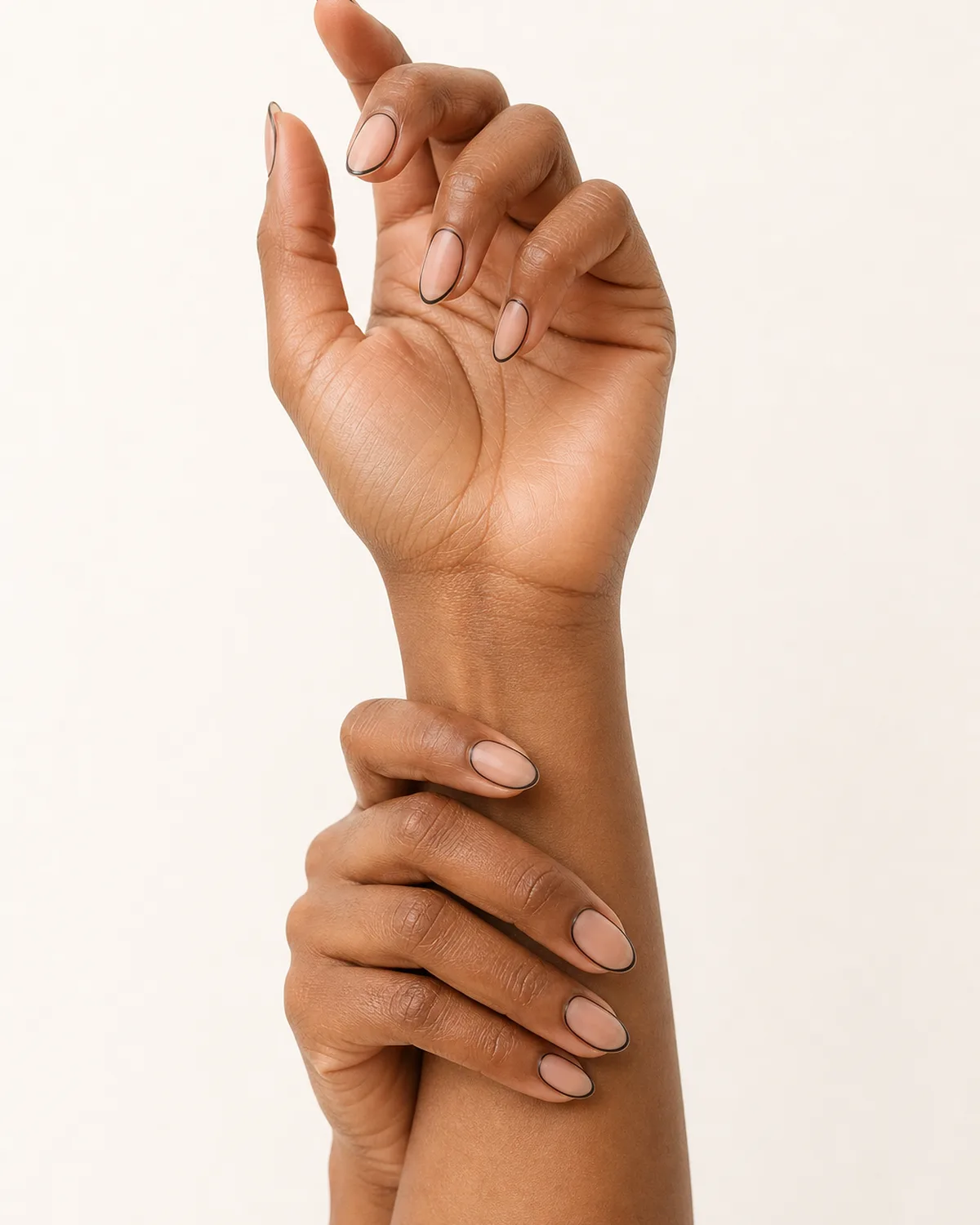
10. The Outline Nail That Traces the Shape Without Filling It
A thin black line painted along the edge of each almond nail — following the cuticle curve, running up both sides, and arching over the tip. The interior stays completely bare. The nail looks like a line drawing of itself.
This design borrows from graphic illustration: an outline defines the shape without filling it. The eye reads the almond silhouette through the border alone, and the empty center becomes negative space that makes the outline more visible, not less.
The black line needs to maintain consistent width around the entire nail. The hardest section is the cuticle curve, where the brush has to follow a tight radius without thickening or thinning. A striping brush with long bristles gives the steadiest line because the length absorbs hand tremor.
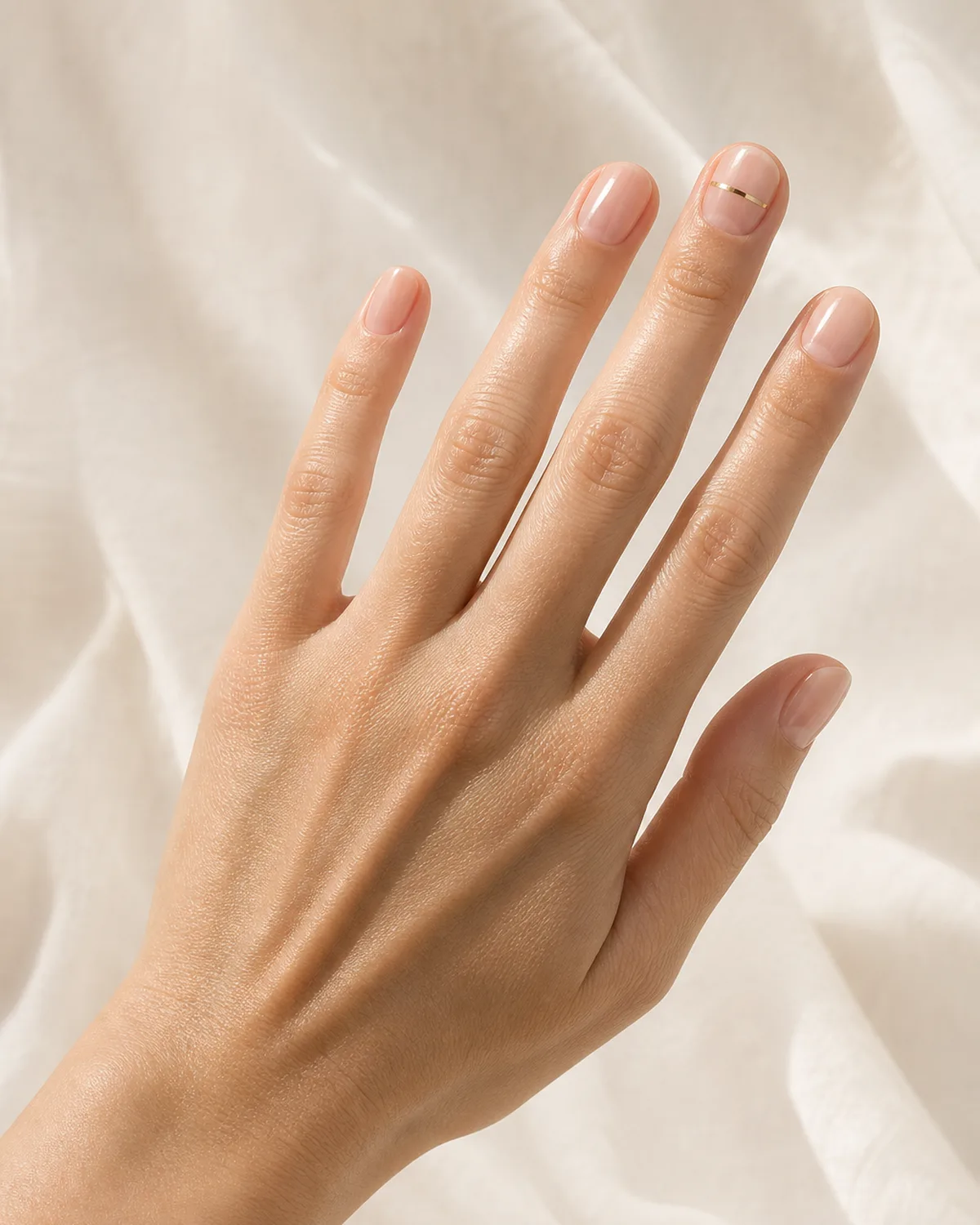
11. A Horizontal Gold Bar Where a Ring Would Sit
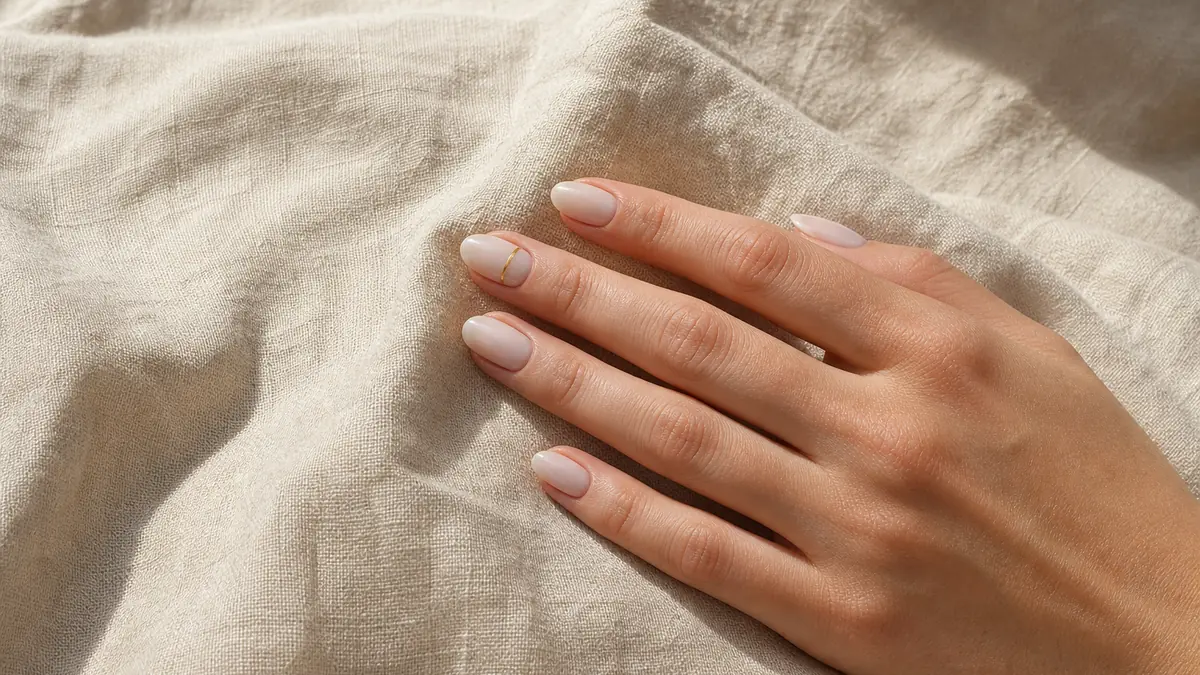
Four nails in bare high-gloss. One ring-finger nail with a single thin gold horizontal stripe painted across the center. The stripe sits at the widest point of the nail, which gives it the longest possible run across the surface.
A horizontal stripe reads differently from a vertical one. Vertical lines (like idea one in this guide) elongate the nail. Horizontal lines widen it. On a round nail, the horizontal stripe adds visual width that balances the circular shape and prevents it from looking small.
The gold color is deliberate. Against bare nails, gold reads as an accessory rather than as polish. It sits in the same visual register as a thin gold ring or a delicate chain — something added to the hand rather than applied to the nail. This distinction is what keeps a single stripe from tipping into "nail art" territory.
Minimalist nails follow a different logic than decorative ones. These four principles separate intentional simplicity from "she just didn't finish."
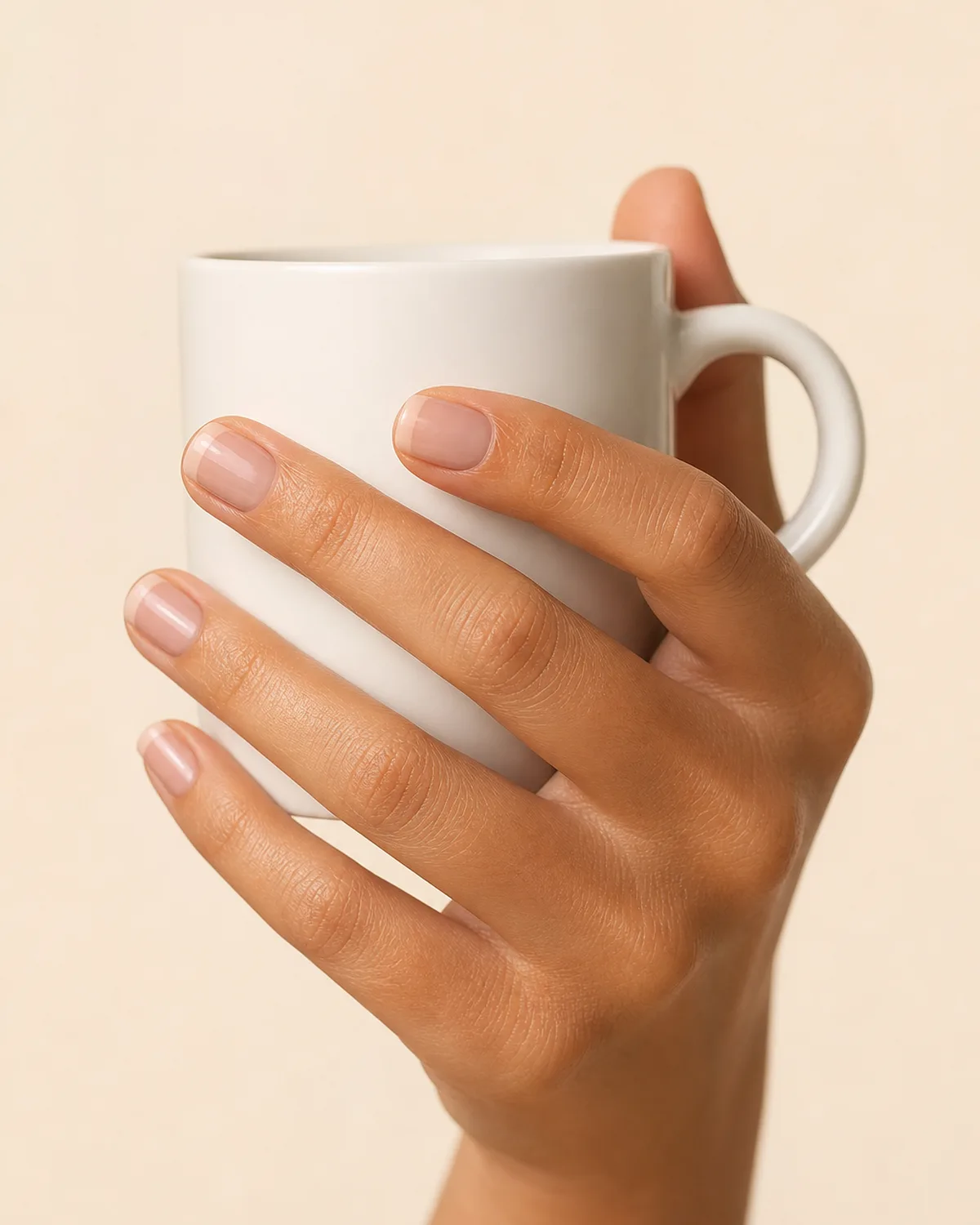
12. A Color Block So Soft It Almost Matches the Skin
A warm nude base with a slightly lighter blush block at the tip — the color difference so subtle that it only registers in certain lighting. The tip is there. The contrast is there. But the eye has to work for it.
This is the minimalist version of a French manicure. Instead of the high-contrast white tip, the "tip" is a tone-on-tone shift that whispers rather than declares. The boundary between base and tip is crisp (this is a color block, not a gradient), but the colors are so close that the crispness reads as precision rather than drama.
Short square nails carry this design because the flat tip gives the color block a clean horizontal boundary. Rounded shapes would soften the block edge, which might make the already-subtle contrast disappear entirely.
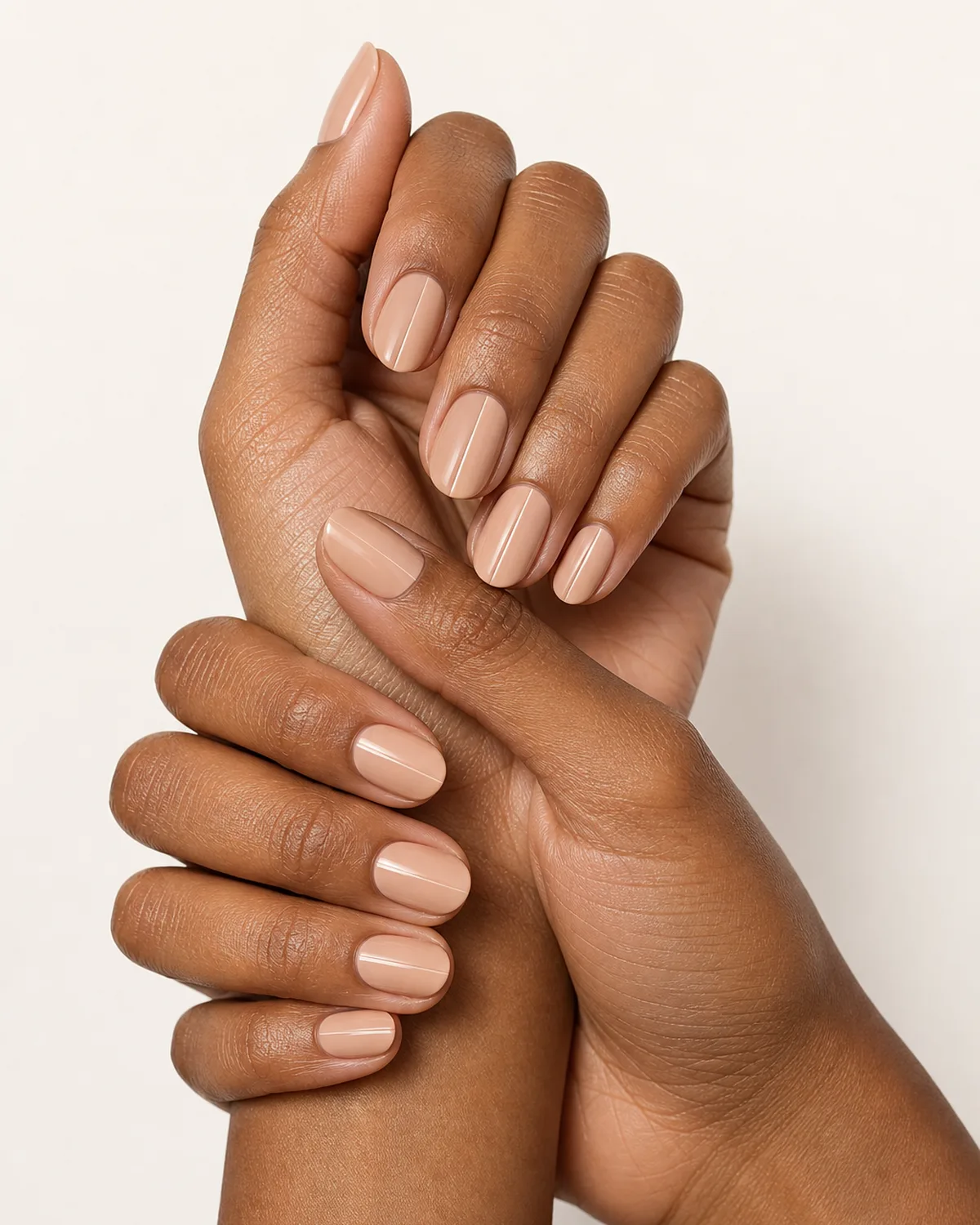
13. Matte and Gloss on the Same Nail
The same nude color on one nail, split vertically: the left half finished matte, the right half finished glossy. Same hue, different texture. One side absorbs light. The other reflects it. The contrast is invisible in shade and dramatic in direct light.
The technique requires masking. The tech applies a glossy top coat to the full nail, cures it, then masks the right half with a thin tape strip and applies the matte top coat to the left half only. When the tape lifts, the boundary between matte and gloss is sharp enough to see but too subtle to photograph from a distance.
Oval nails balance the vertical split by distributing the matte and gloss evenly from cuticle to tip. The rounded edges prevent the split from creating a hard visual stop at the sidewalls.
14. The Set That Works with Every Ring She Owns
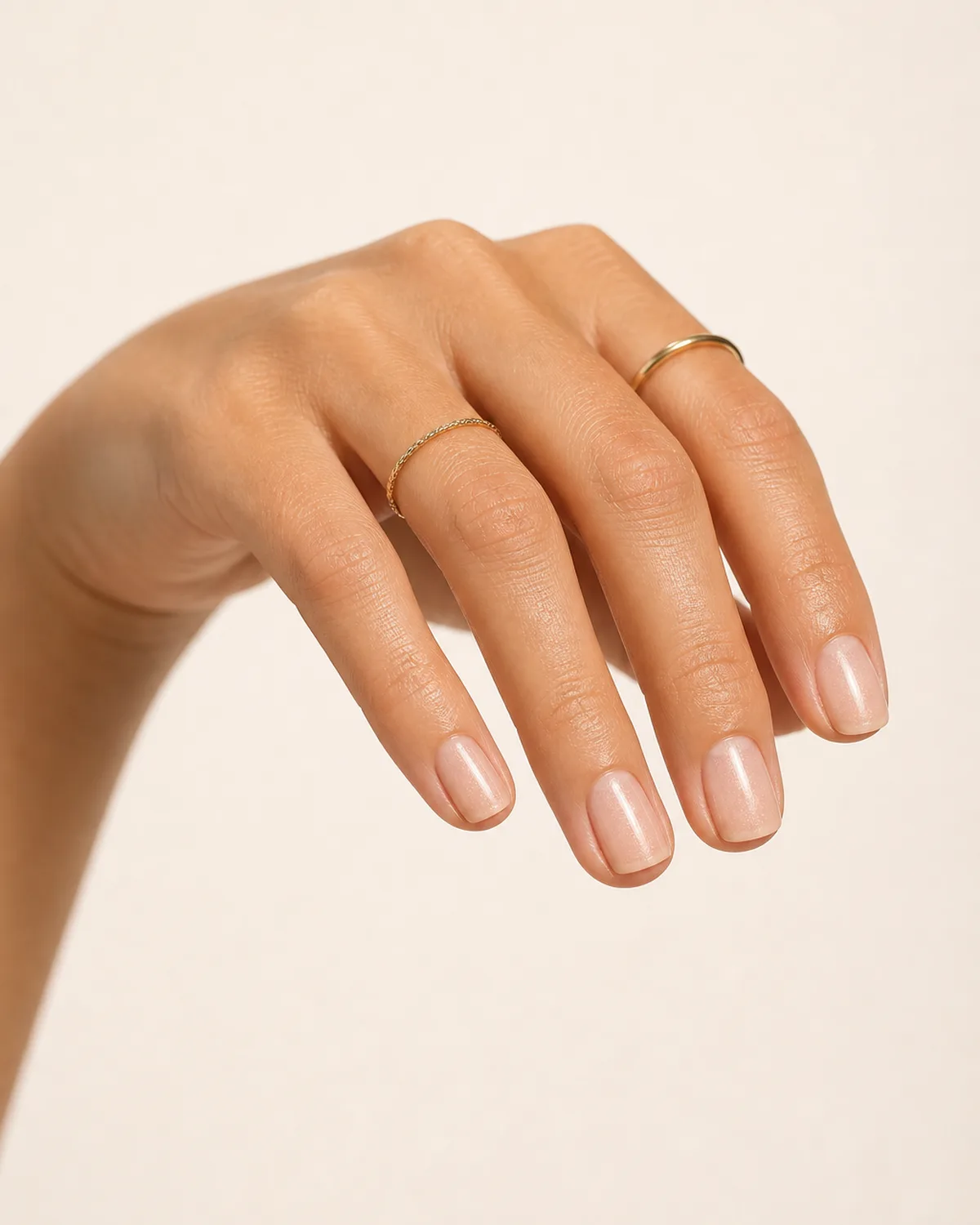
Sheer nude with an invisible fine shimmer on short square nails — the kind of shimmer that only appears when light hits at a specific angle. The rest of the time, the nails look like a standard nude set. The shimmer is a secret between the wearer and anyone close enough to notice.
This design exists to complement jewelry rather than compete with it. Gold rings, silver bands, stacked thin rings, a single signet — the sheer nude base sits behind all of them without clashing or drawing attention away. The shimmer adds just enough dimension to prevent the nails from looking flat next to metallic accessories.
The short square shape is deliberate. Square nails sit flush against the finger pad, which means they do not extend past the profile of the rings. The nails frame the jewelry from below without overshadowing it.
15. The Minimalist Nail Sloane Reaches for When Everything Else Feels Like Too Much
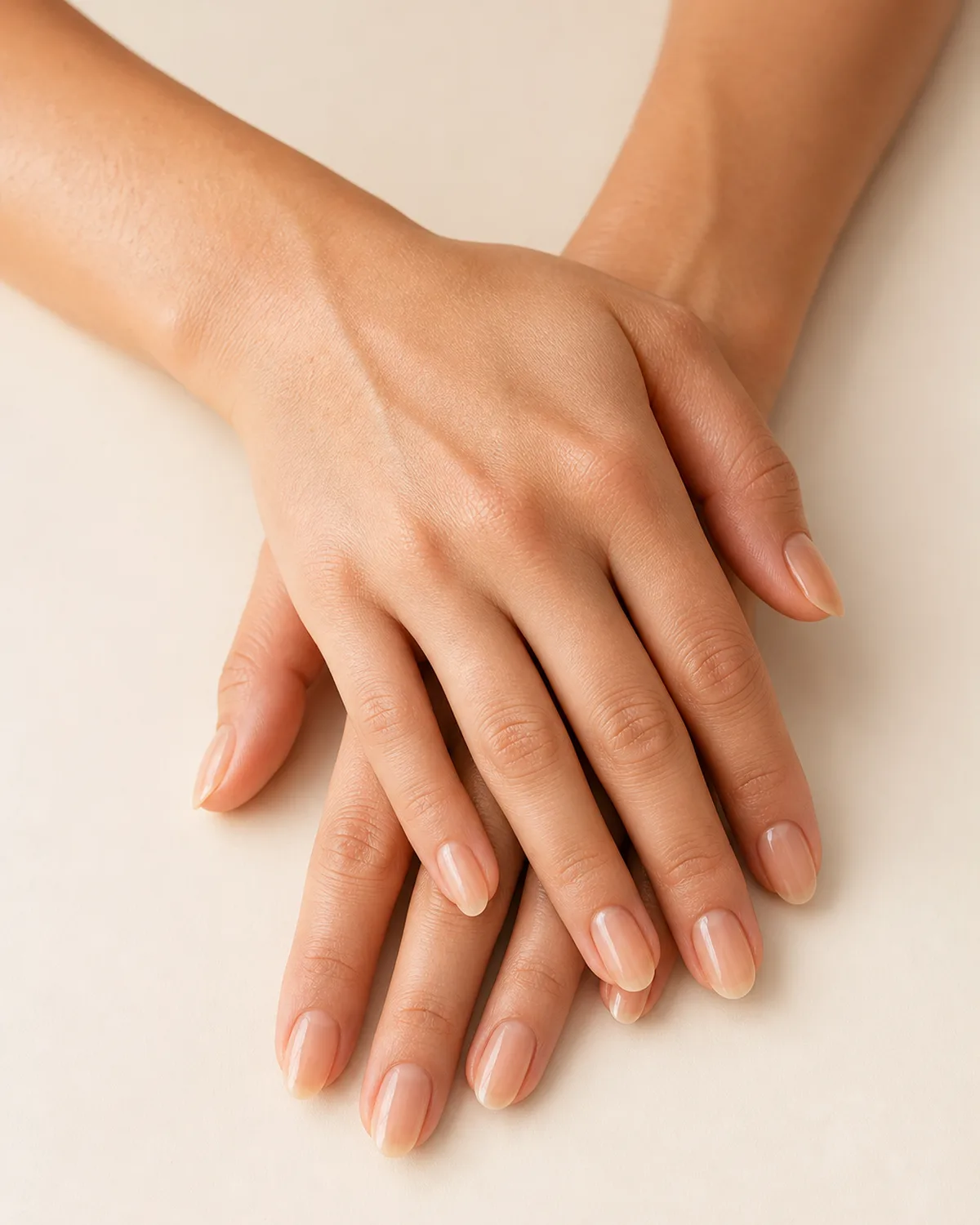
Sloane's quiet favorite is a single coat of warm sheer over natural almond nails. No art. No accent. No line, no dot, no split. Just the shape of the nail, the color of the nailbed, and a thin layer of warmth that makes everything look intentional.
This is the design Sloane returns to after testing every trend in this guide and every trend in the last three seasons. It survives outfit changes, season changes, and mood changes because it is not attached to any of them. The nail just looks cared for, which is the one thing that never goes out of style.
One coat. Dry two minutes. Done. The entire manicure takes less time than the cuticle prep, which is exactly the point.
Fifteen ways to say less with a manicure — from a single black line to a gold dot to nothing at all except a perfect gloss. Minimalist nails work because they respect what is already there: the shape of the nail, the tone of the skin, the quiet confidence of knowing when to stop adding.
15 Minimalist Nail Designs
- 1Single center lineOne thin black line, cuticle to tip.
- 2Almost nothingSheer milky gloss, zero art.
- 3Negative spaceHalf-moon bare, half greige.
- 4Gold dotPinhead gold at the cuticle.
- 5Barely-there accentOne ring finger, micro French.
- 6Double parallel linesTwo thin white lines near the tip.
- 7Half-painted diagonalWarm taupe on one side, bare on the other.
- 8Micro dot scatterMatte black dots, nude base, texture from afar.
- 9Crystal clearNo color, no tint, just glass.
- 10Outline traceBlack border, bare interior.
- 11Gold bar accentHorizontal gold bar on one ring finger.
- 12Tone-on-tone blockBlush tip so soft it almost vanishes.
- 13Matte-gloss splitSame color, two finishes, one nail.
- 14Sheer shimmerInvisible sparkle, ring-ready.
- 15Sloane's quiet favoriteOne coat of warm sheer, nothing else.
styvea.com

Sloane Avery edits Styvea, where she shares nail design ideas, shapes, colors, and at-home manicure how-tos for anyone who loves a good manicure. Every guide is reviewed for clarity, usefulness, image accuracy, and Pinterest-to-page alignment before publication. Visit the About page.