Mismatched nails flip the one rule most manicures follow — instead of all ten nails wearing the same color or pattern, several (or all) of them carry something different from their neighbors.
The mismatch isn't random. Each look below follows one clear logic — a palette, a rule, a story — so the hand still reads as one considered set, not a clash.
These fifteen looks move from an easy two-color alternate to a full rainbow scramble, across bases and palettes. Save the logic you want to try next.
From a simple two-color alternate through a full rainbow scramble and two hands with two different stories, these fifteen looks all use the same principle — deliberate variation nail to nail — at different logics and palettes. Jump straight to the one that matches your mood.
- 1Two-color alternate
- 2Tonal family gradient
- 3Single wild-card nail
- 4Full rainbow scramble
- 5Pattern-vs-solid split
- 6Black vs. bright contrast
- 7Same hue, different finishes
- 8Two palettes, one hand
- 9Negative space vs. full coverage
- 10Autumn palette scramble
- 11Gemstone multicolor
- 12French tip color swap
- 13Warm-vs-cool split
- 14Pastel scramble
- 15Two hands, two stories
1. The Two-Color Alternate That Skips Every Other Nail
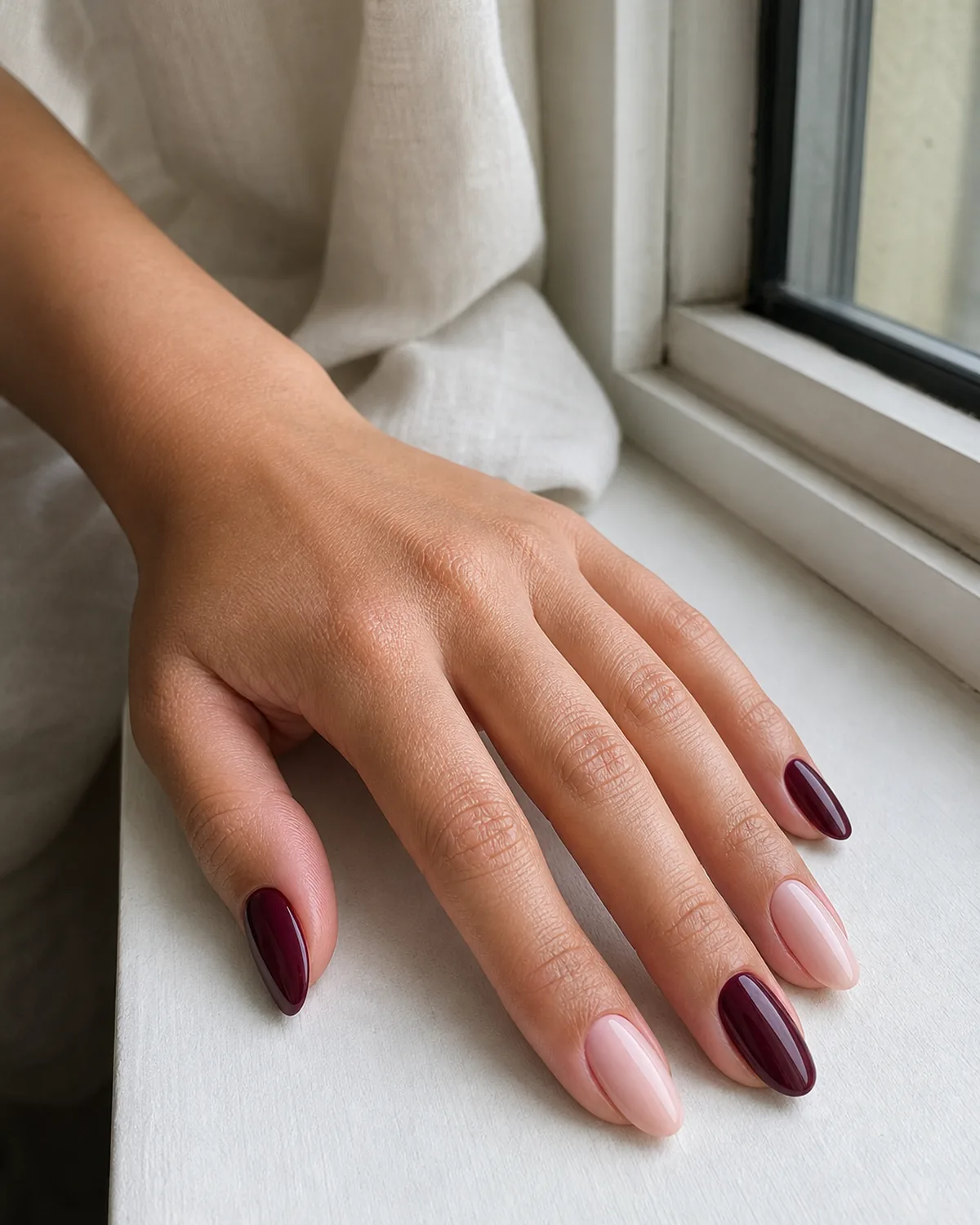
The simplest way into mismatched nails is picking two colors and letting them trade off, nail to nail, in a clean crisp swap. A deep burgundy sits next to a soft blush pink, then burgundy again, with no blending or transition between them — each nail stays fully one color or the other.
It reads more considered than a single wild-card accent because the whole hand participates equally, the way the spring nail trends embrace playful color pairing this season. Medium almond nails keep the alternation crisp along a clean, even curve.
- Paint each nail in either the deep burgundy or the soft blush pink, alternating one to the next.
- Keep the polish edge crisp at the cuticle on both colors.
- Cure or dry each nail fully before moving to the next.
- Check that no two adjacent nails share the same color.
- Finish all ten nails with a single glossy top coat.
2. What Five Shades of the Same Color Family Look Like Side by Side
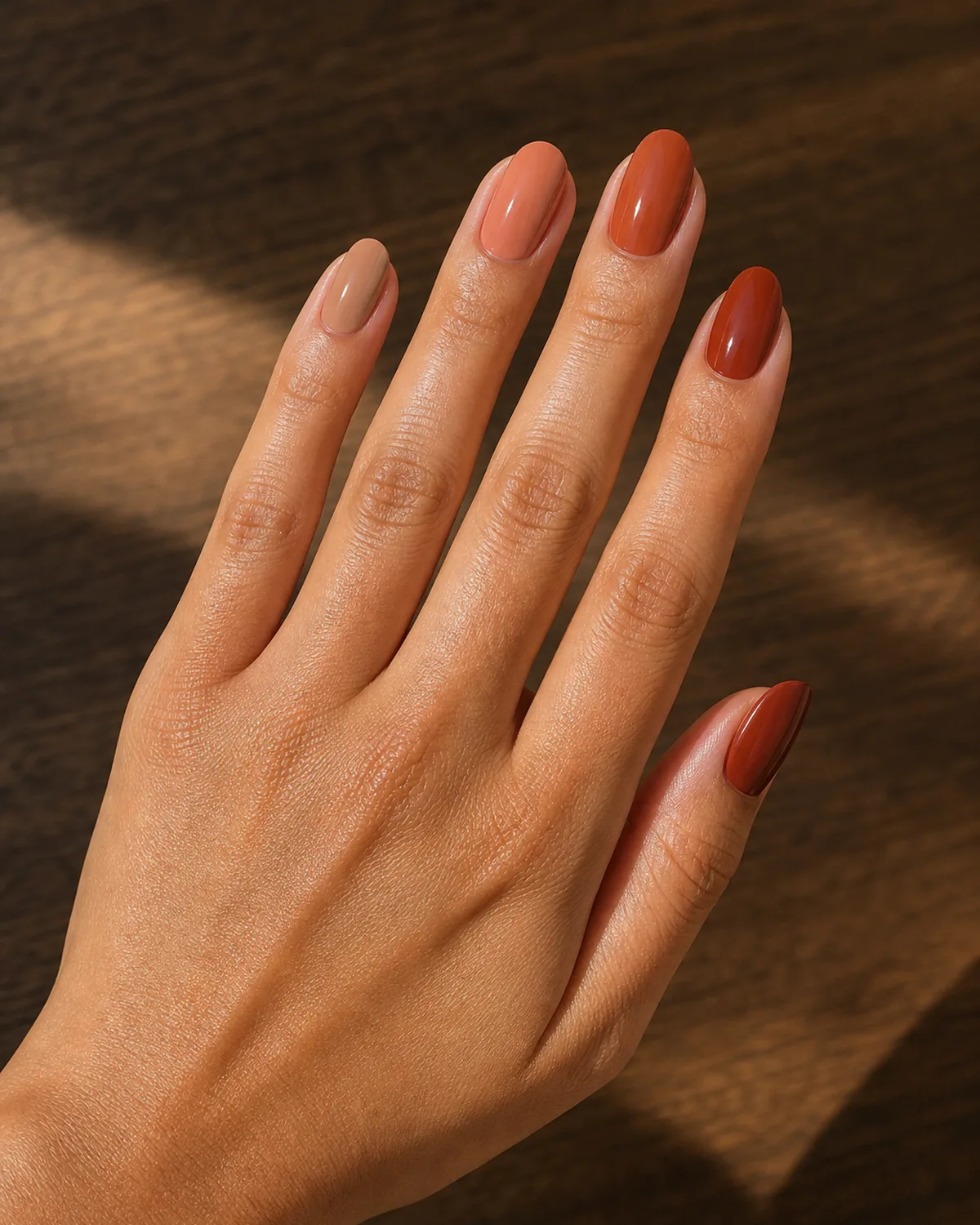
Instead of two colors trading off, this version spreads five different depths of the same terracotta-orange family across the hand — a pale sandy tan, a warm mid-terracotta, and a deep rust, moving in visible steps rather than a smooth blend.
Because every nail sits in the same family, the mismatch feels cohesive rather than scattered — closer to a paint chip fan than a clash. Medium oval nails give each shade a clean plane to read clearly next to its neighbors.
- Choose five polishes within one color family, from lightest to darkest.
- Assign one shade per nail in a mixed, non-sequential order across the hand.
- Paint each nail its assigned shade and let it dry fully.
- Avoid placing the two closest shades directly next to each other.
- Seal all five with a single top coat for a consistent finish.
3. A Single Wild-Card Nail Among Nine That Match
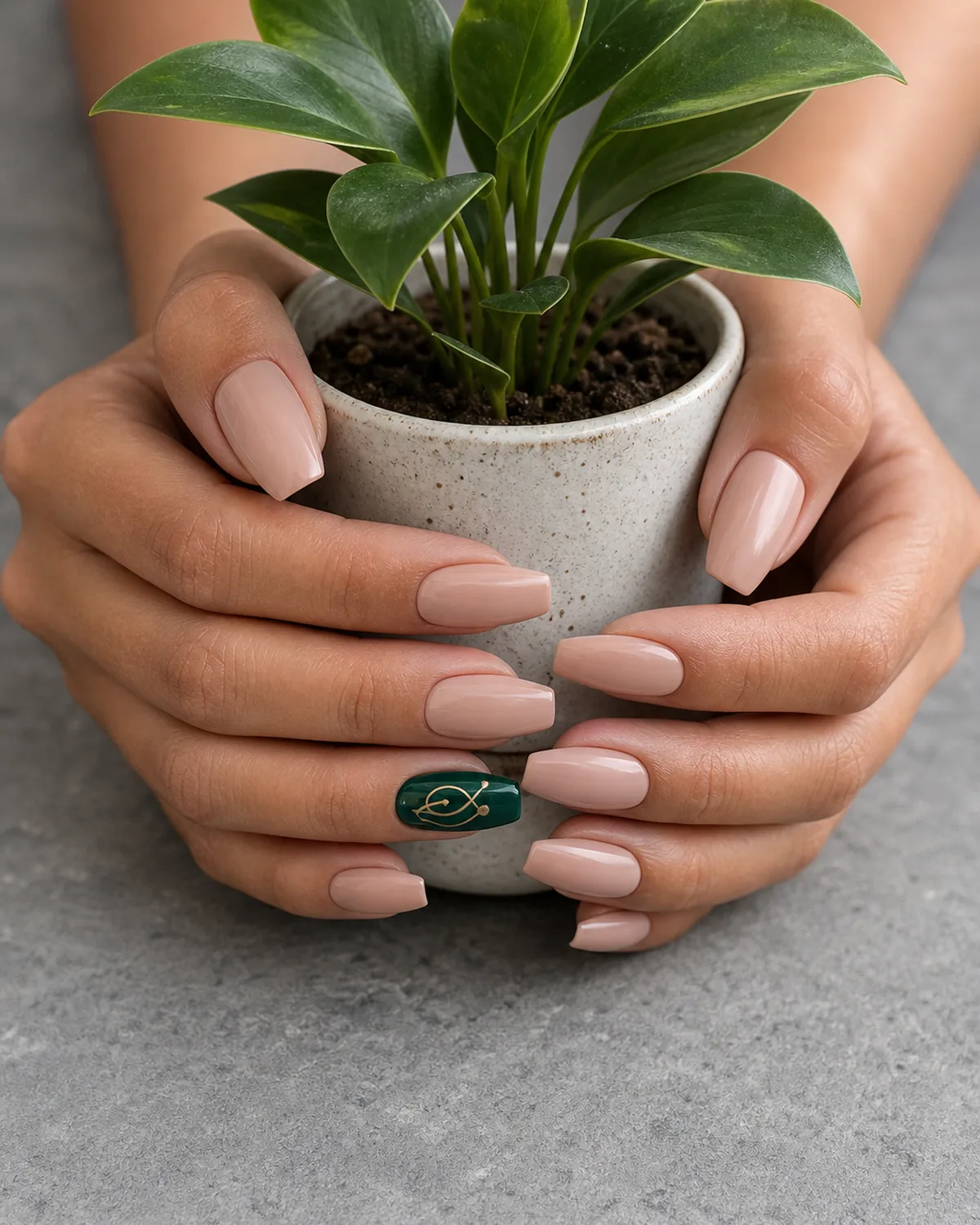
This one sits closest to a familiar accent nail, but the logic is different: nine nails match exactly in a soft nude, and one wild-card nail breaks completely from the set in a bold emerald with a small graphic pattern layered on top.
The contrast works because the nine matching nails do all the calm, quiet work, leaving the wild card free to be as loud as it wants. Medium coffin nails give that one nail enough surface for the pattern to actually register.
- Paint nine nails in a matching soft nude polish and let dry.
- On the remaining nail, paint a base of bold emerald green.
- Add a small graphic pattern on top of the emerald nail once dry.
- Cure or dry the wild-card nail fully before handling.
- Finish all ten nails with a single top coat.
4. The Full Rainbow, One Hue Per Nail, No Repeats
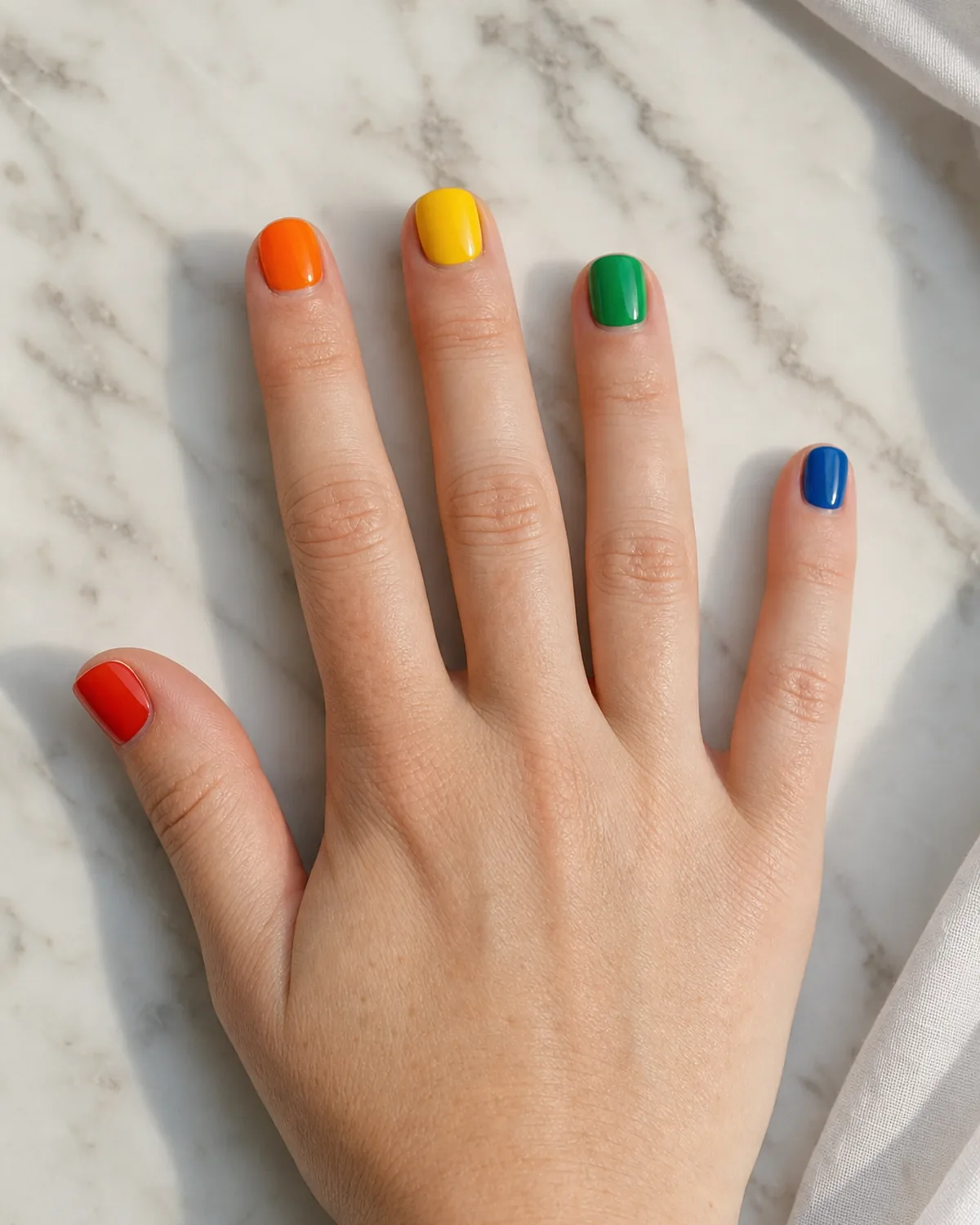
This is the most dramatic version of the mismatch logic — every visible nail wears a different rainbow hue, red through blue, with no color repeated anywhere on the hand. It is the closest this list gets to a full scramble.
The rule that keeps it from feeling chaotic is simple: each hue stays a flat, clean solid, so the variation lives entirely in the color choice and nowhere else. Short square nails keep each block of color compact and easy to read at a glance.
- Choose five saturated rainbow hues with no near-duplicates.
- Assign one hue per nail, mixing the order across the hand.
- Paint each nail its assigned hue as a flat, even solid.
- Let each color dry fully before starting the next.
- Finish with a single glossy top coat across all ten nails.
5. When Half the Hand Gets a Pattern and the Other Half Stays Solid
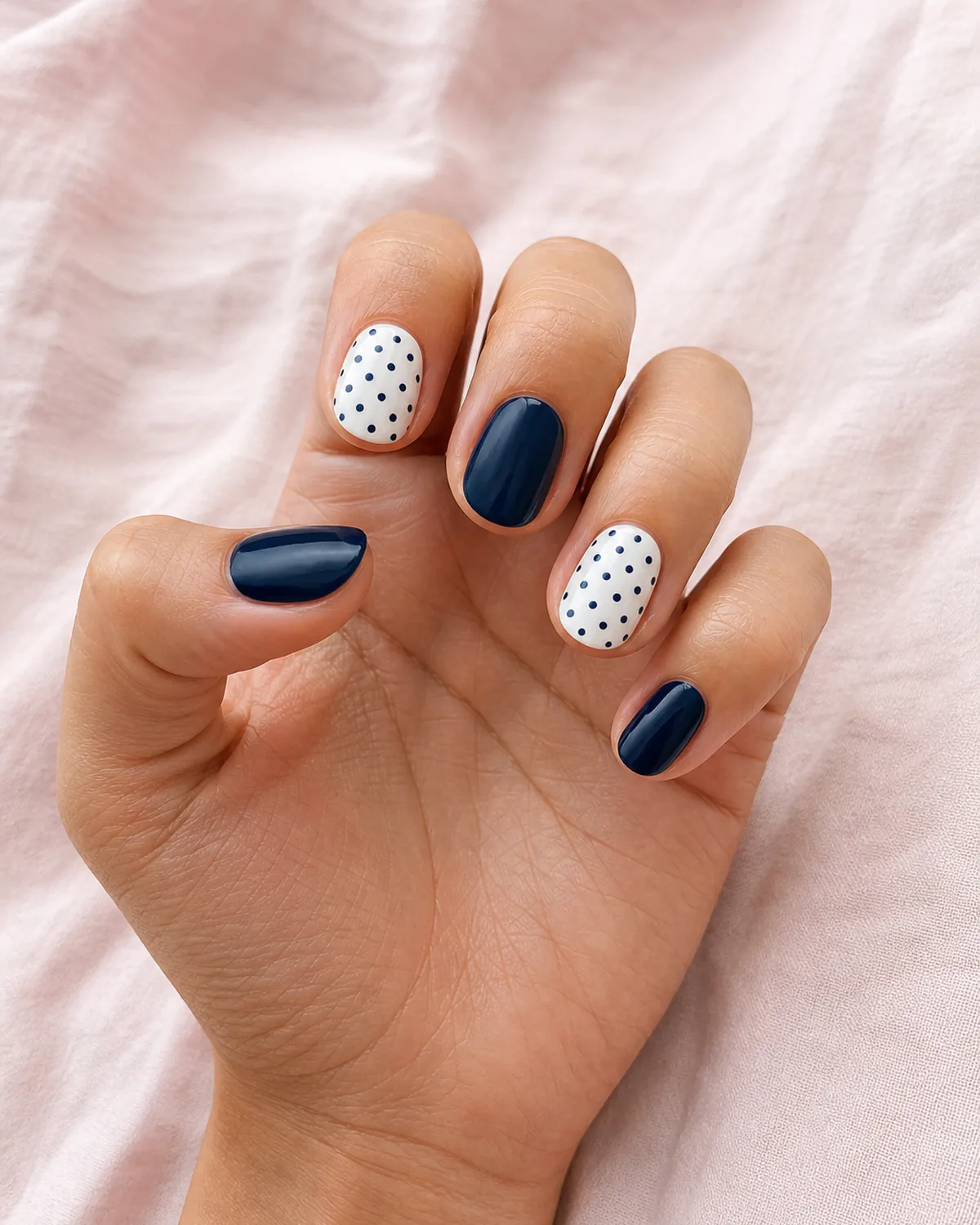
Rather than mixing colors, this version mixes surface treatment: some nails wear a small graphic polka-dot pattern in navy on white, while the rest stay a plain solid navy — the same palette, split by whether it's patterned or not.
Because the color family stays constant, the eye reads the split as a design choice rather than an accident. Medium round nails let the polka-dot pattern sit clearly without crowding the nail's edge.
- Paint all ten nails a white base and let dry.
- On the nails staying patterned, add small navy polka dots once dry.
- On the remaining nails, paint over the white with solid navy.
- Let both finishes cure or dry fully.
- Seal the whole set with a single top coat.
You don't need to scramble the whole hand at once. Pick the amount of mismatch you actually want this week, and start with that one.
6. High-Contrast Black Against Three Saturated Brights
Where the earlier looks mix softer palettes, this one pushes contrast on purpose — a deep matte black sits alongside a hot pink and an electric blue, three loud saturated colors set against the darkest possible neutral.
The black does real work here: it gives the brights somewhere to land instead of competing with each other directly. Medium almond nails keep each block of color long enough to hold its own against its neighbors.
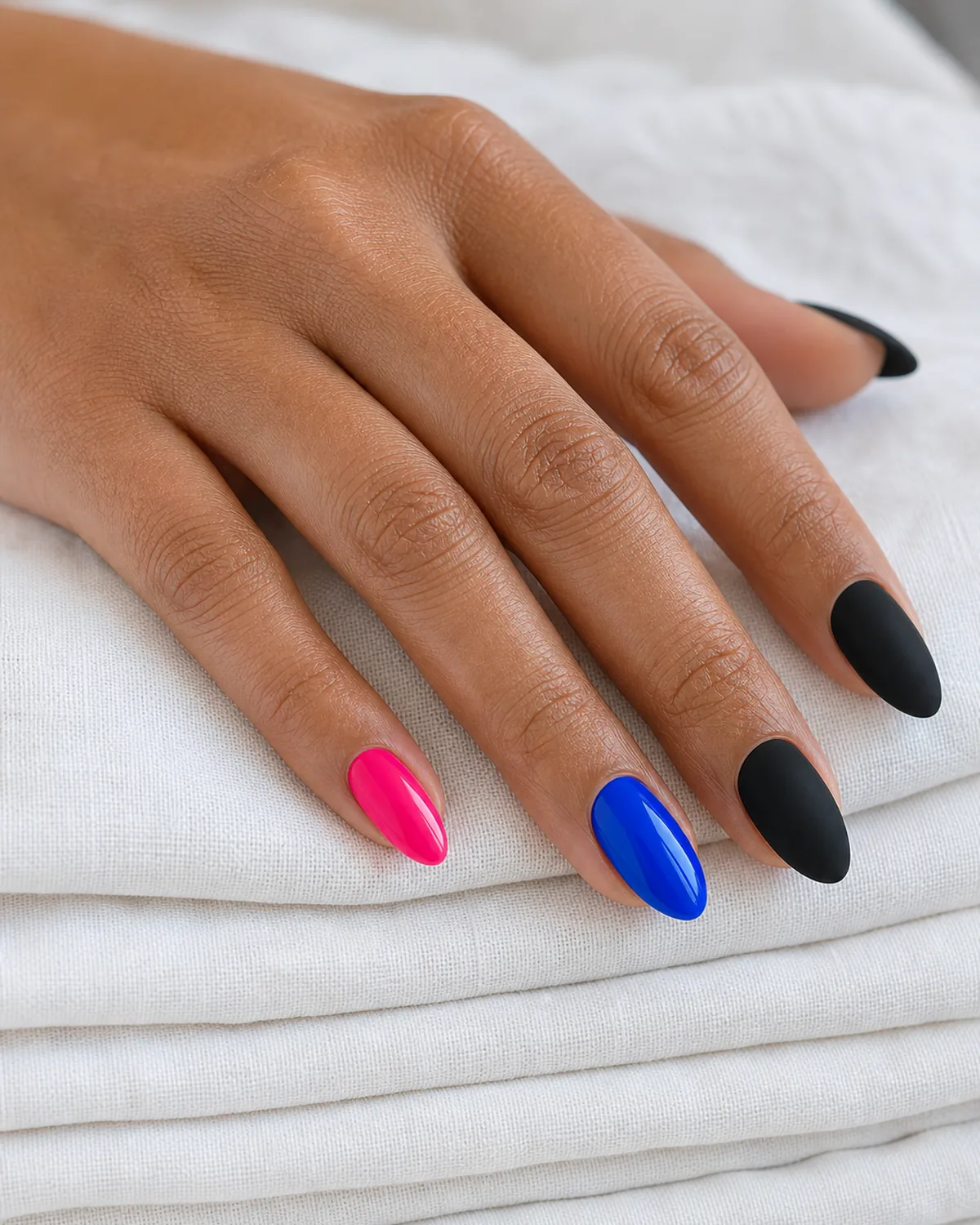
- Paint some nails in deep matte black and let cure.
- Paint the remaining nails in hot pink and electric blue, mixing the order.
- Keep each color block a clean, flat solid with no overlap.
- Let every nail cure or dry fully before handling.
- Finish with a single top coat, keeping the black matte if preferred.
7. The Same Pink, Five Different Finishes
This mismatch logic holds color constant and varies texture instead — every nail wears the same rose-pink hue, but the finish changes nail to nail: matte, glossy cream, a fine shimmer, and a soft chrome.
Because the underlying color never shifts, the differences are subtle and close-up, the kind that only really show once someone's hand catches the light at an angle. Short almond nails keep each finish easy to compare side by side.
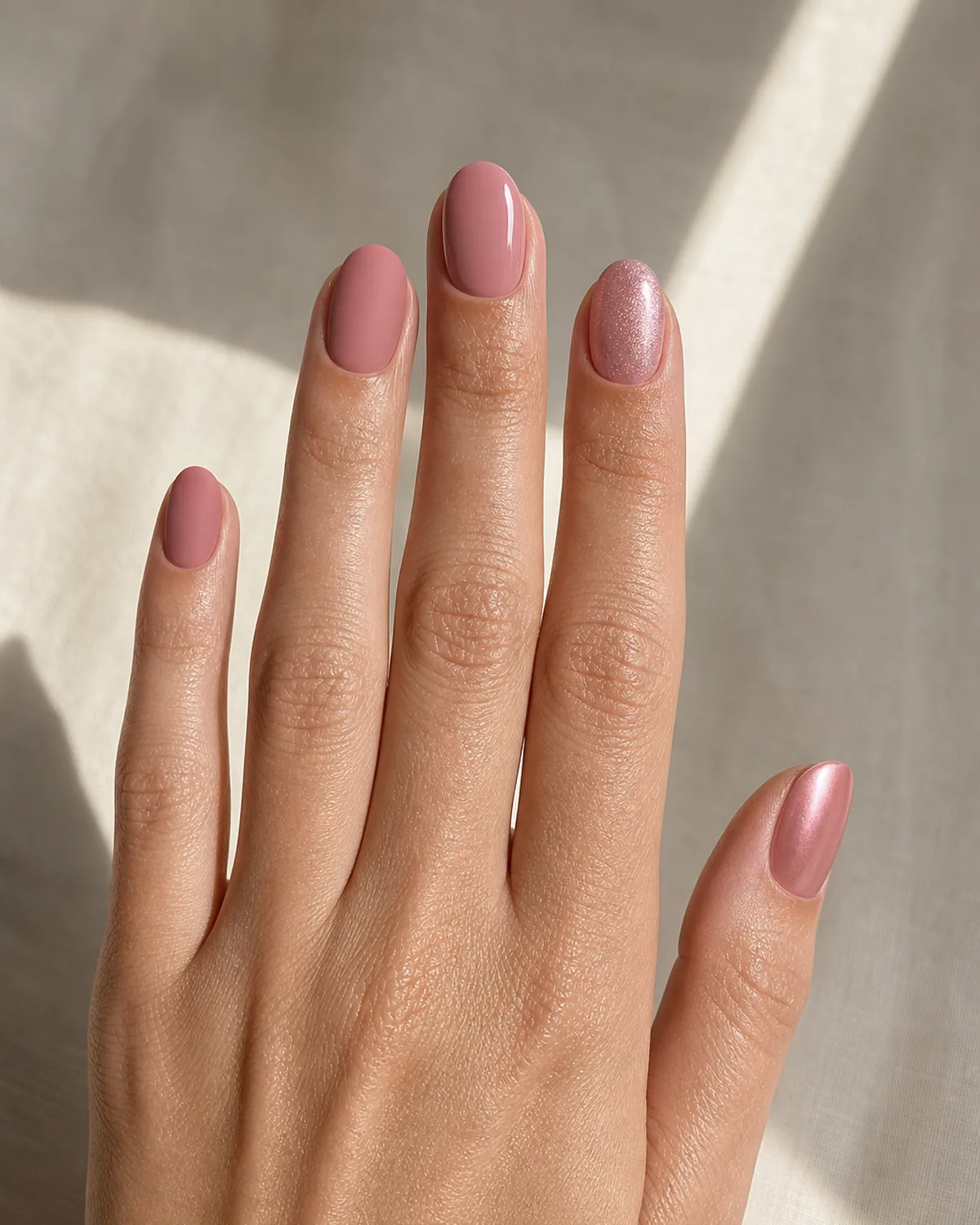
- Paint all ten nails the same rose-pink base color.
- On select nails, seal with a matte top coat instead of gloss.
- On others, layer a fine shimmer or a soft chrome finish over the same pink.
- Let each finish cure or dry fully before comparing them side by side.
- Leave a few nails in the plain glossy cream finish as the baseline.
8. A Client Who Couldn't Choose, So She Got Both
A regular sat down torn between two swatches — a soft lavender and a warm caramel — and asked if she really had to pick just one. The answer, after a beat, was no: half the hand in one, half in the other.
The split isn't alternating like the two-color look earlier; it's grouped, so each palette gets its own uninterrupted stretch across several nails before the other one takes over. Medium square nails give each color story enough real estate to feel complete on its own.
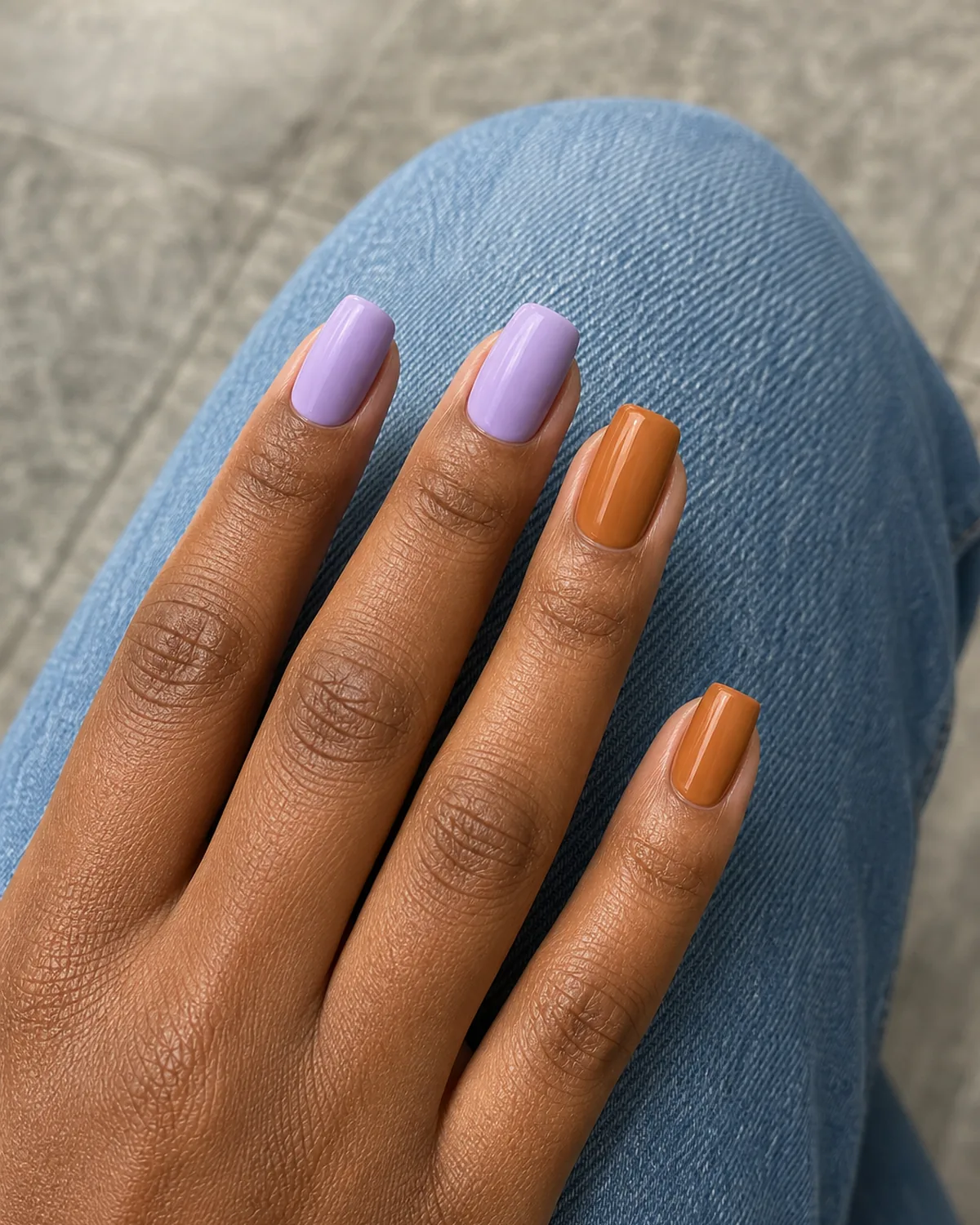
- Decide which nails belong to each color group before starting.
- Paint one grouped section in the soft lavender and let dry.
- Paint the remaining grouped section in the warm caramel.
- Keep the boundary between the two groups clean and deliberate.
- Finish the whole hand with a single top coat.
9. Negative Space on Some Nails, Full Coverage on the Rest
Instead of varying color, this version varies coverage. Some nails carry a negative-space design — a thin outline of color with bare nail showing through the center — while the rest are painted in full solid coverage in the same shade.
The bare nail peeking through does a lot of visual work, giving the eye somewhere to rest between the fully covered nails. Medium oval nails keep the outline shapes clean and easy to trace.
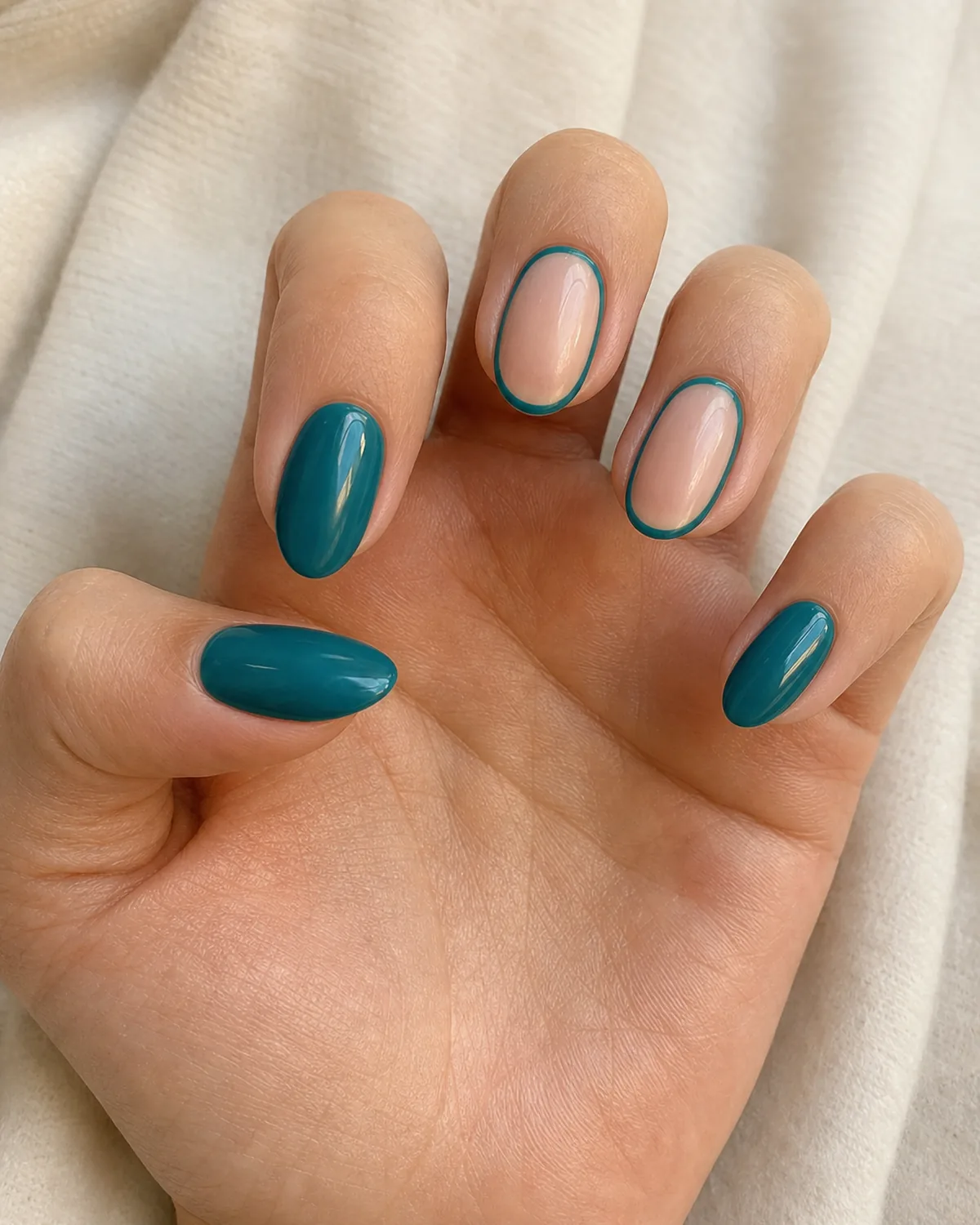
- Paint the fully covered nails in solid color and let cure.
- On the negative-space nails, paint only a thin outline near the edges.
- Leave the center of each negative-space nail bare.
- Cure or dry both types fully before handling.
- Seal the whole set with a single top coat, including the bare centers.
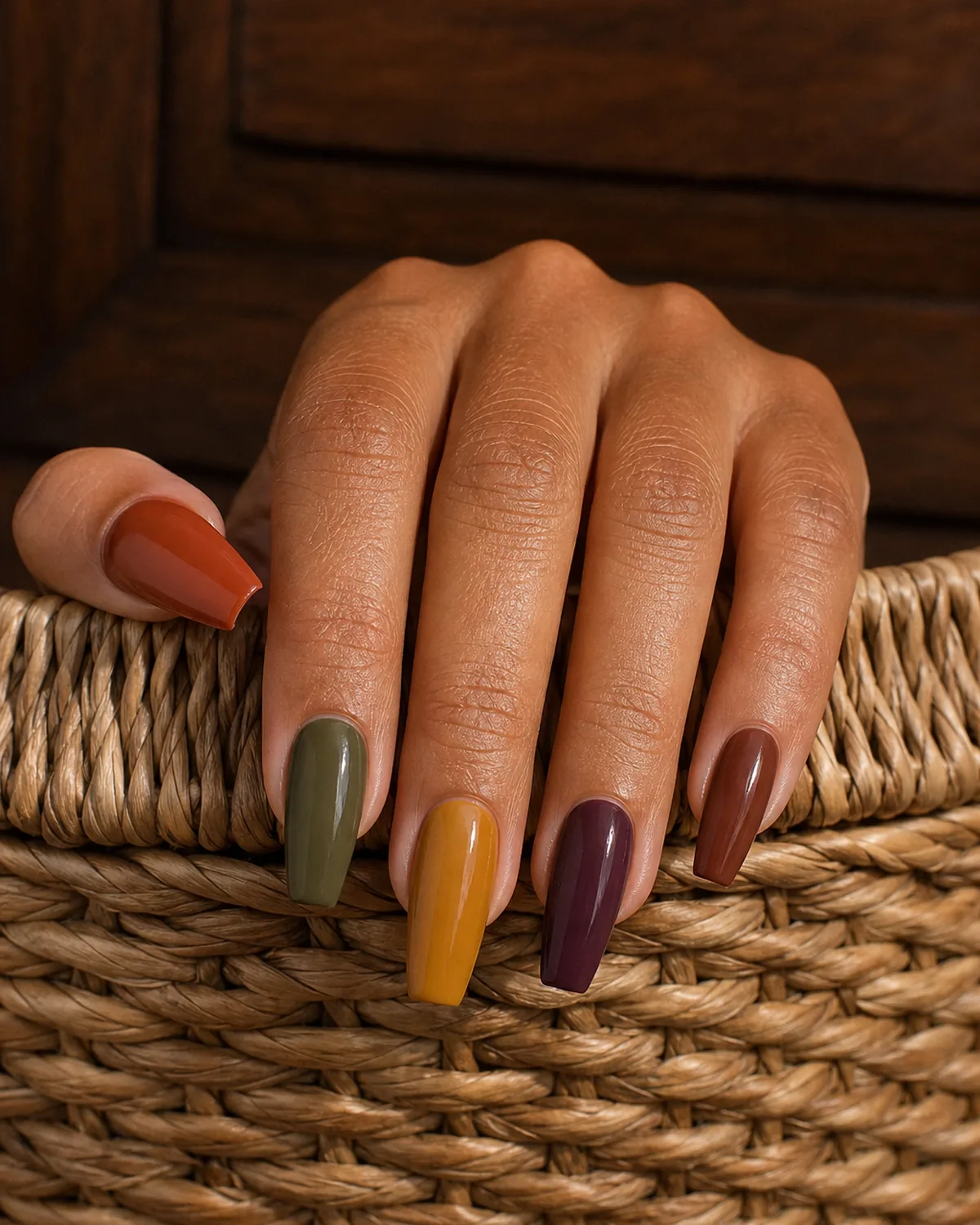
10. A Muted Autumn Palette Scrambled Across Ten Nails
This scramble stays inside one tight seasonal palette — rust, olive, mustard, and deep plum — so even with four different colors in play, the whole hand still reads as distinctly autumnal rather than random.
The trick is keeping every shade muted rather than saturated; a bright version of any of these colors would break the cohesion the palette is built on. Medium coffin nails give each muted shade a long, calm plane to sit on.
- Choose four muted autumn shades within the same saturation range.
- Assign one shade per nail in a scrambled, non-repeating order.
- Paint each nail its assigned shade as a flat solid.
- Let every nail dry or cure fully before the next step.
- Finish with a single top coat across the whole scrambled set.
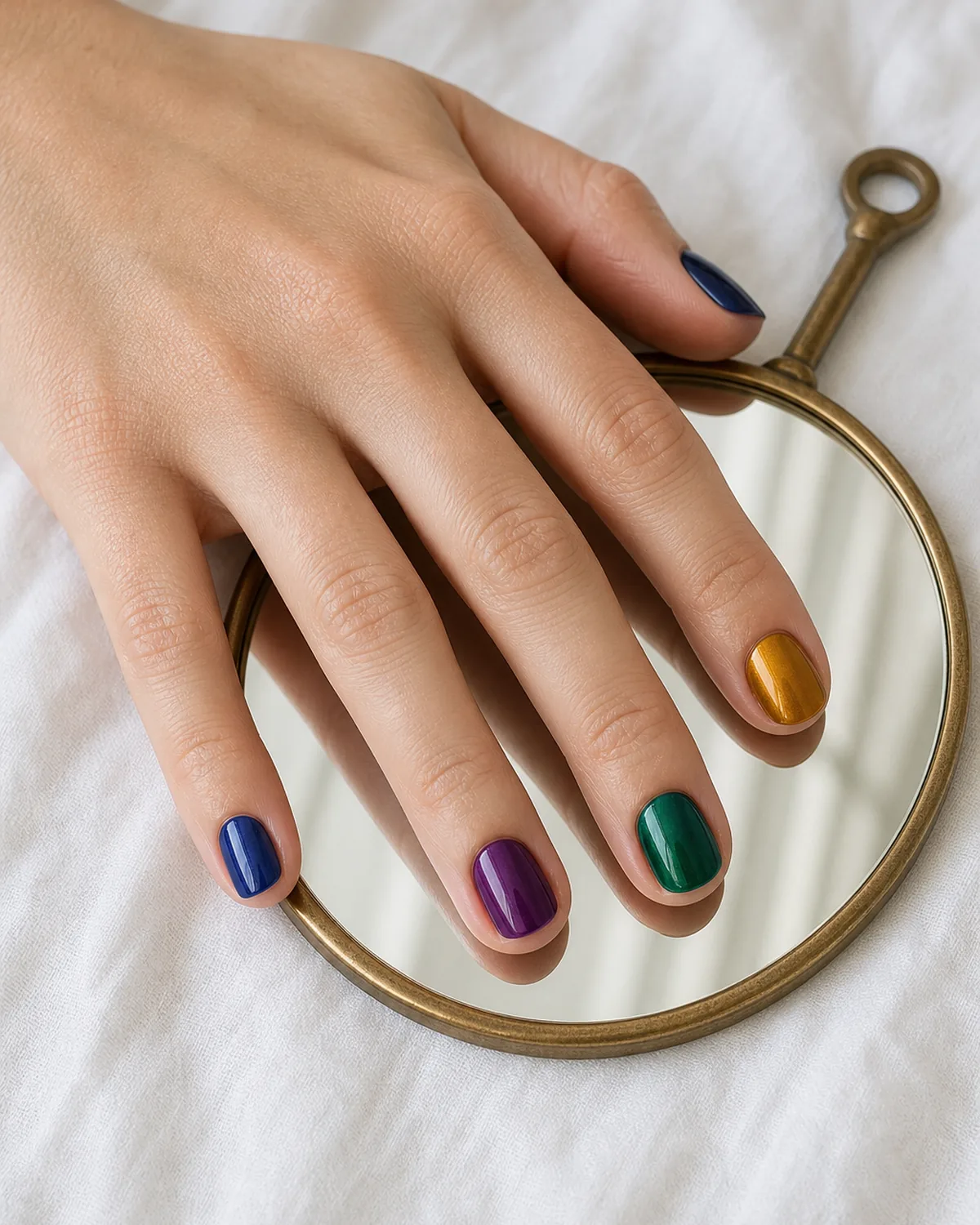
11. Ten Nails, Ten Gemstone Colors
Where the pink nails trend stays inside one hue family, this look goes the opposite direction — each nail takes on a different jewel-toned color reminiscent of a gemstone: sapphire blue, ruby red, amethyst purple, emerald green, scrambled nail to nail.
The saturation is what unifies it — every color is rich and deep rather than pastel, so the variety reads as intentional rather than mismatched by accident. Short round nails keep each gem-toned block compact and glossy.
- Choose four or five saturated jewel-toned polishes.
- Assign one gemstone color per nail, mixing the order across the hand.
- Paint each nail its assigned color as a rich, even solid.
- Let each color cure or dry fully before starting the next.
- Finish the whole set with a high-gloss top coat.
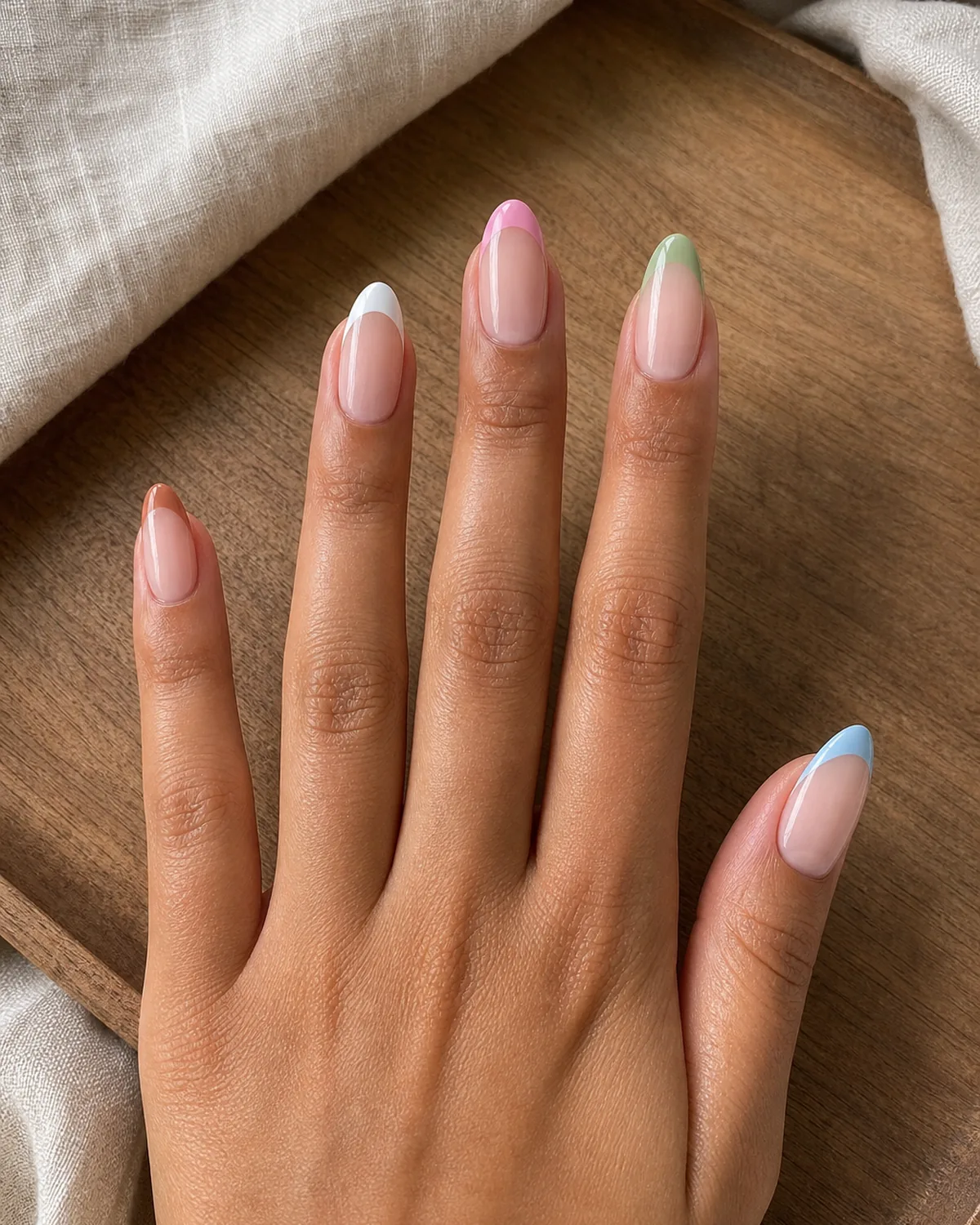
12. When Every French Tip Gets a Different Color
This one keeps the french tip nails structure fully intact — the same clean smile line on every nail — but swaps the tip color nail to nail: white, soft pink, sage green, terracotta.
Because the shape stays identical across the hand, the mismatch reads as a controlled variation on a classic rather than a departure from it. Medium almond nails keep every smile line crisp and consistent.
- Paint a neutral base coat across all ten nails and let dry.
- Tape or freehand a clean smile line on each nail.
- Paint each tip a different assigned color, keeping the line crisp.
- Let each tip cure or dry fully before removing any tape.
- Finish the whole hand with a single glossy top coat.
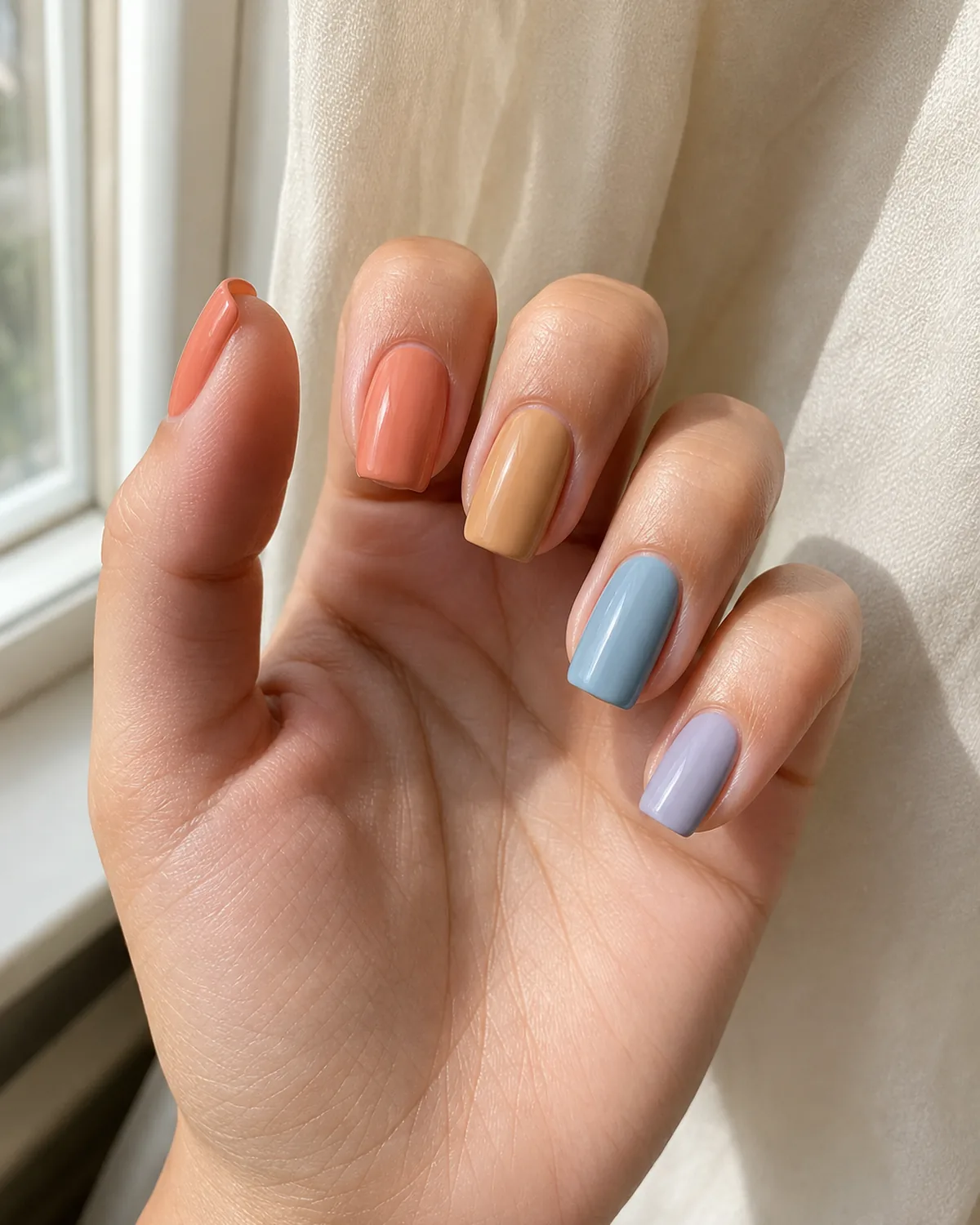
13. Warm Tones on One Hand's Worth, Cool Tones on the Rest
This mismatch logic splits by temperature rather than by hue family — a coral and a golden nude carry the warm side, while a soft blue and a lilac-grey carry the cool side, placed together across the same hand.
It's a subtler contrast than the black-and-bright look earlier, working more like a color-theory exercise than a bold statement. Medium square nails give each temperature group a clean, even block to sit in.
- Choose two warm shades and two cool shades in similar depth.
- Assign the warm shades to some nails and the cool shades to the rest.
- Paint each nail its assigned shade as a flat, even solid.
- Let every nail dry or cure fully before the next step.
- Finish the whole hand with a single top coat.
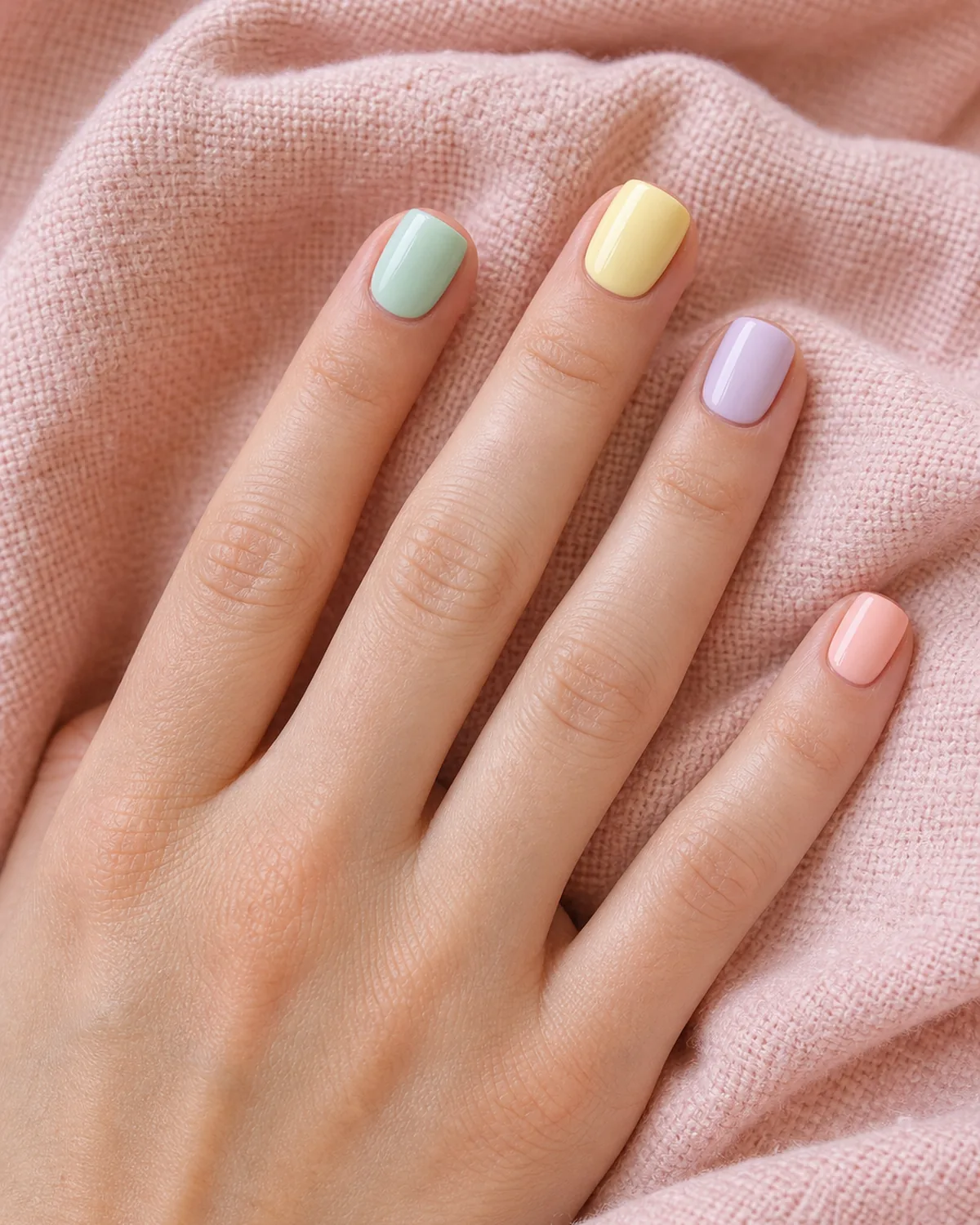
14. A Soft Pastel Scramble With No Two Nails Alike
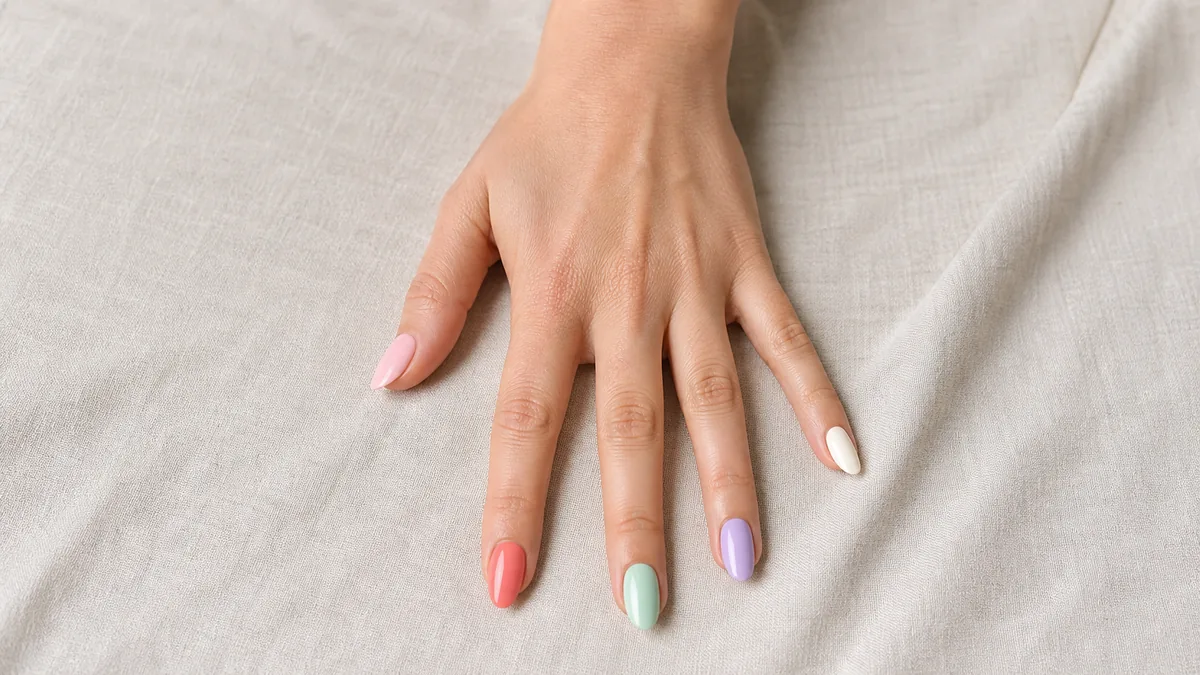
Here the same full-scramble logic from earlier returns, but softened — baby blue, mint, buttery yellow, and pale lilac, each nail a different pastel with no two matching, in a gentler register than the saturated rainbow version.
The pastel palette keeps the scramble feeling calm rather than loud, more macaron box than paint sample. Short square nails keep each soft color compact and easy on the eye.
- Choose four or five soft pastel polishes with no near-duplicates.
- Assign one pastel per nail, scrambling the order across the hand.
- Paint each nail its assigned pastel as a flat, even solid.
- Let each color dry or cure fully before starting the next.
- Finish the whole set with a single soft-gloss top coat.
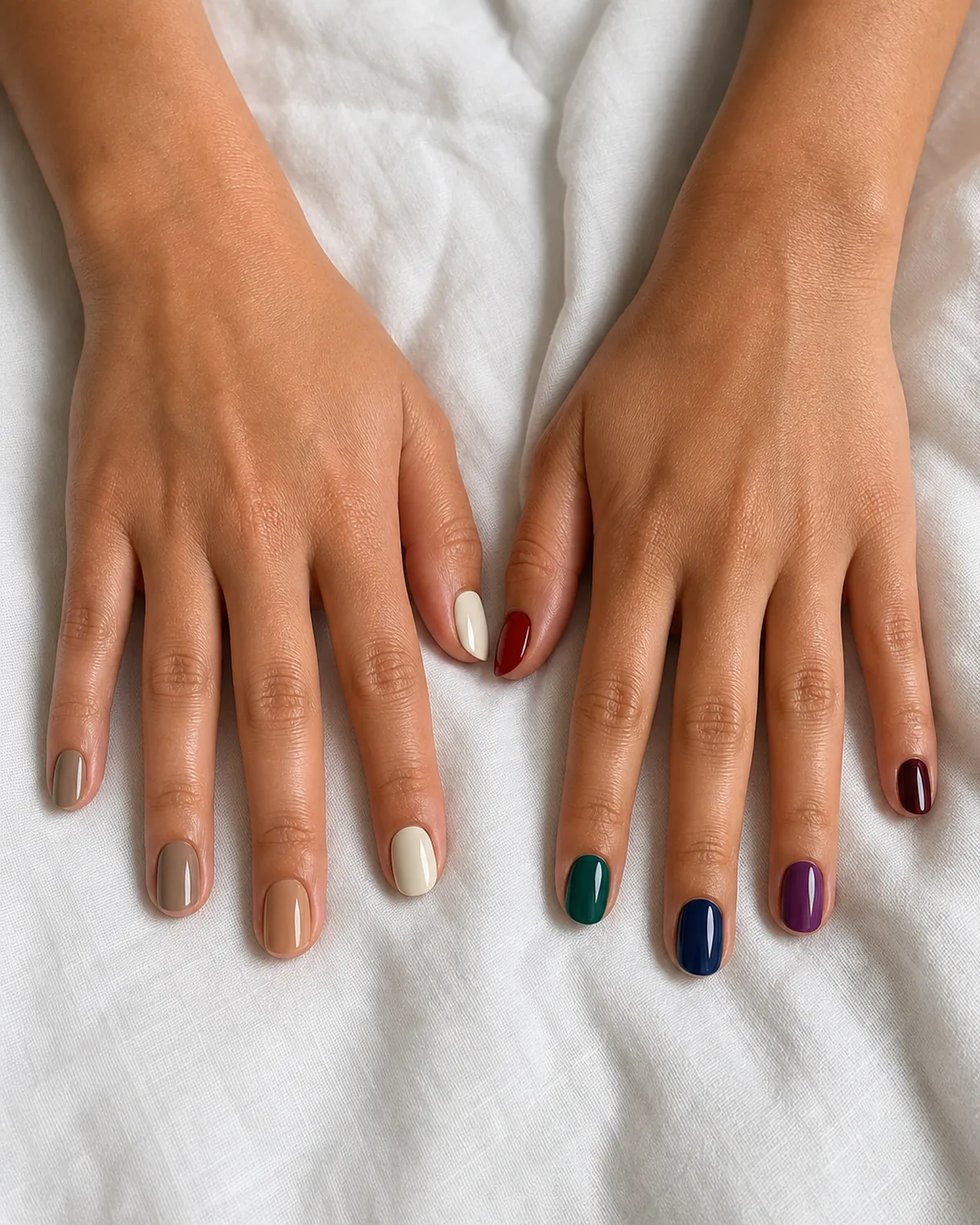
15. Two Hands, Two Completely Different Color Stories
The last look takes the mismatch logic one step further than any single hand can — one hand wears a soft neutral tonal-family palette, and the other wears a bold saturated jewel-toned palette, two internally coherent stories that never mix.
Each hand still reads as considered on its own; the mismatch only appears once both hands are seen together. Medium round nails keep both palettes calm enough to hold their own separate identities.
- Decide which hand carries the neutral palette and which carries the jewel tones.
- Paint the first hand's nails in coordinating soft neutral shades.
- Paint the second hand's nails in coordinating saturated jewel tones.
- Let both hands cure or dry fully before placing them side by side.
- Finish each hand with a single top coat matched to its own palette.
That's the full range of mismatch logic, from a simple two-color swap to two hands telling entirely different stories. Whichever one you try first, the rule stays the same: let the variation follow a clear idea, not the absence of one.
Mismatched nails come down to four decisions: pick one logic instead of several, decide how many nails actually differ, keep a shared thread running through the set, and choose a mismatch that suits your hand's size. These four rules are what make any of the fifteen looks above land as deliberate rather than clashing.
15 Mismatched Nail Ideas to Try
- 1Two-color alternateBurgundy and blush trade off nail to nail on medium almond.
- 2Tonal family gradientFive terracotta depths side by side on medium oval.
- 3Single wild-card nailNine nude nails, one bold emerald standout, on medium coffin.
- 4Full rainbow scrambleFive rainbow hues, no repeats, on short square.
- 5Pattern-vs-solid splitPolka dots meet plain navy on medium round.
- 6Black vs. bright contrastMatte black against hot pink and electric blue on medium almond.
- 7Same hue, different finishesOne rose-pink, four finishes, on short almond.
- 8Two palettes, one handLavender and caramel grouped on medium square.
- 9Negative space vs. full coverageBare-nail outlines meet solid color on medium oval.
- 10Autumn palette scrambleRust, olive, mustard, plum on medium coffin.
- 11Gemstone multicolorSapphire, ruby, amethyst, emerald on short round.
- 12French tip color swapOne shape, four tip colors, on medium almond.
- 13Warm-vs-cool splitCoral and gold against blue and lilac-grey on medium square.
- 14Pastel scrambleFour soft pastels, no two nails alike, on short square.
- 15Two hands, two storiesNeutral palette meets jewel tones across both hands on medium round.
styvea.com

Sloane Avery edits Styvea, where she shares nail design ideas, shapes, colors, and at-home manicure how-tos for anyone who loves a good manicure. Every guide is reviewed for clarity, usefulness, image accuracy, and Pinterest-to-page alignment before publication. Visit the About page.