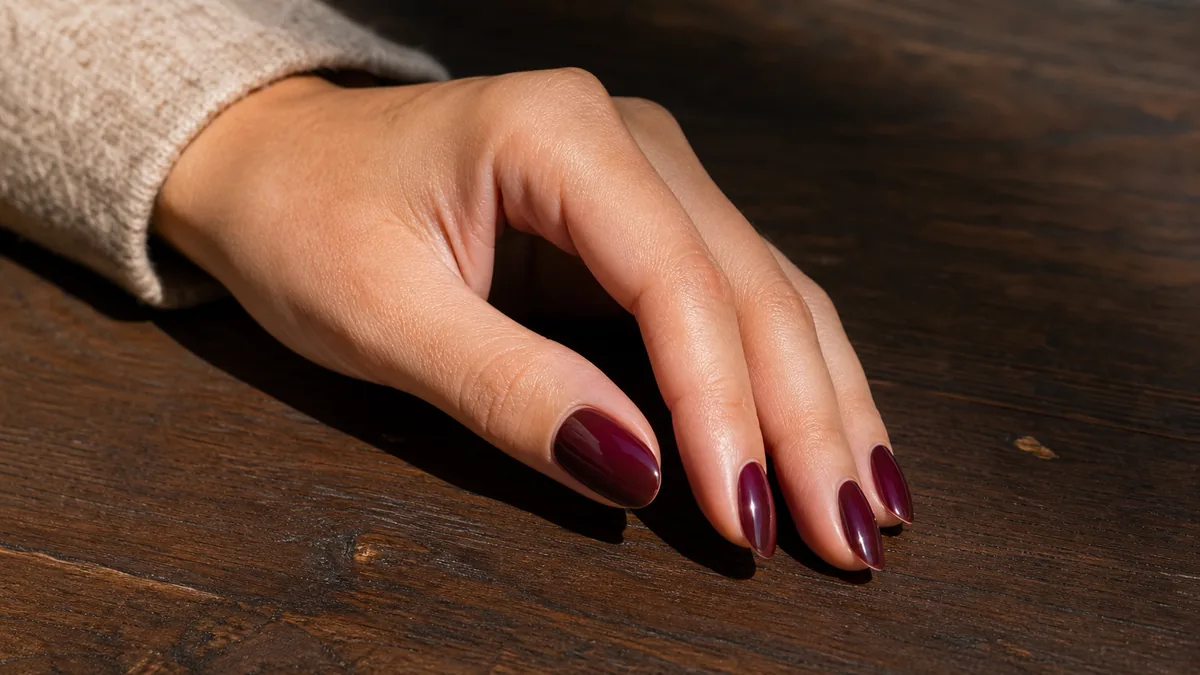
Burgundy sits in a color lane of its own — deeper than red, redder than brown, with a visible wine-purple undertone neither family carries. It reads moodier than bright red, warmer than black, without fully becoming either one.
That undertone is what makes burgundy worth treating as its own category rather than "dark red." The fifteen looks below move through the full range this wine tone can take, from a near-black matte to a sheer garnet wash.
From a classic glossy oxblood through a near-black matte wine and a sheer garnet wash, these fifteen looks all keep the same purple-red undertone front and center at different depths, finishes, and shapes. Jump straight to the one that matches your mood.
- 1Red, but moodier
- 2Almost black wine
- 3Burgundy meets chrome
- 4The bordeaux shade
- 5Sheer garnet jelly
- 6The fall bride's request
- 7The French flipped
- 8Red or brown? Neither
- 9Velvet matte wine
- 10Under a leather jacket
- 11Wine, not wine-red
- 12Glitter-fleck wine
- 13Can burgundy look soft?
- 14Two coats or three
- 15The editor's pick
1. A Client Who Wanted "Red, But Moodier"
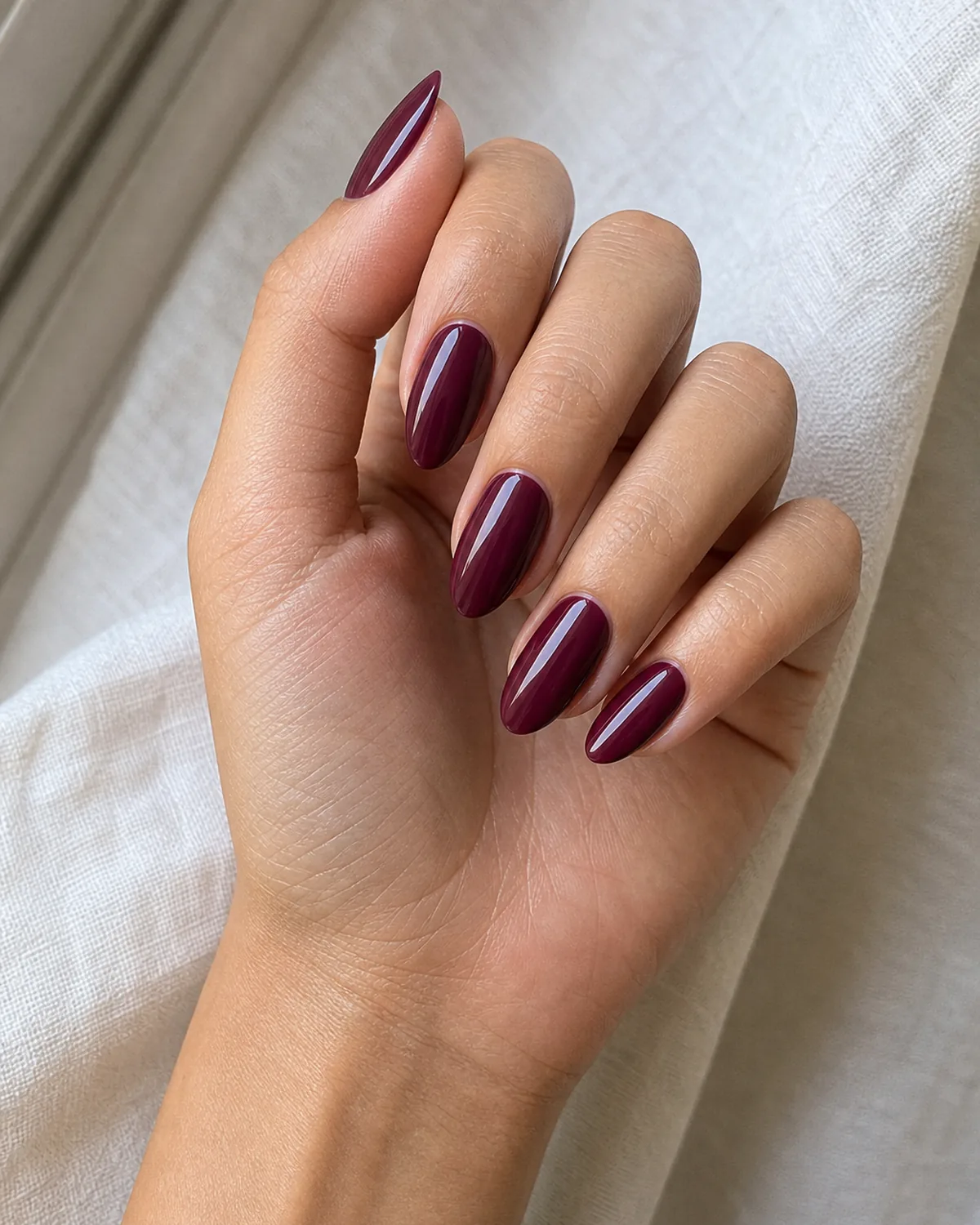
A longtime regular came in asking for red, then paused at the swatch wall and said she wanted something with more weight to it — less like a stop sign, more like a glass of wine held up to a window.
That request is oxblood burgundy: a classic glossy finish with the same intensity as a bright red but a visible purple undertone running underneath it, the way the cherry red nails trend stays on the brighter, purple-free side of red.
The shift from red to oxblood isn't subtle once it's on the nail — under the same light, the burgundy pulls noticeably darker and cooler. Medium almond nails give the glossy finish a long, clean plane to catch the light.
- Apply two even coats of a glossy oxblood burgundy polish.
- Let each coat dry fully before applying the next.
- Keep the cuticle line clean and crisp on both coats.
- Check the undertone in direct light — it should read purple-red, not orange-red.
- Seal with a high-gloss top coat for maximum shine.
2. The Wine That Reads Almost Black Until the Light Hits It
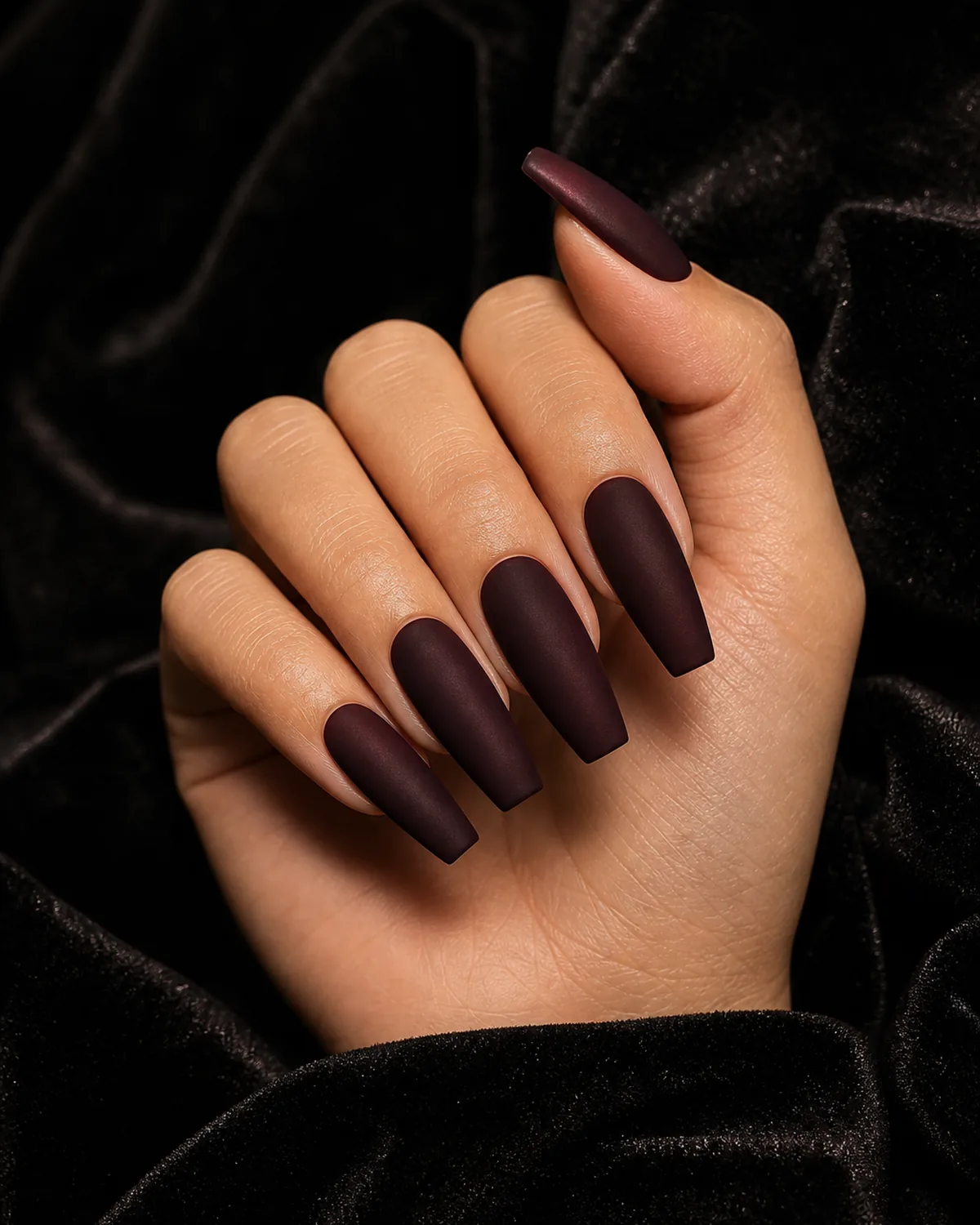
Some burgundies sit so deep in the wine family that they look like black from across a room. This one is a matte-velvet deep plum-red — under low or indirect light, it reads as a near-black neutral, and it's only when direct light catches the nail that the underlying purple-red comes through.
That shift between "is this black?" and "no, it's wine" is the entire appeal of this shade. Long coffin nails hold enough surface area for the matte texture to fully register before the color reveals itself.
- Apply two coats of a near-black deep plum-red polish.
- Seal with a matte top coat instead of a glossy one.
- Check the color under both dim and direct light before finishing.
- Avoid a high-shine top coat, which would mute the near-black effect.
- Touch up any thin spots at the tip where the plum-red shows lightest.
3. What Happens When Burgundy Meets a Chrome Finish
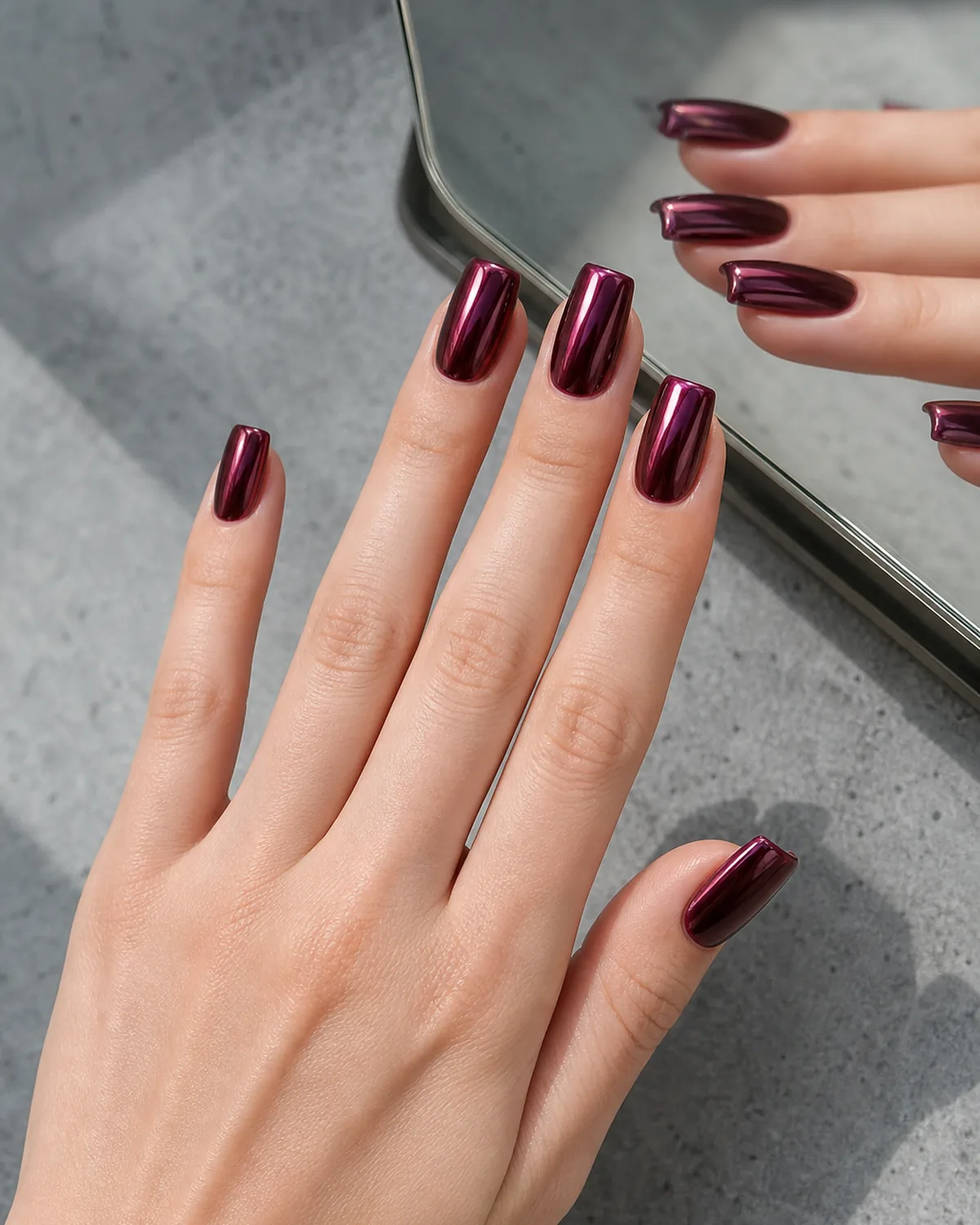
Burgundy usually shows up in a flat, matte, or glossy cream finish — this version instead layers a chrome powder over a wine-toned base, so the deep purple-red catches light in a mirrored, almost liquid way rather than sitting flat on the nail.
The chrome doesn't lighten the burgundy; it just changes how the color moves under light, shifting between wine and near-black depending on the angle. Square nails give the chrome finish a wide, flat surface to reflect evenly.
- Apply two coats of a deep wine-toned burgundy base and let cure fully.
- Buff a chrome powder over the cured base in circular motions.
- Remove excess powder with a soft brush before sealing.
- Seal the chrome layer with a non-abrasive top coat.
- Check the mirror effect from multiple angles before finishing the set.
4. The Shade a Sommelier Would Call Bordeaux
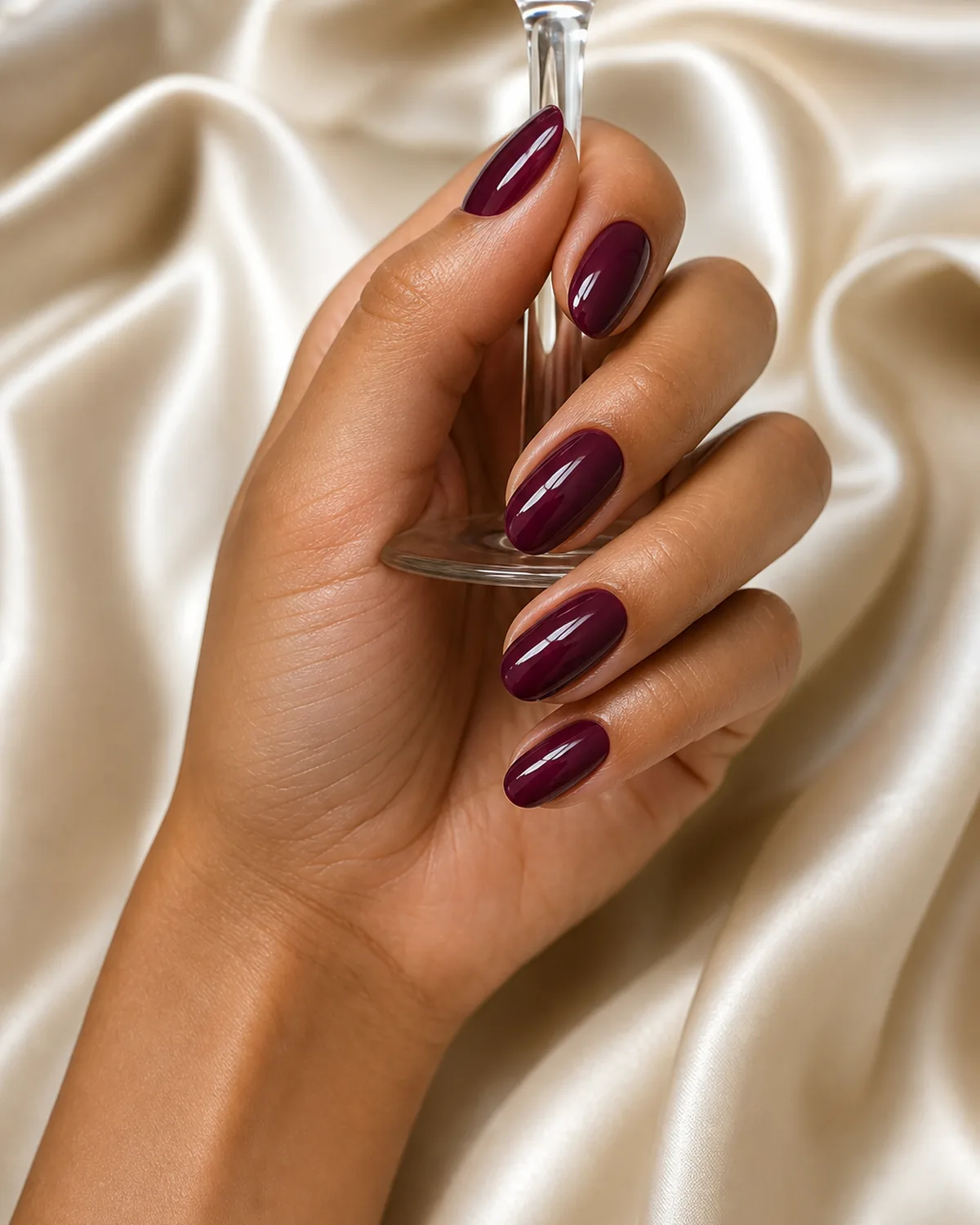
Not every burgundy is the same wine — this one leans toward the brighter, more saturated end some would specifically call bordeaux, a glossy cream finish with a touch more red visibility than the near-black or oxblood versions elsewhere on this list.
Bordeaux still keeps the purple undertone that separates burgundy from true red, but it sits a half-step lighter and more vivid, closer to the wine itself than the bottle's shadow. Oval nails let the glossy cream catch light evenly along a rounded plane.
- Apply two coats of a bordeaux-leaning glossy cream polish.
- Keep each coat thin to avoid pooling at the cuticle.
- Let the color cure fully between coats for even saturation.
- Compare against a true-red swatch to confirm the purple undertone holds.
- Finish with a glossy top coat for a wet-look shine.
5. A Garnet Jelly Sheer Enough to See the Nail Bed Through
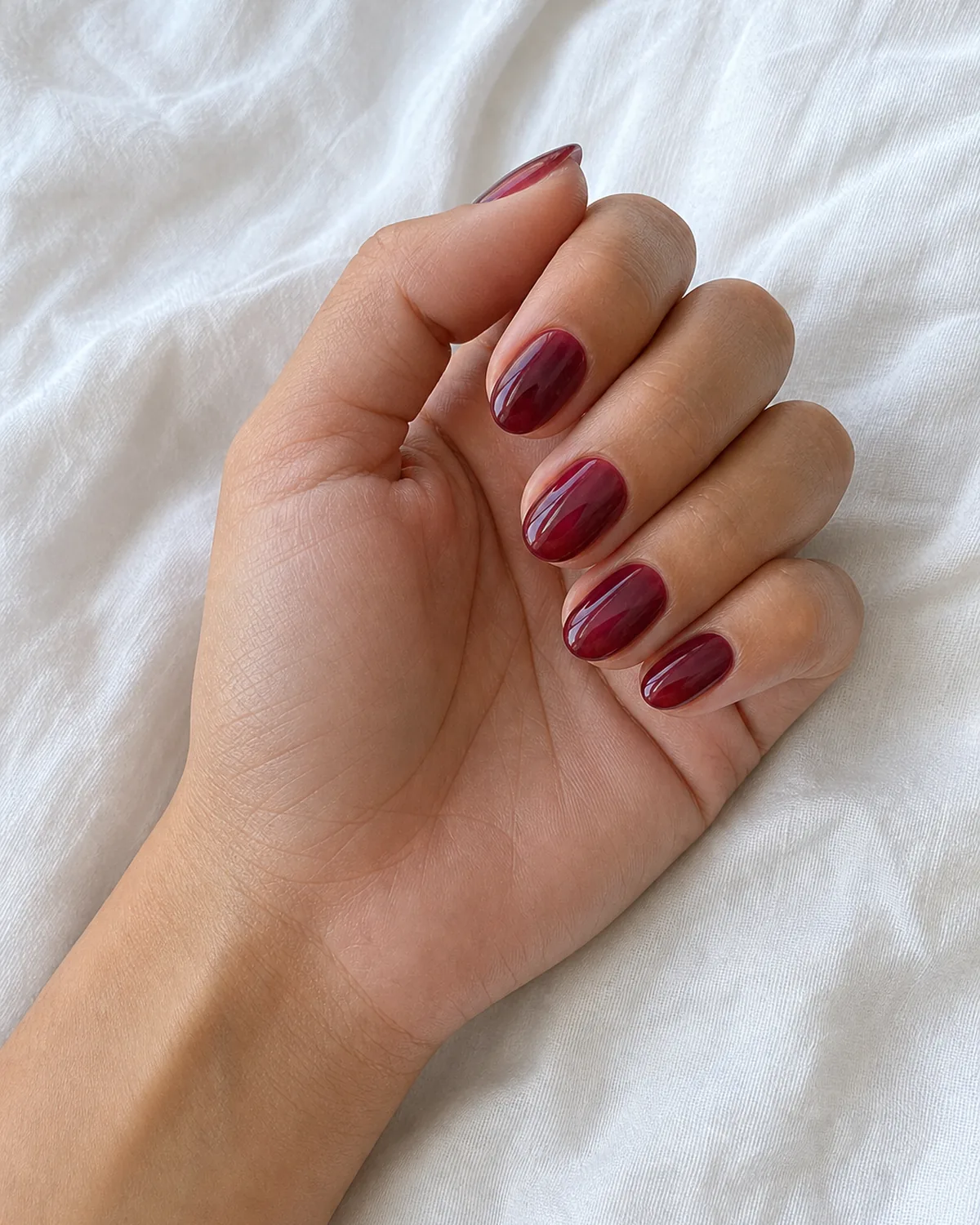
Not every burgundy needs full opacity. This jelly finish stays sheer enough that the natural nail bed shows faintly through the garnet-toned color, giving the wine tone a softer, glass-like quality instead of a fully opaque wash.
Because the finish is translucent, the depth builds with each layer rather than sitting flat from the first coat — two thin layers read noticeably different from three. Short almond nails keep the sheer jelly from pooling unevenly across a smaller surface.
- Apply one thin coat of a garnet jelly polish and check the sheerness.
- Add a second thin coat if more depth is wanted, letting the first cure first.
- Avoid thick single coats, which can pool unevenly in a jelly formula.
- Let the final coat cure fully before handling.
- Seal with a glossy top coat to keep the jelly's glass-like quality.
6. The One Request Every Fall Bride's Maid of Honor Makes
Fall weddings bring a specific request to the chair almost every season: something that photographs rich against a bouquet without competing with the bride's own color story. Port-wine burgundy, glossy and full-coverage, is the answer that keeps coming up — deep enough to read formal, warm enough to sit well against autumn foliage in photos.
The gloss finish matters here more than in some other looks on this list, since a flat or matte version can read duller in flash photography. Long coffin nails give the glossy port-wine enough length to photograph clearly at a distance.
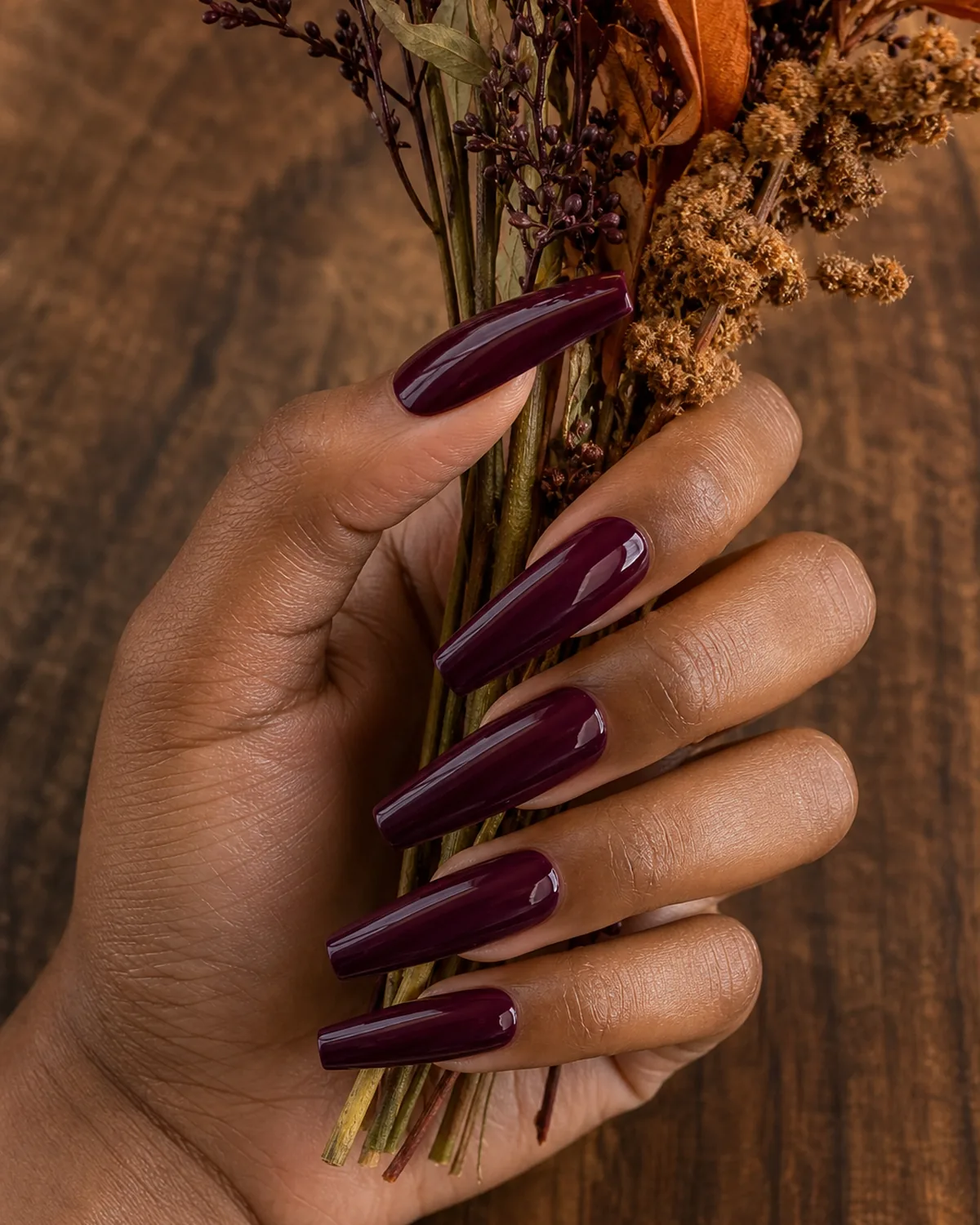
- Apply two even coats of a glossy port-wine burgundy polish.
- Let each coat dry fully before layering the next.
- Keep the finish high-gloss rather than matte for photo reflectivity.
- Check the color under both daylight and indoor lighting before the event.
- Finish with a durable glossy top coat built to last through a full day.
7. Burgundy on the Base, Bare on the Tip — the French Flipped
The usual smile-line manicure paints a pale tip over a bare or sheer base. This version reverses that logic entirely: a solid wine-toned burgundy covers the base of the nail, and the tip is left bare or barely-there, so the deep color and the natural nail trade places compared to the classic version.
The reversal reads as a single color-placement idea rather than a full technique on its own — the wine tone still has to hold its purple-red depth at the base for the flip to register. Medium square nails give the reversed color block a clean, even edge to work from.
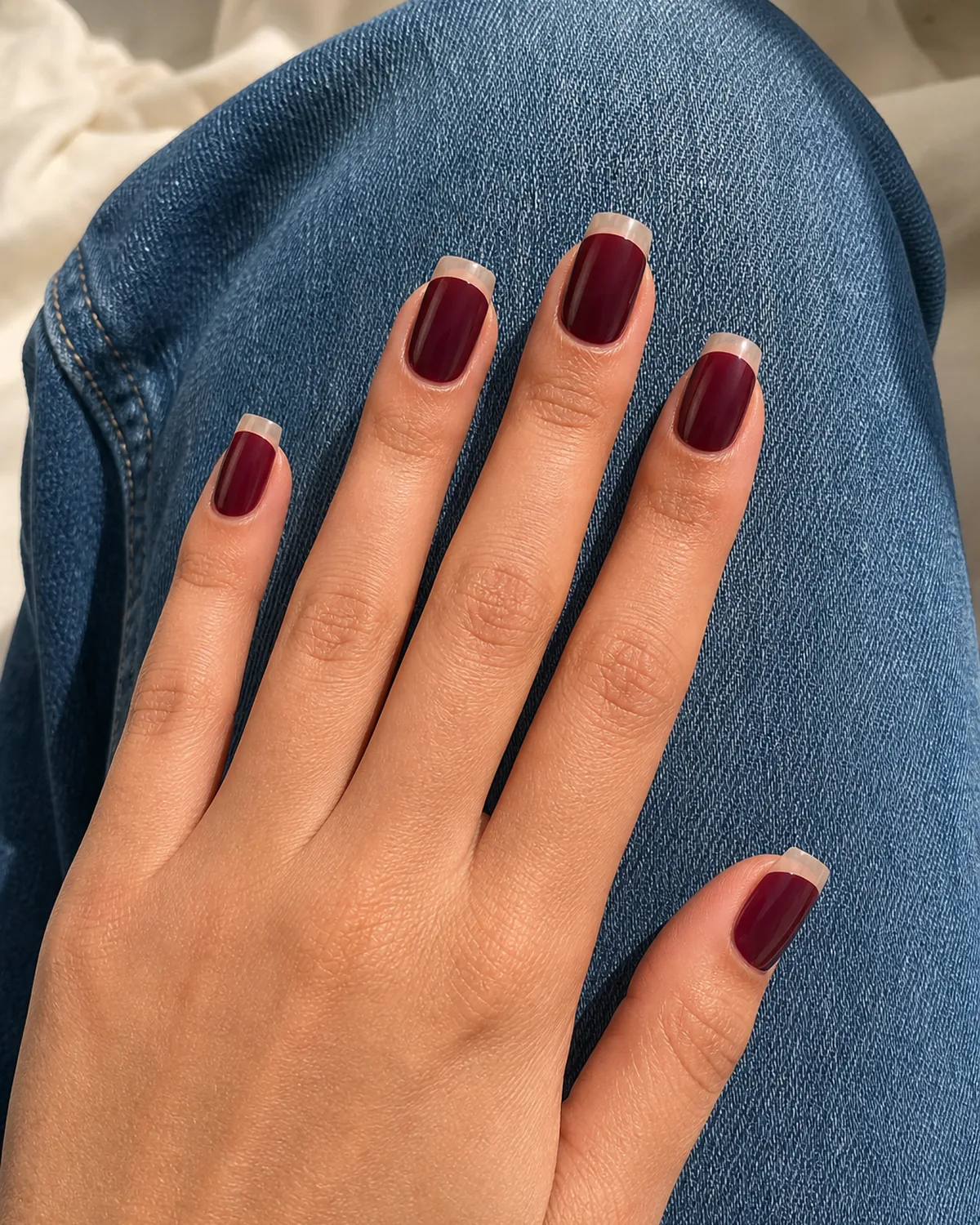
- Paint a bare or clear base coat across the whole nail and let dry.
- Apply the wine-toned burgundy to the base two-thirds of the nail.
- Leave the remaining tip section bare or with a single sheer coat.
- Keep the line between the two sections clean and deliberate.
- Seal the whole nail with a single glossy top coat.
Burgundy covers a wide range from near-black to sheer wash. Pick the depth and finish you actually want this week, and start with that one.
8. Is This Red or Brown? Neither.
Held up next to a swatch of chocolate brown nails, this merlot burgundy makes the case for its own lane — it has more red visibility than a true brown and more brown warmth than a true red, landing exactly at the crossover point between the two families.
That in-between quality is what makes merlot burgundy the hardest shade on this list to categorize at a glance, and also the one that reads most sophisticated in low light. Square nails give the glossy merlot a wide, even surface to hold that ambiguous depth.
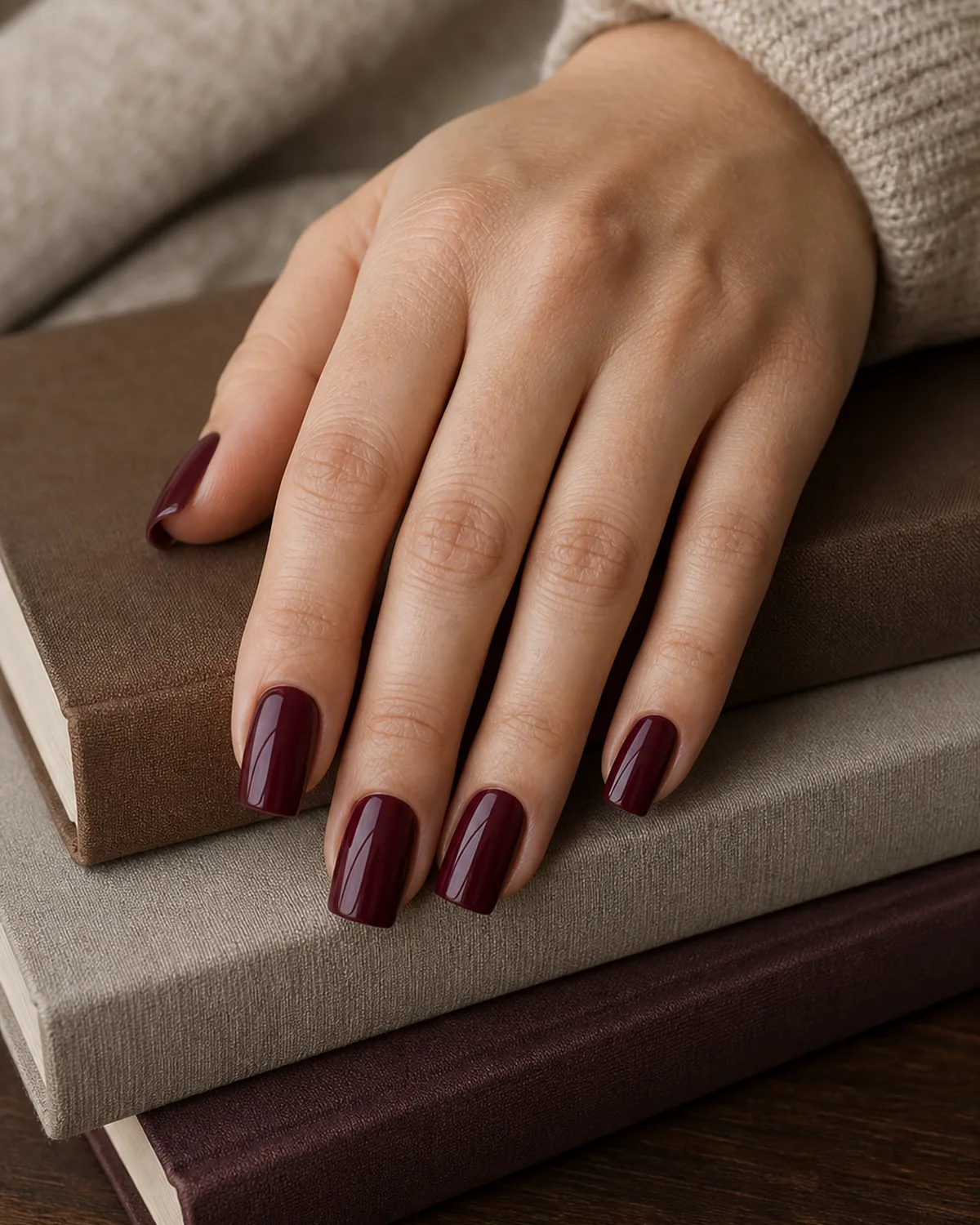
- Apply two coats of a merlot-toned burgundy polish.
- Compare the wet color against both a red and a brown swatch before finishing.
- Let each coat cure fully for accurate color depth.
- Keep the finish glossy to let the crossover tone show clearly.
- Seal with a high-shine top coat.
9. A Velvet Matte That Seems to Swallow the Light
Where the glossy looks on this list reflect light off the surface, this one absorbs it. A velvet matte deep wine finish flattens every reflection, so the burgundy reads as a dense, almost fabric-like block of color rather than a shiny lacquer.
The matte texture asks for a longer canvas to fully land — a short nail can make a velvet finish look chalky rather than rich. Stiletto nails give the deep wine enough surface to hold that dense, light-absorbing quality convincingly.
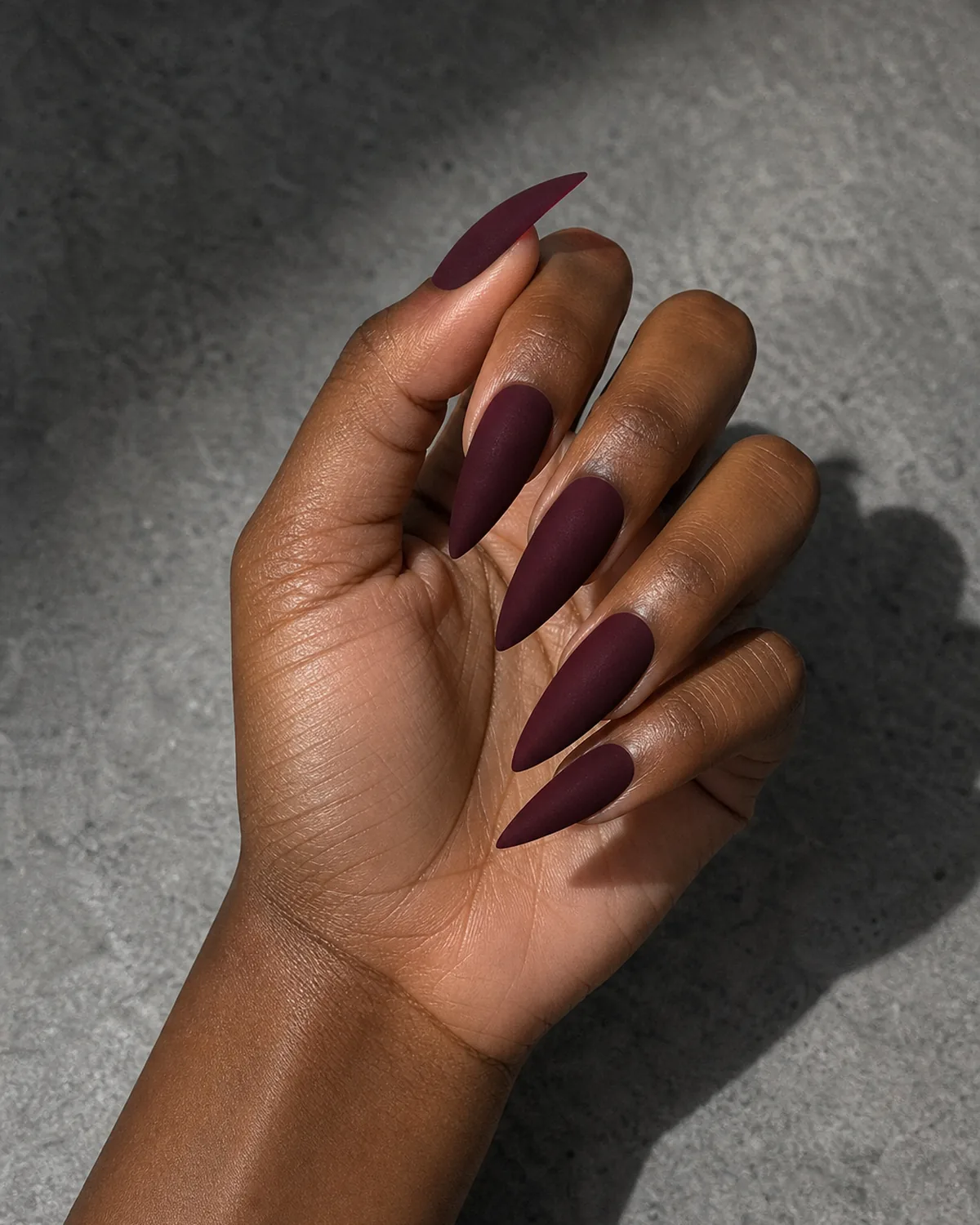
- Apply two coats of a deep wine burgundy polish and let cure.
- Seal with a matte top coat formulated for a velvet, non-chalky finish.
- Avoid layering a glossy top coat over the matte, which would undo the effect.
- Check for even matte coverage under direct light before finishing.
- Touch up any glossy patches at the tip with a light second matte layer.
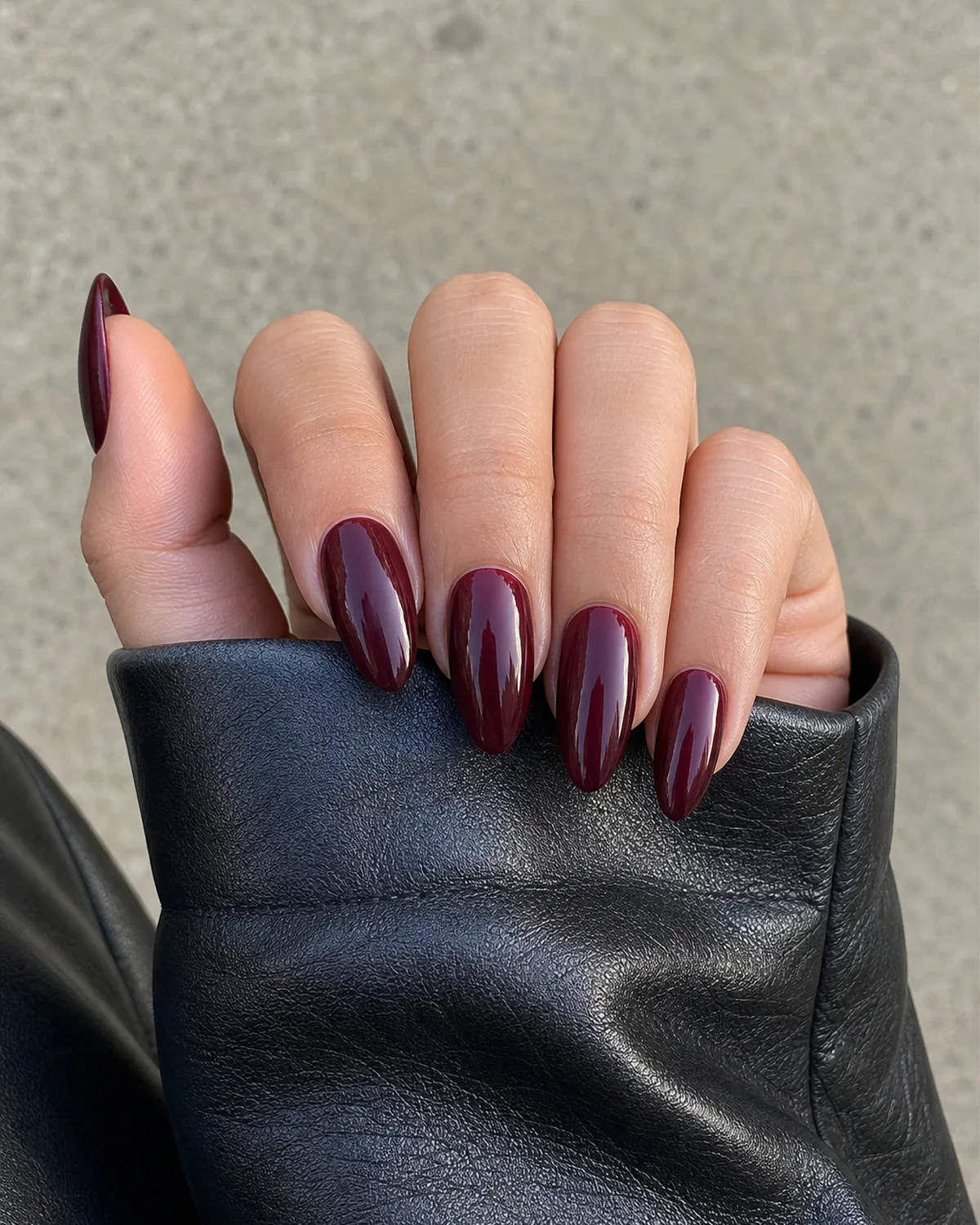
10. The Manicure That Looks Right Under a Leather Jacket
Some colors only make full sense against a specific texture. A true glossy burgundy — not leaning toward bordeaux or merlot, just the classic middle of the wine family — reads as the natural match for leather, denim, and other heavier fall textures in a way brighter reds don't.
The high-gloss finish keeps the color from disappearing against darker fabrics, giving it enough shine to stay visible rather than blending into a dark sleeve. Medium almond nails keep the glossy burgundy visible without overwhelming the hand.
- Apply two coats of a true glossy burgundy polish.
- Let each coat dry fully to build even saturation.
- Test the color against a dark fabric swatch for contrast.
- Keep the finish high-gloss rather than matte for visibility against dark textures.
- Seal with a durable glossy top coat.
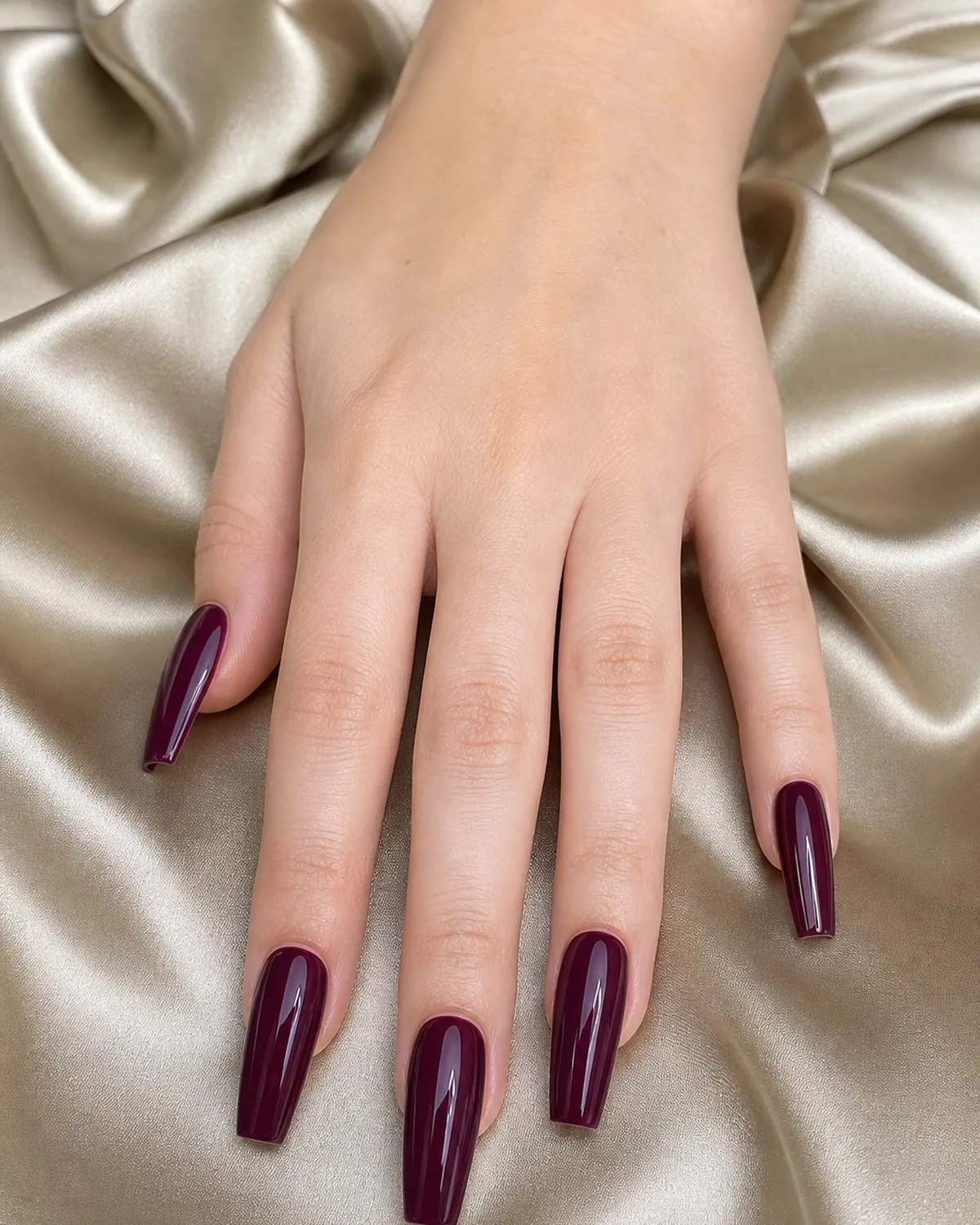
11. When She Asked for "Wine, Not Wine-Red"
A specific request comes up often enough to earn its own entry: something that leans into the purple side of the wine family rather than the red side. Aubergine-leaning burgundy answers that — a glossy finish where the purple undertone is visible even in flat lighting, not just when the light catches it at an angle.
This is the most purple-forward shade on the list without crossing into a true eggplant or plum-purple territory; the red base is still clearly present underneath. Long coffin nails give the aubergine-leaning burgundy a long plane where the purple shift reads clearly.
- Apply two coats of an aubergine-leaning burgundy polish.
- Check the undertone in flat, indirect light to confirm the purple shift is visible.
- Let each coat cure fully between layers.
- Compare against a true purple swatch to confirm red is still the dominant base.
- Finish with a glossy top coat.
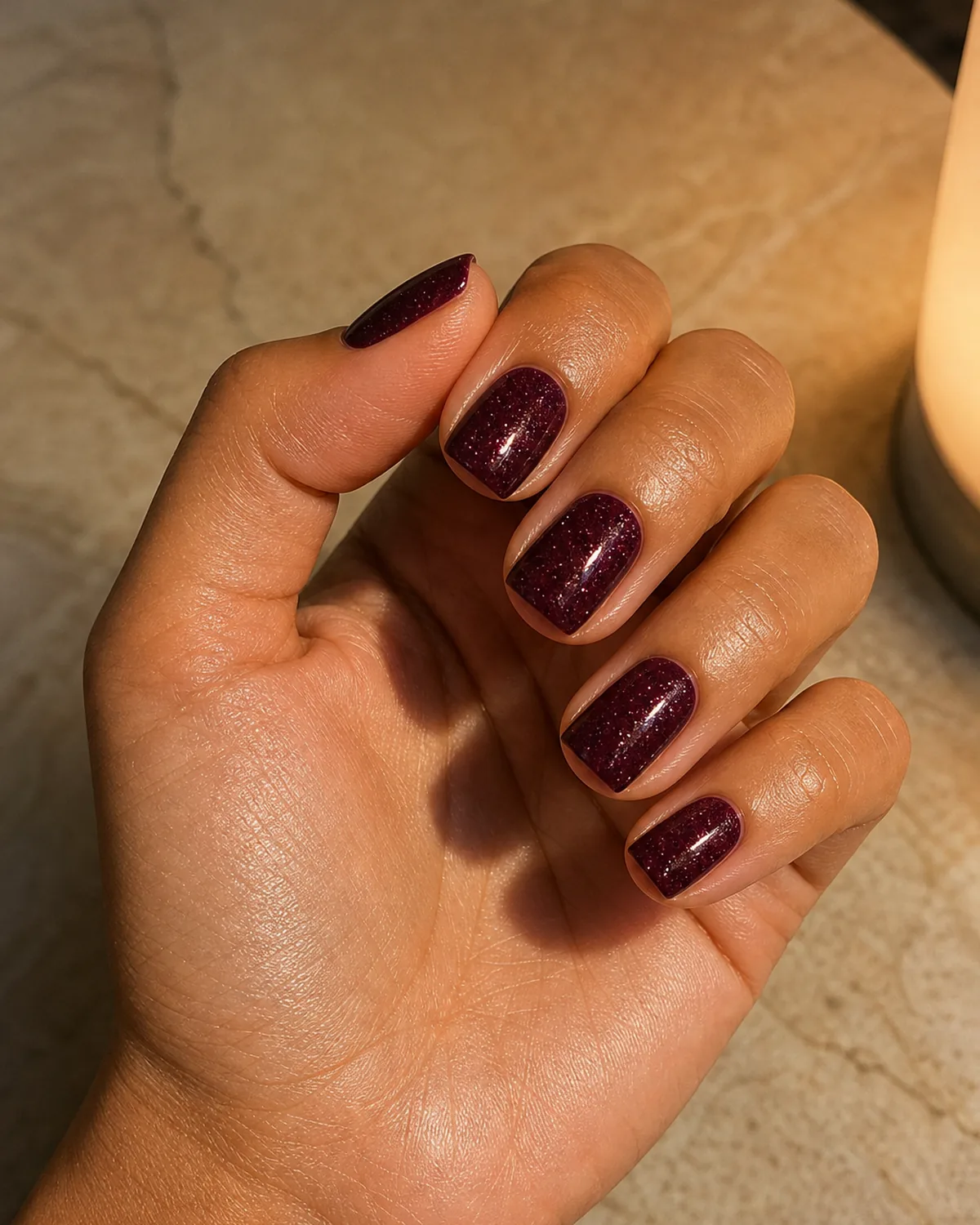
12. A Glitter-Fleck Wine That Only Shows Up Under Direct Light
At rest, this nail reads as a plain deep wine burgundy. Tilt it toward a lamp or window, though, and fine glitter flecks suspended in the polish catch the light in small flashes, without changing the base color or turning the finish into a full glitter manicure.
The restraint is the point — most of the time this reads as a quiet, sophisticated wine tone, and the sparkle only reveals itself on movement. Short square nails keep the glitter-fleck finish compact and easy to catch in a single glance.
- Apply two coats of a deep wine burgundy base and let cure.
- Layer a clear glitter-fleck top coat over the cured base.
- Let the glitter layer dry fully before handling.
- Check the sparkle under both flat and direct light.
- Seal with one more clear top coat to lock the flecks in place.
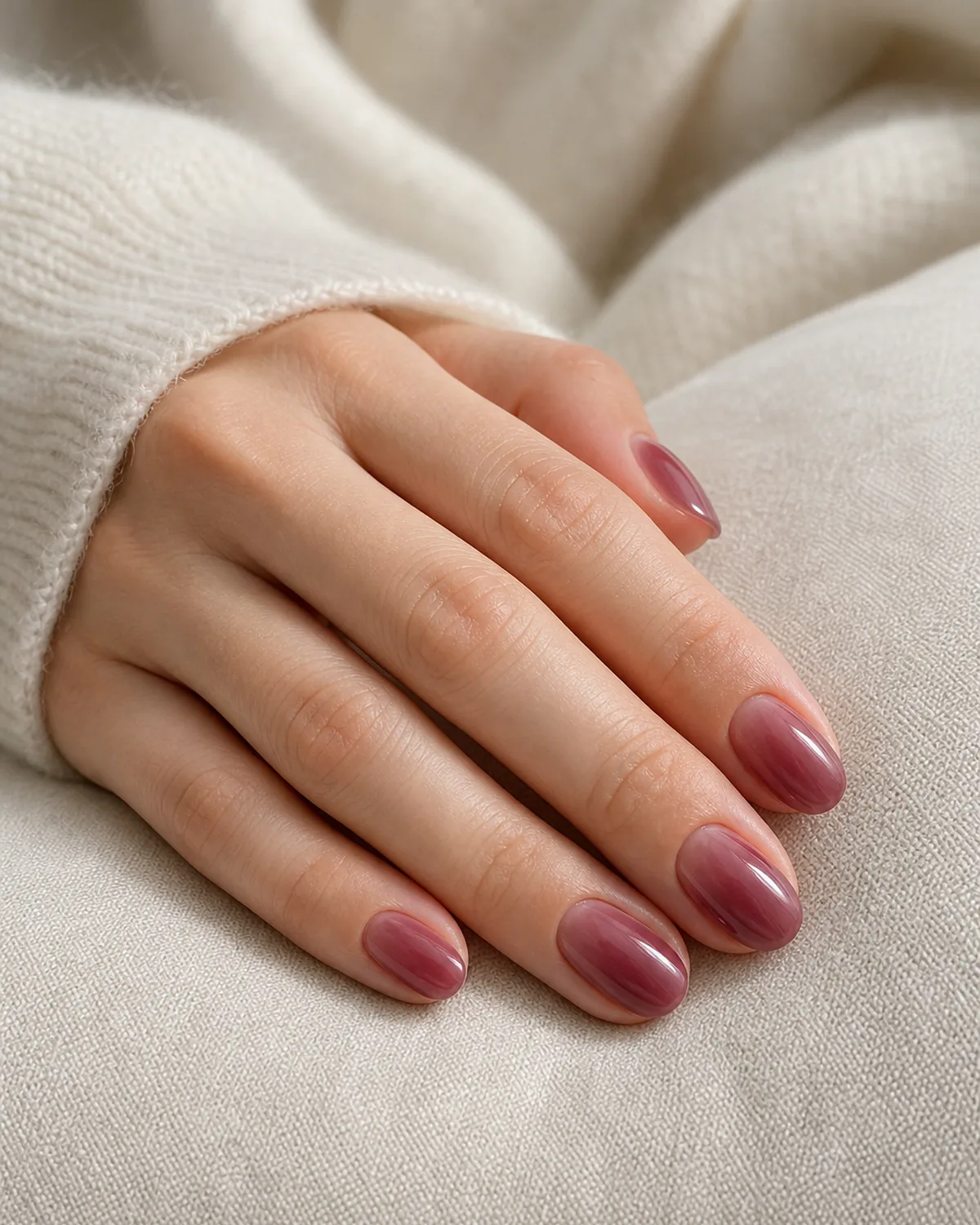
13. Can Burgundy Look Soft?
Every shade so far on this list has leaned deep and saturated — this one tests the opposite end. A sheer wash of lighter burgundy, thinned down rather than fully opaque, keeps the wine-red undertone recognizable while reading noticeably softer than the near-black or oxblood versions earlier.
The undertone still has to hold — thin the wrong burgundy too far and it can drift toward a plain pink, losing the red-brown crossover that makes it burgundy at all. Oval nails let the sheer wash sit evenly across a rounded surface.
- Apply one thin coat of a lighter burgundy polish and check the opacity.
- Add a second thin coat only if more coverage is wanted.
- Confirm the wine-red undertone is still visible, not drifting toward plain pink.
- Let the final coat cure fully.
- Seal with a soft-gloss top coat.
14. Two Coats for the Office, Three for Everywhere Else
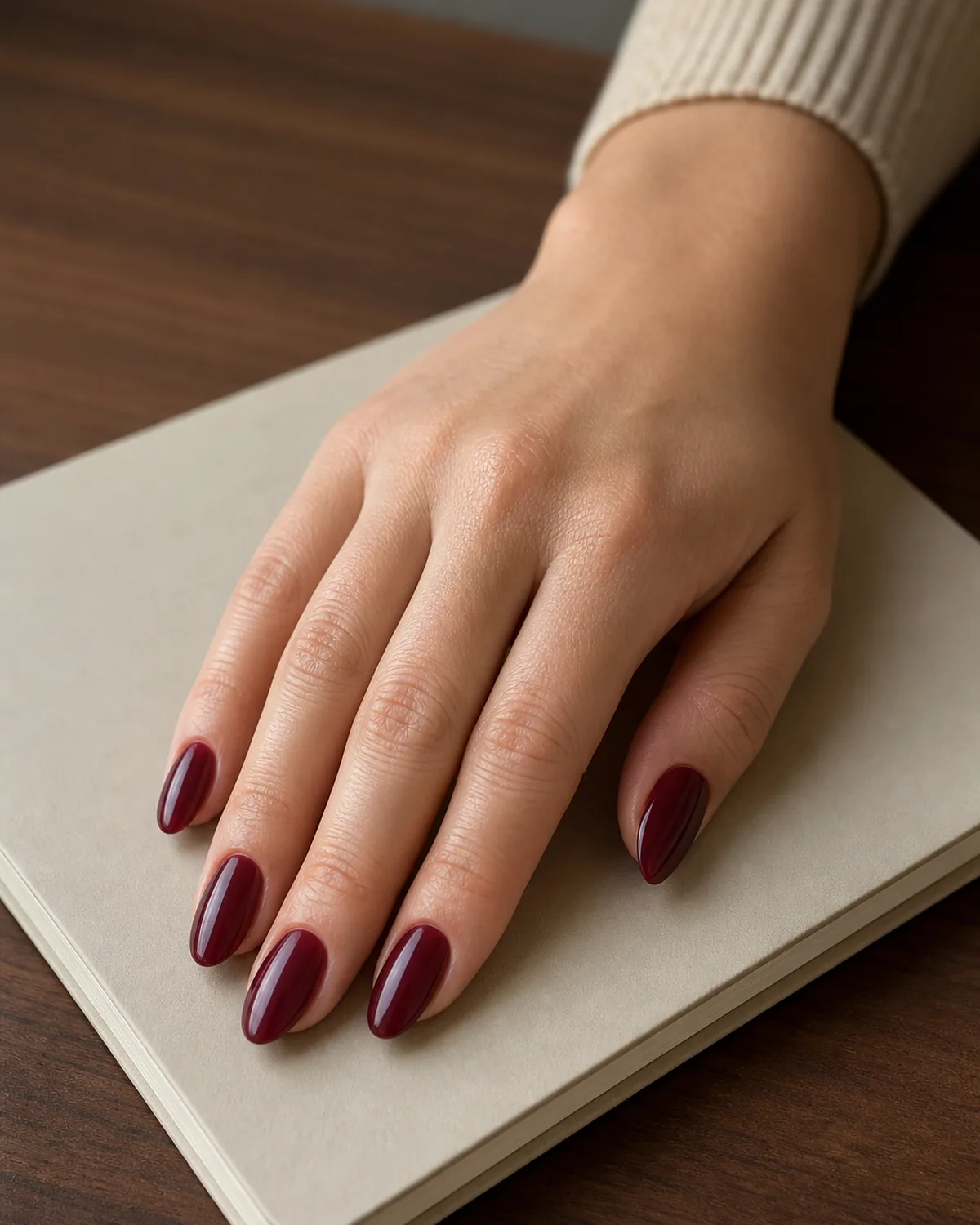
The same true burgundy polish can serve two different moods depending on how many coats go on. Two coats leave it slightly translucent and low-key enough for a conservative office setting; a third coat pushes it fully opaque and richer, for anywhere that calls for more presence.
Building the same color in layers this way means one bottle covers both looks without needing a second shade at all. Medium almond nails show the difference between the two- and three-coat builds clearly side by side.
- Apply two coats of a true burgundy polish for the lighter, office-appropriate build.
- Let both coats cure fully before deciding if a third is needed.
- Add a third coat for full, rich opacity when more presence is wanted.
- Compare both builds in the same light before choosing.
- Seal either version with a glossy top coat.
15. The Shade Sloane Reaches for When Red Feels Too Loud
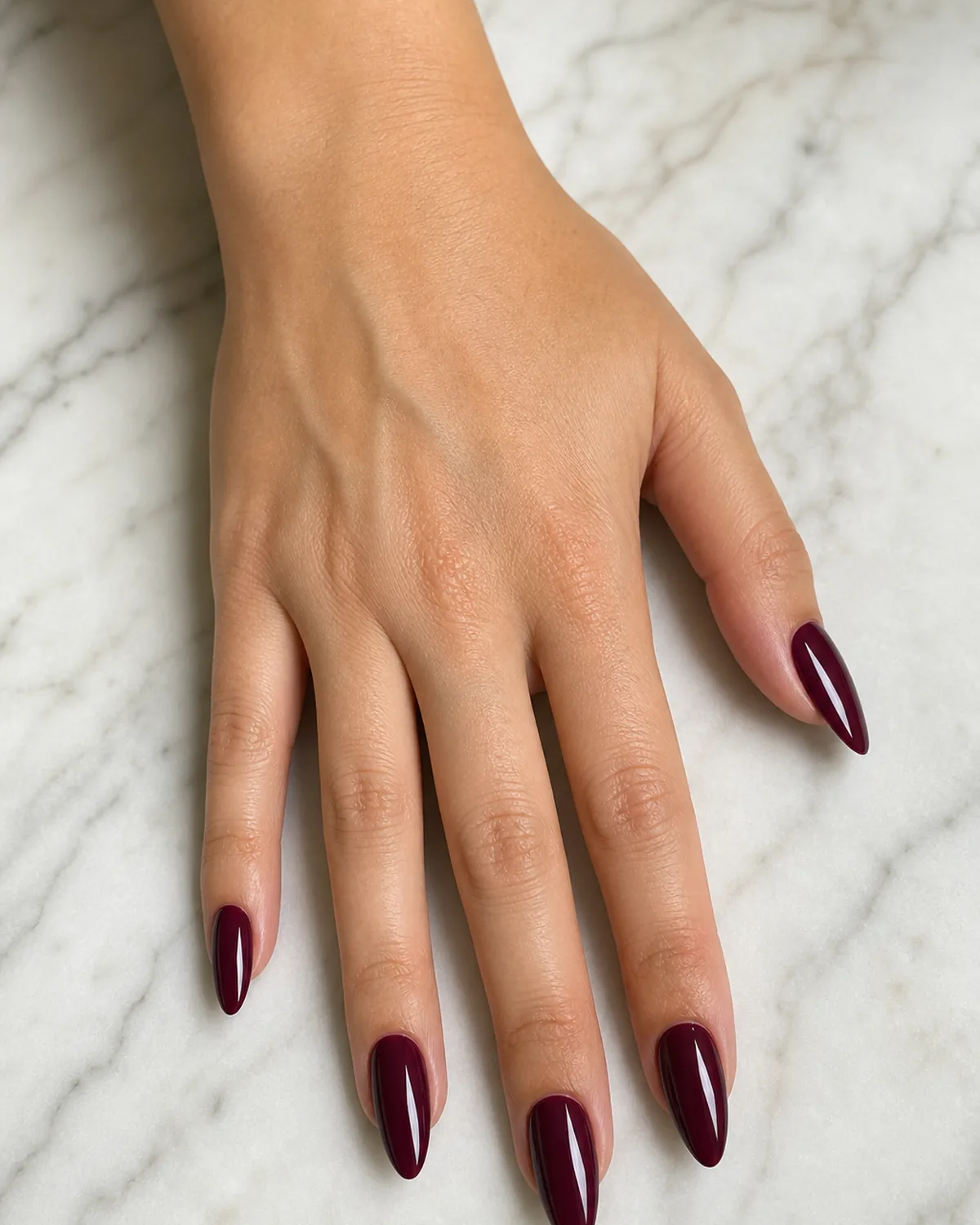
After fifteen ways to work the wine tone, the one that gets reached for most is the simplest: a classic glossy true burgundy, full coverage, no chrome or glitter layered on top. It has the same intensity as the spring nail trends this list opened the year with, just recast in a deeper, moodier register for the months that call for it.
It works as a starting point for anyone new to the wine family and as a reliable fallback for anyone who has already tried the rest. Long almond nails give the classic glossy burgundy a clean, elongated finish.
- Apply two even coats of a classic glossy true burgundy polish.
- Let each coat cure fully before applying the next.
- Keep the cuticle line clean for a polished finish.
- Check the undertone one final time in direct light.
- Seal with a high-gloss top coat.
That's the full range burgundy can take, from a near-black matte to a sheer garnet wash. Whichever depth you start with, the same rule holds across all fifteen: the purple-red undertone is what makes it burgundy, not just "a darker red."
Burgundy lives in a narrow lane between red, brown, and black — these four rules keep any of the fifteen looks above reading as the wine tone it's meant to be, instead of drifting into a neighboring color family.
15 Burgundy Nail Ideas to Try
- 1Red, but moodierGlossy oxblood on medium almond.
- 2Almost black wineMatte-velvet deep plum-red on long coffin.
- 3Burgundy meets chromeChrome-fleck wine on square.
- 4The bordeaux shadeGlossy cream bordeaux on oval.
- 5Sheer garnet jellyTranslucent garnet on short almond.
- 6The fall bride's requestGlossy port-wine on long coffin.
- 7The French flippedWine base, bare tip, on medium square.
- 8Red or brown? NeitherGlossy merlot on square.
- 9Velvet matte wineLight-swallowing deep wine on stiletto.
- 10Under a leather jacketGlossy true burgundy on medium almond.
- 11Wine, not wine-redAubergine-leaning burgundy on long coffin.
- 12Glitter-fleck wineSparkle-under-light deep wine on short square.
- 13Can burgundy look soft?Sheer wash lighter burgundy on oval.
- 14Two coats or threeBuildable true burgundy on medium almond.
- 15The editor's pickClassic glossy true burgundy on long almond.
styvea.com

Sloane Avery edits Styvea, where she shares nail design ideas, shapes, colors, and at-home manicure how-tos for anyone who loves a good manicure. Every guide is reviewed for clarity, usefulness, image accuracy, and Pinterest-to-page alignment before publication. Visit the About page.