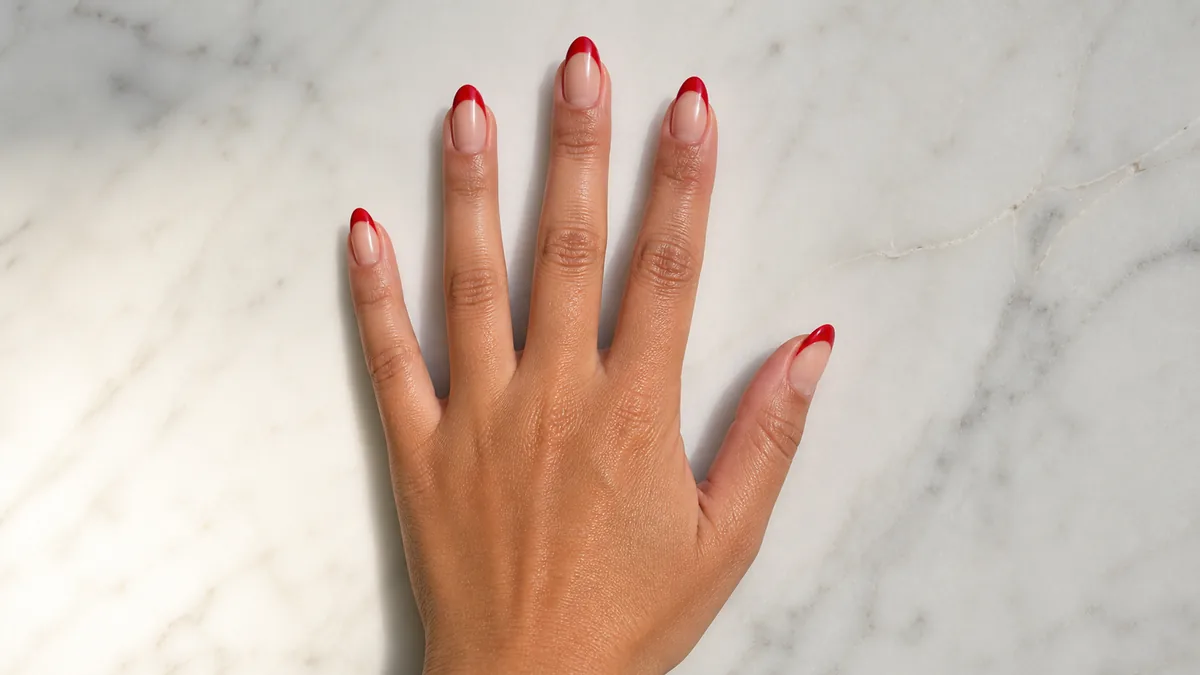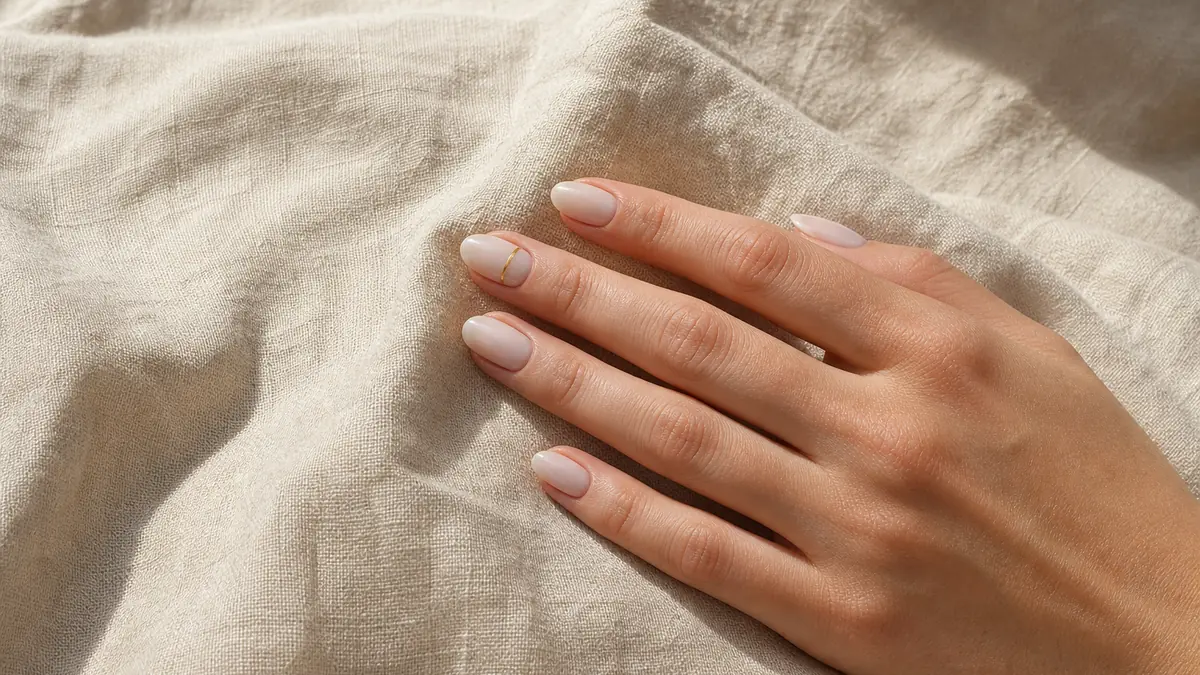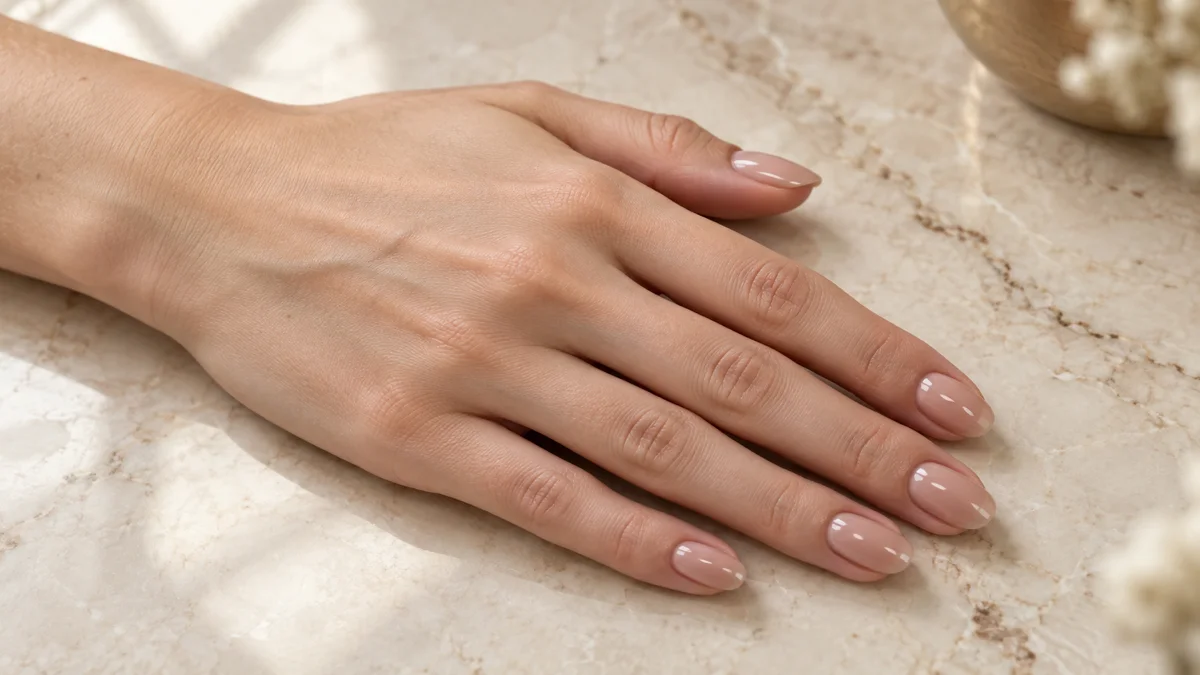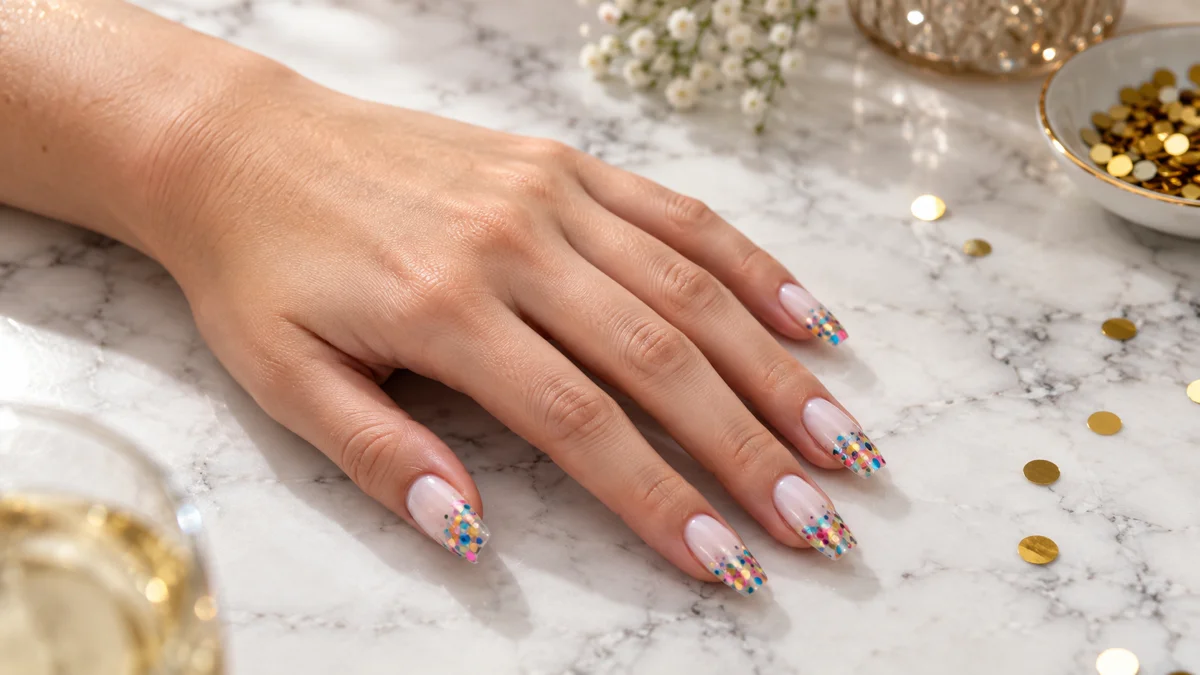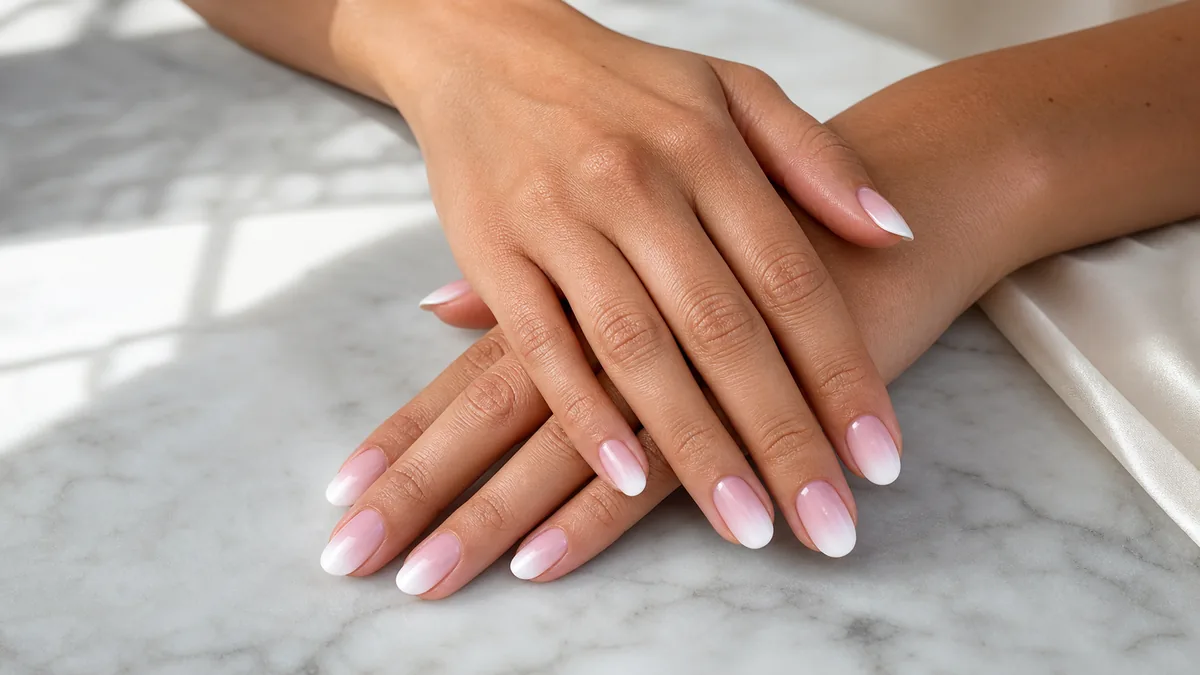
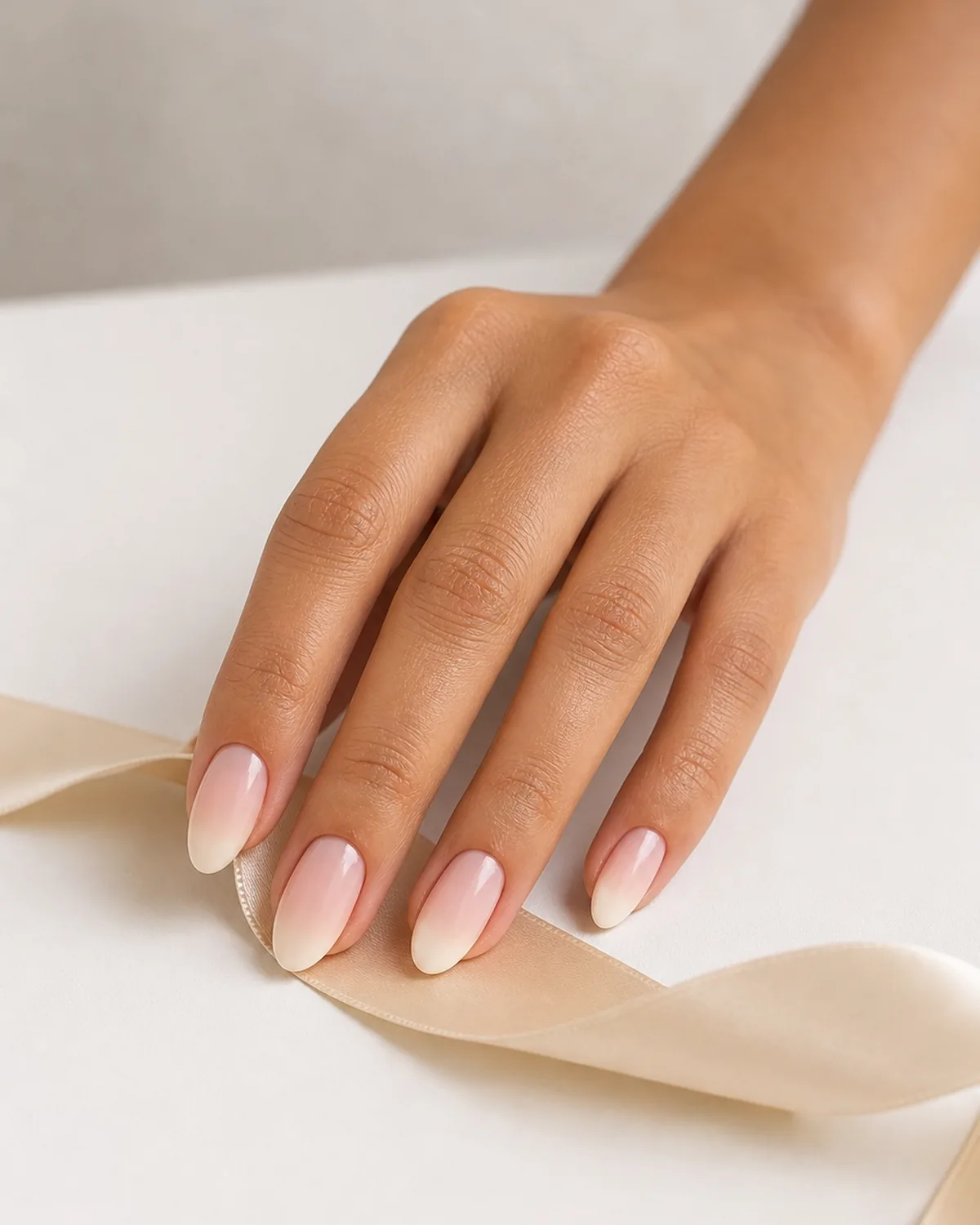
French ombre nails dissolve the classic French tip into a soft gradient — white fades into pink, no hard line, no obvious start-and-stop.
The technique forgives shaky hands better than a crisp French manicure and grows out gracefully. Compared to a full ombre, it keeps the gradient anchored to the tip zone.
These fifteen looks run from a subtle baby boomer fade through chrome, glitter, and matte variations.
From a classic baby boomer fade and chrome-dusted gradients through glitter tips and matte finishes, these fifteen looks cover every register of the French ombre. Jump straight to the one that fits.
1. A Classic Baby Boomer Fade That Started the Whole Trend
The original French ombre: opaque white at the free edge dissolving into translucent pink at the cuticle. Medium oval nails give the gradient just enough runway to look balanced without stretching thin.
What makes this version hold up years after it first circulated is the proportions. The white zone occupies roughly a third of the visible nail, the transition band covers the middle third, and the sheer pink base fills the rest. That ratio photographs well in any light and pairs naturally with spring nail colors or a neutral wardrobe.
A glossy top coat is non-negotiable here — it unifies the two zones into a single smooth surface and keeps the gradient from looking chalky at the blend point.
2. She Asked for "French But Not That French"
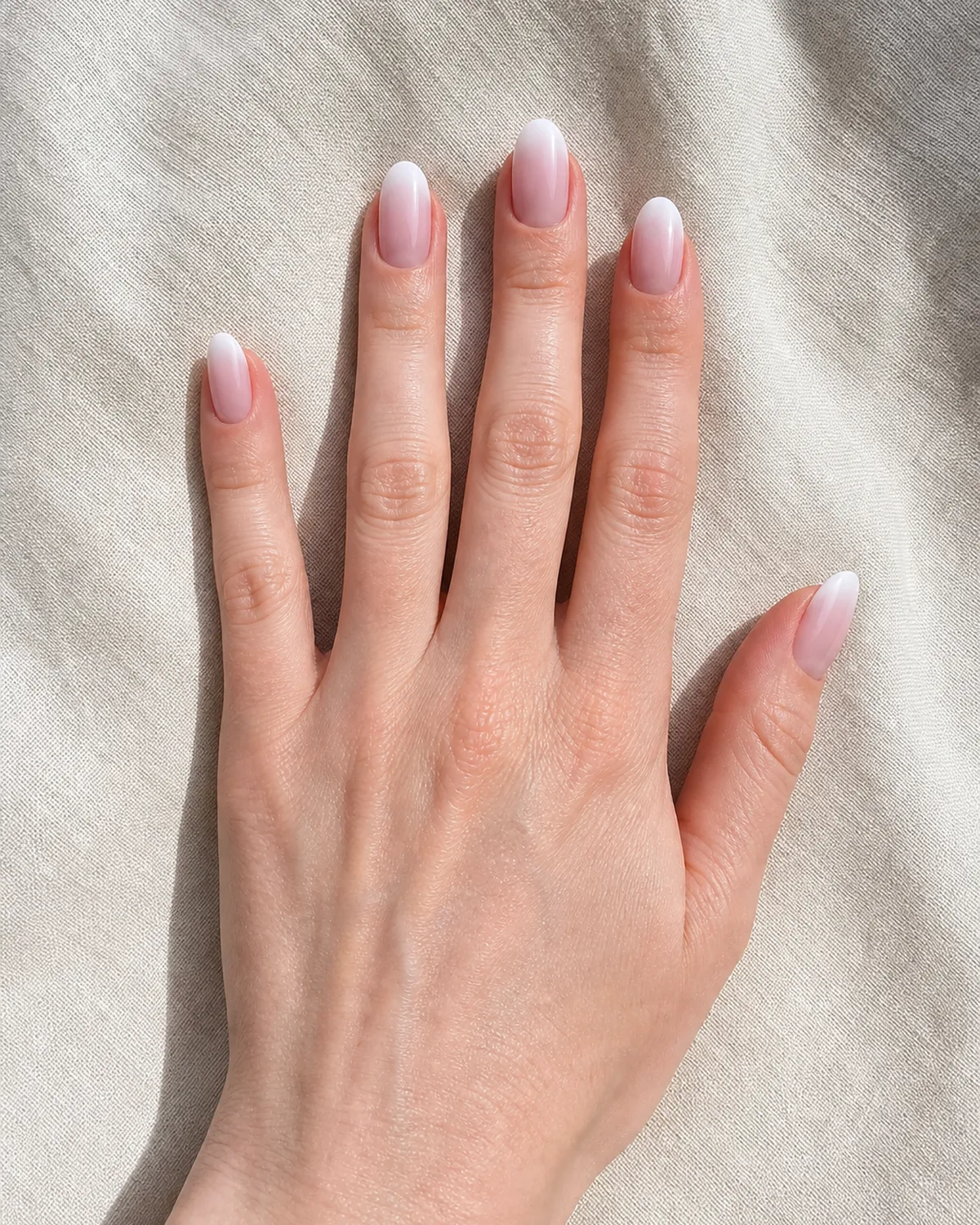
A barely-there blush base with the faintest whisper of white at the tips. On short round nails the gradient is so compressed it reads more like a healthy natural nail than a manicure.
The subtlety is the point. In person, it takes a second look to realize these nails are done at all. Under direct light, the white edge just barely catches — enough to register as intentional polish rather than bare nails, but quiet enough to work in any setting without drawing attention.
Short round is the right shape for this level of understatement. Longer nails would stretch the already-faint gradient until it disappears entirely.
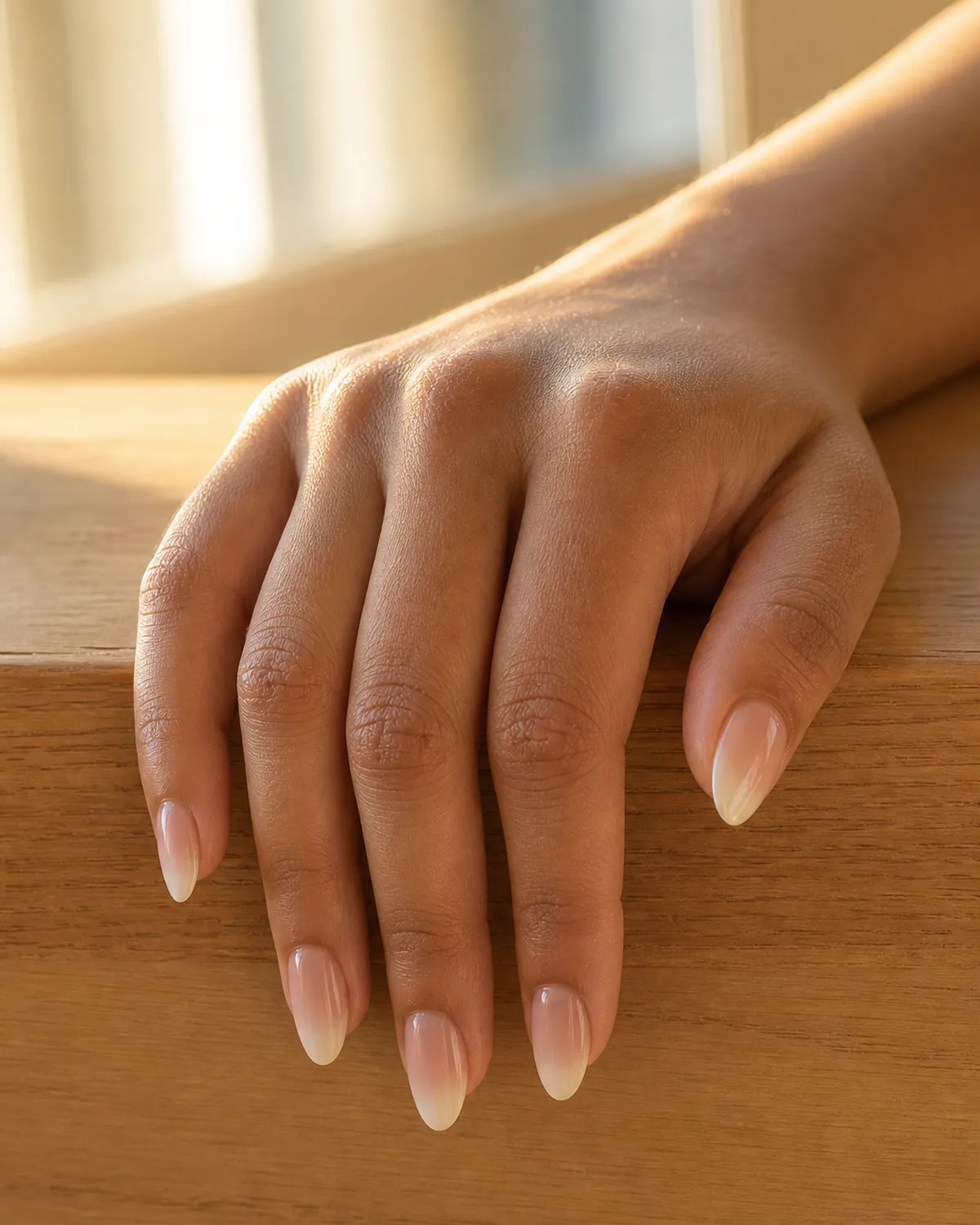
3. What Happens When the White Gets a Little Warmer
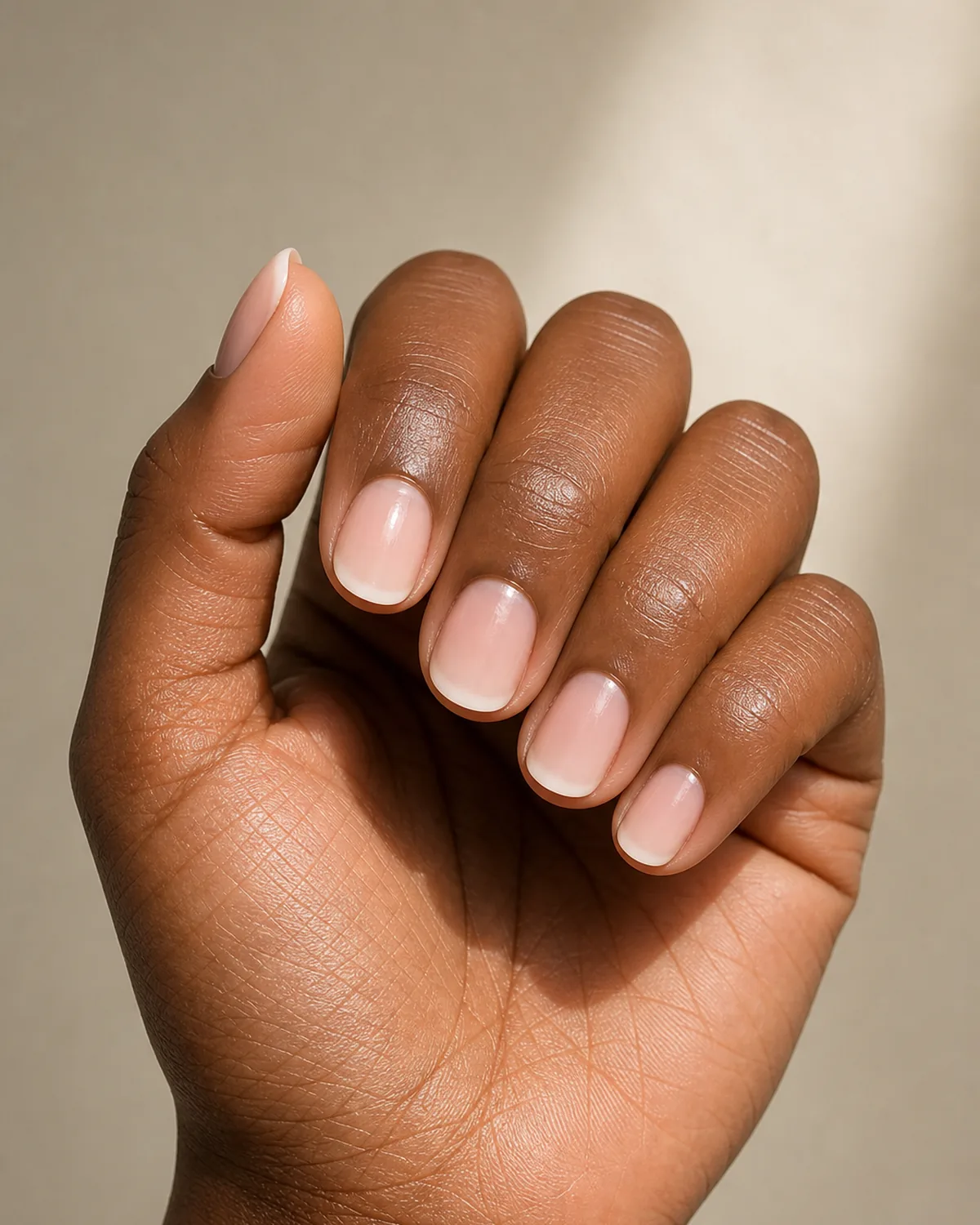
Swap the cool white for an ivory cream and the base for champagne, and the entire mood shifts from bridal to weekend brunch. Medium almond shape keeps it sophisticated while the warm undertone softens the contrast between tip and base.
This warm-toned version photographs especially well under golden-hour light, where cool whites can look stark but ivory cream blends right into the ambient warmth. The gradient reads as one continuous warm tone rather than two separate colors meeting in the middle.
For anyone who finds the traditional white-to-pink too clinical, this is the entry point.
4. Glitter Replacing the White Tip, One Fleck at a Time
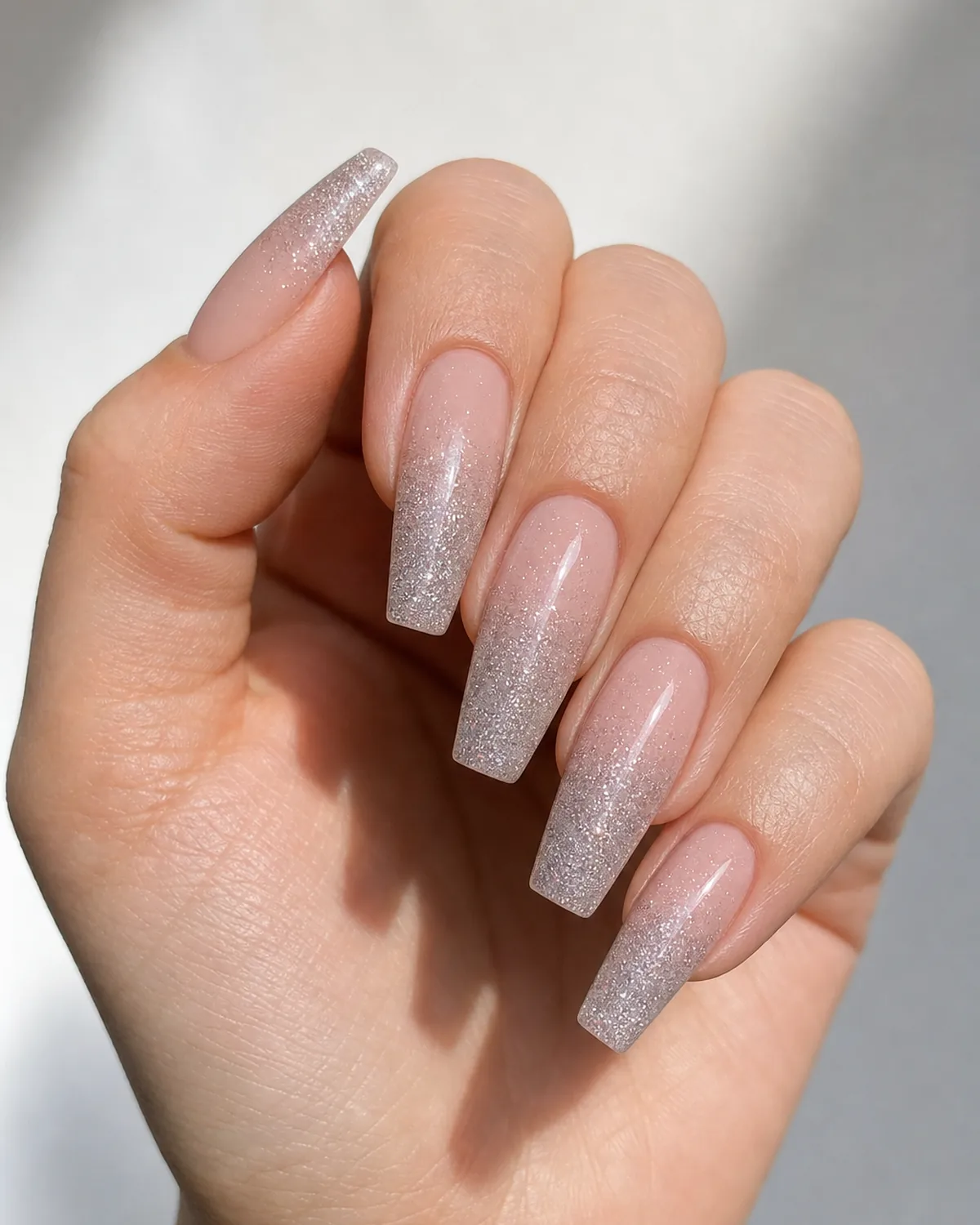
Silver micro-glitter at the free edge fading to bare pink at the base. Long coffin nails give the sparkle maximum surface area. Under direct light the tips catch and release in a way that solid white never does.
The key is density control. The glitter should be most concentrated at the very tip, then scatter progressively as it moves toward the base — like the white zone in a traditional French ombre, but built from individual particles instead of solid pigment. A sparse scatter beats a packed glitter line.
Seal with two coats of top coat to keep the surface smooth. A single coat leaves the glitter edges exposed, which catches on fabric and dulls faster.
5. A Nail Tech Who Only Does French Ombre and Nothing Else
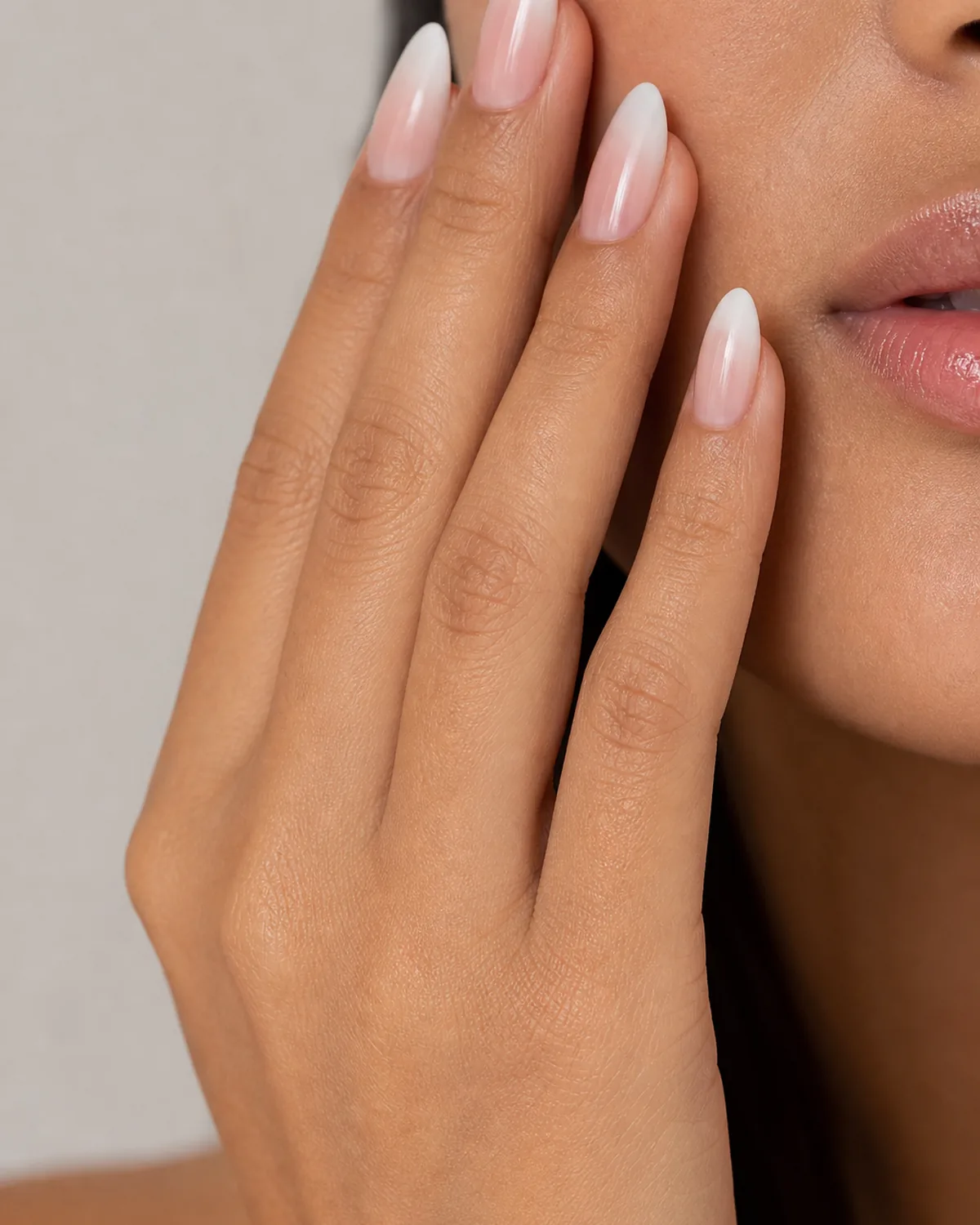
Clean, flawless, zero visible transition line. Long almond nails in a salon close-up that shows what happens when a technician has done this gradient a thousand times. The sponge work is so smooth it looks airbrushed.
What separates a salon-level French ombre from a home attempt is usually the blend zone. A skilled tech builds the gradient in thin, overlapping sponge presses — three to five passes per nail — rather than trying to get it right in one heavy stamp. Each pass adds a whisper of white, and the cumulative effect is a transition so gradual the eye cannot locate where pink becomes white.
Ask for the gradient to be "melted, not stamped" — that single phrase signals the technique most techs associate with this finish.
Two ways to build the gradient, each with trade-offs worth knowing before you book.
6. How Short Nails Make the Fade Look Wider
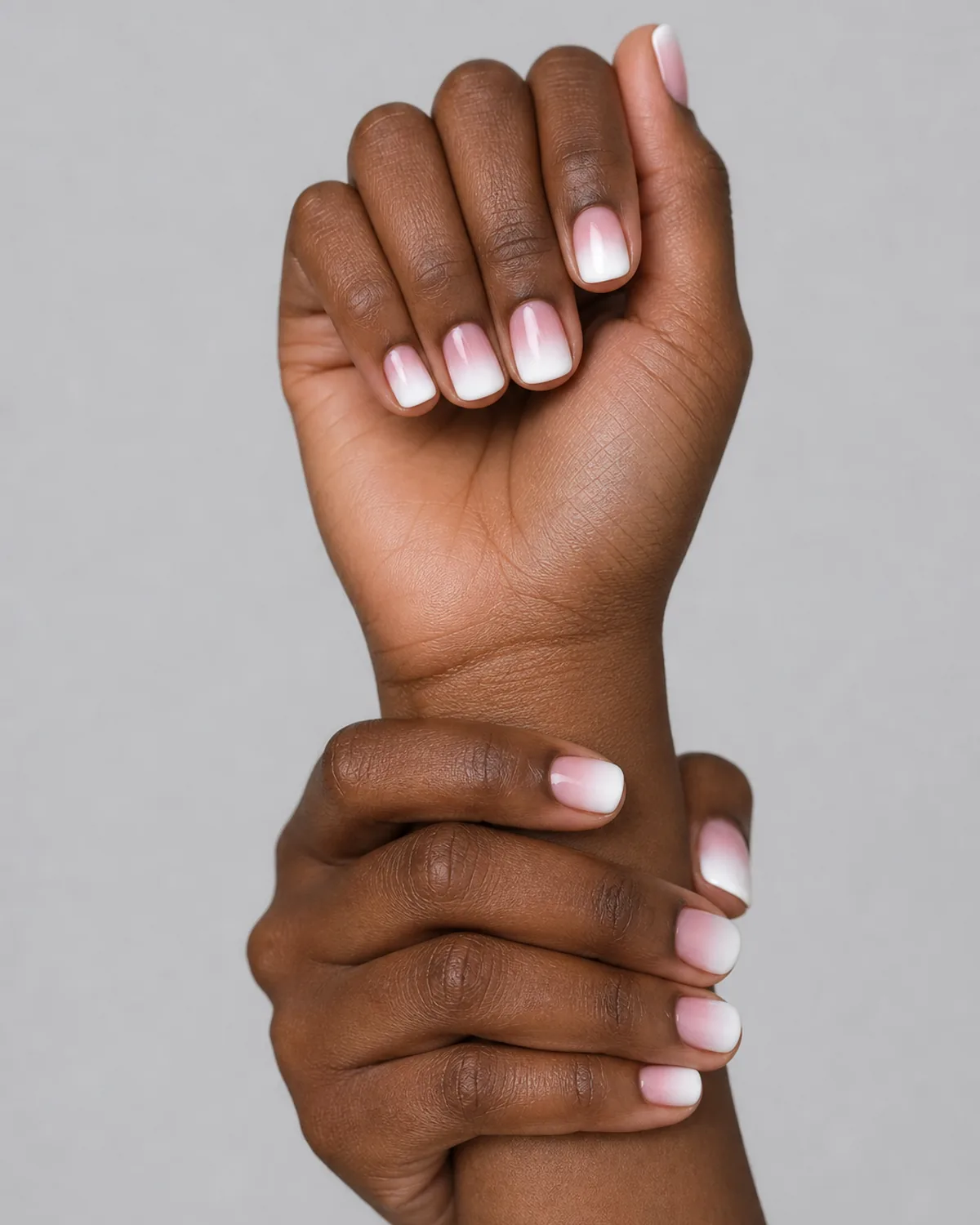
On short square nails the gradient spreads horizontally instead of vertically. The white band at the tip looks proportionally thicker because the nail bed is wider than it is long, which gives the illusion of a bolder look despite the minimal length.
This is the shape that makes French ombre accessible to anyone who keeps nails short for practical reasons — healthcare workers, musicians, climbers. The gradient still reads clearly even at a half-centimeter of free edge because the width carries the visual weight.
The flat, squared-off tip also creates a clean horizontal cutoff that anchors the white zone more sharply than a rounded shape would. Pair with a slightly more opaque white to compensate for the shorter gradient runway.
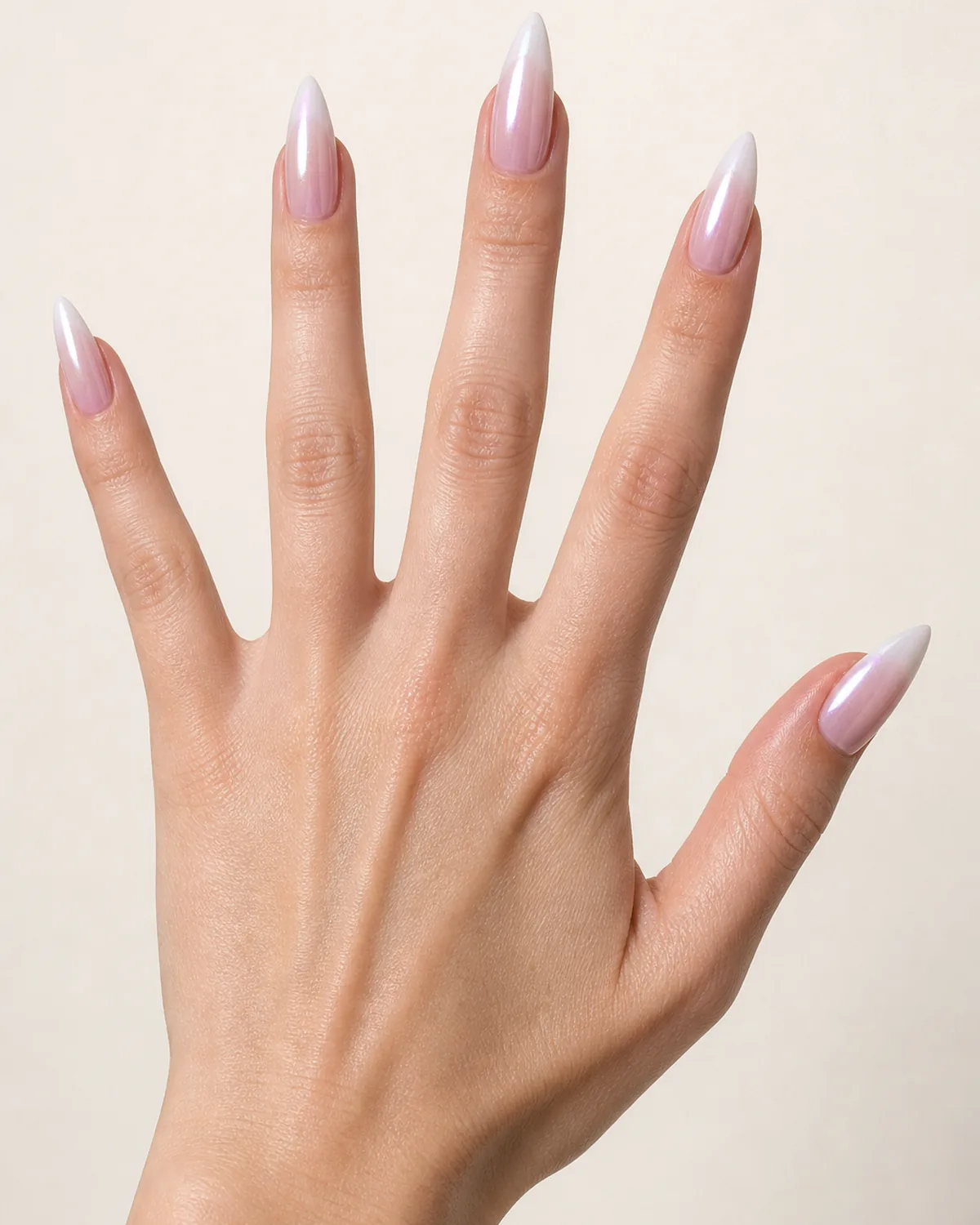
7. Chrome Powder Dusted Over a Baby Boomer Base
A pearl chrome top layer transforms a standard French ombre into something that shifts between pink and silver depending on the angle. Medium stiletto shape adds an editorial edge to the otherwise soft palette.
The chrome does not replace the gradient — it sits on top of it like a translucent filter. At one angle the nails look like a normal baby boomer fade; at another they flash a cool metallic sheen. The effect is most dramatic under indoor lighting, where the chrome catches directional light the way standard polish cannot.
Apply the chrome powder over a no-wipe gel top coat while the surface is still slightly tacky. Buffing it in with a silicone applicator rather than a sponge gives the most even coverage.
8. The One That Looks Airbrushed but Isn't
A seamless sponge-blended French ombre on medium coffin nails, shot in natural diffused light that reveals zero streaks or sponge marks. The gradient is so even that the technique disappears behind the result.
The trick that most tutorials skip: dampen the sponge before loading it with polish. A dry sponge absorbs too much product and leaves a patchy, uneven stamp. A damp sponge (wrung out, not dripping) transfers a thinner, more controlled layer that blends smoother on the nail surface.
Medium coffin is a strong shape for this look because the tapered sides frame the gradient, while the flat tip gives the white zone a clean ending.
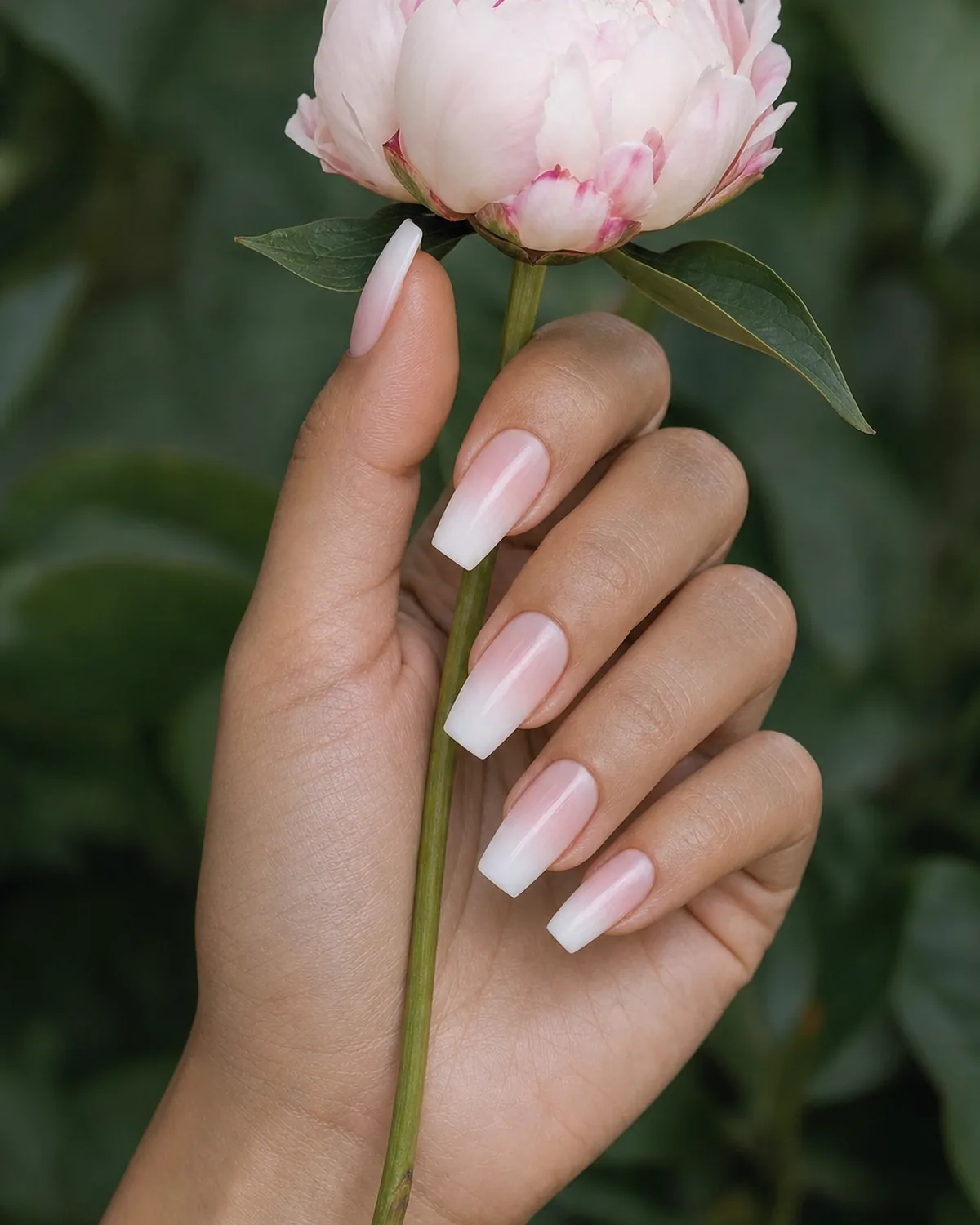
9. Almond Shape Stretching the Gradient Into a Runway Silhouette
Long almond nails elongate the French ombre gradient into a tapered runway silhouette. The white tip narrows as it follows the almond point while the blush base widens at the cuticle, creating a natural depth-of-field effect across every finger.
This is the shape that gives French ombre its most editorial reading. The taper stretches the gradient vertically, making the transition zone appear longer and smoother than it would on a wider nail. It also photographs with a sense of movement that square or round shapes do not.
The visual payoff comes at the cost of practicality — long almond tips are more prone to breakage than shorter shapes. A gel overlay or a thin acrylic reinforcement layer helps.
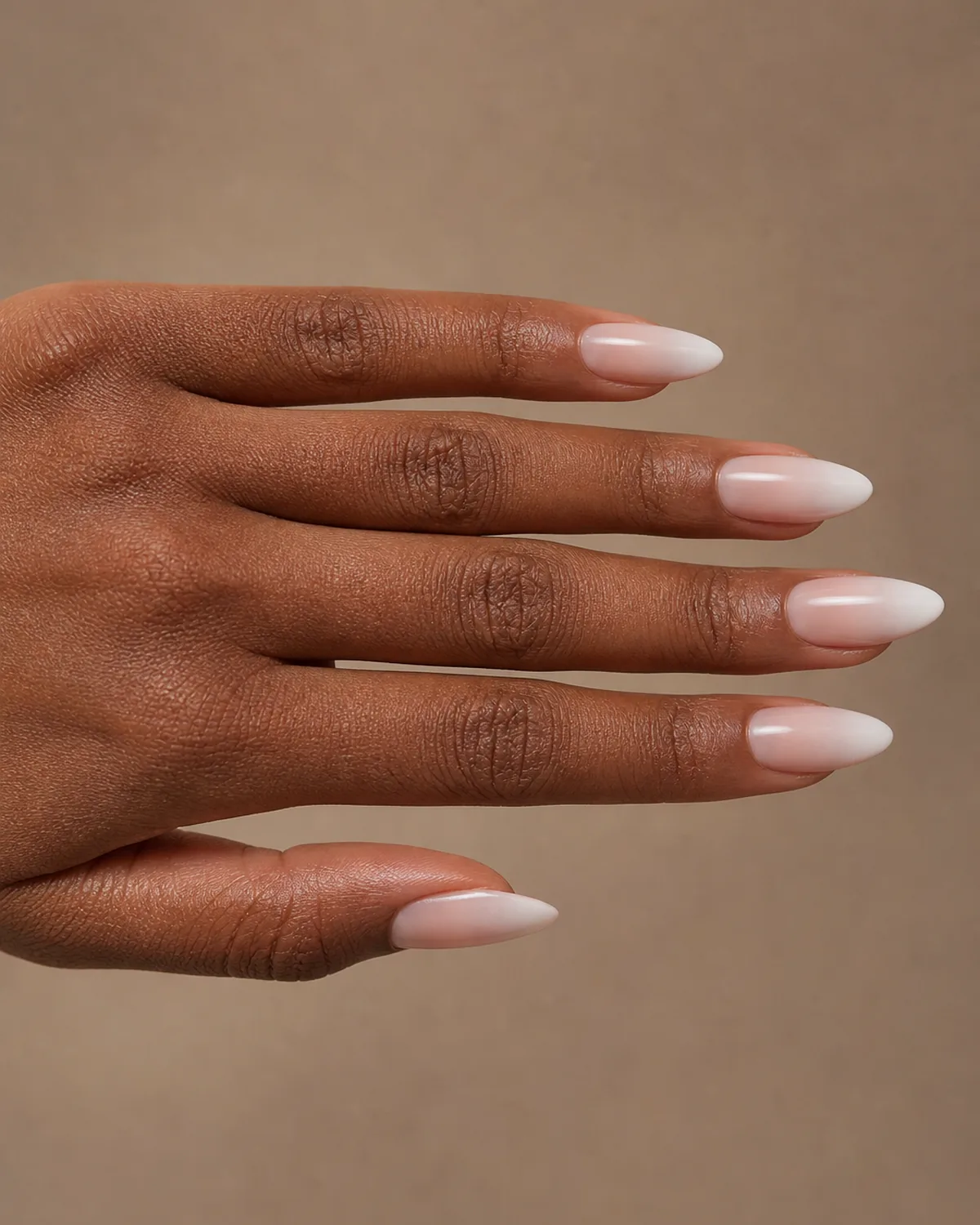
10. Is There a Point Where French Ombre Stops Being French?
When the pink-to-white gradient covers two-thirds of the nail bed and the white zone extends well past the smile line, the look enters hybrid territory. Medium oval on this deep-coverage version blurs the boundary between French ombre and a full-coverage gradient manicure.
The deeper coverage makes the gradient more visible on shorter nails and more dramatic on longer ones. It also changes the grow-out calculus: because the transition zone starts so far back, the gradient compresses toward the cuticle faster as the nail grows, which means more frequent fills to keep the proportions right.
Whether this still qualifies as "French" is mostly a naming question. The visual effect — white concentrated at the tip, fading toward the base — keeps the structural DNA intact.
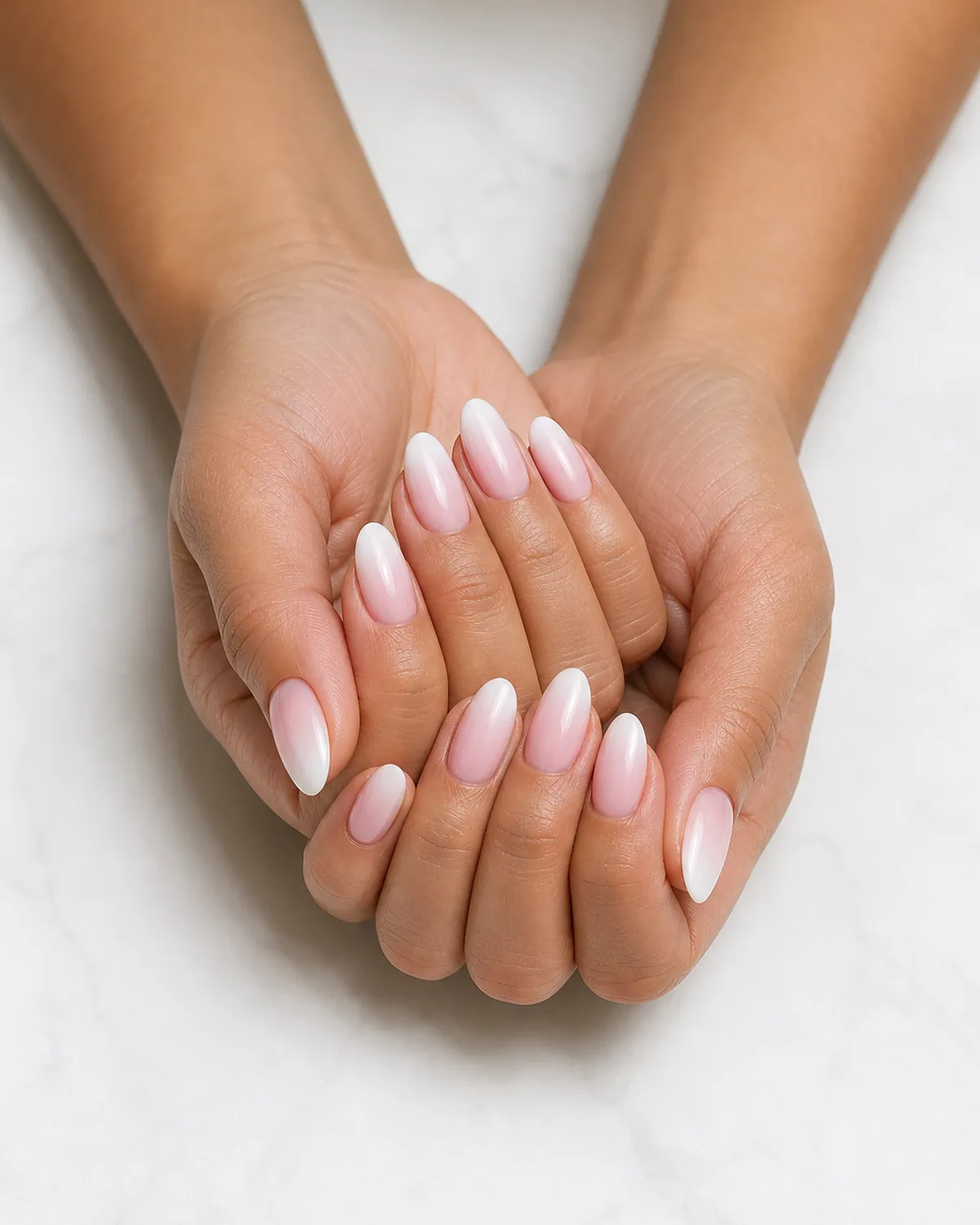
11. A Matte Finish That Makes the Gradient Look Like Marble Dust
Matte top coat over a French ombre gradient kills the shine and turns the transition zone velvety. Short almond nails keep the look architectural rather than precious.
The matte finish changes how the eye reads the gradient. Without gloss to create highlights, the white and pink zones blend into each other more seamlessly — the contrast drops by a full register, and the gradient feels powdery, like crushed stone rather than painted polish.
One practical note: matte finishes show fingerprints and oils more quickly than glossy ones. Wiping the nails with an alcohol pad once a day keeps the velvety look clean.
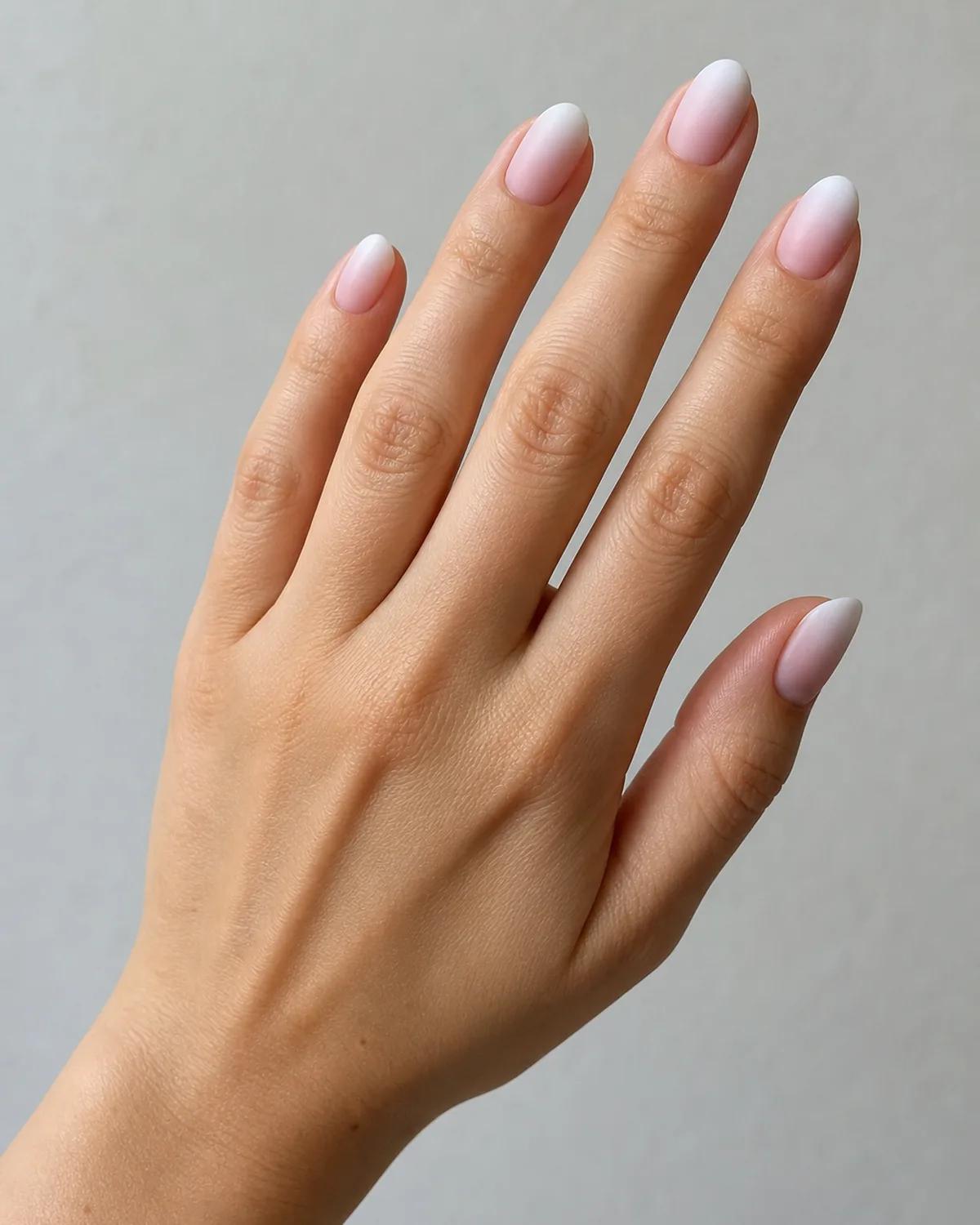
12. Three Weeks Between Fills and Still No Visible Regrowth Line
French ombre hides the grow-out gap better than any crisp-tip manicure because there is no hard edge to creep forward. Medium round nails keep the silhouette low-maintenance while the gradient simply compresses toward the cuticle as the nail lengthens.
At week three, a traditional French tip shows a clear strip of bare nail between the cuticle and the polish line. A French ombre at week three just looks like the gradient has shifted slightly — still wearable, still presentable, and still worth keeping until the next appointment.
This is the version for anyone who wants the French aesthetic but does not want to commit to biweekly salon visits. Apply cuticle oil daily to keep the grow-out zone blending naturally.
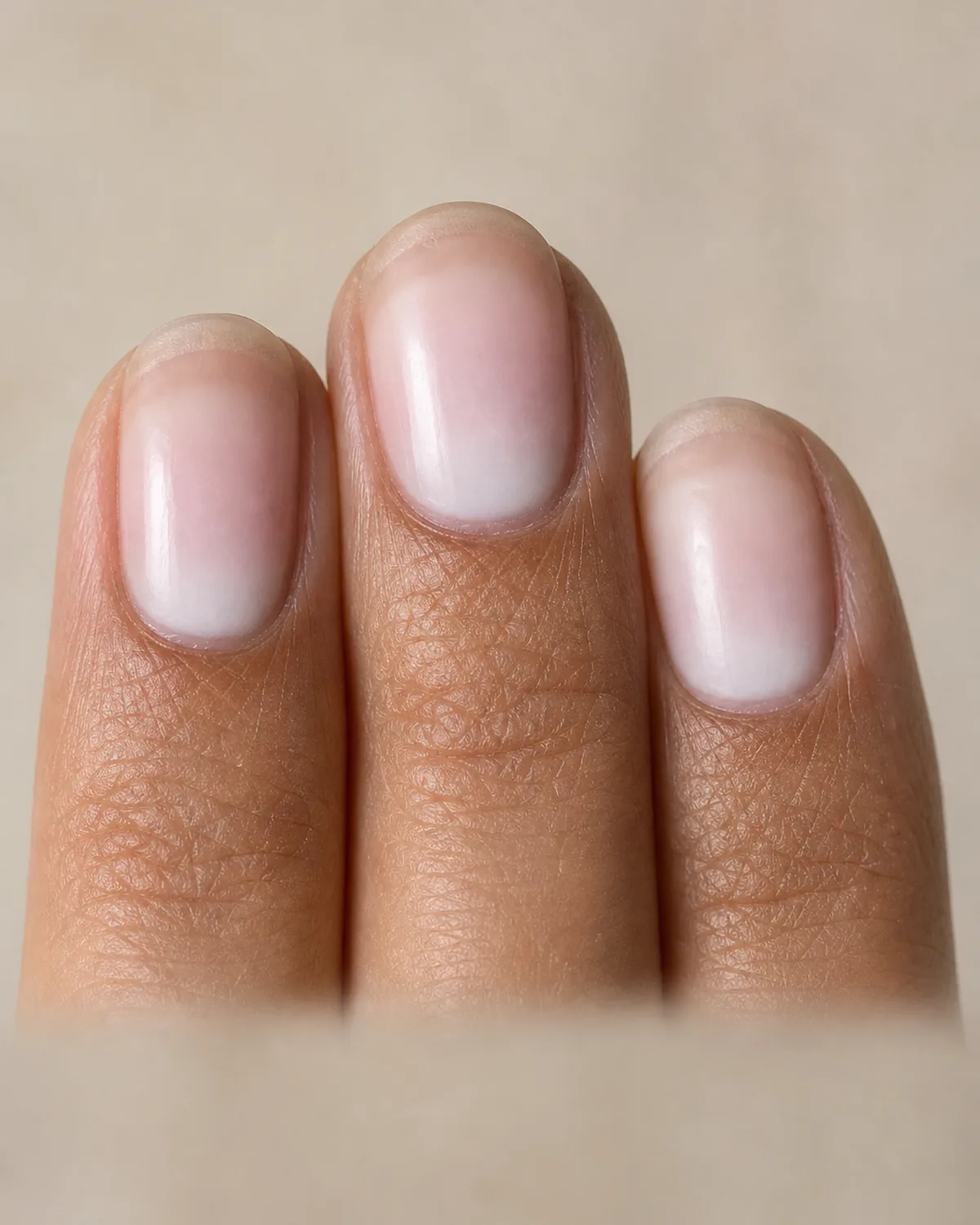
13. Gold Flake Scattered Where the White Meets the Pink
Gold leaf fragments placed along the gradient transition zone — the exact line where white dissolves into pink. Long oval nails give the metallic accents room to breathe without crowding.
The gold catches light at the precise point where the color shift happens, drawing the eye to the gradient itself. It is a more targeted approach than covering the entire nail in gold: the flakes mark the blend line like a seam detail on a garment.
Use real gold leaf (available in craft sheets) rather than gold glitter. Leaf tears into irregular, organic shapes that sit flat against the nail surface, while glitter particles create a bumpy, craft-project texture.
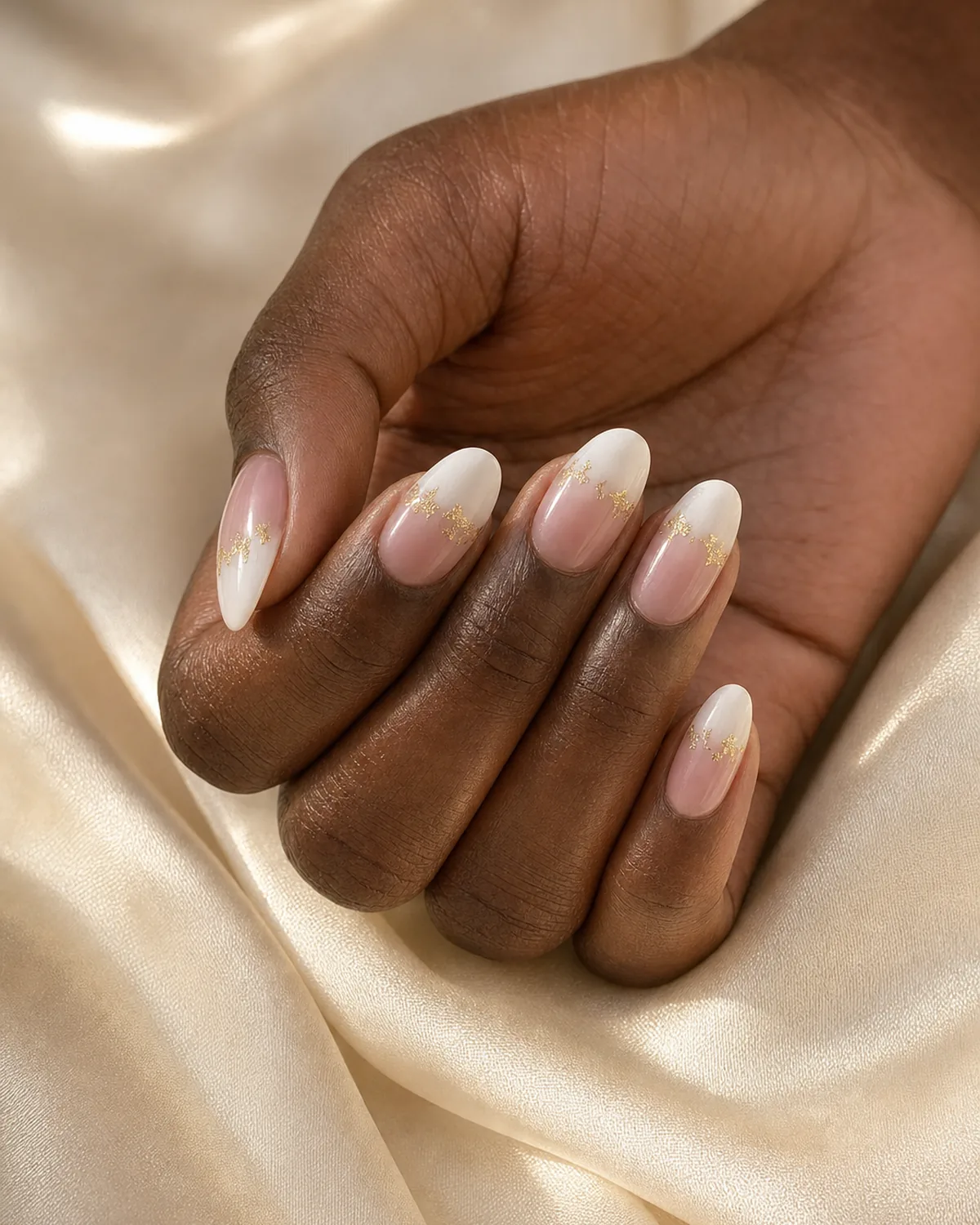
14. French Ombre on Coffin, the Shape That Gives It the Most Real Estate
Wide coffin nails give the French ombre gradient maximum visibility. The flat, broad free edge holds a generous white zone that tapers cleanly into the pink base. Long coffin is where this gradient gets its most dramatic, billboard-scale reading.
The width of the coffin tip means the white band is wider than on any other shape, which creates a stronger contrast against the pink base. It also means the gradient needs to be more carefully blended — any patchiness or sponge marks are more visible on a wide, flat surface than on a narrow almond tip.
If the drama of long coffin feels excessive, a medium coffin length with the same width gives nearly the same gradient visibility at a more practical length.
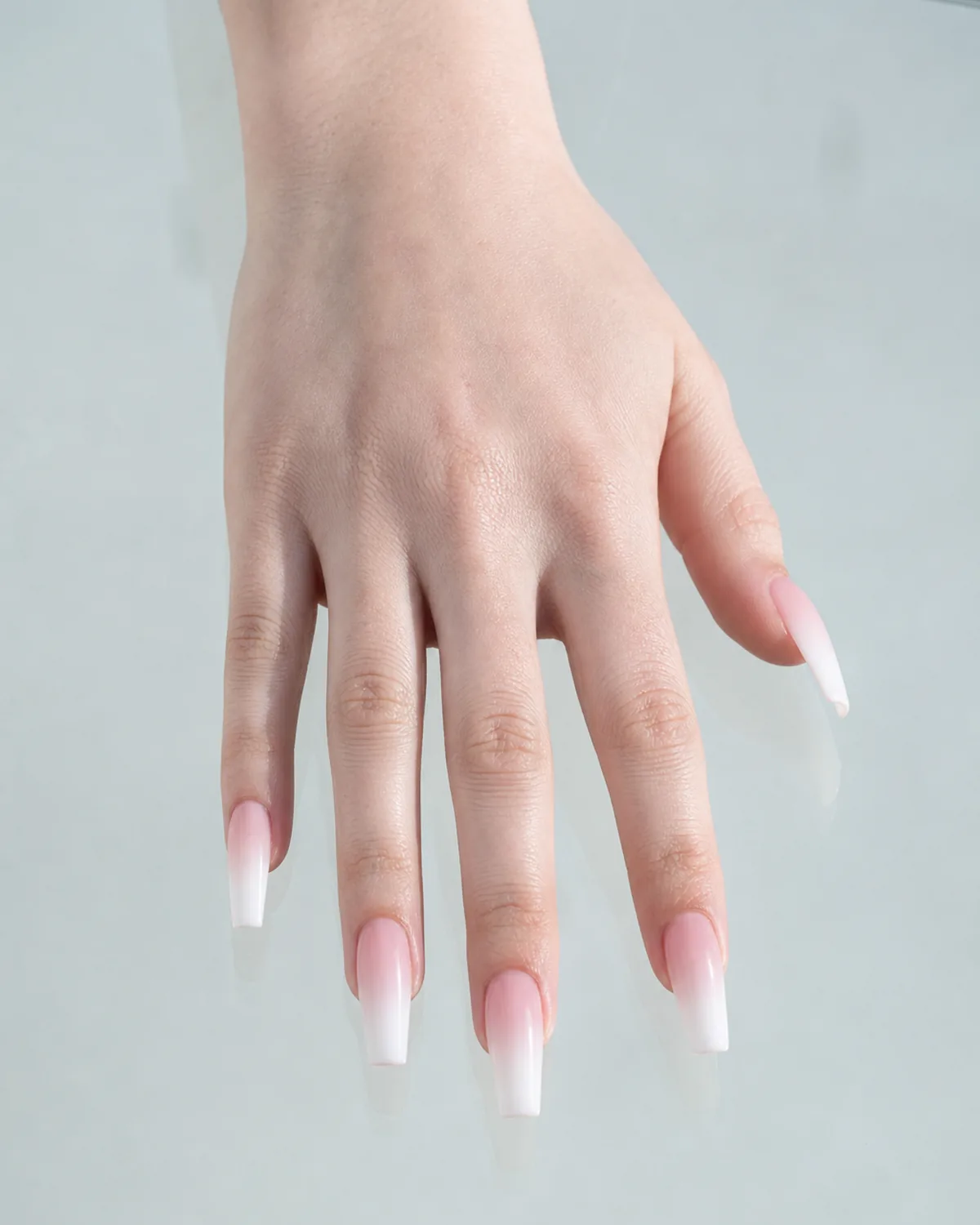
15. The Fade Sloane Keeps Coming Back To
Warm ivory fading into a petal-blush base on medium almond nails. No glitter, no chrome, no art — just a clean gradient that disappears into the nail bed. The kind of set that makes people ask what shade you are wearing, then realize it is two.
This is the French ombre Sloane wears between editorial shoots and trend-testing sessions. It goes with everything, photographs cleanly in any light, and grows out gracefully enough to skip a fill without looking neglected.
The warmth of the ivory (rather than cool white) and the softness of the petal blush (rather than standard pink) are the two details that make it read as curated rather than default.
That is the full range French ombre nails can cover right now — from the quietest barely-there blush fade through chrome-dusted shimmer and gold-flake accents to the matte-velvety finish that rewrites how the gradient feels under the fingertip. Whichever one starts the set, the same principle runs through all fifteen: white dissolves into pink, and the line between them is the whole point.
This sponge technique works with regular polish or gel. It builds the gradient in thin layers so the transition is smooth and streak-free.
15 French Ombre Nail Ideas
- 1Classic baby boomerWhite-to-pink fade on medium oval.
- 2Barely-there blushFaintest white on blush, short round.
- 3Warm ivory fadeIvory-to-champagne on medium almond.
- 4Glitter tipSilver micro-glitter fade on long coffin.
- 5Flawless salon blendZero-line gradient on long almond.
- 6Short wide fadeHorizontal gradient on short square.
- 7Chrome baby boomerPearl chrome over gradient, medium stiletto.
- 8Sponge blendSeamless sponge technique on medium coffin.
- 9Long almond runwayElongated taper gradient on long almond.
- 10Deep-coverage gradientExtended white zone on medium oval.
- 11Matte velvetyMatte coat over gradient, short almond.
- 12Grow-out friendlyLow-maintenance fade on medium round.
- 13Gold flake accentGold leaf at the blend line, long oval.
- 14Coffin gradientWide coffin for maximum gradient.
- 15Sloane's signatureWarm ivory-to-blush on medium almond.
styvea.com

Sloane Avery edits Styvea, where she shares nail design ideas, shapes, colors, and at-home manicure how-tos for anyone who loves a good manicure. Every guide is reviewed for clarity, usefulness, image accuracy, and Pinterest-to-page alignment before publication. Visit the About page.